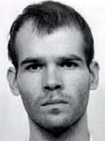
Larry Keith Robison
Mass murderer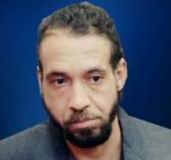 Julio Gonzalez
Mass murderer · USA · 1990
Julio Gonzalez was sentenced to 174 twenty-five-year sentences (a total of 4,35…
87 victims
Julio Gonzalez
Mass murderer · USA · 1990
Julio Gonzalez was sentenced to 174 twenty-five-year sentences (a total of 4,35…
87 victims
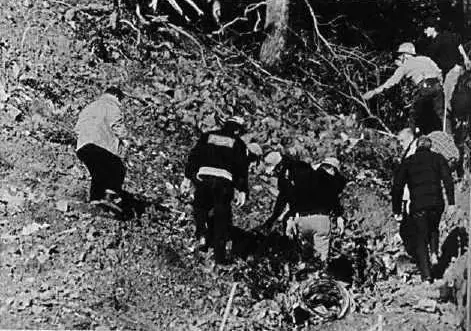 David Burke
Mass murderer · USA · 1987
David Augustus Burke (May 18, 1952–December 7, 1987) was an employee of USAir,…
43 victims
David Burke
Mass murderer · USA · 1987
David Augustus Burke (May 18, 1952–December 7, 1987) was an employee of USAir,…
43 victims
 George Jo Hennard
Mass murderer · USA · 1991
George Jo Hennard carried out a mass killing at a Luby’s Cafeteria in Killeen,…
23 victims
George Jo Hennard
Mass murderer · USA · 1991
George Jo Hennard carried out a mass killing at a Luby’s Cafeteria in Killeen,…
23 victims
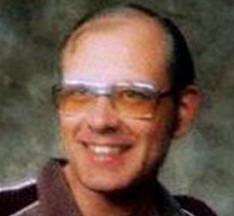 James Huberty
Mass murderer · USA · 1984
James Oliver Huberty was a 41-year-old unemployed security guard. He was born i…
21 victims
James Huberty
Mass murderer · USA · 1984
James Oliver Huberty was a 41-year-old unemployed security guard. He was born i…
21 victims
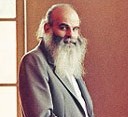 Ronald Gene Simmons
Mass murderer · USA · 1987
Ronald Gene Simmons was a retired United States Air Force sergeant. Over the Ch…
16 victims
Ronald Gene Simmons
Mass murderer · USA · 1987
Ronald Gene Simmons was a retired United States Air Force sergeant. Over the Ch…
16 victims
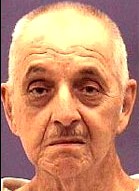 William Pierce
Serial killer · USA · 1970
William Pierce was paroled from the Georgia state prison at Reidsville in May 1…
9 victims
William Pierce
Serial killer · USA · 1970
William Pierce was paroled from the Georgia state prison at Reidsville in May 1…
9 victims
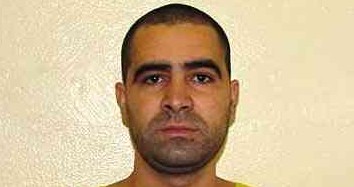 Miguel Angel Soto
Murderer · USA · 1999
Miguel Angel Soto was a convicted offender who was sentenced to death on August…
2 victims
Miguel Angel Soto
Murderer · USA · 1999
Miguel Angel Soto was a convicted offender who was sentenced to death on August…
2 victims
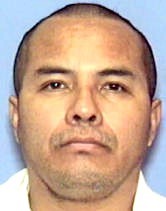 Angel Maturino Resendiz
Serial killer · USA · 1986
Angel Maturino Resendiz was sentenced to die for the capital murder of Dr. Clau…
15 victims
Angel Maturino Resendiz
Serial killer · USA · 1986
Angel Maturino Resendiz was sentenced to die for the capital murder of Dr. Clau…
15 victims
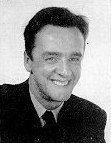 Joseph Albert Guay
Mass murderer · In the Air - Canada · 1949
Joseph Albert Guay (born 1917) was a resident of Quebec City who was responsibl…
23 victims
Joseph Albert Guay
Mass murderer · In the Air - Canada · 1949
Joseph Albert Guay (born 1917) was a resident of Quebec City who was responsibl…
23 victims
- Gender
- male
- Country
- USA
- Location
- Tarrant County, Texas, USA
- Date of birth
- August 12, 1957
- Age at first offence
- 25
- Characteristics
- former mental patient, cannibal, sexual mutilation
- Victim profile
- Ricky Lee Bryant, 31 / Bruce M. Gardner, 33; Earline H. Barker, 55; Scott Willard Reed, 11, and Georgia Ann Reed, 34
- Method of murder
- Shooting ( .22 caliber handgun) / St abbing with knife
- Date(s) of murder
- August 10, 1982
- Years active
- 1982
- Date of arrest
- Next day
- Status
-
Executed
Executed by lethal injection in Texas on January 21, 2000
Timeline
- August 10, 1982 (4:30 p.m.) — Junett Bryant arrived at the home of her adult son, Ricky Lee Bryant, in Fort Worth, Texas, and discovered him lying on the floor with his head severed from his body.
- August 11, 1982 (shortly after 4:00 a.m.) — A police officer in Wichita, Kansas, noticed a suspicious looking vehicle backed up to a local church and stopped the sole occupant, Larry Robison.
- November 1982 — Robison was indicted in Tarrant County, Texas, for the intentional murder of Bruce Gardner while in the course of committing and attempting to commit the offense of robbery of Earline Barker.
- 1983 — Robison was convicted of the capital offense and sentenced to death.
- 1986 — The Texas Court of Criminal Appeals reversed Robison's conviction and sentence due to an error during jury selection.
- November 13, 1987 — The jury found Robison guilty of capital murder.
- June 29, 1994 — The Court of Criminal Appeals affirmed Robison's conviction and sentence.
- June 26, 1995 — The United States Supreme Court denied certiorari review.
- April 22, 1996 — Robison filed an application for state writ of habeas corpus.
- July 19, 1996 — Robison filed a supplemental application.
- August 8, 1996 — The trial court recommended that the application be denied and the supplemental application be dismissed as untimely filed.
- October 9, 1996 — The Court of Criminal Appeals agreed and denied habeas relief.
- December 12, 1996 — Robison filed a federal habeas petition in the United States District Court for the Northern District of Texas.
- February 9, 1997 — The district court entered an order denying habeas corpus relief.
- April 1, 1997 — The district court denied Robison's request for a certificate of appealability.
- August 13, 1998 — The United States Court of Appeals for the Fifth Circuit affirmed the district court's denial of habeas relief.
- September 21, 1998 — The Fifth Circuit denied a motion for rehearing.
- May 3, 1999 — The Supreme Court denied certiorari review.
- January 21, 2000 — Robison was executed by lethal injection in Texas.
Background
Larry Keith Robison was a former construction worker from Abilene. He had been diagnosed and treated for schizophrenia, and he had a history of drug abuse. An insanity defense was presented and rejected at trial.
At the punishment phase of trial, the State presented evidence that Robison had received a three-year probated sentence for a felony theft conviction. Robison violated one of the terms of his probation, but his probation was never revoked.
Judy Smith testified that Robison called her several times from the Tarrant County Jail. Smith testified that she had seen Robison use amphetamines and knew he used LSD. Susan Wood testified that, in early 1982, she bought drugs from Robison, and they both used the drugs at her house, including speed, crystal, and marijuana.
The offence
At 4:30 p.m. on August 10, 1982, Junett Bryant went to the home of her adult son, Ricky Lee Bryant, in Fort Worth, Texas, and discovered him lying on the floor with his head severed from his body. Ricky Lee Bryant had been sexually mutilated and suffered:
- two gunshot wounds to the head,
- eight cut wounds, and
- forty-nine stab wounds.
Ricky Lee Bryant’s penis was found in the kitchen sink, and his testicles were never found. His decapitated head was posed in the crook of his arm.
Four more homicide victims were located in the house next door to Bryant's. Earline Barker and Bruce Gardner were found fully clothed in the living room:
- Earline Barker had multiple gunshot and stab wounds, including one very deep cut wound to the neck.
- Bruce Gardner had several gunshot wounds and a cut wound to his neck.
In a bedroom was the body of 11-year-old Scott Willard Reed, lying on his stomach. He had been shot once, had a contusion of the head due to blunt trauma, and had been cut and stabbed multiple times. In another bedroom was the nude body of Georgia Reed:
- Georgia Reed had been shot twice,
- had been stabbed multiple times, and
- had a deep cut wound to the neck severing the jugular veins and carotid arteries.
Robison was convicted for the August 10, 1982 murder of Bruce Gardner, General Dynamics assembly line worker, while in the course of committing and attempting to commit the offense of robbery of Earline Barker.
Investigation and arrest
Shortly after 4:00 a.m. on August 11, 1982, a police officer in Wichita, Kansas, noticed a suspicious looking vehicle backed up to a local church. The officer approached and asked Larry Robison, the sole occupant, to get out of the car and for identification.
Robison claimed he had no identification and told the officer his name was Jeffrey K. Kennedy. He also told the officer that the car belonged to his brother, George. Further investigation revealed the car's registration had expired in 1980, although the license plate bore a 1983 sticker. Robison volunteered that he had a checkbook in the car that would serve as identification; the checkbook was in Robison's given name.
A search of Robison’s pockets revealed a woman’s wedding ring, some bullets, and three wallets containing the driver licenses of Robison, Bruce Gardner, and Ricky Lee Bryant. Robison was handcuffed and placed in the police car. The vehicle identification number on Robison’s car revealed the car was registered to Bruce Gardner.
In the car, officers found a loaded .22 caliber handgun under the driver’s seat. Officers also found four rings, more bullets, and two watches in a suitcase in the car. A pawn shop manager sold Robison a .22 caliber handgun one week before the murders and identified the handgun found in Robison’s possession in Kansas as the one he had sold him. An assistant hardware manager at a Winn Dixie store sold Robison three boxes of .22 caliber ammunition on the day of the murders.
All of the shell casings recovered from the murder scene were fired from Robison’s handgun. Three knives recovered at the crime scene tested positive for blood, and the blood type on two of the knives matched three of the victims. A pair of shorts and a matchbook recovered from the suitcase in Kansas tested positive for blood. The rings and two of the watches recovered from Robison were identified as belonging to Ms. Reed and Ms. Barker. Another watch taken from Robison at the time of his arrest was identified as belonging to Gardner.
Thomas Ozmer, a close friend of Ricky Bryant’s, testified that he had known both Robison and Bryant since 1976 and had introduced Bryant to Robison in June 1982. Ozmer stated that about a month before the murders Robison moved in with Bryant. Ozmer also stated he stored an old, inoperable 1966 Chevy Belaire at Bryant's home, and that the license plate found on Gardner’s car in Kansas was from Ozmer’s car.
Trial
In November 1982, Robison was indicted in Tarrant County, Texas, for the intentional murder of Bruce Gardner while in the course of committing and attempting to commit the offense of robbery of Earline Barker. In 1983, Robison was convicted of the capital offense and sentenced to death.
However, in 1986, the Texas Court of Criminal Appeals reversed Robison’s conviction and sentence due to an error during jury selection. Robison was retried upon his plea of not guilty.
Rejecting Robison’s defense of insanity, on November 13, 1987, the jury found Robison guilty of capital murder. After a separate trial on punishment, the trial court, the 297th District Court of Tarrant County, Texas, sentenced Robison to death.
At trial, the primary defense was that Robison was insane at the time of the murders. The defense presented testimony that several members of Robison’s father’s family had been diagnosed with schizophrenia and that Robison had exhibited behavior consistent with schizophrenia. Robison had also been diagnosed and treated for schizophrenia. A defense expert stated Robison was a chronic paranoid schizophrenic and was delusional and legally insane at the time of the offense.
The State presented competing evidence that Robison was faking a mental disorder, and had a long history of drug abuse, including marijuana, methamphetamines, amphetamines, tranquilizers, LSD, and PCP. The State’s expert stated Robison’s past behavior was attributable to a drug psychosis, which has similar symptoms to schizophrenia. There was no evidence that Robison was under the influence of drugs at the time he committed the murders.
Sentencing
After a separate trial on punishment, the trial court, the 297th District Court of Tarrant County, Texas, sentenced Robison to death on November 13, 1987. The conviction and sentence were affirmed on June 29, 1994.
Appeals
On June 29, 1994, the Court of Criminal Appeals affirmed Robison's conviction and sentence.
The United States Supreme Court denied certiorari review on June 26, 1995.
Robison filed an application for state writ of habeas corpus on April 22, 1996, and a supplemental application on July 19, 1996. On August 8, 1996, the trial court recommended that the application be denied and the supplemental application be dismissed as untimely filed. On October 9, 1996, the Court of Criminal Appeals agreed and denied habeas relief.
Robison filed a federal habeas petition on December 12, 1996 in the United States District Court for the Northern District of Texas. On February 9, 1997, the district court entered an order denying habeas corpus relief. On April 1, 1997, the district court denied Robison’s request for a certificate of appealability.
On August 13, 1998, the United States Court of Appeals for the Fifth Circuit affirmed the district court's denial of habeas relief. The Fifth Circuit denied a motion for rehearing on September 21, 1998, and the Supreme Court denied certiorari review on May 3, 1999.
A clemency petition was pending before the Texas Board of Pardons and Paroles.
Outcome
Robison was scheduled to be executed after 6 p.m. on January 21, 2000, and was executed by lethal injection in Texas on January 21, 2000.
Other details
Statements by trial participants and witnesses
Greg Pipes, assistant district attorney who prosecuted Robison, testified:
- “They did diagnose him (as schizophrenic),” Pipes said. “But there are an awful lot of people diagnosed as schizophrenic that aren’t killing people."
- “If I could have found the car keys, I could have gotten away with it.”
- “He had a motive, he had a plan,” Pipes said. “He had the ability to understand that he needed to leave as soon as he killed those five people. He killed Ricky Bryant and couldn't find his keys to his car to get away. That's why he went next door -- to get a vehicle. Then afterwards, he goes out and buys more ammunition and flees.”
- “Is it justice?” Pipes asked. “It's a shame it won't bring back the five people he killed, but it's the only way society can protect itself. He's as dangerous today as the day he killed those five people.”
- Pipes stated that if Robison's sentence were to be commuted to a life sentence, he would be released in a few years since mandatory release laws were in effect at the time of his crime. He explained mandatory release requires an inmate to be given "good time" credit of one and a half days for every day served. When the inmate's time served plus his good time credits equal his sentence, he must be released, regardless of his potential as a future danger to society, after only one third of the actual sentence is served.
Judy Smith testified that Robison said about Ricky Bryant:
- “he went into the bathroom and shot him like a kamikaze... He said that after he had killed Ricky Bryant, he could not find the car keys, and that's why he went next door.”
Smith testified that Robison expressed puzzlement about “why Mrs. Barker didn't do something because Georgia Reed was screaming and begging him for her life.”
Smith testified Robison said he killed Scott Reed because he “couldn't leave any witnesses.”
Smith testified that regarding his arrest in Kansas Robison said: “the lady police officer was very lucky that he didn't shoot her, too,” and that Robison realized that if he shot a police officer, “they'd never leave him alone.”
During a court hearing in November, Robison apologized to the families of the victims.
Rhonda Kreps, whose mother, sister and nephew were slain by Robison, said:
- “The pain - you just don't even know the pain,” she said recently. She also said: “I need closure. I need him to go - go to sleep an leave me alone,”
Robison’s mother, Lois Robison, said:
- “We are no longer Lois and Ken Robison, but we became the parents of a mass murderer.” She also said: “Talking about it makes me feel pretty awful,”
- “No books, paper, radio, just mental torment,”
- “I'm worried most about my mother because she fought so hard to save his life,”
- “Things will never be the same for me or my family,” (father Ken Robison was quoted in the same passage)
- “He’s either going to have his sentence commuted or be executed. I thought at first if people knew the truth, they wouldn't execute him. But this mechanism in Texas is where the truth doesn't much matter.”
- “I am frankly afraid for him to be turned loose on the streets again, which is one reason we did not arrange for bail,” and also “I was told by a doctor at the VA hospital that if he doesn't get (treatment) he will continue to get worse and could be a danger to himself and others.”
- “I need closure.
Larry Robison stated:
- “He deserves to die, he said.”
- “I don't presume to second guess what God's will is for me. If it's my time to go, I'll gladly get on that table and leave.”
- “That's something maybe I probably won't ever know.”
- “Remember, Mom, this is really just a movie. What you think is happening is not real. When the movie's over, we'll find out what is really real.”
- “He's preparing to go over to the other side,” (as attributed to Lois Robison)
- “He says he's already halfway there.”
Victims and related persons
The victims included:
- Ricky Lee Bryant (adult son of Junett Bryant)
- Earline Barker
- Bruce Gardner (General Dynamics assembly line worker)
- Georgia Reed
- Scott Willard Reed
Rhonda Kreps lost three people she loved: her mother, her sister Georgia and her 11-year old nephew, Scott.
Clemency and execution proceedings
The Texas Attorney General issued a media advisory on January 20, 2000, stating Larry Keith Robison was scheduled to be executed after 6 p.m. on January 21st. The advisory included that a clemency petition was pending before the Texas Board of Pardons and Paroles.
Inside the death chamber, Rhonda Kreps dabbed her eyes as she watched him die. She sobbed heavily and was comforted by other witnesses and prison officials.
After the execution, relatives of the five people Robison killed issued a statement:
- “Justice has been done. Larry Robison has paid with his life for the 17-year nightmare of trauma and heartache he caused for the families of his victims,”
- “We will cherish the memories of our loved ones. We are grateful for the support of our friends and families, the community and the Texas Department of Criminal Justice Victims Services Division.”
A planned memorial service for Larry Robison turned into a thanksgiving celebration at First Methodist Church in Huntsville. Victims’ families were not celebrating, and one family member said: “Lethal injection is too good for him,” and “In Alabama, we'd fry him. I'd like him to suffer like Georgia [her sister] did, to beg for his life and know the terror she must have known.”
Drug and alcohol evidence
There was no evidence of drug or alcohol use connected with the offense.
Spotted an error, or have more information about this case?