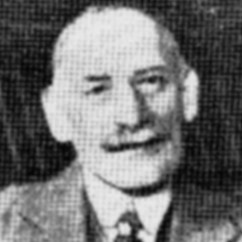
Harold Greenwood
Murderer? Barry George
Murderer? · United Kingdom · 1999
Barry George was also known as Barry Bulsara. He was born on 15 April 1960 in H…
1 victim
Barry George
Murderer? · United Kingdom · 1999
Barry George was also known as Barry Bulsara. He was born on 15 April 1960 in H…
1 victim
 Derek Bentley
Murderer? · United Kingdom · 1952
Derek William Bentley (30 June 1933 – 28 January 1953) was a British teenager h…
1 victim
Derek Bentley
Murderer? · United Kingdom · 1952
Derek William Bentley (30 June 1933 – 28 January 1953) was a British teenager h…
1 victim
 Oscar Slater
Murderer? · United Kingdom · 1908
Oscar Joseph Slater (8 January 1872 – 1948) was a victim of miscarriage of just…
1 victim
Oscar Slater
Murderer? · United Kingdom · 1908
Oscar Joseph Slater (8 January 1872 – 1948) was a victim of miscarriage of just…
1 victim
 Dr. Bennett Clark Hyde
Murderer? · USA · 1909
Dr. Bennett Clark Hyde was accused in Kansas City of murdering members of the S…
3 victims
Dr. Bennett Clark Hyde
Murderer? · USA · 1909
Dr. Bennett Clark Hyde was accused in Kansas City of murdering members of the S…
3 victims
 Bartolomeo Vanzetti
Murderer? · USA · 1920
Bartolomeo Vanzetti (June 11, 1888–August 23, 1927) was an anarchist who was co…
2 victims
Bartolomeo Vanzetti
Murderer? · USA · 1920
Bartolomeo Vanzetti (June 11, 1888–August 23, 1927) was an anarchist who was co…
2 victims
 Nicola Sacco
Murderer? · USA · 1920
Nicola Sacco Nicola Sacco and Bartolomeo Vanzetti were convicted of murdering t…
2 victims
Nicola Sacco
Murderer? · USA · 1920
Nicola Sacco Nicola Sacco and Bartolomeo Vanzetti were convicted of murdering t…
2 victims
 Patrick Mahon
Murderer · United Kingdom · 1924
Patrick Herbert Mahon (also known as Pat Waller), born in West Derby, Liverpool…
1 victim
Patrick Mahon
Murderer · United Kingdom · 1924
Patrick Herbert Mahon (also known as Pat Waller), born in West Derby, Liverpool…
1 victim
 Leamon White
Murderer · USA · 1987
Leamon White was convicted of first-degree murder and sentenced to death by a M…
1 victim
Leamon White
Murderer · USA · 1987
Leamon White was convicted of first-degree murder and sentenced to death by a M…
1 victim
 Yahweh ben Yahweh
Murderer · USA · 1980
Yahweh ben Yahweh was born and legally named Hulon Mitchell Jr. (October 27, 19…
23 victims
Yahweh ben Yahweh
Murderer · USA · 1980
Yahweh ben Yahweh was born and legally named Hulon Mitchell Jr. (October 27, 19…
23 victims
 Jennifer Womac
Murderer · USA · 2009
Jennifer Lee Womac was 38 and was charged in a patricide murder case in Meigs C…
1 victim
Jennifer Womac
Murderer · USA · 2009
Jennifer Lee Womac was 38 and was charged in a patricide murder case in Meigs C…
1 victim
 Anthony Morley
Murderer · United Kingdom · 2008
Anthony Morley (born 1972) was an English model and convicted murderer. He won…
1 victim
Anthony Morley
Murderer · United Kingdom · 2008
Anthony Morley (born 1972) was an English model and convicted murderer. He won…
1 victim
 Shonda Johnson
Murderer · USA · 1997
Shonda Johnson was also known as Shonda Nicole Richards. She was White. She was…
1 victim
Shonda Johnson
Murderer · USA · 1997
Shonda Johnson was also known as Shonda Nicole Richards. She was White. She was…
1 victim
- Gender
- male
- Country
- United Kingdom
- Location
- Kidwelly, Carmarthenshire , Wales, United Kingdom
- Date of birth
- 1874
- Age at first offence
- 45
- Characteristics
- poisoner
- Victim profile
- Mabel Greenwood (his wife)
- Method of murder
- Poisoning (arsenic)
- Date(s) of murder
- June 16, 1919
- Years active
- 1919
- Date of arrest
- June 17, 1920
- Status
-
Acquitted / overturned
Acquitted, 1920.
Background
Harold Greenwood (1874 – 17 January 1929) was an English solicitor who was accused and acquitted of murdering his wife by arsenic poisoning. He was tried at Carmarthen Assizes in 1920 and was defended by Edward Marshall Hall. His case was noted as a rare example of a legal professional being charged with murder.
Harold Greenwood was a Yorkshire solicitor who moved to Wales in 1898. He, his wife Mabel (née Bowater), and their four children lived comfortably, with domestic staff, in Kidwelly, Carmarthenshire.
Mabel Greenwood was in indifferent health. She had an active and popular role in the local community and was seen regularly on a Sunday carrying her prayerbook and Bible to St. Mary’s Church. For some years she was treated by Dr. T. R. Griffiths, and she had endured a series of unaccountable fainting spells, which were generally supposed to be due to a weak heart.
In October 1919, local gossip increased after Harold Greenwood’s second marriage. The police proposed to exhume Mabel Greenwood’s body for forensic examination, and when Greenwood was informed he replied, “Just the very thing – I am quite agreeable”.
Within a few months of Mabel Greenwood’s funeral, Greenwood married Gladys Jones. Greenwood’s second wife, Gladys Jones, was much younger than Mabel. This second marriage caused local gossip.
After acquittal, Harold Greenwood moved with his second wife to Sellack, near Ross-on-Wye, Herefordshire, changed his name to Pilkington, and lived an uneventful life until his death in 1929.
The offence
Mabel Greenwood died after symptoms that began in the context of a gooseberry pie for lunch. On 16 June 1919, Mabel complained of stomach pains after eating a gooseberry pie, saying, “it always disagrees with me”. Harold Greenwood gave her brandy, which caused her to vomit. Dr Griffiths was summoned and dispensed medication.
By the early hours of the following day, Mabel Greenwood died. Dr Griffiths certified the cause of death as heart disease. Within the subsequent investigation and inquest, her remains were examined and were found to contain 0.25 to 0.5 grain (16 to 32 mg) of arsenic, but there was no evidence of heart disease.
A jury later concluded that the arsenic was administered by Harold Greenwood, describing it as “murder by arsenical poisoning ... administered by Harold Greenwood”. After the trial, the jury returned a not guilty verdict and added a rider stating that they were satisfied that a dangerous dose of arsenic was administered to Mabel Greenwood, but were not satisfied that this was the immediate cause of death, and were not satisfied as to how or by whom the arsenic was administered.
Investigation
After Mabel Greenwood’s death, local gossip developed and the police proposed to exhume the body for forensic examination in October 1919. When Greenwood was informed, he replied, “Just the very thing – I am quite agreeable”.
The body was later exhumed and examined. The examination found no trace of valvular disease, but it found arsenic between a quarter and a half a grain in the body. Miss Phillips and Nurse Jones were among those who listened attentively to the coroner when the inquest opened. These interested parties and others heard Mr. Ludform, who represented Harold Greenwood at the hearing in the latter’s absence, comment on the seeming alacrity with which a suggestion of alleged foul play had come from the vicar.
Sergeant Hodge Lewis’s notes were read over at the inquest.
A jury unanimously returned a verdict of “murder by arsenical poisoning ...
Harold Greenwood’s response to hearing the verdict was “Oh dear!”.
Arrest
Harold Greenwood was arrested on 17 June 1920.
Trial
The trial began on 2 November 1920 at Carmarthen Assizes before Mr Justice Shearman.
The case was prosecuted by Sir Edward Marlay Samson and defended by Sir Edward Marshall Hall. The trial was described as Hall’s third murder trial of the year, and he was already in poor health; however, he accepted the brief. Hall stated, “The man's innocent, and I'll get him off – you'll see”.
Sir Edward Marlay Samson made a request for all witnesses to be ordered from the court, save for two medical men.
During the trial, the proseuction and defence contested the forensic evidence and witness testimony. The defence’s argument included challenges to medical evidence and evidence connected to the maid’s account.
Hall opened the defence by citing from Othello and alleging the case arose from local gossip.
Greenwood denied any involvement in his wife’s death and withstood lengthy cross-examination. Greenwood was called as a witness in his own defence. Irene Greenwood, the accused’s 22-year old daughter, gave evidence that she had also drunk from the wine bottle alleged by the prosecution to have been the source of the poison that killed Mabel, and she stated that she had drunk it “without ill effect”.
The judge referred to this in the summing-up: “If she also drank from the bottle, there is an end of the case”.
Evidence and arguments
Dr Griffiths’ testimony was challenged. The defence argued that Dr Griffiths had administered medication at the time, which could be a cause of death independently of any arsenic. The defence highlighted that Dr Griffiths changed his account of the drugs, moving from a claim of morphia to a claim of opium based on later statements, and that the exact nature of the pills was disputed.
The prosecution sought to connect arsenic weedkiller with the Burgundy served for lunch. The Crown sought to show that Greenwood had placed some of the weed-killer in the bottle of Burgundy before the Sunday lunch on 15 June 1919. The prosecution alleged that arsenical compound was purchased in two separate packages, containing 60 per cent arsenic, marketed under the brand of Cooper’s Weedicide.
The fatal dose was discussed in terms of time windows and dose estimates. Dr. William Willcox (later Sir William) gave it as his opinion that death was due to heart failure consistent with prolonged vomiting and diarrhoea due to arsenical poisoning. He gave an opinion that the fatal dose must have been taken in soluble form between 1.30 and 6 p.m., and he said that at least two grains had been swallowed by Mabel Greenwood within 24 hours of her death.
The defence called a poison expert, Colonel Toogood, who stated that Mabel Greenwood died from morphia poisoning, following acute gastroenteritis set up by eating gooseberry skins. Dr. William Griffiths of Swansea, also for the defence, argued that a quarter of a grain of arsenic in a body was not conclusive evidence that it had caused death, and he pointed out that a living body could contain two and a half grains of arsenic without ill effect.
The maid Hannah Williams testified that Greenwood had spent half an hour in the pantry before lunch on the fatal Sunday, suggesting she was occupied in poisoning the wine. Hall tore her evidence “to tattered shreds” in cross-examination, and she was described as reducing to tears and incoherence.
The prosecution was also challenged by Irene Greenwood’s evidence about drinking from the same bottle during lunch. Her evidence was described as having demolished the prosecution’s case that depended on the administering of the Burgundy by an alleged poisoner.
During the summing-up, Mr. Justice Shearman warned the jury against any show of bias and told them: “It is your duty to concentrate wholly upon the guilt or innocence of the prisoner.”
Verdict
The jury was absent for two and a half hours before returning their verdict. The words on the slip of paper handed to the judge read: “We are satisfied on the evidence of this case that a dangerous dose of arsenic was administered to Mabel Greenwood on Sunday, June 15th, 1919. But we are not satisfied that this was the immediate cause of death. The evidence before us is insufficient and does not conclusively satisfy us as to how and by whom the arsenic was administered. We therefore return a verdict of not guilty.”
An additional rider was added by the jury, not published at the time, stating: “We are satisfied ... that a dangerous dose of arsenic was administered to Mabel Greenwood ... (nor) how or by whom the arsenic was administered”.
Harold Greenwood was acquitted.
Outcome
The acquittal left questions unanswered, and the public reaction included scowls from some who felt that they had been cheated by a brilliant advocate. Belief in Greenwood’s guilt persisted in Wales for years.
Greenwood’s life in Kidwelly was disrupted after the trial. He found that even Dr. Griffiths had turned against him, including by suing Greenwood for outstanding medical fees. Greenwood became socially isolated and decided to move away from Kidwelly.
Other details
Mabel Greenwood was interred on Thursday, 19 June 1919, in the churchyard of St. Mary’s Kidwelly. Irene Greenwood registered her mother’s death, and the narrative also included that Greenwood had omitted to send a formal certificate to the vicar, which caused the vicar to voice misgivings and direct suspicion toward Greenwood.
Nurse Jones was described as having influenced local opinion and later attempted to stop inflaming opinion against Greenwood.
There was discussion of Sergeant Hodge Lewis calling on Nurse Jones and asking for confirmation about what happened on the night of Mrs. Greenwood’s death. The two police officers later cited notes at the inquest.
At the inquest, Miss Phillips was referred to by the absent Greenwood as “a treacherous busybody,” and Greenwood dubbed her “The Kidwelly Postman,” from her readiness to disseminate gossip.
At the trial, there was mention that Greenwood’s motive was challenged in court. The prosecution’s case was described as resting on unsure motive, and the defence presented Greenwood’s financial position as relevant: Greenwood was said to have been dependent on his wife’s money to keep Rumsey House in funds, and the wife’s income was described as having passed in equal shares to the children through trustees after her death.
Harold Greenwood later wrote an article for the magazine John Bull about what it felt like to be accused of murder in the trial of another solicitor, Major Herbert Rowse Armstrong of nearby Hay-on-Wye, who was convicted and hanged for the poison murder of his wife, Katharine.
Harold Greenwood died on 17 January 1929.

Spotted an error, or have more information about this case?