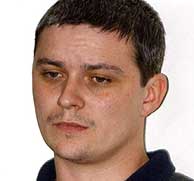
Ian Huntley
Murderer Dale Cregan
Murderer · United Kingdom · 2012
Dale Christopher Cregan (born 6 June 1983) was convicted in the United Kingdom…
4 victims
Dale Cregan
Murderer · United Kingdom · 2012
Dale Christopher Cregan (born 6 June 1983) was convicted in the United Kingdom…
4 victims
 Rahan Arshad
Murderer · United Kingdom · 2006
Rahan Arshad (born 1970) was a taxi driver. He lived at Turves Road, Cheadle Hu…
4 victims
Rahan Arshad
Murderer · United Kingdom · 2006
Rahan Arshad (born 1970) was a taxi driver. He lived at Turves Road, Cheadle Hu…
4 victims
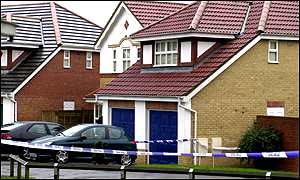 Anthony Smith
Murderer · United Kingdom · 2001
Anthony Smith was a former sergeant in the Coldstream Guards. He had left the C…
3 victims
Anthony Smith
Murderer · United Kingdom · 2001
Anthony Smith was a former sergeant in the Coldstream Guards. He had left the C…
3 victims
 David John Copeland
Murderer · United Kingdom · 1999
David John Copeland was born in Isleworth, in the London Borough of Hounslow, a…
3 victims
David John Copeland
Murderer · United Kingdom · 1999
David John Copeland was born in Isleworth, in the London Borough of Hounslow, a…
3 victims
 Karl Bluestone
Murderer · United Kingdom · 2001
Karl Bluestone was a Gravesend police officer. · 28 August 2001 — Karl Blueston…
3 victims
Karl Bluestone
Murderer · United Kingdom · 2001
Karl Bluestone was a Gravesend police officer. · 28 August 2001 — Karl Blueston…
3 victims
 Maurizio Minghella
Serial killer · Italy · 1978
Maurizio Minghella was born in Genova on 16 luglio 1958. He lived in the Bolzan…
9 victims
Maurizio Minghella
Serial killer · Italy · 1978
Maurizio Minghella was born in Genova on 16 luglio 1958. He lived in the Bolzan…
9 victims
 Gabriel Socley
Murderer · France · 1935
Gabriel Socley was sentenced to death for the rape, and the later status of the…
1 victim
Gabriel Socley
Murderer · France · 1935
Gabriel Socley was sentenced to death for the rape, and the later status of the…
1 victim
 Clayton Lockett
Murderer · USA · 1999
Clayton Lockett was convicted of first degree murder in Noble County, Oklahoma,…
1 victim
Clayton Lockett
Murderer · USA · 1999
Clayton Lockett was convicted of first degree murder in Noble County, Oklahoma,…
1 victim
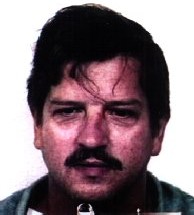 William George Bonin
Serial killer · USA · 1972
William George Bonin was executed by lethal injection in California on February…
44 victims
William George Bonin
Serial killer · USA · 1972
William George Bonin was executed by lethal injection in California on February…
44 victims
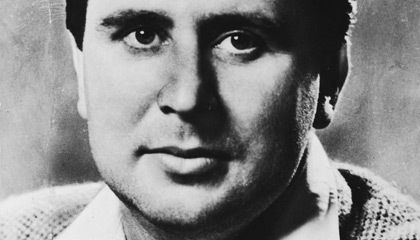 Brian Donald Hume
Murderer · United Kingdom/Switzerland · 1949
Brian Donald Hume partnered in illegal activities with Stanley Setty. Hume had…
2 victims
Brian Donald Hume
Murderer · United Kingdom/Switzerland · 1949
Brian Donald Hume partnered in illegal activities with Stanley Setty. Hume had…
2 victims
- Gender
- male
- Country
- United Kingdom
- Location
- Soham, Cambridgeshire, England, United Kingdom
- Date of birth
- January 31, 1974
- Age at first offence
- 28
- Characteristics
- child killer, rape, abduction
- Victim profile
- Holly Marie Wells and Jessica Aimee Chapman, both 10
- Method of murder
- Suffocation
- Date(s) of murder
- August 4, 2002
- Years active
- 2002
- Date of arrest
- 13 days after
- Status
-
Imprisoned
Sentenced to life imprisonment on December 17, 2003; on September 29, 2005 High Court Judge Mr Justice Moses ruled that he should spend 40 years in prison before he can be considered for parole
Case information
Ian Huntley was a former school caretaker in 2003.
Maxine Carr was his girlfriend and shared a house with him.
Holly Wells and Jessica Chapman were two girls aged 10.
Background
Huntley was born in Grimsby on 31 January 1974. He was the first son of Kevin and Linda Huntley.
By the time he started secondary school in September 1985, he was a target of bullying, which increased as he founded and promoted the Grimsby and Immingham chapter of the Bros fan club. At age 13 he was transferred to a different school. He left school in the summer of 1990 with 5 A-C grades in his GCSEs and chose employment instead of A-level study.
Throughout the 1990s Huntley worked at various unskilled low-salary jobs. He was investigated by police on at least ten occasions for rape, underage sex, indecent assault and burglary. One rape and one burglary resulted in criminal charges, but in both cases the charges were dropped by the Crown Prosecution Service because there was not enough evidence. In October 1993, he was convicted of riding an unlicenced and uninsured motorcycle and received a £250 fine.
Kevin and Linda separated in the early 1990s, and Linda later had a lesbian relationship, but the couple later lived together again. Huntley had a brother called Wayne, born on 16 August 1975. Wayne married Claire Evans, born in 1976. Huntley married Claire three days before his 21st birthday in 1995, but they separated not long after. They waited four years for a divorce because Huntley refused to grant one until January 1999. Wayne married his brother’s ex-wife in July 2000.
In February 1999, Huntley met Maxine Carr at Hollywood’s nightclub in Grimsby. They shared a flat together in Barton-upon-Humber. Carr found a job packing fish at a local fish processing factory while Huntley worked as a barman. He travelled to Cambridgeshire on his days off to help his father, who worked as a school caretaker in the village of Littleport near Ely. Huntley enjoyed the work and in September 2001 applied for caretaker at Soham Village College, after the previous caretaker was sacked for having an inappropriate relationship with a pupil. Huntley was accepted and began work on 26 November 2001.
Carr was a teaching assistant at St Andrew’s Primary, the girls’ school, and she had got along well with the girls.
The offence
On 4 August 2002, around 6 p.m., two 10-year-old girls, Holly Wells and Jessica Chapman, walked past Huntley’s rented house in College Close. Huntley asked them to come into the house and said that Carr was in the house as well, although she had gone to visit family in Grimsby.
Shortly after Holly and Jessica entered 5 College Close, Huntley murdered them.
Huntley’s reasons for committing the murders may never be known. The police believed that Huntley killed the girls in a jealous rage, and there may have been a sexual motive.
Huntley disposed of the girls’ bodies in a ditch 20 miles away and set them alight to destroy forensic evidence.
Investigation
Jessica Chapman and Holly Wells were reported missing later on 4 August 2002, and a police search began at around midnight.
The search involved police and hundreds of volunteers and lasted well into the next day and the following weeks. Pictures of the girls were circulated throughout the community. Jessica and Holly’s parents held a news conference pleading for information about their whereabouts. David Beckham made a televised appeal for their safe return.
Ian Huntley, a caretaker of Soham Village College who assisted in the search, told investigators he had seen the girls walking by his house that he shared with Maxine Carr around the time they left the barbecue. After he admitted to seeing the girls, investigators searched Huntley’s home and the college where he worked.
During the search, officers found no evidence linking him to the crime, but some investigators remained suspicious of his behavior.
A week later, investigators decided to search the college premises again. In a storage building at Soham Village College, an officer found a garbage bin with the half burned remains of Jessica and Holly’s Manchester United jerseys along with their shoes.
On 17 August 2002, 13 days after the girls disappeared, a game warden walking through woods found the girls’ partially burned bodies in a six-foot-deep ditch close to the RAF Lakenheath airbase in Suffolk. Autopsy reports listed their probable cause of death as asphyxiation.
The location of the bodies further tied Huntley to the case because he was known to have previously gone plane spotting in the area, and the area was in close proximity to his father’s house.
Forensics specialists found fibers that were matched to the girls’ clothes. Evidence included Huntley’s hairs found on Holly and Jessica’s soccer jerseys, as well as fibers from his clothes and carpets from his house and car.
Investigators traced the last signal from Jessica’s mobile phone to a small area directly near Huntley’s home.
Arrest and charges
Following the discovery of the half burned jerseys and shoes, police arrested Huntley and his girlfriend Maxine Carr on suspicion of murder; their suspicions were confirmed later the same day.
Huntley was later formally charged with the murder of the girls. Carr was arrested for assisting an offender and conspiring to obstruct the course of justice.
The girls’ deaths led to intense media interest and worldwide attention.
Trial
Court and parties
The trial of Ian Huntley and Maxine Carr began on 3 November 2003 at London’s Old Bailey Courthouse.
A jury of five men and seven women was selected.
Mr Justice Moses presided over the trial. The prosecution case was led by Richard Latham QC.
Prosecution case
Latham began opening arguments two days into the trial.
Latham suggested he would present overwhelming evidence that Huntley brutally murdered the girls and tried to cover it up. Latham also claimed evidence that Carr misled the police to protect Huntley.
The jury was told that when Jessica’s phone switched off, the last signal sent indicated she was in the “immediate area” of Huntley’s house.
Phone records proved Carr was in Grimsby visiting her mother at the time of the girls’ disappearance, while Huntley was traced to the location in and around Soham. The prosecution presented fingerprints on the bin liner that were matched with Huntley.
Witnesses testified that they saw Huntley sanitizing his red Ford Fiesta car. The witnesses stated he “thoroughly wash[ed] and vacuum[ed] it the day after the girls disappeared,” and that he “ripped out the lining of the boot and replaced it with domestic carpet and he got rid of a throw (rug) that had been covering the back seat.”
The prosecution evidence included that after cleaning his car, Huntley replaced all four tires even though the tread was not worn down.
A BBC News report described that Huntley offered the mechanic who performed the work 10 to record a false registration number.
Traces of chalk, concrete, soil and other materials were found in and beneath Huntley’s car and were forensically linked to the area where the girls’ bodies were found.
Huntley’s admission
Three weeks into the trial, Huntley made a momentous admission.
After denying he had any knowledge of the girls’ whereabouts or how they died, he confessed he was responsible for the girls’ deaths, suggesting they were accidental.
Stephen Coward QC offered a statement from Huntley who was not in court because he was supposedly ill, stating that the girls stopped by his house to talk to Ms. Carr and that during that time Holly had a nosebleed. A BBC News report described that Huntley led the girls to his bathroom where he tended to Holly’s nosebleed in the bathtub. The report further suggested that while reaching over to wet pieces of toilette paper, Huntley accidentally knocked Holly backwards and into the bathtub, which was half full of water.
Huntley claimed that Jessica began screaming and that in an effort to quiet her he put his hand over her mouth and in the process “accidentally” suffocated her. He said he looked at Holly in the bathtub and realized she was also dead.
He admitted putting the girls in his car and driving them to Lakenheath, cutting off their clothes, taking them back to Soham, and burning the bodies with petrol.
Carr’s case and confession
During the trial, Carr also made a confession.
A BBC News report described Carr telling police: “it was her idea to claim she was in the house she shared with Mr. Huntley on the day Holly Wells and Jessica Chapman disappeared.”
Carr said she used a “crib card” with alibi details to assist her in lying more effectively to police. Carr alleged that she lied to prevent a 1998 “false” rape allegation against Huntley from being unearthed again. The rape allegation was dropped shortly after it was reported because police were able to establish that Huntley was in a different location from the young woman at the time of the supposed assault.
Huntley continued to claim the deaths were accidental even after confessing to killing the girls, and he admitted to one charge of conspiring to pervert the course of justice.
Defence case and closing submissions
The defence team began arguing its case on 1 December 2003.
Huntley testified first and gave his latest version of what happened on the day he killed the girls. Latham cross-examined Huntley and accused him of lying and changing his story to fit the facts. A BBC News report described Latham calling the nosebleed story “rubbish,” and Latham said he was tempted the moment the girls arrived at his doorstep.
The report also described Latham suggesting that Huntley deliberately intended to murder the girls, and that this would account for why he made no attempt to resuscitate them after their deaths.
Huntley said he failed to react because he was “frozen by panic” and that he was visibly angered by Latham’s accusations that he deliberately drowned Holly and suffocated Jessica.
After Huntley stepped down, Carr’s testimony began. Carr’s lawyer, Michael Hubbard QC, told the court that his client had “no control” over the events that unfolded on that day. Hubbard suggested that Carr faced charges only for lying to protect Huntley.
Carr testified that she didn’t think Huntley could ever commit murder and that if she had known at the time he was responsible for Holly and Jessica’s deaths she would have “been out of that house like a shot straight to the police or straight to the nearest person I could talk to, to tell them,”.
During closing statements, Latham claimed that Huntley and Carr were “convincing liars” and that the girls “had to die” in order to satisfy Huntley’s “own selfish self-interest.”
Latham suggested: “it was not possible for Holly to have drowned in six to eight inches of bath water with two other people (Jessica and Huntley) within arm’s reach,” and also not possible for Jessica to have died from Huntley placing one had over her mouth to quiet her.
Latham suggested Huntley’s motive was sexual in nature, while there was no evidence of sexual assault due to the advanced state of decomposition of the girls’ bodies.
Coward asked the jury to “resist pressure” and outside influences when making the final decision about Huntley. A BBC News report described Coward saying the prosecution treated the deaths as “sinister from the start.” Coward also submitted that the only evidence available suggested their deaths were “entirely innocent from the start,”.
Hubbard addressed the jury and claimed Carr admitted telling lies to protect Huntley but was in no way responsible for the murders. Hubbard said Carr initially did not believe Huntley committed the crimes and that if she had known she wouldn’t have protected him. Hubbard also claimed it was Huntley who devised the alibi and that Carr went along with it because she feared he would be implicated.
On 11 December 2003, the judge asked the jury to take care when considering a verdict and to judge the case on evidence alone.
On 12 December, the jury retired to deliberate. It took them approximately five days.
Verdict
On 17 December 2003, the jury returned its verdicts.
Carr was found guilty of conspiring to pervert the course of justice, but she was cleared of two counts of assisting an offender. She received a three-and-a-half year prison sentence.
After rejecting Huntley’s story, the jury found him guilty of the murder of Jessica Chapman and Holly Wells.
Huntley was sentenced to two life terms in prison. During sentencing the judge said: “you murdered them both. You are the one person who knows how you murdered them, you are the one person who knows why,”.
Sentencing
Huntley was sentenced on 17 December 2003 to two life terms in prison.
On 29 September 2005, High Court Judge Mr Justice Moses ruled that Huntley should spend 40 years in prison before he could be considered for parole.
The judge said there was no evidence of abduction of the two girls. The start of his minimum term was backdated to October 2002, when he was first remanded in custody; he had initially been held in a mental hospital before a judge decided he was fit to stand trial.
Under this ruling, he was expected to remain in prison until at least October 2042, when he would be 68 years old.
Appeals
The text did not describe an appeal outcome.
Aftermath
Carr was freed under police protection after just 5 months because she had already spent 16 months on remand. She was provided with a new identity and lived under police protection.
After Huntley’s conviction, it emerged that authorities were aware of allegations including indecent assault, underage sex, and rapes; however, the only allegation that resulted in a charge was a rape, and the charge was dropped before it came to court. Huntley had also been charged with burglary but was not convicted.
On the day of Huntley’s conviction, Home Secretary David Blunkett announced an inquiry into the vetting system that had allowed Huntley to get a caretaker’s job at a school despite complaints and allegations.
The inquiry was chaired by Sir Michael Bichard. It was announced on 18 December 2003 with a stated purpose to enquire urgently into child protection procedures in Humberside Police and Cambridgeshire Constabulary, particularly assessing intelligence-based record keeping, vetting practices since 1995, and information sharing with other agencies, and to report to the Home Secretary with recommendations.
The inquiry opened on Tuesday, 13 January 2004, and its findings were published in June 2004.
The inquiry criticised Humberside and Cambridgeshire police forces for failings in maintaining intelligence records on Huntley. It recommended a registration scheme for people working with children and vulnerable adults. It also suggested a national system set up for police forces to share intelligence. The report stated there should be a clear code of practice on record keeping by all police forces.
The Police Reform Act 2002 was mentioned in connection with criticism of Chief Constable of Humberside Police David Westwood for ordering destruction of criminal records of child abusers. Westwood was suspended by then Home Secretary David Blunkett using powers under the Police Reform Act 2002. The suspension was later lifted with Westwood agreeing to retire a year early in March 2005.
Chief Constable of Cambridgeshire Police Tom Lloyd was also criticised for failing to contact Humberside Police during vetting. The inspectorate criticised a lack of grip on the investigation, including nationally televised appeals by David Beckham and Detective Superintendent David Beck, who announced he had left a message for abductors on Jessica’s mobile phone before the case was taken from him.
The text included additional Operation Ore related developments: Antony Goodridge pleaded guilty to child pornography offences and was given a six-month sentence. Detective Constable Brian Stevens was cleared of charges of indecent assault and child pornography offences after poor presentation of prosecution evidence by computer expert Brian Underhill caused the trial to be stopped. Stevens was later convicted of perverting the course of justice for giving a false alibi and was imprisoned for eight months.
It was also stated that Tom Lloyd announced his resignation in June 2005 following accusations that he had become extremely drunk and had pestered a senior female official.
Huntley was scalded with boiling water on 14 September 2005 when another inmate, Mark Hobson, attacked him. Huntley alleged the prison authorities failed in their duty of care towards him and launched a claim for £15,000 compensation. Huntley was reportedly awarded £2,500 in legal aid to pursue this claim. The Soham MP Jim Paice criticised the move, saying: “The people I represent have no sympathy for him at all”.
Huntley did not attend the hearing at which his minimum term was decided.
The Wells and Chapman families received £11,000 in compensation for the murder of their daughters.
On 5 September 2006, Huntley was found unconscious in his prison cell, thought to have taken an overdose. He had previously taken an overdose of anti-depressants at Woodhill Prison in June 2003 while awaiting his trial. He was under police guard in hospital until 7 September, when he was returned to Wakefield Prison.
Following this attempted suicide, his cell was cleared and a tape was found marked with Queen on one side and Meat Loaf on the other. The tape was thought to contain confessions from Ian Huntley. It was believed he made the tape in return for anti-depressants from a fellow prisoner, who hoped to obtain and later sell the confession to the media.
Aaron Nicholls was named as the prime suspect for providing antidepressants for the September 2006 suicide attempt.
On 28 March 2007, The Sun began publishing transcripts of Huntley’s taped confession.
On 23 January 2008, Ian Huntley was moved to Frankland (HM Prison) in County Durham.
On 21 March 2010, Huntley was taken to hospital with media reports claiming that his throat had been slashed by another inmate. His injuries were not said to be life-threatening. The prisoner who wounded Huntley was later named as fellow life sentence prisoner and convicted armed robber Damien Fowkes. Huntley applied for a £20,000 compensation payout for his injuries.
The text also reported that on 23 January 2008 Huntley moved to Frankland (HM Prison) in County Durham and described additional details about prison-related incidents.
The text reported that Carr’s mother, Shirley Capp, was sentenced to six months in jail for intimidating a witness during the trial. It described that Capp’s neighbour Marion Westerman told police she had seen a crying Carr and Huntley looking in the boot of a car outside Carr’s mother’s house shortly after the girls had gone missing. It stated that Carr’s mother’s threats nearly resulted in Westerman retracting her statement at the time and not testifying in court.
Home Office comments were included after the September 2006 overdose incident: “Huntley continues to be managed according to Prison Service policy on the prevention of suicide and self-harm. In particular he will be subject to Assessment, Care in Custody and Teamwork (ACCT) procedures through which his risk will be continually assessed. The Prison Service works to minimise the risk of any prisoner taking their own life, but it cannot eliminate that risk entirely.”
Other details
People and roles
- Holly Wells and Jessica Chapman were 10-year-old girls.
- Ian Huntley was a caretaker of Soham Village College at the time.
- Maxine Carr was a primary school teacher assistant and Huntley’s girlfriend.
Dates and timeline items explicitly stated in the text
- 31 January 1974 — Ian Huntley was born in Grimsby.
- September 1985 — Huntley started secondary school.
- 4 August 2002 — Holly Wells and Jessica Chapman walked past Huntley’s rented house; later that day they were reported missing.
- 17 August 2002 — partially burned bodies were found.
- 3 November 2003 — trial began at London’s Old Bailey Courthouse.
- 1 December 2003 — defence team began arguing its case.
- 17 December 2003 — jury returned verdicts; Huntley was convicted and sentenced; Carr was sentenced to three-and-a-half years.
- 29 September 2005 — High Court Judge Mr Justice Moses ruled Huntley should spend 40 years before parole consideration.
- 14 September 2005 — Huntley was attacked in prison and scalded with boiling water.
- 5 September 2006 — Huntley was found unconscious in his prison cell.
- 7 September (year not separately stated) — Huntley was returned to Wakefield Prison.
- 28 March 2007 — The Sun began publishing transcripts of Huntley’s taped confession.
- 23 January 2008 — Huntley was moved to Frankland (HM Prison).
- 21 March 2010 — Huntley was taken to hospital with reports of his throat being slashed by another inmate.
Mental assessment
Huntley’s mental state was assessed at Rampton High Secure Hospital/Rampton Secure Hospital to determine whether he suffered from mental illness and whether he was fit to stand trial. The assessment was carried out by consultant psychiatrist Dr Christopher Clark.
Dr Christopher Clark stated: “ Although Mr Huntley made clear attempts to appear insane, I have no doubt that the man currently, and at the time of the murder, was both physically and mentally sound and therefore, if he is found guilty, carried out the murder totally aware of his actions.”
Uncertainty and motives
The text stated that Huntley’s reasons for committing the murders may never be known. The police believed Huntley killed the girls in a jealous rage. The text also stated there may have been a sexual motive.
Location and evidence details
The text listed the following locations: Soham Village College; College Close; RAF Lakenheath airbase in Suffolk; Rampton Hospital/Rampton Secure Hospital; Old Bailey Courthouse in London; Wakefield Prison; Woodhill Prison; Frankland (HM Prison) in County Durham; Belmarsh prison; Pinderfields Hospital in Wakefield. It also included that half burned jerseys and shoes were found in a storage building at Soham Village College.
Compensation and probation-related details
The text said Carr was released on probation on 14 May 2004 with a new secret identity for her protection.
Spotted an error, or have more information about this case?