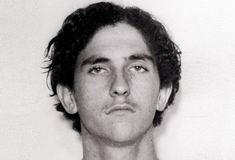
Steven Craig Hurd
Murderer Ervil LeBaron
Murderer · USA · 1972
Ervil Morrell LeBaron (1925 to August 16, 1981) was the leader of a polygamous…
35 victims
Ervil LeBaron
Murderer · USA · 1972
Ervil Morrell LeBaron (1925 to August 16, 1981) was the leader of a polygamous…
35 victims
 Marvin Gray
Murderer · USA · 1975
Marvin Gray was convicted killer who claimed responsibility for 23 slayings and…
23 victims
Marvin Gray
Murderer · USA · 1975
Marvin Gray was convicted killer who claimed responsibility for 23 slayings and…
23 victims
 Yahweh ben Yahweh
Murderer · USA · 1980
Yahweh ben Yahweh was born and legally named Hulon Mitchell Jr. (October 27, 19…
23 victims
Yahweh ben Yahweh
Murderer · USA · 1980
Yahweh ben Yahweh was born and legally named Hulon Mitchell Jr. (October 27, 19…
23 victims
 Charles Manson
Murderer · USA · 1969
Charles Milles Manson (born November 12, 1934) was an American criminal and mus…
9 victims
Charles Manson
Murderer · USA · 1969
Charles Milles Manson (born November 12, 1934) was an American criminal and mus…
9 victims
 Henry Wirz
Murderer · USA · 1864
Henry Wirz (also known as Heinrich Hartmann Wirz) (November 25, 1823 – November…
11 victims
Henry Wirz
Murderer · USA · 1864
Henry Wirz (also known as Heinrich Hartmann Wirz) (November 25, 1823 – November…
11 victims
 Emilio and Antonio Izquierdo
Mass murderers · Spain · 1990
Emilio Izquierdo and Antonio Izquierdo carried out a mass murder known as the P…
9 victims
Emilio and Antonio Izquierdo
Mass murderers · Spain · 1990
Emilio Izquierdo and Antonio Izquierdo carried out a mass murder known as the P…
9 victims
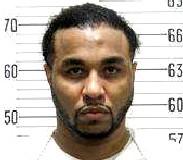 Tony Von Carruthers
Murderer · USA · 1994
February 24, 1994 — Marcellos “Cello” Anderson borrowed a white Jeep Cherokee f…
3 victims
Tony Von Carruthers
Murderer · USA · 1994
February 24, 1994 — Marcellos “Cello” Anderson borrowed a white Jeep Cherokee f…
3 victims
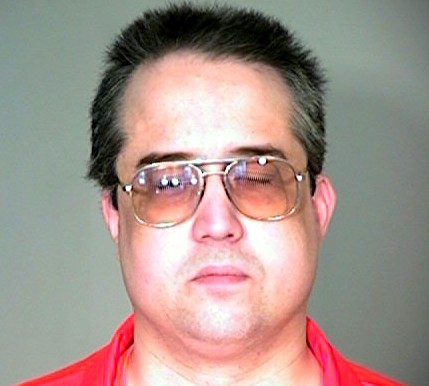 Ronald Schackart
Murderer · USA · 1984
Ronald Dwight Schackart and Charla Regan had known each other since high school…
1 victim
Ronald Schackart
Murderer · USA · 1984
Ronald Dwight Schackart and Charla Regan had known each other since high school…
1 victim
 Patrick Mahon
Murderer · United Kingdom · 1924
Patrick Herbert Mahon (also known as Pat Waller), born in West Derby, Liverpool…
1 victim
Patrick Mahon
Murderer · United Kingdom · 1924
Patrick Herbert Mahon (also known as Pat Waller), born in West Derby, Liverpool…
1 victim
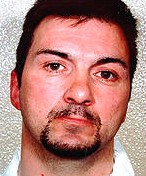 Barry George
Murderer? · United Kingdom · 1999
Barry George was also known as Barry Bulsara. He was born on 15 April 1960 in H…
1 victim
Barry George
Murderer? · United Kingdom · 1999
Barry George was also known as Barry Bulsara. He was born on 15 April 1960 in H…
1 victim
- Gender
- male
- Country
- USA
- Location
- Orange County, California, USA
- Date of birth
- 1950
- Age at first offence
- 20
- Characteristics
- cannibalism, mutilation, mentally ill
- Victim profile
- Jerry Wayne Carlin, 20 (gas station attendant) / Florence Nancy Brown, 31
- Method of murder
- Beating with a hatchet / St abbing with knife
- Date(s) of murder
- June 3-4, 1970
- Years active
- 1970
- Date of arrest
- —
- Status
-
Died in custody
Died in prison on May 28, 2005
Case record: Steven Craig Hurd
Legal outcome
Steven Craig Hurd was declared mentally unfit for trial and spent five years at Atascadero State Mental Hospital. He was tried in May 1975, convicted of two counts of first-degree murder, and sentenced to life in prison with parole possible after seven years. Hurd died in prison on May 28, 2005.
Background
Hurd organized a small Satanic cult in Orange County, recruiting three teenage boys and a 31-year-old woman as devoted followers. He was described as a good prisoner at the time of his parole hearing. By the age of 20, Hurd had organized the cult; he was born in 1950. He was diagnosed as legally insane and was confined to Atascadero State Hospital, where he continued to report the periodic visits of “Father Satan.” His teenage disciples were referred to the California juvenile system for “rehabilitation.”
The offence
Hurd and followers committed killings in 1970 in Orange County and Southern California. The crimes occurred on two consecutive nights in June 1970, including:
- the killing of a gas station attendant
- the killing of a teacher
Hurd’s trial evidence included that the group buried Florence Brown’s body in a shallow grave near El Cariso on Ortega Highway. Hurd told state psychiatrists that he returned to the gravesite several days later, dug up the body, ripped out Brown’s heart, and ate it. He said it tasted like chicken.
Murder of Jerry Wayne Carlin
The group confronted Jerry Wayne Carlin, 20, during his graveyard shift at a Santa Ana gas station on June 2, 1970. Hurd and follower Arthur “Moose” Hulse forced the newlywed into the station’s restroom, where they hacked him to death with a Boy Scout hatchet. Hulse later licked the blood off the hatchet, and Hurd claimed this.
Murder of Florence Nancy Brown
Florence Nancy Brown, a 31-year-old mother of five, was stopped at the intersection of Interstate 5 and Sand Canyon Boulevard when the killers piled into her station wagon on June 4, 1970. The killers abducted Brown to an orange grove in Irvine. According to the testimony of one of the accomplices, Brown begged for her life and asked if she was going to die; Hurd answered by stabbing her more than 20 times. Evidence presented during Hurd’s trial revealed that Brown’s body was buried in a shallow grave near El Cariso on that Ortega Highway.
The parole-hearing material described Brown’s injuries as including severing her right arm and removing her heart and lungs as sacrificial offerings. The pitiful remains were found by hikers on June 17, in a shallow grave near the village of El Cariso, a half-mile east of the Orange County line.
Investigation and arrest
The five Satan worshippers, including Hurd, were arrested on a tip about three weeks after the killings. Upon arrest, Hurd told authorities that he had planned to use Brown’s car to visit San Francisco and meet the presiding “Head Devil.”
A sheriff’s officer advised the press: “We have some kind of nut on our hands.”
Trial
Hurd was tried in Orange County in May 1975. He was convicted of two counts of first-degree murder and sentenced to life in prison, with parole possible after seven years.
William Gamble was Hurd’s lawyer during his trial in 1975.
Sentencing and parole
Parole was possible after seven years, but the Orange County District Attorney’s Office successfully opposed Hurd’s parole seven times starting in 1981. In an April 1, 2002 letter to the state Board of Prison Terms, Deputy District Attorney Doug Woodsmall objected to Hurd’s parole bid and described Hurd’s murders as: “carried out in an especially heinous, atrocious, cruel and callous manner. “
The letter continued: “Both he and his crimes are indelibly impressed in the public consciousness of Orange County citizens,” Woodsmall wrote. “In a matter of days, Hurd involved himself in two of the most brutal and vicious killings in the history of Orange County. ” “His total depravity clearly marks Hurd as a subject both unfit and unsuitable for parole now or in the future.”
Deputy District Attorney Ted Burnett appeared in person at Mule Creek prison in 2002 to object to Hurd’s application for parole. Burnett said: “The man’s a monster, and he should stay in prison forever,“
In an April 12, 2002 parole hearing at Mule Creek Prison in Ione, a two-member panel ruled that Hurd, described as a good prisoner, could try again for parole in three years. He could have been denied parole for up to five years. The panel rejected parole again, citing his “heinous and reprehensible” killings of two people in 1970.
Appeals
No appeal information was included in the provided material.
Outcome
He died at a local hospital outside Mule Creek State Prison in Amador County from a brain hemorrhage on May 28, 2005. Orange County prosecutors were not notified of Hurd’s death, and the California Department of Corrections did not issue a press release to the media.
Assistant District Attorney David Brent, head of the DA’s homicide unit, said he was unaware of Hurd’s death until this week. Brent said: “I’m not happy anyone dies, but I am glad he did not have a long life, based on what he did to his victims in 1970,“
Orange County Superior Court Judge Francisco Briseno, who prosecuted the Hurd case as a deputy district attorney in 1975, said he too was unaware that Hurd had died and declined further comment.
Aftermath and related persons
Hurd was 55 when he died. Jim Carlin, Jerry Wayne Carlin’s older brother, was told of Hurd’s death earlier in the week. Jim Carlin said he was relieved that his brother’s killer was never released from prison because he felt Hurd would still have been a danger to others. Carlin said: “I sincerely hope he sought mercy from God and would hate to think he maintained his attitude straight into hell.“ “People are not born evil but sometimes embrace it because they think it gives them power or notoriety. Hopefully he embraced the Truth before his death.“
Hurd’s lawyer William Gamble said he was unaware that his former client had died. Gamble said: “He was a very confused young man with a serious mental illness who was easily led astray by this doctrine of Satanism,”
Other details
The second parole-hearing material described Hurd as a barbiturate addict and a native of Southern California. From time to time, as cash ran short, the group lived like trolls in highway culverts, dropping pills and raiding garbage cans for food. They looked for larger game, a greater “kick,” and committed killings for human sacrifice.
The parole-hearing material said Hurd’s attorney rejected any connection to Anton LaVey’s Church of Satan, and that Anton LaVey was quick to echo that sentiment from his base in San Francisco, but it made no difference in the end.
The group confronted Carlin during his graveyard shift at a Santa Ana gas station on June 2, 1970. The day after Carlin was slaughtered, the group hijacked a station wagon driven by Brown when she exited the I-5 Freeway at Sand Canyon.
Hurd spent five years at Atascadero State Mental Hospital after his arrest when he was declared mentally unfit for trial. Three co-defendants were convicted of lesser crimes and were released within a few years. Arthur “Moose” Hulse was convicted of two counts of first-degree murder and remained in prison; he was described as now 57.
Hurd’s notoriety and attention in the 1970s eluded him in death, and no one knew he had died.
A series in 2009 listing the “50 Most Notorious Cases” in Orange County history included Hurd’s crime spree during the county’s 120th anniversary series.
The ritualistic killings on June 2 and 3, 1970 touched off a wave of fear throughout Orange County and Southern California, described as coming in the wake of the Manson family serial murders in Los Angeles County in 1969.
Timeline
- June 2, 1970 — Hurd and Arthur “Moose” Hulse confronted Jerry Wayne Carlin, 20, during his graveyard shift at a Santa Ana gas station; Carlin was hacked to death with a Boy Scout hatchet.
- June 3, 1970 — The ritualistic killings were described as continuing on this date.
- June 4, 1970 — Florence Nancy Brown, a 31-year-old mother of five, was abducted after killers piled into her station wagon at the intersection of Interstate 5 and Sand Canyon Boulevard.
- June 17, 1970 — Brown’s remains were found by hikers in a shallow grave near the village of El Cariso, a half-mile east of the Orange County line.
- May 1975 — Hurd was tried, convicted of two counts of first-degree murder, and sentenced to life in prison with parole possible after seven years.
- 1981 — The Orange County District Attorney’s Office started successfully opposing Hurd’s parole.
- April 1, 2002 — Deputy District Attorney Doug Woodsmall objected to Hurd’s parole bid in a letter to the state Board of Prison Terms.
- 2002 — Deputy District Attorney Ted Burnett appeared in person at Mule Creek prison to object to Hurd’s application for parole.
- April 12, 2002 — A two-member panel rejected Hurd’s parole and ruled he could try again for parole in three years.
- May 28, 2005 — Hurd died in prison from a brain hemorrhage at a local hospital outside Mule Creek State Prison in Amador County.
Spotted an error, or have more information about this case?