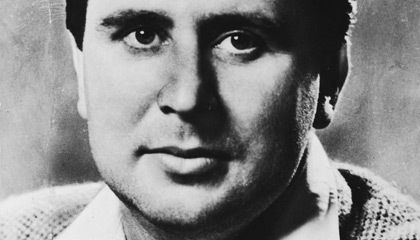
Brian Donald Hume
Murderer Ernesto Picchioni
Murderer · Italy · 1944
March 12, 1949 — He was sentenced to life in prison. · 2016 — The case record l…
16 victims
Ernesto Picchioni
Murderer · Italy · 1944
March 12, 1949 — He was sentenced to life in prison. · 2016 — The case record l…
16 victims
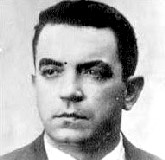 José María Jarabo
Murderer · Spain · 1958
José María Jarabo was a Spanish spree killer. · April 28, 1923 — José María Jar…
4 victims
José María Jarabo
Murderer · Spain · 1958
José María Jarabo was a Spanish spree killer. · April 28, 1923 — José María Jar…
4 victims
 George Sitts
Murderer · USA · 1945
George Sitts was executed by the State of South Dakota on April 8, 1947 for the…
3 victims
George Sitts
Murderer · USA · 1945
George Sitts was executed by the State of South Dakota on April 8, 1947 for the…
3 victims
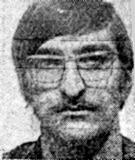 George Geschwendt
Mass murderer · USA · 1976
George Geschwendt — defendant · Joseph M. Ryan — Superintendent (warden) · Erne…
6 victims
George Geschwendt
Mass murderer · USA · 1976
George Geschwendt — defendant · Joseph M. Ryan — Superintendent (warden) · Erne…
6 victims
 Steven Hunter
Murderer · Australia · 1986
Steven Hunter repeatedly reoffended while on parole. Hunter was described as ha…
2 victims
Steven Hunter
Murderer · Australia · 1986
Steven Hunter repeatedly reoffended while on parole. Hunter was described as ha…
2 victims
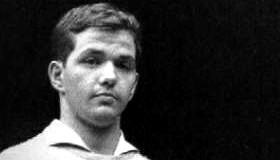 Jürgen Bartsch
Serial killer · Germany · 1962
Jürgen Bartsch was born out of wedlock in post-war Germany. He lost his mother…
4 victims
Jürgen Bartsch
Serial killer · Germany · 1962
Jürgen Bartsch was born out of wedlock in post-war Germany. He lost his mother…
4 victims
 Mario Cesar Frieiro
Murderer · Argentina · 1998
Mario Cesar Frieiro was an Argentine murderer. Frieiro had a discussion with hi…
1 victim
Mario Cesar Frieiro
Murderer · Argentina · 1998
Mario Cesar Frieiro was an Argentine murderer. Frieiro had a discussion with hi…
1 victim
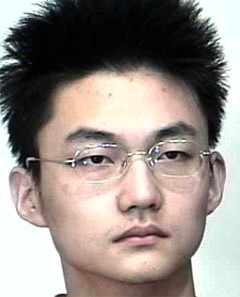 Min Chen
Murderer · Canada · 2003
Min Chen (born January 30, 1983) was a Chinese visa student from Shanghai, Chin…
1 victim
Min Chen
Murderer · Canada · 2003
Min Chen (born January 30, 1983) was a Chinese visa student from Shanghai, Chin…
1 victim
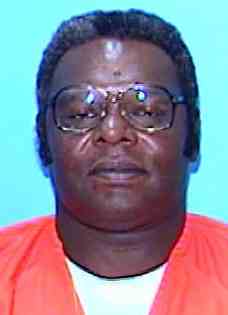 Johnny Robinson
Murderer · USA · 1985
Johnny L. Robinson was convicted of first-degree murder, kidnapping, armed robb…
1 victim
Johnny Robinson
Murderer · USA · 1985
Johnny L. Robinson was convicted of first-degree murder, kidnapping, armed robb…
1 victim
- Gender
- male
- Country
- United Kingdom/Switzerland
- Location
- United Kingdom/Switzerland
- Date of birth
- 1919
- Age at first offence
- 30
- Characteristics
- dismemberment, robbery
- Victim profile
- Stanley Setty, 42 (used car dealer) / Arthur Maag, 50 (taxi driver)
- Method of murder
- St abbing with a German SS dagger / Shooting
- Date(s) of murder
- October 4, 1949 / January 30, 1959
- Years active
- 1949–1959
- Date of arrest
- —
- Status
-
Life imprisonment
Sentenced to 12 years as “accessory” on January 20, 1950; released on February 1, 1958; sentenced to life in prison on September 30, 1959; in 1976, he was judged to be insane and was returned to Broadmoor Hospital in Berkshire, England.
Case record: Brian Donald Hume
Background
Brian Donald Hume partnered in illegal activities with Stanley Setty. Hume had been invalided out of the R.A.F. in 1941 after suffering from meningitis.
A quarrel broke out between Hume and Setty, ostensibly because Setty had kicked Hume’s dog.
The offence
Stanley Setty was born in Baghdad in Iraq, of Jewish parents. After the War, Setty became involved in various illegal activities, including acquiring and selling stolen cars and forging petrol coupons. Hume and Setty worked together.
Setty was last seen on October 4, 1949, on which date he was known to have £1,000 in £5 notes.
Hume killed Setty in Hume’s flat in Finchley Road, London, during a fight that developed after a quarrel. Hume later described stabbing Setty to death while they were fighting.
Hume dragged Setty’s body through the flat to the end kitchen and hid it in the coal cupboard. He then began cleaning up the apartment to remove bloodstains that had seeped into the carpet and into the floorboards. At one point he retrieved car keys from Setty’s jacket.
Hume then drove Setty’s car down Finchley Road past Swiss Cottage and eventually to Setty’s own lock-up at Cambridge Terrace Mews. Hume returned to his London flat around 10.45pm on October 4, 1949.
Hume decided to dispose of the body by dismembering it, parcelling body parts, and dropping them in the sea by plane.
On October 5, 1949, Hume dismembered the body in the early hours, first dyeing a stained carpet dark green using next-door dry-cleaners and touching up bare patches on the floor with varnish. Hume dismembered the legs first and packaged them into a parcel using carpet felt. He covered Setty’s staring eyes as he continued to cut up the body.
Hume placed the head in a box that contained baked beans and added pieces of brick and rubble to make the parcels heavy. Hume had difficulty with the torso, placed it back into the coal cupboard after an abortive attempt to put it in a cabin trunk, and then arranged for disposal later.
At 2.30pm, Hume left the flat with two packages, the legs under one arm and the box with the head in it, and traveled by hired car with his dog Tony towards Elstree Airfield. It was 3pm when he put the parcels into the plane and set off for Southend, despite his real destination being the English Channel. Ninety minutes later he could see the French coast and he threw out the dagger and tools, then dumped the parcels, which sank out of sight.
He returned to his London flat at 8.30pm on October 5, 1949. The torso continued to trouble him.
The following morning, Hume arranged for a decorator to come to the flat. The decorator helped him carry the torso, heavily packed with lead weights, out of the flat and into Hume’s car. Hume left the torso in the car for an hour while he went back to clean the coal cupboard.
At Elstree airport, a friendly engineer helped him carry the torso onto the plane. Hume again flew to the English Channel. During the attempt to eject the torso, the body part initially would not budge. Hume then tilted the plane to try to get the torso to slide and smash through the door, and the torso was eventually released from the aircraft. The weights and a blanket caught on a hook in the cabin, and Hume managed to break the weights free leaving them and the carpet felt to drop into the sea.
Hume saw the torso bobbing in the water and returned back to land with concern that it might turn up on the coastline.
A farm labourer named Stanley Tiffin discovered a parcel on the Essex marshes on October 21. On inspection, it contained a torso with no head or legs, but with arms, and with stab wounds in the chest. From fingerprints, the corpse was identified as Setty.
Investigation
After Setty’s disappearance, Setty’s sister and brother-in-law reported him missing. The papers printed stories, including “Dealer With 200 Fivers Vanishes,” suggesting Setty had been killed because of the £1,000 he had on him. Setty’s car was fingerprinted.
On October 8, 1949, the papers revealed that Scotland Yard issued the numbers of Setty’s £5 notes that he had received from the bank on the morning of Setty’s death. Some of this money had been deposited by Hume into his own bank account and used to pay taxi cabs while traveling from London to Elstree Air Field.
Police recovered a notebook belonging to Setty that detailed all of his business associates.
The torso was found on Friday, October 21, on the Essex mudflats. A taxi driver who had been given a £5 with published serial numbers came forward and explained that he had taken a customer from Southend Airport to Finchley Road. Police investigated airfields in the area and discovered that Hume had hired a plane and was an associate of Setty.
Chief Inspector Jamieson and Superintendent MacDougall interrogated Hume after an arrest at his flat, and detectives posted at both the front and back of the flat.
After forensics swept Hume’s Finchley Road flat, bloodstains were found under the floorboards.
Arrest
Police knocked on Hume’s door at 7.30am on October 27, 1949. Hume was interrogated at the Albany St Police Station.
Hume kept up a plea that he had nothing to do with the murder. He denied that he owned a car when questioned.
Hume concocted an elaborate story that he had been offered £150 by three smugglers known as Mac, Greeny, and The Boy, who asked him to drop parcels by plane into the sea.
After the police did not believe his story, Hume was charged with murder, but the jury were unable to reach a verdict at his first trial.
Trial
Hume’s trial took place on January 18, 1950, at the Old Bailey.
At his first trial, a hung jury resulted.
At his second trial, the judge instructed the jury to find Hume not guilty of murder.
Hume pleaded guilty to being an accessory after the fact. On January 20, 1950, the jury retired at noon after the judge’s last words and failed to agree.
Hume was sentenced to twelve years in prison as an accessory after the fact to murder.
During the trial, Hume maintained that the bloodstains had come about because parcels had been in his flat.
The defence found a witness who admitted he had worked in Paris with a gang of car smugglers. The witness’s descriptions of the men and some names correlated with Hume’s story. The jury considered whether such a gang existed and whether Hume had been an unwilling accomplice.
Sentencing
Hume was sentenced to 12 years as “accessory” on January 20, 1950.
Hume was released from Dartmoor Prison on February 1, 1958.
After later crimes in Switzerland, Hume was sentenced to life in prison on September 30, 1959, with hard labour.
Appeals
No appeals were described.
Outcome
The murder charge did not result in a conviction because the judge instructed the jury to find Hume not guilty of murder at the second trial.
Hume was convicted of being an accessory after the fact and was sentenced to 12 years. He served eight years.
After release, he confessed to killing Setty in a popular newspaper, describing himself as having murdered Setty and dismembered his body, with the body parts dropped into the English Channel from an aeroplane.
Aftermath
After being released, Hume sold his confessions to the Sunday Pictorial, which he said he confessed to killing Setty.
In later account(s), Hume admitted that he had murdered Setty with a Nazi S.S. dagger and described dropping the head and legs into the English Channel from an aeroplane. The following day, Hume arranged for a decorator to come to the flat and asked the man to help him carry the parcel containing the torso downstairs and into his car.
Hume misjudged the route of his flight and mistook watery marshes for the Channel during the second disposal attempt.
After his release, Hume committed bank robberies in England and in Switzerland.
In Zurich, on January 30, 1959, Hume shot and killed a taxi driver named Arthur Maag. Maag was described as a fifty-year-old taxi driver.
Hume was arrested and was sentenced to life with hard labour. In 1976, he was judged to be insane and was returned to Broadmoor Hospital in Berkshire, England.
Timeline
- October 4, 1949 — Hume killed Stanley Setty in Hume’s Finchley Road flat in London during a fight that developed from a quarrel.
- October 5, 1949 — Hume dismembered Setty’s body and disposed of body parts by dropping them into the English Channel from an aeroplane.
- October 8, 1949 — Scotland Yard issued the numbers of Setty’s £5 notes that he had received from the bank.
- October 21, 1949 — A farm labourer, Stanley Tiffin, discovered a torso on the Essex marshes; fingerprints identified it as Setty.
- October 27, 1949 — Police arrested Hume at his Finchley Road flat.
- January 18, 1950 — Trial at the Old Bailey.
- January 20, 1950 — Sentenced to 12 years as “accessory”; jury failed to agree after retiring at noon.
- February 1, 1958 — Hume was released from Dartmoor Prison.
- September 30, 1959 — Hume was sentenced to life in prison.
- 1976 — Hume was judged insane and was returned to Broadmoor Hospital in Berkshire, England.
Other details
Hume was described as having a grievance against society and as being paranoid about recognition after leaving Dartmoor.
Hume changed his name to Donald Brown when he met up with a reporter for the paper and confessed his life-story. He later took another alias, John Stephen Bird.
Hume was also described as having had an electrician’s business on Finchley Road in Golders Green, north London, and as being married with a child on the way, with Cynthia giving birth to a baby daughter.
Stanley Setty’s car had been found abandoned. The crime attracted press attention and police were contacted by the United Services Flying Club at Elstree, which said that a club member called Brian Douglas Hume had hired a plane and been seen to load a large parcel.
When Hume arrived at Southend, there was no parcel in the plane and the window of the cockpit was broken. Hume paid for his taxi back to London with a £5 note taken from a huge wad.
Hume’s apartment, above a greengrocers’ shop in Finchley Road just opposite Golders Green Station, bore traces of blood under the floorboards.
In later accounts, Hume was said to have dumped Setty’s dismembered body from a hired private aircraft over the Essex marshes.
People
- Brian Donald Hume — defendant.
- Stanley Setty / Setty — victim.
- Stanley Tiffin — farm labourer who discovered the parcel containing the torso.
- Cynthia — Hume’s wife.
- Tony — Hume’s dog.
- Chief Inspector Jamieson — interrogated Hume.
- Superintendent MacDougall — interrogated Hume.
- Detectives — searched Hume’s Finchley Road flat and found bloodstains under the floorboards.
- Arthur Maag — taxi driver who was shot and killed in Zurich.
- Trudi Sommer (Trudi) — beauty-shop owner with whom Hume shared an apartment in Zurich.
- Fred Redman — Pic Assistant Editor who suspected a bigger story.
- Victor Sims — Pic Reporter.
- Dr Hans Gut — president of the court in Zurich.
- Mr Justice Sellers — judge at Hume’s trial.

Spotted an error, or have more information about this case?