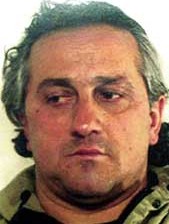
Maurizio Minghella
Serial killer Marco Bergamo
Serial killer · Italy · 1985
Marco Bergamo (detto il “mostro di Bolzano”) was a saldatore and carpentiere wh…
5 victims
Marco Bergamo
Serial killer · Italy · 1985
Marco Bergamo (detto il “mostro di Bolzano”) was a saldatore and carpentiere wh…
5 victims
 Andrea Matteucci
Serial killer · Italy · 1980
Andrea Matteucci (also known as “Mostro di Aosta”) was an Italian serial killer…
4 victims
Andrea Matteucci
Serial killer · Italy · 1980
Andrea Matteucci (also known as “Mostro di Aosta”) was an Italian serial killer…
4 victims
 Antonio Mantovani
Serial killer · Italy · 1983
Antonio Mantovani was born in Trevenzuolo (Verona) in 1957 and was known as the…
4 victims
Antonio Mantovani
Serial killer · Italy · 1983
Antonio Mantovani was born in Trevenzuolo (Verona) in 1957 and was known as the…
4 victims
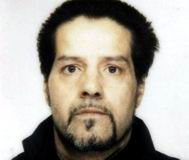 Bartolomeo Gagliano
Serial killer · Italy · 1981
Bartolomeo Gagliano was mentally ill and was serving time for multiple murders…
3 victims
Bartolomeo Gagliano
Serial killer · Italy · 1981
Bartolomeo Gagliano was mentally ill and was serving time for multiple murders…
3 victims
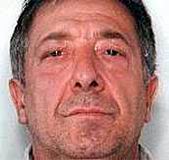 Donato Bilancia
Serial killer · Italy · 1997
Donato Bilancia was sentenced to 13 terms of life imprisonment, with no possibi…
17 victims
Donato Bilancia
Serial killer · Italy · 1997
Donato Bilancia was sentenced to 13 terms of life imprisonment, with no possibi…
17 victims
 Thandi Maqubela
Murderer · South Africa · 2009
Thandi Maqubela was “humiliated and outraged” by her husband’s infidelities. Th…
1 victim
Thandi Maqubela
Murderer · South Africa · 2009
Thandi Maqubela was “humiliated and outraged” by her husband’s infidelities. Th…
1 victim
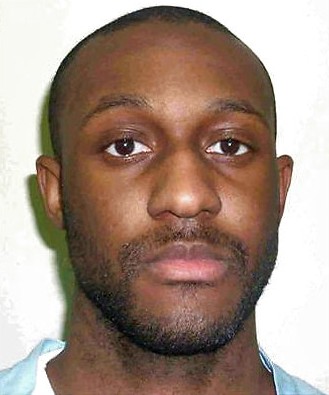 Kent Jermaine Jackson
Murderer · USA · 2000
Kent Jermaine Jackson was a male Black defendant. He was a Newport News inmate…
1 victim
Kent Jermaine Jackson
Murderer · USA · 2000
Kent Jermaine Jackson was a male Black defendant. He was a Newport News inmate…
1 victim
 Timothy Alan Dunlap
Murderer · USA · 1991
Timothy Alan Dunlap was 35 and lived in Sellersburg, Indiana. He pleaded guilty…
2 victims
Timothy Alan Dunlap
Murderer · USA · 1991
Timothy Alan Dunlap was 35 and lived in Sellersburg, Indiana. He pleaded guilty…
2 victims
- Gender
- male
- Country
- Italy
- Location
- Genova/Torino, Italy
- Date of birth
- 1954
- Age at first offence
- 24
- Characteristics
- necrophilia
- Victim profile
- Anna Pagano , 20 / Giuseppina Jerardi , 23 / Maria Caten a Alba , 14 / Maria Strambelli , 21 / Wanda Scerra , 19 / Loredana Maccario, 53 / Fatima H'Didou, 27 / Cosima Guido, 63 / Tina Motoc, 27 (prostitutes)
- Method of murder
- Strangulation / Beating with a rock
- Date(s) of murder
- 1978 / 1996 - 2001
- Years active
- 1978–2001
- Date of arrest
- March 2001
- Status
-
Life imprisonment
Sentenced to life in prison in 1982; released in 1995; sentenced to life in prison on June 8, 2005
Case record: Maurizio Minghella
Background
Maurizio Minghella was born in Genova on 16 luglio 1958. He lived in the Bolzaneto area in the Val Polcevera. When he was six years old, his mother separated from her husband and raised five children, including Maurizio, alone. His mother later entered a relationship with a new partner who beat the whole family, and she developed a deep hatred for that partner, describing him at the first interrogation as: « Era un alcolizzato e ci menava di brutto. Lo detestavo parecchio, sovente ho sognato di ucciderlo, stringendogli una corda al collo da dietro le spalle ».
He attended school without managing to pass the second grade, and at age 12 he was still attending the first grade. At school he seized classmates by the neck and blocked their nose or mouth.
After leaving school, he did small jobs including working as a tiler. He continued to steal scooters, motorcycles, Fiat 500 and Fiat 850 to drive around in Val Polcevera and nearby areas. He was described as a “donnaiolo” and was seen with different girls. He was nicknamed the “Travoltino della val Polcevera”.
He became interested in boxing but was expelled after beating another boy.
An episode that later had repercussions on his psyche was the death of his brother, who crashed on a motorcycle. After this episode, Minghella developed a morbid attraction to the dead, especially young people. He was known to visit morgues to observe corpses and the suffering of relatives.
He was classified as unfit for military service due to mental disorders. In 1977, he married Rosa Manfredi, who was 15 years old and depended on psychotropic drugs. The marriage was brief: Minghella frequented prostitutes, and Rosa Manfredi died after an overdose of drugs following a miscarriage. The miscarriage traumatized Minghella further.
In 1978, he was visited in the psychiatric clinic of the University of Genova, where his IQ test resulted in 70.
The offence
Minghella committed a series of killings of prostitutes.
Between 1996 and 2001 in Torino, he was convicted for a sequence of ten murders of prostitutes; the account also stated that he had killed five women in Genova in 1978.
The Genova killings in 1978 On 9 aprile 1978, Anna Pagano, 20 anni, a prostitute, was found dead in Trensasco, in the north-western inland of Genova. Her body had a fractured head, and her legs and back were covered with misspelled writings alluding to the “Brigate Rosse”. The assassin had tortured the body by inserting a ballpoint pen into the victim’s anal cavity. The account stated that Minghella tried to mislead the investigation by writing “Brigate Rosse” on the body with an orthography error, but the police noticed the misdirection.
On 8 luglio 1978, Giuseppina Jerardi was killed in Genova using the same modes and her body was hidden in a stolen and abandoned car.
On 18 luglio 1978, Maria Catena “Tina” Alba, 14 anni, was killed; her body was found naked the next day. The body had been tied with a kind of garrote to a tree.
On 22 agosto, Maria Strambelli, 21 anni, a shop assistant of Apulian origin, was killed; her body was found three days after her disappearance in the periphery of Genova.
The last Genova victim was Wanda Scerra, 19 anni, who disappeared on 28 novembre. Her body was found in a ditch on the side of the railway Genova-Milano near Genova. The account stated that the victim had been raped and strangled.
The Torino killings (1996–2001) described in the account In March 1997, Loredana Maccario, 53 anni, was killed. She was murdered in her home in via Principe Tommaso in the Turin district of San Salvario.
In May, Minghella strangled Fatima H’Didou, a 27-year-old Moroccan prostitute, with the laces of a tracksuit after beating and raping her. The killing was placed at Caselette.
On 30 gennaio 1999, he strangled Cosima Guido, 67 anni, known as “Gina”, in the apartment where she received clients in piazza IV marzo in the district of San Salvario. Two pieces of kitchen paper towels with Minghella’s biological traces were found on the stairs of the pied-à-terre.
Florentina “Tina” Motoc was killed in the night between 16 and 17 febbraio 2001. She had been brutally beaten on the face and head. Minghella then tried to get rid of her clothes by lighting a small fire. This was described as the last killing, and the account stated that DNA traces, complete or partial prints found at the crime scenes, similar methods, and the time window (all after 17) led the police to arrest him.
Arrest and evidence described in the account (Torino case) Minghella was arrested on 7 marzo 2001. At his home, investigators found the victims’ mobile phones with the serial number deleted. His phone was also traced to the area where Motoc was found the evening of the crime. While in custody at the Vallette prison, in spring 2001 he attempted an escape by fleeing from the laundry and managed only to reach the first boundary wall.
On 2 gennaio 2003 he presented himself in hospital for pains in the chest and arm. In the afternoon he escaped, took a train at the station Torino Porta Nuova, and managed to reach Biella. He was arrested at 22 the same day.
He was suspected of ten murders of prostitutes but was convicted for only four. On 4 aprile 2003, the Corte d’Assise di Torino sentenced him to life imprisonment for the murder of Motoc and to 30 years in prison for the murders of Cosima Guido and Fatima H’Didou. The account stated he was in isolation in the prison of Poggioreale in Naples.
Investigation
For the Genova killings A handwriting expert examination was requested, comparing Minghella’s handwriting with the attempted misdirection found on the body of Anna Pagano. Both the writing and the pen used to sodomize the victim were considered attributable to Minghella.
For the murder of Tina Alba, a pair of Minghella’s glasses was found at the crime scene.
During interrogations in the night between 5 and 6 dicembre, Minghella confessed the killings of Maria Strambelli and Wanda Scerra but denied responsibility for the other murders.
The account stated that in a supplementary investigation, Minghella’s name was connected to those of Anna Pagano and Maria Catena Alba. For Anna Pagano, the account said that the evidence relied on a handwriting expertise that attributed the “Brigate Rosse” writing to Minghella and that the pen found on the Pagano body was also considered to belong to him.
For Maria Catena Alba, the account said the prosecution’s proof included that a pair of glasses owned by the girl was found in Minghella’s apartment.
The accused later retreated from his confession, accusing police of mistreatment.
For the Torino killings (1996–2001) described in the account The account stated that the police relied on DNA traces, prints, similar methods, and timing. It also described that in at least some cases organic material from the killer was found on the bodies and the prosecution ordered comparing DNA from the materials to Minghella’s DNA. An advance report indicated compatibilities without demonstrating anything yet; decisive results were expected.
The account also stated that a preservative with semen liquid led to a custody measure for the murder of Fatima H’Didou, and that in the case of Tina Motoc the police said they used the victim’s cell phone used by Minghella and his family from 9 febbraio onward, as well as shoelaces showing the same soil from the place where the body was found. It also stated that another cell phone of Minghella showed that he was in the area where the body was found on 9 febbraio.
It described that Minghella exited prison at 17 to work as a carpenter and had to return at 22, with variations for holidays.
Arrest
For the 1978 Genova case Minghella was arrested for the killings in 1978 and confessed in the night between 5 and 6 dicembre to killing Strambelli and Scerra, denying other murders.
For the Torino case The account described an attempted escape from the laundry during spring 2001. He escaped again after being admitted to the prison hospital on the morning of 2 gennaio 2003 and was arrested at 22 that same day after reaching Biella.
Trial
Genova trial and incarceration On 3 aprile 1981, Minghella was condemned by the Corte d’Assise di Genova to life imprisonment (ergastolo) for the five murders to be served at Porto Azzurro maximum-security prison.
The account stated that in prison he always proclaimed his innocence. It also stated that in the 1980s don Andrea Gallo requested review of the process.
Torino trial On 4 aprile 2003, the Corte d’Assise di Torino sentenced Minghella to life imprisonment for the murder of the prostitute Tina Motoc and to 30 years of prison for the murders of Cosima Guido and Fatima H’Didou.
The account stated that he was accused of ten murders of prostitutes but convicted for four.
Sentencing
Minghella was sentenced to life imprisonment for the five murders in Genova with a sentence dated 3 aprile 1981 and a “definitive” life sentence stated as being in 1982.
The account stated that he obtained semiliberty in 1995, at age 37.
For the Torino case, on 4 aprile 2003 he was sentenced to life imprisonment for the murder of Tina Motoc and to 30 years for the murders of Cosima Guido and Fatima H’Didou.
The account further stated that after procedural issues, the Court of Appeal in Torino on 30 settembre (same year as the April 2003 conviction) reduced the penalty from two life sentences to one.
On 8 giugno 2005, the first criminal division of the Cassazione, presided by judge Mario Sossi, confirmed the life sentence.
Appeals
The account stated that in the 1980s don Andrea Gallo asked for a revision of the Genova process. It also stated that in 1995 he obtained semiliberty and was able to leave for daytime hours.
It stated that he attempted the procedural revision pathway twice, in 1982 and again 17 years later, unsuccessfully.
It stated that on 30 settembre the Court of Appeal of Torino confirmed the convictions from the first instance but, due to a procedural issue, reduced the penalty from two life sentences to one.
On 8 giugno 2005, the Cassazione confirmed the life sentence.
Outcome
Minghella was sentenced to life imprisonment in 1982. He was released in 1995. He was sentenced to life imprisonment again on 8 giugno 2005.
The account stated that at the time of incarceration described, he was held in isolation in the prison of Poggioreale in Naples.
Other details
Semiliberty and work
In 1995, the account stated that he obtained semiliberty and was transferred to the prison of Vallette in Torino. He entered a recovery community associated with don Ciotti, working as a carpenter in one of the cooperatives of the Gruppo Abele from 17 to 22.
Interviews, psychiatric assessments, and quoted statements
The account included psychiatric descriptions by experts, including: «Soggetto cluster-b, psico-nevrosi isterica». It explained this as: «Disturbo istrionico di personalità, caratterizzato da emotività eccessiva e caricaturale e dalla ricerca di attenzione». It also included a description of dissociative disturbances, stating: «Stanno a indicare non la dissociazione psichica della schizofrenia ma una condizione in cui una funzione psichica, come la memoria, è separata dalle altre funzioni mentre di solito è integrata. Comprende l’ammesia associativa (dimentica contenuti psichici passati con significato emotivo e traumatico) e l’ammesia isterica, la fuga dissociativa».
The account included a statement attributed to Minghella regarding his motivation during psychiatric explanations: «Avevo un sogno, afferrarlo da dietro le spalle, strangolarlo con un laccio, per impedirgli di picchiare mamma».
It included a statement attributed to Minghella regarding an emergency during the pregnancy of Rosa Manfredi: «Un giorno le venne una terribile emorragia, usciva il sangue, tanto, un fiume. Mi inginocchiai per fermarlo con le mani ma non ci riuscivo».
A quote attributed to Minghella regarding his memory during sexual relations was also included: «Durante i rapporti sessuali, a volte, mi viene un terribile mal di testa e non ricordo nulla».
The account included a quote that Minghella wrote on Anna Pagano’s back: «Brigate Rosa».
Investigations and statements on DNA/technology
The account described the use of the AFIS database for fingerprints and described that earlier fingerprints were considered unusable due to the loss of papillary lines, “guanto epidermico,” but that digital photography using oblique light revealed distinguishing features. It described re-reading from 1997 using new techniques.
Mentions of other cases and numbers
The account stated that a police “cold case” unit reopened seven older cases in the Turin area and listed multiple victims with names and ages, including Floreta Skupe (23), Nadia Shehu (22), Carolina Gallone (66), Loredana Maccario (53), Heriona Sulejmani (16), Atli «Elisa» Isaku (22), and Ebe Romano (35).
It also stated that the prosecutor in 2004 had been required to request archiving for insufficient evidence for cases including Nadia Shehu. It described that genetic traces from the scene were too weak to compare and that even coincident fingerprints in some points were partial and therefore unusable.
The account stated that police considered updating investigation based on new investigative techniques that could potentially increase the number of victims attributed to Minghella, stating a figure of “sedici” as a possibility if responsibilities were proven, and it described “sette fascicoli” reopened.
Confession, retraction, and allegations against police
The account stated that after confession for Strambelli and Scerra, Minghella denied responsibility for the other murders. It stated that he later retreated from his confession and accused the police of mistreatments.
It also described an earlier statement at interrogation and another quote attributed to him during psychiatric explanation, but it did not provide new case outcomes beyond the listed convictions and sentences.

Spotted an error, or have more information about this case?