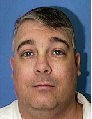
Robert Lloyd Henry
Murderer Brian Kevin Rosenfeld
Murderer · USA · 1985
Brian Kevin Rosenfeld Brian Kevin Rosenfeld was sentenced to three concurrent l…
23 victims
Brian Kevin Rosenfeld
Murderer · USA · 1985
Brian Kevin Rosenfeld Brian Kevin Rosenfeld was sentenced to three concurrent l…
23 victims
 Russell Ellwood
Murderer · USA · 1991
Russell Ellwood was a former taxi driver. Authorities suspected him of killing…
20 victims
Russell Ellwood
Murderer · USA · 1991
Russell Ellwood was a former taxi driver. Authorities suspected him of killing…
20 victims
 Robert Martines Perez
Murderer · USA · 1994
Name: Robert Martines Perez · Other name used in proceedings: Robert Martinez P…
15 victims
Robert Martines Perez
Murderer · USA · 1994
Name: Robert Martines Perez · Other name used in proceedings: Robert Martinez P…
15 victims
 Billy Frank Vickers
Murderer · USA · 1993
Billy Frank Vickers Vickers was executed by lethal injection in Texas on Januar…
14 victims
Billy Frank Vickers
Murderer · USA · 1993
Billy Frank Vickers Vickers was executed by lethal injection in Texas on Januar…
14 victims
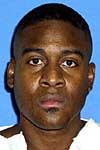 Edward Green III
Murderer · USA · 1992
Edward Green III was executed by lethal injection in Texas on October 5, 2004.…
2 victims
Edward Green III
Murderer · USA · 1992
Edward Green III was executed by lethal injection in Texas on October 5, 2004.…
2 victims
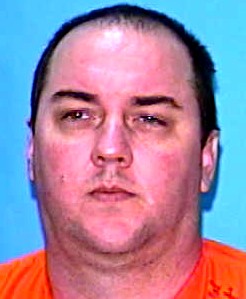 John Steven Huggins
Murderer · USA · 1997
John Steven Huggins was sentenced to death on February 26, 1999 and was resente…
1 victim
John Steven Huggins
Murderer · USA · 1997
John Steven Huggins was sentenced to death on February 26, 1999 and was resente…
1 victim
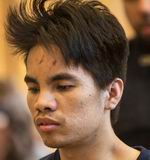 Mingdong Chen
Mass murderer · USA · 2013
Mingdong Chen was charged with five counts of murder for the deaths of four chi…
5 victims
Mingdong Chen
Mass murderer · USA · 2013
Mingdong Chen was charged with five counts of murder for the deaths of four chi…
5 victims
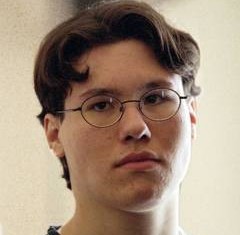 Seth Privacky
Mass murderer · USA · 1998
Seth Privacky (June 2, 1980 - July 15, 2010) was sentenced to life in prison wi…
5 victims
Seth Privacky
Mass murderer · USA · 1998
Seth Privacky (June 2, 1980 - July 15, 2010) was sentenced to life in prison wi…
5 victims
- Gender
- male
- Country
- USA
- Location
- San Patricio County, Texas, USA
- Date of birth
- September 26, 1962
- Age at first offence
- 31
- Characteristics
- —
- Victim profile
- Carol Lea Arnold, age 57, and her mother Hazel Rumohr, age 83
- Method of murder
- Beating / St abbing with knife
- Date(s) of murder
- September 5, 1993
- Years active
- 1993
- Date of arrest
- November 1993 ( surrenders )
- Status
-
Executed
Executed by lethal injection on November 20, 2003 in Texas
Case record: Robert Lloyd Henry
Background
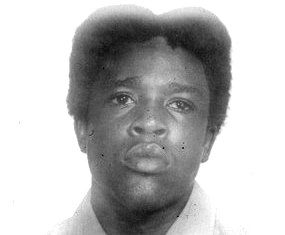
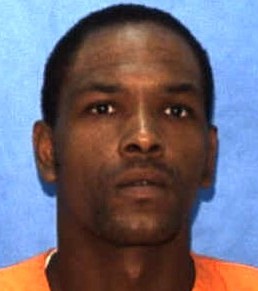
Robert Lloyd Henry was executed in Texas on November 20, 2003.
Henry was described as a Potter County native. He was 41 at the time of execution and 30 at the time of the murders. He had no previous criminal history at the time of the offense.
At execution, Henry nodded toward friends and relatives, then mouthed, "Bye-bye. I love you. Here I go." He then blew a kiss and immediately snorted and gasped as the drugs took effect. He was pronounced dead at 6:19 p.m.
A San Patricio County jury found Henry guilty of murdering Hazel Rumohr and her daughter Carol Lea Arnold. Henry was sentenced to death and remained convicted after appellate and post-conviction proceedings.
The offence
Between midnight and 9:00 a.m. on September 5, 1993, Henry entered the home of acquaintances Carol Lea Arnold, age 57, and her mother Hazel Rumohr, age 83. There were later no signs of forced entry.
While inside the home, Henry viciously beat and stabbed both Arnold and Rumohr to death.
Rumohr suffered multiple stab wounds. In addition to the defense wounds on her hands and arms, Rumohr suffered stab wounds in the neck, back, and chest. The cause of death was a slashing stab wound to the chest that began near her shoulder, continued through her chest cavity, and punctured her heart.
Arnold was stabbed and beat severely about the head and neck. The medical examiner described her face as "entirely bruised" and it was unrecognizable to her neighbor of two and one-half years, who identified Arnold by her jewelry and clothing. A rope or cord was attached to Arnold's leg, indicating that Henry intended some sort of bondage. Arnold’s cause of death was blunt trauma to the head and brain.
The motive behind the murders was never clear. Prosecutors alluded to a possible connection to a bondage fetish, noting the rope that was found tied to Arnold's leg and testimony about the video Henry and a co-worker watched.
Investigation
Two months after the murders, Henry walked into the Corpus Christi Police Department to turn himself in to an officer he knew and trusted, E.R. Frobish.
Henry told Frobish, "I killed two people in Portland, and I want to turn myself in to you."
Henry made other confessions, admitting he used a knife and had worn work boots with knobby soles. The soles of Henry’s work boots matched bloody foot prints at the crime scene.
Henry’s oral confessions were substantiated by DNA evidence:
- Rumohr's blood was found in Henry's car.
- Henry's blood was found on the victims' washing machine.
The chances of the latter match were stated as 1 in 10,000.
A neighbor identified Arnold by her jewelry and clothing after the attack, and a rope or cord was attached to Arnold's leg.
Trial
Henry and Arnold's son had been good friends during their teenage years, and Henry had regularly visited Arnold's home. Henry maintained contact with the victims through Christmas cards.
At trial, Henry pleaded innocent despite his confession.
Paul Johnson, a co-worker of Henry, testified that the day before Henry went to police about the case, Henry and Johnson watched a video together, and Henry told Johnson, in tears, that he had "made his own bed and would have to lie in it."
There was testimony and expert evidence presented at trial relating to Henry’s mental health and his confessions. A doctor who testified for the defense described Henry’s obsessive-compulsive anxiety disorder and said Henry panicked at the police station and told police whatever he believed would end the questioning quickly. The doctor also said that, based on psychological testing, Henry was probably not capable of committing the murders. A psychologist testified that Henry might be capable of murder. A psychiatrist expressed doubts that Henry could not remember committing the murders.
Defense counsel presented expert testimony of Dr. George Kramer to explain why Henry, who claimed to be innocent, had confessed. Dr. Kramer opined that Henry's obsessive-compulsive anxiety disorder, combined with his high intelligence, led him to fantasize that he was responsible for the murders and that once police began to interrogate him, a panic attack caused him to say whatever he believed would end the questioning quickly. Dr. Kramer also testified that Henry’s performance on certain psychological tests did not suggest that Henry was capable of committing the murders.
Dr. Kramer’s opinion was based on his own examination and testing of Henry and his review of evaluations and tests performed by others, including:
- a letter written to defense counsel by Dr. Joel Kutnick, a psychiatrist retained to evaluate Henry’s competency to stand trial, in which Dr. Kutnick expressed doubts about Henry’s claim that he could not remember the events surrounding the murders and suspected that Henry was malingering, which Dr. Kramer rejected;
- results of tests performed by Jim Williams, a contractor with a master's degree in psychology, whose evaluation concluded that Henry might have been capable of committing the murders; Dr. Kramer omitted any reference to this conclusion.
The materials prepared by Dr. Kutnick and Williams were used to impeach Dr. Kramer and were introduced into evidence without objection as bases for Dr. Kramer's expert opinion, and they were also discussed by the State's expert at sentencing.
Grant Jones, one of Henry’s defense lawyers, denied any conspiracy, and said he and co-counsel provided the best defense possible.
A San Patricio County jury convicted Henry on November 14, 1994, and sentenced him to death.
A doctor described Arnold’s facial injuries as "entirely bruised," and a neighbor identified Arnold by her jewelry and clothing.
Sentencing
Henry was sentenced to death on November 14, 1994.
Appeals
State and federal habeas procedural history
- July 15, 1994 — Henry was indicted for the capital murders of Hazel Rumohr and Carol Arnold.
- November 14, 1994 — Henry convicted and sentenced to death.
- October 2, 1996 — The conviction was affirmed by the Texas Court of Criminal Appeals.
- November 6, 1996 — Henry's motion for rehearing is denied.
- November 8, 2000 — The Texas Court of Criminal Appeals denied Henry's application for state habeas corpus relief.
- July 2, 2002 — The U.S. District Court for the Southern District of Texas denied Henry's petition for writ of habeas corpus.
- April 8, 2003 — The Fifth Circuit Court of Appeals denied Henry's request for a Certificate of Appealability.
- October 14, 2003 — The United States Supreme Court denied certiorari review.
- September 23, 2003 — Henry's execution was scheduled for November 20, 2003.
In the Fifth Circuit proceedings, Robert Lloyd Henry sought a certificate of appealability to challenge the district court's denial of his 28 U.S.C. § 2254 petition for a writ of habeas corpus. Henry contended that his trial counsel rendered ineffective assistance by presenting the expert testimony of Dr. George Kramer without adequately investigating the basis for that testimony. The court addressed exhaustion of state remedies and procedural bars, and denied the request for a certificate of appealability.
Statements and quotations from legal proceedings and related persons
San Patricio County District Attorney Patrick Flanigan, who prosecuted the case, denied any elicit scheme to convict Henry, and said: "Some death row inmates are concerned with their own peace, getting right with their maker and making comments of remorse," "Others (like Henry) take the position that they were wrongly convicted."
Henry also made statements in a death-row context denying involvement in the murders and asserting that evidence was contrived. He said: "I kind of got suckered through the whole system," "I'm getting a bum rap. You can't avoid it... I'm stuck."
Henry said he was "stuck" and also said in relation to the appeal process: "I've maintained through the whole appeals process that all I need is another shot," "If I could have a second trial, I could have torn the case up."
Henry also said: "I don't know what I could say that'll help them," and about words for the family.
At execution, when asked by the warden if he had a final statement, Henry replied, "No sir."
Outcome
Henry was executed by lethal injection in Texas on November 20, 2003.
According to execution accounts, the lethal injection began at 6:11 p.m., and Henry was pronounced dead eight minutes later at 6:19 p.m.
Henry did not make a last statement or request a final meal.
Aftermath
Relatives of the victims continued to seek answers. Linda Callais, Arnold's daughter, said, "We've always had the question, 'Why?'" and she said, "And if he is still proclaiming his innocence, there will still be no answer to the question."
In relation to feelings about execution timing, Kristy Petersen said: "I go in and out on if I want to see him executed," "Today I want him to be executed because I am sick of it messing with my life." "I have kids, and they don't understand why mommy is upset." "And I can't tell them why mommy is upset."
On days when Petersen opposed the execution, the voice in her head told her: "Whether it was him murdering my grandmother, or the state murdering him, murder is murder."
Other details
- Henry was described as a family acquaintance and as a friend of Arnold's son during their teenage years.
- Henry maintained contact with Hazel Rumohr and Carol Arnold through Christmas cards.
- The crime was described as occurring at the victims' home in Portland, Texas, at 1820 Portland Drive.
- It was noted that the medical examiner described Arnold's face as "entirely bruised."
- A rope or cord was attached to Arnold's leg, indicating possible intent of bondage.
- Henry admitted to police that he killed the women after smoking marijuana.
- The defense included testimony that Henry panicked during interrogation and that psychological testing suggested he was probably not capable of committing the murders.
- Competing expert testimony suggested Henry might have been capable, and other expert testimony expressed doubts about Henry’s inability to remember the murders.
- A former co-worker testified Henry and the co-worker watched a sadistic and masochistic video the day before Henry went to police.
Spotted an error, or have more information about this case?