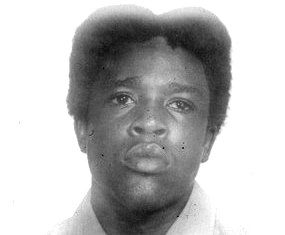
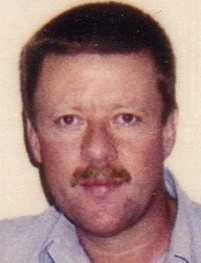
James Dupree Henry
Murderer Ervil LeBaron
Murderer · USA · 1972
Ervil Morrell LeBaron (1925 to August 16, 1981) was the leader of a polygamous…
35 victims
Ervil LeBaron
Murderer · USA · 1972
Ervil Morrell LeBaron (1925 to August 16, 1981) was the leader of a polygamous…
35 victims
 Marvin Gray
Murderer · USA · 1975
Marvin Gray was convicted killer who claimed responsibility for 23 slayings and…
23 victims
Marvin Gray
Murderer · USA · 1975
Marvin Gray was convicted killer who claimed responsibility for 23 slayings and…
23 victims
 Yahweh ben Yahweh
Murderer · USA · 1980
Yahweh ben Yahweh was born and legally named Hulon Mitchell Jr. (October 27, 19…
23 victims
Yahweh ben Yahweh
Murderer · USA · 1980
Yahweh ben Yahweh was born and legally named Hulon Mitchell Jr. (October 27, 19…
23 victims
 Charles Manson
Murderer · USA · 1969
Charles Milles Manson (born November 12, 1934) was an American criminal and mus…
9 victims
Charles Manson
Murderer · USA · 1969
Charles Milles Manson (born November 12, 1934) was an American criminal and mus…
9 victims
 Michael Eugene Sharp
Murderer · USA · 1982
Michael Eugene Sharp (#740), a Texas death row inmate. Brenda Kay Broadway (32)…
2 victims
Michael Eugene Sharp
Murderer · USA · 1982
Michael Eugene Sharp (#740), a Texas death row inmate. Brenda Kay Broadway (32)…
2 victims
 Norman Parker
Murderer · USA · 1966
Name: Norman Parker · Also known as: Nathen Parker; Shawn Vincent · Date of bir…
3 victims
Norman Parker
Murderer · USA · 1966
Name: Norman Parker · Also known as: Nathen Parker; Shawn Vincent · Date of bir…
3 victims
 John Dewberry
Homicide · USA · 1994
Defendant: John Curtis Dewberry Victim: Elmer Rode Jurisdiction/Court: Texas Co…
1 victim
John Dewberry
Homicide · USA · 1994
Defendant: John Curtis Dewberry Victim: Elmer Rode Jurisdiction/Court: Texas Co…
1 victim
 George Putt
Spree killer · USA · 1969
George Putt was born in New Orleans, Louisiana in the mid-1940s. His parents we…
5 victims
George Putt
Spree killer · USA · 1969
George Putt was born in New Orleans, Louisiana in the mid-1940s. His parents we…
5 victims
 Peter Miniel
Murderer · USA · 1986
Peter Miniel was executed by lethal injection in Texas on October 6, 2004. On M…
1 victim
Peter Miniel
Murderer · USA · 1986
Peter Miniel was executed by lethal injection in Texas on October 6, 2004. On M…
1 victim
 Susanna Cox
Murderer · USA · 1809
Susanna Cox (1785–1809) was a young domestic servant in Berks County, Pennsylva…
1 victim
Susanna Cox
Murderer · USA · 1809
Susanna Cox (1785–1809) was a young domestic servant in Berks County, Pennsylva…
1 victim
- Gender
- male
- Country
- USA
- Location
- Orange County, Florida, USA
- Date of birth
- 1950
- Age at first offence
- 24
- Characteristics
- robbery, convicted rapist
- Victim profile
- Zellie Riley, 81 (Orlando civil rights leader)
- Method of murder
- Asphyxiation
- Date(s) of murder
- March 23, 1974
- Years active
- 1974
- Date of arrest
- —
- Status
-
Executed
Executed by electrocution in Florida on September 20, 1984
Case record
Background
James Dupree Henry was sentenced by Florida state courts to be executed for the murder of Zellie L. Riley. Henry was 34 years old. Henry was executed by electrocution in Florida on September 20, 1984.
Henry turned down a deal that would have allowed him to plead guilty to the March 23, 1984, slaying of Orlando civil rights leader Zellie Riley in exchange for a life sentence.
The offence
Henry broke into Riley’s home with the intention of robbing him. He took $64 and some credit cards. Riley died of strangulation from the gag Henry put in his mouth.
Henry slightly wounded a white police officer when he was arrested. In the sentencing phase described in federal appellate proceedings, Henry’s resisting arrest and shooting a police officer as the officer knelt on the ground begging not to be shot again were discussed as a nonstatutory aggravating circumstance relied on by the judge.
Investigation
At a news conference Tuesday, Henry said that he was not guilty but that he was ''sorry'' for the grief suffered by the victim's family.
Arrest
Henry resisted arrest and shot a police officer as the officer knelt on the ground begging not to be shot again.
Trial
Henry was convicted of killing Zellie Riley. The federal appellate proceedings described the jury as returning a general verdict of guilty. In the trial sentencing recommendation, the jury voted 7-5 to recommend death and the trial judge sentenced Henry to death.
The jury recommended a death sentence by a vote of 7-5. The foreperson transmitted a question to the trial judge shortly before the jury returned the 7-5 majority recommendation of the death sentence. The question evidenced a concern by some one or more jurors that if the defendant were sentenced to life imprisonment, he might be set free earlier than after the expiration of 25 years. The court’s answer made it clear that upon such a sentence, the defendant would not be eligible for parole within 25 years.
Henry’s sentencing involved instructions and claims about whether the jury must find aggravating circumstances beyond a reasonable doubt. Henry’s jury instruction issue included that the jury was instructed that "seven or more of you must agree upon the recommendation you submit to the court." Henry failed to object to this instruction at trial.
Sentencing
Henry was condemned to death. Ten years later, new evidence and testimony from an NYU doctor revealed that he was an "intellectually limited brain- damaged individual," but the Supreme Court said it was too late.
The Florida aggravating factors discussed in federal proceedings included murder while committing robbery, especially henious and cruel murder, and pecuniary gain. The nonstatutory aggravating factors issue concerned the sentencing authority’s consideration of nonstatutory aggravating circumstances at Henry’s sentencing hearing.
Federal appellate proceedings described the dispute over allowing the jury to consider nonstatutory aggravating circumstances and constitutional error in that regard, including consideration of “nonstatutory aggravating circumstances being presented to the jury.”
The trial judge also discussed whether mitigating circumstances existed. The judge specifically found that as to "mitigating circumstances, there are absolutely none." The trial judge allowed the jury to consider all mitigating circumstances "included but not limited to" statutory circumstances.
During federal habeas litigation, Henry also raised a claim that the trial judge improperly considered only statutory mitigating circumstances, and the reviewing court rejected this claim. Another contention involved whether the trial judge relied on the “Sec. (5)(d) aggravating circumstance, murder while committing robbery,” resulting in automatic imposition of the death penalty; the reviewing court rejected this argument.
Henry argued that he was denied effective assistance of counsel at his sentencing hearing, including because counsel did not object to the jury charge that failed to instruct the jury that aggravating circumstances must be found beyond a reasonable doubt and because counsel failed to object to the jury charge allowing consideration of nonstatutory aggravating factors. The reviewing court concluded that the instruction issue was harmless beyond a reasonable doubt and rejected the ineffective assistance claims.
Appeals
United States Court of Appeals for the Fifth Circuit (Unit B), remand and habeas issues
A panel in the United States Court of Appeals for the Fifth Circuit (Unit B) addressed the procedural and merits issues after remand from the Supreme Court. The panel discussed Engle v. Isaac and Wainwright v. Sykes and concluded that the Florida issue was properly before the court, and adhered to its earlier judgment that the state trial court committed constitutional error by allowing non-statutory aggravating circumstances to be placed before and considered by the jury at Henry's sentencing hearing. The panel affirmed the district court’s judgment vacating Henry’s death sentence.
The later Fifth Circuit decision also addressed the effect of Barclay on Henry’s case. It reversed the district court’s grant of the writ on the Barclay issue because the Supreme Court held in Barclay that the Constitution does not prohibit the sentencing judge from considering nonstatutory aggravating circumstances in all cases.
The later Fifth Circuit decision also addressed Henry’s cross-appeal issues including harmless error, jury instruction on standard of proof, Enmund v. Florida arguments, ineffective assistance of counsel, and various constitutional deficiencies in the sentencing proceeding.
Supreme Court and subsequent federal appellate actions
The federal proceedings described multiple Supreme Court actions vacating and remanding for further consideration in view of Engle v. Isaac and later Barclay v. Florida.
The United States Court of Appeals for the 11th Circuit in Atlanta decided to allow a 24-hour reprieve to expire at 7 A.M. Thursday before Henry’s execution.
The Supreme Court turned down a plea to spare Mr. Henry and allow further review of his case.
Outcome
Henry said: "My final words are--I am innocent."
The New York Times headline text included: "High Court Clears Way For Florida Execution"
Aftermath
A temporary stay was entered staying petitioner's execution until 7:00 a.m. on September 20, 1984, or until further order of this court, and it expired by its own terms at 7:00 a.m. E.D.T. September 20, 1984.
Timeline
- September 20, 1984 — Henry was executed by electrocution in Florida.
- March 23, 1984 — Henry was sentenced to die for the slaying of Orlando civil rights leader Zellie Riley in exchange for a proposed life sentence deal that Henry turned down.
- 1974 — Henry was convicted of killing Zellie Riley and condemned to death.
- 7:00 a.m., September 20, 1984 — A temporary stay expired by its own terms.
Spotted an error, or have more information about this case?