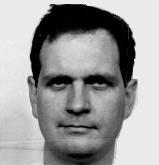
David Lee Herman
Murderer Brian Kevin Rosenfeld
Murderer · USA · 1985
Brian Kevin Rosenfeld Brian Kevin Rosenfeld was sentenced to three concurrent l…
23 victims
Brian Kevin Rosenfeld
Murderer · USA · 1985
Brian Kevin Rosenfeld Brian Kevin Rosenfeld was sentenced to three concurrent l…
23 victims
 Yahweh ben Yahweh
Murderer · USA · 1980
Yahweh ben Yahweh was born and legally named Hulon Mitchell Jr. (October 27, 19…
23 victims
Yahweh ben Yahweh
Murderer · USA · 1980
Yahweh ben Yahweh was born and legally named Hulon Mitchell Jr. (October 27, 19…
23 victims
 Russell Ellwood
Murderer · USA · 1991
Russell Ellwood was a former taxi driver. Authorities suspected him of killing…
20 victims
Russell Ellwood
Murderer · USA · 1991
Russell Ellwood was a former taxi driver. Authorities suspected him of killing…
20 victims
 Robert Martines Perez
Murderer · USA · 1994
Name: Robert Martines Perez · Other name used in proceedings: Robert Martinez P…
15 victims
Robert Martines Perez
Murderer · USA · 1994
Name: Robert Martines Perez · Other name used in proceedings: Robert Martinez P…
15 victims
 Noble Mays
Murderer · USA · 1979
Noble Mays had been convicted once for burglary and once for assault, which was…
1 victim
Noble Mays
Murderer · USA · 1979
Noble Mays had been convicted once for burglary and once for assault, which was…
1 victim
 Nadia Braxton
Murderer · USA · 2011
Nadia Braxton was 29 years old and lived in their Kenner home with her three da…
3 victims
Nadia Braxton
Murderer · USA · 2011
Nadia Braxton was 29 years old and lived in their Kenner home with her three da…
3 victims
 George Whitaker
Murderer · USA · 1994
George Whitaker III was convicted of capital murder and sentenced to death for…
1 victim
George Whitaker
Murderer · USA · 1994
George Whitaker III was convicted of capital murder and sentenced to death for…
1 victim
 Bernard Smith
Murderer · USA · 1983
Bernard Smith was convicted in Superior Court (Yuma) of first-degree murder and…
1 victim
Bernard Smith
Murderer · USA · 1983
Bernard Smith was convicted in Superior Court (Yuma) of first-degree murder and…
1 victim
 Reinaldo Dennes
Murderer · USA · 1996
Reinaldo Dennes was born in Havanna, Cuba, on 2/9/56. His family came to the US…
1 victim
Reinaldo Dennes
Murderer · USA · 1996
Reinaldo Dennes was born in Havanna, Cuba, on 2/9/56. His family came to the US…
1 victim
- Gender
- male
- Country
- USA
- Location
- Tarrant County, Texas, USA
- Date of birth
- November 7, 1957
- Age at first offence
- 32
- Characteristics
- robbery, attempted rape
- Victim profile
- Jennifer Burns (female, 21)
- Method of murder
- Shooting
- Date(s) of murder
- December 20, 1989
- Years active
- 1989
- Date of arrest
- 10 days after
- Status
-
Executed
Executed by lethal injection in Texas on April 2, 1997
Case record: David Lee Herman
Timeline
- December 20, 1989 — David Herman killed Jennifer Burns during a robbery at the Lace nightclub in Arlington, Texas.
- April 24, 1996 — The President signed the Antiterrorist and Effective Death Penalty Act of 1996.
- April 2, 1997 — David Lee Herman was executed by lethal injection in Texas.
- April 4, 1996 — Herman filed his notice of appeal.
Background
David Lee Herman, age 39, was a former owner of a topless nightclub. He killed a woman while robbing the place.
The offence
While robbing the Lace Club in Arlington, Texas, David Lee Herman shot three people. One of the three was Jennifer Burns, who died.
Herman confronted club manager Clay Griffin at gunpoint. Herman ordered the manager to the office where Jennifer Burns and another woman, Sally Fogle, were preparing to open for the day. Herman ordered Burns to put $11,200 in a canvas bag, then tried to rape her. When he could not, he became enraged and shot all three with a .357 caliber gun, killing Ms. Burns. The other two shooting survivors survived.
Investigation and arrest
Herman was arrested 10 days later, and much of the money was recovered.
Trial
Herman was tried for capital murder. His attorney asked the state trial judge to submit a fourth issue to the jury in the punishment stage of the trial. The issue asked, "Do you find any aspect of the defendant's character that would justify life in prison rather than death?"
In the alternative, Herman’s attorney asked that the trial court inform the parties what instructions the court would give the jury regarding the application of mitigating evidence in the punishment phase. The defense argued this information would be important during voir dire of prospective jurors.
The court denied both defense requests. The court stated it would properly instruct the jury as to mitigating evidence if mitigating evidence were later submitted.
At voir dire, both parties were allowed wide latitude to examine prospective jurors' attitudes towards the death penalty, their ability to understand and answer special issues, and their ability to consider mitigating evidence. Defense counsel repeatedly asked potential jurors what standard of proof they would use to determine if mitigating evidence presented for Herman was sufficient to support a sentence of life imprisonment rather than death. The prosecution objected successfully on the ground that such questions were irrelevant to qualification as a juror because the standard of evidence used to evaluate mitigating evidence is a legal standard and not a factual matter appropriate for voir dire.
The two shooting survivors testified against him. A jury took only 15 minutes to convict him of capital murder.
Greg Pipes, the prosecutor, said: "it is always nice to have 2 people come in and say: "He shot me and shot my friend and he killed this young lady."
Sentencing
Herman was sentenced to death for the murder of Jennifer Burns.
Appeals
Herman sought to appeal the district court's denial of his petition for writ of habeas corpus. The case was United States Court of Appeals, Fifth Circuit: David Lee Herman, Petitioner-appellant v. Gary L. Johnson, Director, Texas Department of Criminal Justice, Institutional Division, Respondent-appellee.
The appellate opinion stated that Herman, sentenced to death for the murder of Jennifer Burns, sought to appeal the district court's denial of his petition for writ of habeas corpus, and that the appeal was dismissed. The opinion also described the voir dire issue raised by Herman.
Before Herman’s trial for capital murder, his attorney asked the state trial judge to submit the fourth issue in the punishment stage about whether any aspect of the defendant's character would justify life in prison rather than death. The defense also requested that the court inform the parties what instructions it would give the jury regarding mitigating evidence in the punishment phase. The appellate opinion included Herman’s argument that the trial court's refusal to inform him what instruction would be given to jurors in the penalty trial on evaluating mitigating evidence deprived him of his right to intelligently use his peremptory challenges, and that this deprivation impaired his rights to due process and the effective assistance of counsel under the Fifth, Sixth, Eighth and Fourteenth Amendments.
The opinion stated that peremptory challenges are not constitutional rights, citing Georgia v. McCollum. It further stated that the Supreme Court had rejected the notion that the loss of a peremptory challenge constitutes a violation of the constitutional right to an impartial jury and quoted Ross v. Oklahoma:
[W]e reject the notion that the loss of a peremptory challenge constitutes a violation of the constitutional right to an impartial jury. We have long recognized that peremptory challenges are not of constitutional dimensions. They are a means to obtain the end of an impartial jury. So long as the jury that sits is impartial, the fact that the defendant had to use a peremptory challenge to achieve that result does not mean the Sixth Amendment was violated.
The opinion stated that the trial court judge was within discretion when he refused to allow detailed questioning of veniremen on the legal standard they would use to evaluate mitigating evidence. It stated that Herman never alleged the jury seated in his trial was unfair or unable to properly evaluate mitigating evidence. It stated that Herman made no showing that the trial court's refusal to allow him to question individual veniremen on this topic was a denial of any federal or constitutional right.
Application for Certificate of Probable Cause
The opinion stated that Herman did not move for a Certificate of Probable Cause with the court, instead filing a notice of appeal of the district court's denial of his petition for writ of habeas corpus. It stated that, in the past, a habeas petitioner sentenced to death who filed a notice of appeal had the notice treated as an application for a certificate of probable cause, citing Jones v. Whitley. Since Herman requested a certificate of probable cause from the district court and his appellate brief requested a certificate of probable cause to appeal, the opinion treated his notice of appeal as a request for a certificate.
Antiterrorist and Effective Death Penalty Act of 1996
The opinion discussed that on April 24, 1996, the President signed the Antiterrorist and Effective Death Penalty Act of 1996, which amended the procedures for habeas petitioners wishing to appeal denial of habeas relief. The opinion stated that under the amended law, petitioners must obtain a certificate of appealability ("COA") instead of a certificate of probable cause ("CPC"). It quoted the requirement that an appellate court grant a COA "only if the applicant has made a substantial showing of the denial of a constitutional right," citing 28 U.S.C. § 2253(c)(2).
The opinion discussed how different circuits addressed whether the COA requirements applied to pending applications for certificates of probable cause, including Reyes v. Keane, Lennox v. Evans, Williams v. Calderon, and Lowell v. Prunty. It included this quotation from Lowell v. Prunty:
In cases such as this in which appellant does not meet the CPC standard under pre-Act law, a fortiori appellant could not meet a more demanding standard.
The opinion stated that it made no determination whether COA standards were higher than CPC standards and no determination whether COA applied to pending appeals of denial of habeas. It held that Appellant made no showing he was denied either a federal or constitutional right and therefore failed to meet the standards for either a CPC or COA.
The opinion concluded: "For that reason, the motion for a certificate of probable cause is DENIED." It then stated: "APPEAL DISMISSED."
Outcome
Herman’s conviction proceeded to the death sentence and his appeal of the denial of habeas relief was dismissed. His motion for a certificate of probable cause was denied and the appeal was dismissed.
Aftermath
David Lee Herman made a last statement before his execution:
It was horrible and inexcusable for me to take the life of your loved one and to hurt so many mentally and physically. I am here because I took a life and killing is wrong by an individual and by the state, and I am sorry we are here but if my death gives you peace and closure then this is all worthwhile. To all of my friends and family, I love you and I am going home - David Lee Herman
Execution details
Herman was executed by lethal injection in Texas.
He was put to death about 38 hours after a guard on death row spotted his injuries. He spent 3 hours in a hospital getting his wounds stitched before being returned to his cell. He had tried to slash his throat and wrist with a disposable plastic razor one day before his execution.
Other details
In the appellate opinion, the case name and parties were:
- David Lee Herman, Petitioner-appellant v. Gary L.
The appellate opinion included:
- "Application for Certificate of Probable Cause to Appeal from the United States District Court for the Northern District of Texas."
- "Before DUHE, WEINER and STEWART, Circuit Judges."
- "Oct. 10, 1996" and "98 F.3d 171" were included with the appellate caption.
Spotted an error, or have more information about this case?