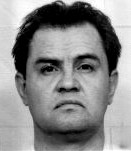
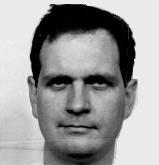
Adolph Gil Hernandez
Murderer Brian Kevin Rosenfeld
Murderer · USA · 1985
Brian Kevin Rosenfeld Brian Kevin Rosenfeld was sentenced to three concurrent l…
23 victims
Brian Kevin Rosenfeld
Murderer · USA · 1985
Brian Kevin Rosenfeld Brian Kevin Rosenfeld was sentenced to three concurrent l…
23 victims
 Yahweh ben Yahweh
Murderer · USA · 1980
Yahweh ben Yahweh was born and legally named Hulon Mitchell Jr. (October 27, 19…
23 victims
Yahweh ben Yahweh
Murderer · USA · 1980
Yahweh ben Yahweh was born and legally named Hulon Mitchell Jr. (October 27, 19…
23 victims
 Russell Ellwood
Murderer · USA · 1991
Russell Ellwood was a former taxi driver. Authorities suspected him of killing…
20 victims
Russell Ellwood
Murderer · USA · 1991
Russell Ellwood was a former taxi driver. Authorities suspected him of killing…
20 victims
 Robert Martines Perez
Murderer · USA · 1994
Name: Robert Martines Perez · Other name used in proceedings: Robert Martinez P…
15 victims
Robert Martines Perez
Murderer · USA · 1994
Name: Robert Martines Perez · Other name used in proceedings: Robert Martinez P…
15 victims
 Robert Edward Maury
Serial killer · USA · 1985
Robert Edward Maury was sentenced to death on October 27, 1989. · October 27, 1…
3 victims
Robert Edward Maury
Serial killer · USA · 1985
Robert Edward Maury was sentenced to death on October 27, 1989. · October 27, 1…
3 victims
 Frederick Guy Browne
Murderer · United Kingdom · 1927
Frederick Guy Browne was executed by hanging at Pentonville prison on May 31, 1…
1 victim
Frederick Guy Browne
Murderer · United Kingdom · 1927
Frederick Guy Browne was executed by hanging at Pentonville prison on May 31, 1…
1 victim
 Linda Henning
Murderer · USA · 1999
Linda Henning was convicted of felony murder and kidnapping in connection with…
1 victim
Linda Henning
Murderer · USA · 1999
Linda Henning was convicted of felony murder and kidnapping in connection with…
1 victim
 Thomas Harrison Provenzano
Murderer · USA · 1984
21 July 2000 — Thomas Harrison Provenzano was executed by lethal injection in F…
1 victim
Thomas Harrison Provenzano
Murderer · USA · 1984
21 July 2000 — Thomas Harrison Provenzano was executed by lethal injection in F…
1 victim
 Mark Rowntree
Spree killer · United Kingdom · 1975
Mark Rowntree (born 1956 in Bradford, Yorkshire) was a British spree killer. He…
4 victims
Mark Rowntree
Spree killer · United Kingdom · 1975
Mark Rowntree (born 1956 in Bradford, Yorkshire) was a British spree killer. He…
4 victims
- Gender
- male
- Country
- USA
- Location
- Lubbock County, Texas, USA
- Date of birth
- September 1, 1950
- Age at first offence
- 38
- Characteristics
- robbery, abuse
- Victim profile
- Elizabeth Alvarado (female, 69)
- Method of murder
- Beating with a baseball bat
- Date(s) of murder
- September 30, 1988
- Years active
- 1988
- Date of arrest
- Same day
- Status
-
Executed
Executed by lethal injection in Texas on February 8, 2001
Case details
Adolph Gil Hernandez was executed by lethal injection in Texas on February 8, 2001.
Background
Hernandez was a parolee and had an extensive criminal record. He had been paroled from burglary about 8 months earlier. He had five prior felony convictions at the time of his capital murder trial: three convictions for burglary and two convictions for unauthorized use of a motor vehicle. During the punishment phase, the state presented evidence that Hernandez had been convicted and sentenced to prison for the five prior felony convictions.
Hernandez had multiple convictions and periods of incarceration and parole in the years before the murder. He was paroled in 1980 after serving 23 months of a 9-year sentence for burglary. In 1985, he was paroled after serving 4 years of a 15-year sentence for burglary of a home. After returning to prison for a parole violation, he was paroled again in January 1988. In the ten years prior to Alvarado’s murder, Hernandez had been imprisoned and paroled three times.
Courts and testimony during the proceedings described that Hernandez assaulted his wife and daughter, assaulted other jail inmates, and threatened to kill the judge in his capital murder trial. At his trial and during most of his appeals, Hernandez blamed the slaying on an alcohol-induced blackout. In the past month before execution, he instead contended that the murder was committed by a black man whose identity he did not know, and he claimed that he remembered nothing about the offense in an “alcoholic blackout.” He later claimed in a motion that he now remembered what happened and said he was simply a bystander and a “black male” whose name he did not know actually committed the offense.
The offence
Hernandez murdered Elizabeth Alvarado in Slaton, Texas, during the course of committing a robbery.
On the evening of September 30, 1988, Hernandez and his friend Mike Martinez went to the home of Margarita Davila in Slaton, Texas, with an eight-pack of beer. The three drank the beer, and Hernandez played baseball with Davila’s young son. About 7:30 p.m., Hernandez and Martinez left Davila’s home to buy more beer. As he was leaving, Hernandez picked up the baseball bat. Davila told him not to take the bat, but he did so anyway. Davila and Martinez both testified that when Hernandez left Davila’s home, he was not drunk.
Hernandez purchased a six-pack of beer, and Hernandez and Martinez went to the home of Kenneth Hodges, where they shared the six-pack with Hodges and another individual. Eventually, Hernandez and Martinez left Hodges’ home. Hernandez and Martinez walked together for a short time, then split up. Martinez testified that when the two parted company Hernandez was not drunk.
At about 9 p.m., Hernandez arrived at the home of a young boy who lived with his grandmother near Elizabeth Alvarado’s residence. The boy looked out the window on hearing a knock at the front door and recognized Hernandez. Hernandez swung the baseball bat at the boy; the boy was able to deflect the blow by closing the screen door. Hernandez ran off in the general direction of the home of Elizabeth Alvarado, the victim. On cross-examination, the boy stated that he did not smell alcohol on Hernandez at the time of this attack.
Josie Vargas, Alvarado’s adult daughter, arrived at Alvarado’s home shortly thereafter. Vargas was accompanied by her nephew. As they drove into the driveway, Vargas and her nephew saw Hernandez emerge from the kitchen door with Alvarado’s purse and a baseball bat. Vargas immediately recognized Hernandez as she had known him almost her entire life. Hernandez ran back inside the house and came out the front door, approaching Vargas asking if she was alone. Vargas grabbed the bat and they struggled over control. Vargas wrestled the bat away from Hernandez, and Hernandez ran off with Alvarado’s purse. Vargas hit Hernandez three times with the bat as he fled.
The bat that Vargas recovered from Hernandez was identified by Davila’s son as his. Vargas and her nephew entered Alvarado’s house where they found her beaten beyond recognition. Vargas and her nephew testified that Alvarado may have been still alive at this point because Alvarado was making gurgling noises as they waited for the emergency medical personnel to arrive. Medical technicians attempted to initiate life support procedures, but Alvarado was declared dead upon arrival at Lubbock General Hospital.
An autopsy revealed that Alvarado was killed by being hit about the head with a blunt object. Alvarado had lacerations on her head and a broken nose, as well as a depressed skull fracture. Alvarado sustained eight blows to the head and suffered a massive subdural hemorrhage. Both bones in Alvarado’s right wrist were broken by impact from a blunt instrument. The pathologist testified that injuries as intense as those sustained by Alvarado must have been inflicted by blunt force and were consistent with use of a baseball bat. Alvarado was 69 years old at the time of her murder.
Not more than an hour after Alvarado was found beaten to death, authorities found Hernandez and apprehended him. Hernandez did not have the black baseball cap he had been seen wearing earlier in the evening as well as during his encounter with Vargas, nor did he have the victim’s purse. Slaton police officers discovered a black baseball cap and Alvarado’s blood-spattered purse, wallet, and money discarded at a location near her home while attempting to retrace Hernandez’ movements from the murder scene. Tennis shoes worn by Hernandez at the time of arrest were consistent with a shoe print where these articles were discovered.
Investigation and evidence
Authorities discovered Alvarado’s blood-spattered purse, wallet, and money at a location near her home. A black baseball cap was also found at the location. Hernandez’s tennis shoes were consistent with a shoe print associated with where these articles were discovered.
At the time of arrest, Hernandez was found hiding in some bushes. Police found him about an hour after the murder.
Defense attorneys produced a 12-year-old shirt they claimed did not belong to Hernandez but was tainted with Alvarado’s blood. They also argued that the bloody shirt uncovered after 12 years would exonerate Hernandez, but a state judge denied their request for a stay so that the evidence could be considered.
Trial
Hernandez was indicted with the offense of murdering Elizabeth Alvarado in the course of committing a robbery.
On January 31, 1990, a jury found Hernandez guilty of the capital offense. A separate punishment hearing ensued. On February 5, 1990, the jury returned a verdict on the special issues, resulting in the trial court assessing punishment as death. Appeal was automatic to the Court of Criminal Appeals.
At trial, Hernandez did not contest being guilty of murder. Hernandez’s counsel argued that it was a “drunken murder” not a capital murder. Hernandez’s counsel made the following remarks during closing argument:
" . . . the issue here is not one of innocence. . . . The question is not murder - or innocence. The question is, is it murder or is it capital murder. . . . The question of murder versus capital murder. The question of robbery versus theft. Those are the things that you have to look at because innocence is not an issue here. . . .This was a drunken murder. . . .We want a true verdict. And based on the evidence and not on the number of witnesses . . . that verdict is guilty of murder. And we would ask you . . . to return a true verdict in this case of murder."
At the punishment phase, the state presented evidence of Hernandez’s five prior felony convictions (three for burglary and two for unauthorized use of a motor vehicle). Many witnesses testified to acts of violence or threats of violence committed by Hernandez in and out of prison, including while waiting for trial for the instant capital murder. Hernandez’s parole officer and several officers of various local law enforcement agencies testified that Hernandez did not have a reputation in the community for being a peaceful and law-abiding citizen.
Hernandez threatened a trial judge in this case.
Sentencing
On February 5, 1990, the jury returned a verdict on the special issues, and the trial court (the 140th District Court of Lubbock County) assessed punishment as death.
Appeals
Hernandez’s direct appeal and subsequent habeas proceedings proceeded through multiple courts.
June 29, 1994 — The Court of Criminal Appeals affirmed the conviction and sentence. April 24, 1995 — The U.S. Supreme Court denied a petition for writ of certiorari.
November 7, 1995 — Hernandez filed a petition for federal habeas relief in the U.S. District Court for the Northern District of Texas, Lubbock Division. January 16, 1996 — The federal district court dismissed the petition so Hernandez could pursue relief in state court. April 2, 1997 — Hernandez filed an application for state writ of habeas corpus with the state court of conviction. Thereafter, the state court recommended that relief be denied. November 18, 1998 — The Court of Criminal Appeals adopted the trial court’s findings and denied habeas relief. December 21, 1998 — Hernandez filed a petition for federal habeas relief in the federal district court in Lubbock. March 18, 1999 — The federal district court denied relief. April 23, 1999 — The federal district court denied Hernandez permission to appeal. May 30, 2000 — The U.S. Court of Appeals for the Fifth Circuit denied Hernandez permission to appeal. October 30, 2000 — The U.S. Supreme Court denied Hernandez’ petition for writ of certiorari.
Outcome
Hernandez was executed by lethal injection in Texas on February 8, 2001. He was pronounced dead at 6:24 p.m.
At his execution, Hernandez made a brief statement expressing love to his family and did not mention the crime. Hernandez told witnesses:
"I want to thank my family for their help and moral support and for their struggle. It would have been a lot harder without their love. I am just going home,"
and: "I'll see y'all one of these days. Just don't rush it."
Mary Jane Garcia, another daughter of Elizabeth Alvarado, witnessed the execution. It was also noted that Garcia traveled to Huntsville to witness the execution of Jack Wade Clark, who raped and murdered her daughter, Melisa Ann Garcia, in 1989.
Ernestine Perez, another daughter of Elizabeth Alvarado, said:
"He didn't suffer at all,"
and: "I was still waiting for something else when they said he's dead. How painful can that be? I wish my mother had the opportunity to give us a farewell like he did to his family, or that we had a chance to see her for the last time. "We weren't given that opportunity."
Travis Ware, the former Lubbock district attorney who prosecuted Hernandez, said:
"My heart goes out to the victims in any of these cases,"
"But especially in this case, where they lost two relatives in the same family to two completely unconnected cases. This has got to be a first."
Hernandez’s execution was also described as coming after Hernandez and his attorneys raised questions about his guilt. It was reported that the governor refused a request for a 30-day reprieve.
Timeline
- November 10, 1988 — Hernandez was indicted with the offense of murdering Elizabeth Alvarado in the course of committing a robbery.
- January 31, 1990 — A jury found Hernandez guilty of the capital offense.
- February 5, 1990 — The jury returned a verdict on the special issues; the trial court (the 140th District Court of Lubbock County) assessed punishment as death.
- April 24, 1995 — The U.S.
- May 30, 2000 — The U.S.
- October 30, 2000 — The U.S.
- February 2, 2001 — Hernandez filed a request for stay of execution in order to pursue further testing of evidence in the state court of conviction.
- February 6, 2001 — The state trial court declined to modify the execution date and forwarded the matter to the Court of Criminal Appeals.
- February 8, 2001 — Hernandez was executed by lethal injection in Texas at 6:24 p.m.
Aftermath
Texas Attorney General John Cornyn provided a media advisory announcing that Hernandez was scheduled to be executed after 6 p.m. on Thursday, February 8th. During his punishment and appeals, Hernandez argued that an “alcoholic blackout” meant he could not have intentionally committed the murder, and later he claimed he remembered what happened and that he was a bystander while another “black male” committed the offense. Defense attorneys produced a bloody shirt stored in a garage for 12 years and a shirt they claimed did not belong to Hernandez, but a state judge refused to stop the execution.
Other details
Hernandez was described as being 50 at the time of execution and as 38 at the time of the September 1988 murder.
Victim: Elizabeth Alvarado (69 years old). Victim family members included: Josie Vargas, Mary Jane Garcia, and Ernestine Perez. A young boy with his grandmother near Alvarado’s residence encountered Hernandez earlier when Hernandez swung a baseball bat at him. Hernandez also interacted with Margarita Davila’s family and with Kenneth Hodges in the evening before the murder. Hernandez used a baseball bat and took Alvarado’s purse containing $350.
Hernandez was also described as denying he was the person who bashed Alvarado eight times in the head with a bat and ran from her house with her purse containing $350.
Hernandez and his attorneys raised questions about guilt prior to execution; courts rejected appeals and the governor refused a request for a 30-day reprieve.
Spotted an error, or have more information about this case?