
Bernard Smith
Murderer Brian Kevin Rosenfeld
Murderer · USA · 1985
Brian Kevin Rosenfeld Brian Kevin Rosenfeld was sentenced to three concurrent l…
23 victims
Brian Kevin Rosenfeld
Murderer · USA · 1985
Brian Kevin Rosenfeld Brian Kevin Rosenfeld was sentenced to three concurrent l…
23 victims
 Marvin Gray
Murderer · USA · 1975
Marvin Gray was convicted killer who claimed responsibility for 23 slayings and…
23 victims
Marvin Gray
Murderer · USA · 1975
Marvin Gray was convicted killer who claimed responsibility for 23 slayings and…
23 victims
 Yahweh ben Yahweh
Murderer · USA · 1980
Yahweh ben Yahweh was born and legally named Hulon Mitchell Jr. (October 27, 19…
23 victims
Yahweh ben Yahweh
Murderer · USA · 1980
Yahweh ben Yahweh was born and legally named Hulon Mitchell Jr. (October 27, 19…
23 victims
 Russell Ellwood
Murderer · USA · 1991
Russell Ellwood was a former taxi driver. Authorities suspected him of killing…
20 victims
Russell Ellwood
Murderer · USA · 1991
Russell Ellwood was a former taxi driver. Authorities suspected him of killing…
20 victims
 Jan Michael Brawner
Mass murderer · USA · 2001
In December 1997, Jan Michael Brawner married Barbara Craft. In March 1998, the…
4 victims
Jan Michael Brawner
Mass murderer · USA · 2001
In December 1997, Jan Michael Brawner married Barbara Craft. In March 1998, the…
4 victims
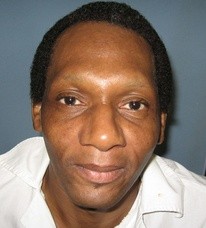 Jimmy Lee Dill
Murderer · USA · 1988
Jimmy Lee Dill was the defendant and death row inmate. · Leon Shaw was the vict…
1 victim
Jimmy Lee Dill
Murderer · USA · 1988
Jimmy Lee Dill was the defendant and death row inmate. · Leon Shaw was the vict…
1 victim
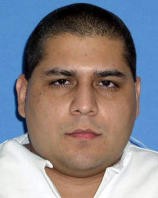 Robert Madrid Salazar
Murderer · USA · 1997
Robert Madrid Salazar was a Black male described as 27 years old at the time of…
1 victim
Robert Madrid Salazar
Murderer · USA · 1997
Robert Madrid Salazar was a Black male described as 27 years old at the time of…
1 victim
- Gender
- male
- Country
- USA
- Location
- Yuma, Arizona, USA
- Date of birth
- October 3, 1953
- Age at first offence
- 30
- Characteristics
- armed robbery
- Victim profile
- Charles Pray, 57 (Low Cost Market cashier)
- Method of murder
- Shooting (.22 caliber pistol)
- Date(s) of murder
- August 22, 1983
- Years active
- 1983
- Date of arrest
- Same day
- Status
-
Died in custody
Sentenced to death on February 17, 1984; died in prison on December 11, 2002
Case details
Bernard Smith was convicted in Superior Court (Yuma) of first-degree murder and armed robbery. He was sentenced to death for the murder.
The presiding judge was William W. Nabours. The prosecutor was Tim Holtzen.
Timeline
- February 17, 1984 — Smith was sentenced to death.
- January 10, 1984 — Trial began.
- January 19, 1984 — Verdict was reached.
- August 22, 1983 — Smith entered the Low Cost Market in Yuma, requested Kool cigarettes at cash register No. 5, pointed a pistol at cashier Charles Pray, demanded money, fired one .22 caliber bullet through the base of Pray's head, removed the paper money from the cash register, and left.
- December 11, 2002 — Smith died in prison.
The offence
Shortly after midnight on August 22, 1983, Smith entered the Low Cost Market in Yuma and went to cash register No. 5. He requested Kool cigarettes and paid with a $5 bill. When the transaction was rung up and the cash drawer opened, Smith pointed a pistol at Charles Pray, the 57-year-old cashier, and demanded the money.
When Pray turned and called out the name of a fellow employee, Smith raised the pistol and fired one .22 caliber bullet through the base of Pray's head, severing the spinal cord. Smith walked around the counter, removed the paper money from the cash register, and left.
Two women outside the store watched Smith walk to his car, followed him from the parking lot, and called the police with his license number.
Pray died from the gunshot wound.
Investigation and arrest
Smith was arrested within minutes of the shooting.
Trial
The trial began on January 10, 1984. The verdict was reached on January 19, 1984.
Sentencing
Smith was sentenced on February 17, 1984 to death for the first-degree murder conviction.
Aggravating circumstances
Smith’s aggravating circumstances included:
- Prior convictions punishable by life imprisonment
- Prior convictions involving violence
- Grave risk of death to others (struck on appeal)
- Pecuniary gain
- Especially heinous/cruel/depraved (struck on appeal)
Mitigating circumstances
The mitigating circumstances were described as none.
The Court found that Smith’s age (30 years old at the time of the murder) was not a mitigating circumstance.
Appeals
Smith’s automatic, direct appeal to the Arizona Supreme Court was described as defendant's automatic, direct appeal to the Arizona Supreme Court.
Procedural posture
Smith was convicted in Superior Court (Yuma) of first-degree murder and armed robbery and was sentenced to death for the murder. This was his automatic, direct appeal to the Arizona Supreme Court.
Aggravating circumstances on appeal (Arizona Supreme Court)
(F)(1) (Prior Life or Death Felony) — UPHELD Smith had been convicted of three prior armed robberies in Arizona, which were on appeal at the time of the murder trial. The Court reiterated that until a conviction is set aside, it should count as a conviction under this aggravating circumstance.
(F)(2) (Prior Violent Felony) — UPHELD Smith was previously convicted in Arizona of three counts of armed robbery. The Court took judicial notice that armed robbery is a violent felony committed against another person.
(F)(3) (Grave Risk of Death) — REVERSED The Court held that the murderous act itself must put others in a zone of danger. It reasoned that although there were other people in the store at the time of the shooting, the murderous act itself did not place them within the zone of danger. It stated that Smith shot only at the victim; the shooting was not random and indiscriminate, but purposeful. It also addressed activity involving other people in the parking lot, stating that pointing the gun at other people in the parking lot and telling them to go did not pose a grave risk of death to them.
(F)(5) (Pecuniary Gain) — UPHELD The Court found the impetus was expectation of pecuniary gain. It described that Smith went into the Low Cost Market to purchase cigarettes, paid, then demanded all the money in the cash register. When the clerk called for the manager, Smith shot the clerk, took the money from the cash register, and left. The Court stated that Smith committed the murder “solely for the purpose of gaining access to the cash register, which was in the victim's control.” The Court also addressed Smith’s claim that the trial judge failed to specifically find that the (F)(5) aggravating circumstance was established beyond a reasonable doubt. It concluded that the burden had been met at trial and that the lack of a specific, separate finding was not error in this case. It noted that Smith was convicted of armed robbery of the clerk at the convenience store and that, under the facts of the case, the jury’s finding of armed robbery implied a finding beyond a reasonable doubt that Smith committed the murder for pecuniary gain.
(F)(6) (Heinous, Cruel or Depraved) — REVERSED
- Cruel — Reversed. “Knew or Reason to Know that Victim Would Suffer” was not found. The evidence of cruelty was described as the pain and mental anguish of the victim during the two weeks after the shooting and before the victim's death. The Court stated that the state must show that the defendant either intended or reasonably foresaw that the victim would suffer as a result of the defendant's acts. It noted that Smith shot the victim in the head, which it viewed as showing intent to kill immediately rather than intent to prolong suffering, citing State v. Adamson and State v. Harding.
- Heinous or Depraved — Reversed.
It described:
- Gratuitous Violence — Not found. It stated the defendant shot the victim once and inflicted no further violence.
- Mutilation — Not found. It stated the defendant did not mutilate the victim.
- Relishing — Not found. It stated: “That defendant's actions may have been cold and deliberate demonstrates not heinousness or depravity but the element of intent, which established the mens rea necessary for the crime of first degree murder but is of no consequence in the death sentencing determination.”
Mitigating circumstances on appeal
The Court found no mitigating circumstances sufficient to call for leniency.
Judgment on appeal
The judgment described that the conviction and death sentence were affirmed. The Court found error in the trial court’s finding of 13-751(F)(6) and -751(F)(3), but affirmed the death sentence in light of the other three aggravating circumstances and lack of mitigating circumstances.
Outcome
Smith’s conviction and death sentence were affirmed. The Court found error in the trial court’s finding of 13-751(F)(6) and -751(F)(3), but it affirmed the death sentence.
Other details
- Smith was 30 years old at the time of the murder.
- The victim was Charles Pray, described as 57-year-old cashier.
- Appellate case citations included:
- State v. Smith (Bernard), 146 Ariz. 491, 707 P.2d 289 (1985).
- Smith v. Stewart, 140 F.3d 1263 (9th Cit. 1998).
- State v. Bernard Smith, 146 Ariz. 491, 707 P.2d 289 (1985).


Spotted an error, or have more information about this case?