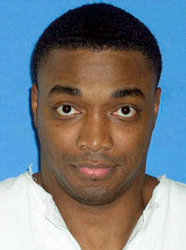
George Whitaker
Murderer Brian Kevin Rosenfeld
Murderer · USA · 1985
Brian Kevin Rosenfeld Brian Kevin Rosenfeld was sentenced to three concurrent l…
23 victims
Brian Kevin Rosenfeld
Murderer · USA · 1985
Brian Kevin Rosenfeld Brian Kevin Rosenfeld was sentenced to three concurrent l…
23 victims
 Russell Ellwood
Murderer · USA · 1991
Russell Ellwood was a former taxi driver. Authorities suspected him of killing…
20 victims
Russell Ellwood
Murderer · USA · 1991
Russell Ellwood was a former taxi driver. Authorities suspected him of killing…
20 victims
 Robert Martines Perez
Murderer · USA · 1994
Name: Robert Martines Perez · Other name used in proceedings: Robert Martinez P…
15 victims
Robert Martines Perez
Murderer · USA · 1994
Name: Robert Martines Perez · Other name used in proceedings: Robert Martinez P…
15 victims
 Billy Frank Vickers
Murderer · USA · 1993
Billy Frank Vickers Vickers was executed by lethal injection in Texas on Januar…
14 victims
Billy Frank Vickers
Murderer · USA · 1993
Billy Frank Vickers Vickers was executed by lethal injection in Texas on Januar…
14 victims
 Jack Owen Spillman
Murderer · USA · 1994
Jack Owen Spillman III was known as “The Werewolf Butcher.” Crimes evidence dev…
3 victims
Jack Owen Spillman
Murderer · USA · 1994
Jack Owen Spillman III was known as “The Werewolf Butcher.” Crimes evidence dev…
3 victims
 Ronnie Cauthern
Murderer · USA · 1987
Ronnie M. Cauthern was convicted of the 1987 slayings of a husband and wife who…
2 victims
Ronnie Cauthern
Murderer · USA · 1987
Ronnie M. Cauthern was convicted of the 1987 slayings of a husband and wife who…
2 victims
 Kenneth Bernard Rouse
Murderer · USA · 1991
Kenneth Bernard Rouse was convicted by a North Carolina jury of first-degree mu…
1 victim
Kenneth Bernard Rouse
Murderer · USA · 1991
Kenneth Bernard Rouse was convicted by a North Carolina jury of first-degree mu…
1 victim
 Thomas Shanks
Murderer · United Kingdom · 1998
Vickie Fletcher was a 21-year-old nurse who began working at Pontefract General…
1 victim
Thomas Shanks
Murderer · United Kingdom · 1998
Vickie Fletcher was a 21-year-old nurse who began working at Pontefract General…
1 victim
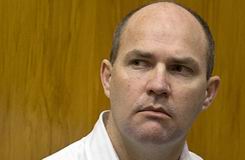 Jeremy McLaughlin
Homicide - Murderer · New Zealand · 1995
Jeremy George Edward McLaughlin (35) — defendant · Jade Bayliss (13) — victim;…
2 victims
Jeremy McLaughlin
Homicide - Murderer · New Zealand · 1995
Jeremy George Edward McLaughlin (35) — defendant · Jade Bayliss (13) — victim;…
2 victims
- Gender
- male
- Country
- USA
- Location
- Harris County, Texas, USA
- Date of birth
- November 21, 1970
- Age at first offence
- 24
- Characteristics
- revenge
- Victim profile
- Shakeitha Shanta Carrier, 16 (his former girlfriend's sister)
- Method of murder
- Shooting ( .45 caliber handgun)
- Date(s) of murder
- June 15, 1994
- Years active
- 1994
- Date of arrest
- Same day (wounded by police)
- Status
-
Executed
Executed by lethal injection in Texas on November 12, 2008
Case record: George Whitaker
Overview
George Whitaker III was convicted of capital murder and sentenced to death for the June 15, 1994 murder of 16-year-old Shakeitha Carrier. His execution took place by lethal injection in Texas on November 12, 2008, and he was pronounced dead at 6:15 p.m.
Timeline
- June 15, 1994 — Whitaker drove to the Crosby home of the parents of his former girlfriend, forced his way into the house, shot Mary Carrier, ran upstairs, shot Shakeitha Carrier in the head, and shot Mary Carrier a second time as she ran outside to look for help; Ashley Carrier was revived after extensive surgery for blunt head injuries.
- October 21, 1994 — Whitaker was indicted in the 339th District Court of Harris County for the capital murder of Shakeitha Carrier.
- March 28, 1996 — After Whitaker pleaded not guilty, a jury found him guilty of the capital offense.
- April 2, 1996 — Following a punishment hearing, Whitaker was sentenced to death.
- May 20, 1998 — The Texas Court of Criminal Appeals affirmed the conviction and sentence.
- October 16, 1998 — Whitaker filed a state application for writ of habeas corpus with the trial court.
- January 19, 1999 — The U.S. Supreme Court denied Whitaker's petition for writ of certiorari.
- July 19, 1999 — Whitaker filed a second state habeas application.
- March 5, 2003 — The Court of Criminal Appeals adopted the trial court’s findings and conclusions, denied Whitaker’s first state writ, and dismissed the second application as an abuse of the writ.
- July 25, 2003 — Whitaker filed a third state application for a writ of habeas corpus with the Texas Court of Criminal Appeals, making a mental retardation claim.
- Sept. 10, 2003 — The Court of Appeals determined Whitaker did not allege sufficient facts for a prima facie showing of retardation and dismissed the application for abuse of the writ.
- March 4, 2004 — Whitaker filed a federal habeas corpus petition in a Houston U.S. district court.
- March 18, 2005 — The district court denied Whitaker habeas relief.
- September 19, 2006 — The Fifth U.S. Circuit Court of Appeals denied Whitaker permission to appeal.
- March 19, 2007 — The U.S.
- November 12, 2008 — Whitaker was executed by lethal injection in Texas; he was pronounced dead at 6:15 p.m.
Background
Whitaker had dated Catina Carrier, who later left him because of abusive behavior. Catina Carrier was not at her parents’ home when Whitaker arrived on June 15, 1994.
During the punishment phase of Whitaker’s trial, the State presented evidence of violent behavior, including testimony from Selena Jackson and Catina Carrier. The material also described other points raised in litigation, including Whitaker’s contentions regarding trial counsel and mental health expert testimony.
Whitaker was described as a former mechanic.
The offence
On June 15, 1994, Whitaker drove to the Crosby home of the parents of his former girlfriend and told her mother, Mary Carrier, that he was returning some of her daughters belongings.
Whitaker forced his way into the house and shot Mrs. Carrier in the shoulder. He then ran upstairs and found Mrs. Carrier’s daughters, Ashley and Shakeitha. The victim’s mother testified that she heard Ashley scream and Shakeitha holler, "...please dont hurt me." A gunshot followed.
Mrs. Carrier, bleeding and in pain, ran outside to look for help. Whitaker caught up with her behind the house and shot her a second time. Shakeitha died from a gunshot wound to the head.
Ashley was revived after some effort and life-flighted to the hospital where she underwent extensive surgery for blunt head injuries. She retained some permanent neurological damage.
Mrs. Carrier suffered two bullet wounds to the right shoulder area. She had permanent nerve damage and no use of her right hand.
Catina Carrier was not at her parents’ home when Whitaker arrived and began shooting.
In later description of events within the material, Whitaker had driven to the Carrier home in Crosby to return items. Mary Carrier refused to let him into the house and told him to put the belongings on the porch. Whitaker brandished a gun and pushed his way into the house. Mary Carrier ordered her 5-year-old daughter Ashley to go upstairs as she begged Whitaker not to hurt her children. Whitaker shot Mary Carrier and then pistol-whipped Ashley into unconsciousness. Mary Carrier heard Shakeitha plead “George, please don't!” and then a shot.
In that same description, after leaving the Carrier residence Whitaker and Rosemary drove Junior home and dropped him off; Whitaker told Junior not to tell anyone about what happened. The material also stated that Whitaker chased Mary Carrier behind the house and shot her a second time.
The material included an account that Whitaker attempted to reload his gun and that later police officers shot him in the hip because they thought he was reaching for a weapon. It also stated that Whitaker was tracked to his apartment where police located him drinking beer with another girlfriend and others, and that he attempted to flee by jumping out of a window.
Investigation and arrest
Whitaker was apprehended later that evening after attempting to flee from the police when officers located him at an uncle’s apartment drinking beer and watching television with another girlfriend, his uncle, and his uncle’s lady friend.
The material stated that Whitaker was shot in the hip by police officers when they observed him reaching for a weapon after he attempted to escape by jumping out of a window.
Trial
Charges and proceedings
Whitaker was indicted in the 339th District Court of Harris County for the capital murder of Shakeitha Carrier on October 21, 1994.
After Whitaker pleaded not guilty, a jury found him guilty of the capital offense on March 28, 1996.
Evidence of future dangerousness
At trial, the State presented evidence of Whitaker’s violent behavior for the sentencing phase. Selena Jackson testified about the relationship with Whitaker, stating that Whitaker hit her in the head about four times with his fist, struck her a second time a month or two later, and in a third incident hit her with his fist causing a black eye and causing her to bleed. Jackson also testified about a confrontation after learning Whitaker was seeing Catina Carrier; she confronted him, and Whitaker hit her on her head several times.
Catina Carrier testified about physical and verbal abuse. She stated that in the first incident, Whitaker hit her in the temple in front of her daughter while they were in his vehicle. In a second incident, she stated Whitaker was choking her while she was asleep, and she lost consciousness; Whitaker said he did it because he had a dream she was cheating on him. In a third incident, after she left work, Whitaker told her she was embarrassing to him and started punching her in the back of her head with his fists while driving; after this Catina made arrangements for her and her daughter to leave.
The material also contained trial-level descriptions of domestic violence, including a statement by Whitaker that he did it because he had a dream she was cheating on him.
Appellate issues discussed at trial-level
The material included details of the direct appeal discussion, including points of error relating to sufficiency of evidence and future dangerousness special issue, as well as points of error relating to ineffective assistance of counsel and claims about jury instructions and constitutional arguments. It also included arguments relating to evidentiary rulings during guilt/innocence and allegations involving Rosemary Whitaker’s testimony and characterization.
Sentencing
After a punishment hearing, Whitaker was sentenced to death on April 2, 1996.
The material described a jury’s findings regarding the “future dangerousness” special issue during sentencing and discussed legal challenges to those findings.
Appeals
Texas Court of Criminal Appeals
The Texas Court of Criminal Appeals affirmed the conviction and sentence on May 20, 1998.
The material described the Court of Criminal Appeals’ disposition of points of error, including that points of error three and seven were overruled, point of error two was overruled regarding legal and factual sufficiency, and points regarding ineffective assistance of counsel and jury instruction issues were overruled. It also described concurring and dissenting opinions addressing points of error four and five, and disagreements regarding the jury being informed about parole eligibility.
U.S. Supreme Court
The U.S. Supreme Court denied Whitaker's petition for writ of certiorari on January 19, 1999, and again on March 19, 2007.
State habeas applications
- The trial court entered findings of fact and conclusions of law recommending denial of habeas relief.
- July 19, 1999 — Whitaker filed a second state habeas application raising one additional ground for relief.
- March 5, 2003 — The Court of Criminal Appeals adopted the trial court’s findings and conclusions, denied the first state writ, and dismissed the second application as an abuse of the writ.
- July 25, 2003 — Whitaker filed a third state application for a writ of habeas corpus making a mental retardation claim.
- Sept. 10, 2003 — The Court of Appeals determined Whitaker did not allege sufficient facts to make a prima facie showing of retardation and dismissed the application as an abuse of the writ.
Federal habeas and Fifth Circuit
- district court.
- Circuit Court of Appeals denied permission to appeal.
- A later appellate discussion described a denial of a certificate of appealability in connection with a petition for a writ of habeas corpus, including claims about ineffective assistance of counsel, a Jackson claim, and a Simmons claim, and it denied the certificate of appealability.
Outcome
Execution details and final statements
Whitaker exhausted his appeals and also lost a clemency bid before the state parole board. The material stated that the Texas Board of Pardons and Paroles unanimously rejected a clemency petition to commute Whitaker's death sentence to life in prison.
On November 12, 2008, Whitaker was executed by lethal injection in Texas and was pronounced dead at 6:15 p.m. Minutes later, he was pronounced dead at 6:15 p.m.
Witnesses connected to Shakeitha Carrier did not attend. The execution was witnessed by Whitaker’s stepfather, Paul Joseph, and his brother, Gerard Whitaker.
Whitaker’s last statement included the following quotes, attributed to Whitaker:
- "I apologize for the pain and suffering I caused," said Whitaker, in an address to 16-year-old Shakeitha Carrier's parents.
- "I pray Lord, please forgive me."
- "You all take care. I love y'all. I'm going on to sleep."
- Another account included: “I’d like to say to Mr. and Mrs. Carrier, I apologize for your pain and suffering,”
- Another account included: “To my family, I love you. Continue to pray for me. I am fine, and I have made peace with God. “I’m going to sleep.”
- Another account included: “I apologize for your pain and suffering,” he said, mentioning the parents of his victim by name.
- Another account included: “Take care. I'm going on to sleep.”
- Another account included: “Continue to pray for me. I am fine. I've made peace with God. Please don't ever forget me,” and “I love y'all. I'm going on to sleep.”
Other details
Victims and related persons
- Victim: Shakeitha Carrier, 16-year-old, known as “Kiki.”
- Additional victim: Ashley Carrier, 5-year-old; she was revived after extensive surgery for blunt head injuries and retained some permanent neurological damage.
- Victim and witness: Mary Carrier, mother of Ashley and Shakeitha; she suffered two bullet wounds to the right shoulder area, had permanent nerve damage, and no use of her right hand.
- Whitaker’s former girlfriend: Catina Carrier, who was not at her parents’ home when Whitaker arrived.
Family relationships and references in later procedural material
- The material stated that Whitaker was described as having a wife named Rosemary Whitaker (also referred to as “Rae”) and that Rosemary testified during the trial about being married to Whitaker for six years and having two children by him. The material also discussed issues about the legal status of that marriage and whether Rosemary was referred to as Whitaker’s wife.
- In connection with execution-day witnessing, Whitaker’s stepfather was identified as Paul Joseph, and his brother as Gerard Whitaker.
Evidence of prior abuse and other acts mentioned in appellate discussion
The material included testimony and descriptions of:
- prior incidents of abuse between Whitaker and Catina Carrier, including choking her and punching her while she was in the vehicle and while driving;
- prior incidents of abuse between Whitaker and Selena Jackson, including multiple fist attacks causing a black eye and bleeding;
- a friend of Catina Carrier being abducted and forced at knifepoint to call Catina Carrier with Whitaker attempting to lure Catina to a meeting place; the material stated that Whitaker threatened until the friend provided Catina’s phone number.
Additional litigation themes contained in the material
The material included discussion of:
- ineffective assistance of counsel contentions concerning trial counsel’s failure to pursue mitigating evidence regarding Whitaker’s psychiatric history and failure to have a psychiatric examination performed;
- claims that the failure to inform the jury that life imprisonment equals 40 years without parole violated provisions of the United States and Texas Constitutions;
- arguments about the constitutionality of the capital murder scheme giving jurors discretion regarding mitigation evidence;
- a claim about extraneous offense evidence not cured by an instruction to disregard, including a witness providing nonresponsive answers regarding engagement ring and being beaten up;
- allegations that the State used allegedly perjured testimony of Rosemary Whitaker and illegally referred to her as Whitaker’s wife during opening statements;
- federal habeas discussion, including claims considered under the Antiterrorism and Effective Death Penalty Act and a denial of a certificate of appealability that addressed ineffective assistance of counsel, a Jackson claim, and a Simmons claim.

Spotted an error, or have more information about this case?