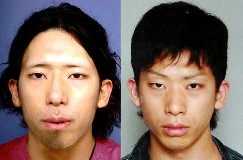
Tatsuya Ichihashi
Murderer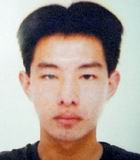 Masahiro Kanagawa
Murderer · Japan · 2008
Masahiro Kanagawa (金川 真大; Kanagawa Masahiro; born 1983) was a Japanese man. · M…
2 victims
Masahiro Kanagawa
Murderer · Japan · 2008
Masahiro Kanagawa (金川 真大; Kanagawa Masahiro; born 1983) was a Japanese man. · M…
2 victims
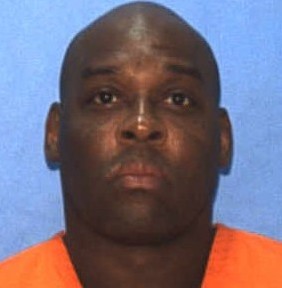 Marvin Jones
Murderer · USA · 1993
Marvin Jones (date of birth: 07/21/65) was tried in Duval County, Florida, in t…
1 victim
Marvin Jones
Murderer · USA · 1993
Marvin Jones (date of birth: 07/21/65) was tried in Duval County, Florida, in t…
1 victim
 Michael Alig
Murderer · USA · 1996
Michael Alig was the offender. · “Angel” Melendez was the victim. Michael Alig…
1 victim
Michael Alig
Murderer · USA · 1996
Michael Alig was the offender. · “Angel” Melendez was the victim. Michael Alig…
1 victim
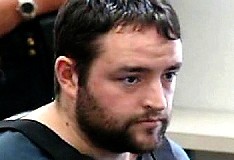 Peter James Wilson
Murderer · USA · 2010
Peter James Wilson was 29 years old. He was from Abbotsford, B.C., and had both…
1 victim
Peter James Wilson
Murderer · USA · 2010
Peter James Wilson was 29 years old. He was from Abbotsford, B.C., and had both…
1 victim
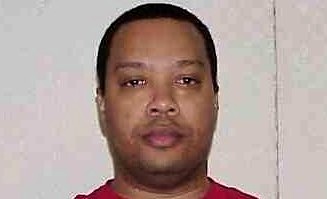 Kevin Stanford
Homicide · USA · 1981
Kevin Stanford was sentenced to death in 1982. The death sentence was commuted…
1 victim
Kevin Stanford
Homicide · USA · 1981
Kevin Stanford was sentenced to death in 1982. The death sentence was commuted…
1 victim
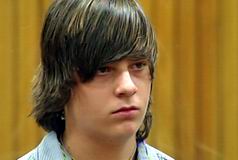 Jordan Nelson
Homicide · New Zealand · 2012
Jordan Nelson was a 13-year-old. He was New Zealand's youngest convicted murder…
1 victim
Jordan Nelson
Homicide · New Zealand · 2012
Jordan Nelson was a 13-year-old. He was New Zealand's youngest convicted murder…
1 victim
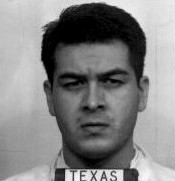 Johnny Joe Martinez
Murderer · USA · 1993
Johnny Joe Martinez was convicted of capital murder for the robbery and murder…
1 victim
Johnny Joe Martinez
Murderer · USA · 1993
Johnny Joe Martinez was convicted of capital murder for the robbery and murder…
1 victim
- Gender
- male
- Country
- Japan
- Location
- Tokyo, Japan
- Date of birth
- 1979
- Age at first offence
- 28
- Characteristics
- rape
- Victim profile
- Lindsay Ann Hawker, 22
- Method of murder
- Suffocation
- Date(s) of murder
- March 25, 2007
- Years active
- 2007
- Date of arrest
- November 10, 2009
- Status
-
Life imprisonment
Sentenced to life in prison on July 21, 2011
Case record: Tatsuya Ichihashi
Identification
- Defendant: Tatsuya Ichihashi
- Date of death of victim: 24 March 2007
- Age of victim: 22
- Place associated with victim: Brandon, near Coventry
- Victim’s full name: Lindsay Ann Hawker
- Age of defendant: 32 at sentencing
Charges and legal result
- Ichihashi was sentenced to life in prison on July 21, 2011 by the Chiba District Court for the murder of Lindsay Hawker.
- Ichihashi admitted raping Lindsay Hawker and causing her death, but said he did not intend to kill her.
Timeline
- October 2006 — Lindsay Hawker left her home in Brandon, near Coventry, to go to Tokyo to teach English with the Nova language school in Koiwa.
- March 2007 — Lindsay Hawker gave an English lesson to Tatsuya Ichihashi at a coffee shop in Tokyo.
- 25 March 2007 — At 1000 local time, Lindsay Hawker returned to Ichihashi’s apartment and informed the taxi driver to wait while she went inside briefly; the driver left after seven minutes.
- 26 March 2007 — Nova reported Hawker missing at 2.30 pm; officers reached Ichihashi’s apartment at 5.40 pm and the situation involved nine officers assembled outside by two hours after 7.00 pm; Ichihashi walked out with a rucksack in bare feet, attempted to run away, and escaped.
- 2007 (less than six months after death) — Lindsay Hawker’s body was found dead at Ichihashi’s apartment in Ichikawa City.
- March 2008 — The Hawker family flew to Japan to appeal on the one-year anniversary of her death.
- March 2009 — The Hawker family returned to Tokyo on the second anniversary of her death and unveiled life-size talking cut-outs of Ichihashi to raise the profile of the investigation.
- November 2009 — Police released pictures of how Ichihashi might look now after plastic surgery; Ichihashi (then 30) was arrested at a ferry terminal in Osaka; Foreign Office confirmation stated he was apprehended.
- 10 November 2009 — Ichihashi was arrested by Japanese police at a ferry terminal in Osaka.
- December 2009 — Ichihashi was charged with abandoning Miss Hawker’s corpse, and later that month he was charged with rape and murder.
- 4 July 2011 — In court Ichihashi told the trial he enticed Miss Hawker into his apartment, raped her, and then strangled her because he feared neighbours would hear her screams and call the police.
- 21 July 2011 — Ichihashi was sentenced to life in prison.
Background
Lindsay Hawker
Lindsay Hawker was from Brandon near Coventry and had been one of three daughters. She was schooled at King Henry VIII School, Coventry, and was an alumna of the University of Leeds, where she studied biology and had achieved a first-class honours degree, graduating in 2006. She moved to Japan in October 2006 to teach English with Nova at the Koiwa branch in Tokyo. She shared her accommodation with two other female teachers, one from Australia and the other from Canada. On the day she disappeared, her family became distressed due to her lack of contact; she had used a variety of media including e-mail, Skype, and telephone to regularly stay in contact during her time there.
Lindsay Hawker was last seen alive after giving her killer an English lesson in a coffee shop, on 25 March 2007. She agreed to give Ichihashi a private lesson and after the lesson Ichihashi persuaded her to go back to his apartment.
Bill and Julia Hawker; victim’s sisters
- Bill Hawker was Lindsay Hawker’s father.
- Julia Hawker was Lindsay Hawker’s wife (Lindsay’s mother).
- The victim’s sisters were Lisa and Louise.
- Bill Hawker said they felt they had got justice and said: “We've waited four-and-a-half years to get justice for Lindsay. We have achieved that today.”
- Bill Hawker also said: “Lindsay loved Japan, and you have not let her down,” referring to Japanese authorities.
- In a statement read when the family left England for the trial, Bill Hawker said: “We're hoping to get justice for our daughter. "That has always been our only aim."
After Lindsay Hawker’s death, Bill and Julia Hawker travelled to Japan multiple times, including appearing on television and handing out leaflets in train stations, and telling the court they spent their savings and pension funds to make sure their daughter’s killer was caught.
Tatsuya Ichihashi
Tatsuya Ichihashi was the son of wealthy doctors. He had studied horticulture at Chiba University and attended university in relation to a Department of Horticulture; he graduated in 2005. He lived in Ichikawa, in Chiba Prefecture, just east of Tokyo. His father relocated his family due to a job assignment as a medical doctor along with the dentist wife. He was described as a loner with an obsession for physical fitness: he regularly attended a gym and cycled 25 kilometres a day. He had an interest in violent manga comics. He had no previous convictions, but had been the subject of an allegation of “theft and injury” six years before Hawker’s death; the matter had been settled out of court.
Ichihashi had been in a stable, year-long relationship with a Japanese woman at the time of Hawker’s killing.
The offence
Meeting and last movements
The pair met after Lindsay Hawker felt sorry for Ichihashi. Four days before the killing happened, she was approached by him on her train journey home from work; he initially claimed she was his English teacher and then asked her to confirm if she was an English teacher. He ran after her as she cycled home and asked for a glass of water when she arrived. Hawker had decided, as a precaution, to let him in to show him her two flatmates. Once inside, Ichihashi took out a pen and paper, drew a picture of her, and signed it with his name, telephone number, and e-mail address. They agreed to meet for an English lesson four days later at a cafe, which Nova allowed.
Events described meeting on Saturday 24 March 2007 in the cafe. After the session concluded, they caught a taxi to Ichihashi’s apartment, a few hundred yards down the road. Hawker told the taxi driver to wait for a short time and went up to Ichihashi’s apartment; seven minutes later, the taxi driver left after she failed to arrive.
Discovery of the body
Lindsay Hawker’s naked body was found:
- battered, bruised, bound and buried in a bathtub full of soil and sand on a balcony of his flat, and
- the body was buried in a sand-filled bathtub in the defendant’s apartment in Ichikawa City in March 2007 (found less than six months later in one account).
Police found her body battered, bruised, and bound, and buried in a bathtub full of soil and sand. Her possessions were strewn across the room. Police said the egg-sized bruises on the left side of her face appeared to have been inflicted with a fist, while lesser marks on her upper body were the result of collision with furniture. Hawker had died when her assailant began strangling her and broke the cartilage of her neck, and her head was shaved after she was killed. It was widely reported in the days after her death that Ichihashi had buried her only in sand, but the record also said he buried the body in sand and compost soil and sprayed it with a substance used to compact and decompose waste. It was believed this had been done with a plan to either bury the body in concrete or wait until it had decomposed.
How Ichihashi described the killing
Ichihashi testified that he raped Hawker as soon as they stepped through the door and later claimed he tried to revive her after accidentally suffocating her in an attempt to stop her from crying out for help. At the trial, he admitted raping Miss Hawker and causing her death but said he did not intend to kill her.
On 4 July 2011, Ichihashi told the trial he enticed Miss Hawker into his apartment, raped her, and then strangled her because he feared neighbours would hear her screams and call the police. He claimed he could not remember strangling her.
At trial, Ichihashi said: “I did not intend to kill her, but I am responsible for her death.” He also said: “I am very sorry for what I did.”
In court, Ichihashi admitted to suffocating Hawker to prevent her from screaming for help while he raped her.
Investigation
Suspicions and warrant
Police suspected that between Sunday night and early Monday, Ichihashi moved the bathtub from the bathroom to the balcony and put Hawker’s body into it. Neighbours said they heard sounds of something striking metal and something being dragged during that time.
An arrest warrant was issued on suspicion of abandoning her body, and Ichihashi was put on the nationwide wanted list. Detectives removed a shopping trolley from Ichihashi’s apartment building on 29 March, which police believed he used to transport bags of horticultural soil where Hawker was buried.
Manhunt details and leads
Ichihashi evaded police for more than two years despite a nationwide manhunt in which a reward of 10 million yen was offered for tips leading to his arrest. A later account said police raided a hotel near Nishi-Funabashi Station with rooms rented to couples by the hour but did not find Ichihashi.
On 13 March 2008, Japanese police released a new wanted poster including an enhanced image of the suspect disguised as a woman, and released images of a drawing Ichihashi had made of Hawker in the hopes someone would recognize the drawing style.
In early 2008, police investigated sightings of Ichihashi among the gay sections of Kabukicho in Tokyo, where he had been tentatively identified by his male sexual partners. By the latter part of 2008, the investigation appeared to have gone cold. In October 2008, as 140 officers became involved, it was suggested by police that Ichihashi may have committed suicide; Hawker’s father called this a “ploy” to scale down the operation. However, it was not communicated to either the Hawker family or the British Foreign Office.
On 15 January 2009, an article in Japan Today reported that Ichihashi had fled and gone underground in the Philippines, according to a reporter from Spa!; the account added that the Philippines was seen as a haven for Japanese criminals wanted by Japanese authorities.
Reward increase and informants
On 26 June 2009, the Japanese National Police Agency raised the cash reward for information leading to the arrest of Tatsuya Ichihashi from ¥1 million to ¥10 million. Questions were raised about distribution of the reward because multiple informants contributed to his capture, including:
- a cosmetic surgery clinic in Nagoya,
- an employee at an Osaka construction company where Ichihashi had been employed for 14 months, and
- an Osaka ferry company employee who reported the sighting of someone resembling Ichihashi.
Plastic surgery and media disclosure
On 4 November 2009, police disclosed that Ichihashi had undergone plastic surgery on 24 October at the clinic in Nagoya, where he had his nose uplifted after failing to receive surgery in Fukuoka in mid-October. Police said he received cosmetic surgery on several occasions to remove two moles on his cheek, add a fold to his eyelids, thin both his lips, and to increase the height of his nose before visiting the Nagoya clinic. Police released a photograph taken immediately before his latest surgery to the press.
Arrest and custody
Capture
On 10 November 2009, Ichihashi was captured in Osaka while attempting to board a ferry to Okinawa.
Detention and initial charging
Ichihashi did not confess upon being arrested. When his 23-day detention period without charge expired on December 2, he was initially charged with abandoning a body, and served two more warrants for rape and murder. It was alleged by Ichihashi’s lawyers that during this period he was threatened with the death penalty if he did not speak, and his reticence was attributed to fatigue and stress.
On 23 December, one of his lawyers announced that he acknowledged involvement in her death but had not intended to kill her and had attempted artificial resuscitation.
Trial
Court proceedings and defendant’s conduct
Ichihashi sat before the judges with his head bowed and unmoving. At the start of each day’s proceedings, and each time he was brought in after a break, he performed a deep bow to the Hawker family as a gesture of apology; the Hawkers hid their faces so as not to see it.
Admissions and claims
At the start of the trial, Ichihashi admitted raping Miss Hawker and causing her death but said he did not intend to kill her. The defence said Ichihashi had tried to revive his English teacher after accidentally suffocating her in an attempt to stop her from crying out for help.
During his testimony, interrupted by sobs, Ichihashi admitted raping their daughter. He said he was responsible for her death by strangling her to stop her crying out, but did not intend to kill her; the defence of not intending to kill was rejected by judges and jurors.
Quotes and requests regarding sentence
The parents had called for their daughter’s killer to be given the maximum punishment for his crimes. During sentencing, Bill Hawker asked for the heaviest sentence available for Ichihashi under Japanese law.
Sentencing
On 21 July 2011, Ichihashi was sentenced to life in prison for the murder of Lindsay Hawker by the Chiba District Court. The Hawker family had asked for the death penalty, but the court felt that the death penalty was not appropriate because Ichihashi had no previous convictions and at the age of 32 there was still a chance he could be rehabilitated. Judge Masaya Hotta said Ichihashi should not receive the death penalty because he had no previous criminal record and as he was aged 32, there was still a slight chance he could be rehabilitated.
Outcome
- Legal outcome: life imprisonment on July 21, 2011 for the murder of Lindsay Hawker.
- Ichihashi had admitted raping Lindsay Hawker and had been convicted for her murder.
Aftermath and related details
Trial attendance and interpreter
British couple Bill and Julia Hawker sat in court near Ichihashi during the trial. Every word of the case, including detail of Miss Hawker’s last hours and death, was relayed to them by an interpreter.
Additional witnesses and comments
Sean Moore, who had lived in Brandon for 18 years, said he knew the Hawker family “by sight” and said: “It was just a terrible shock when it happened and I think we've all been right behind the family to see that justice is... done for them”.
George Fisher, former head of Miss Hawker’s old school King Henry VIII in Coventry, said he was very pleased for the family that “at last they've got some sort of justice.” He added: “Whether it will help them to get closure on Lindsay's death, well I can only hope so,” Mr Fisher said.
Media and other comparisons
Hawker’s case was repeatedly compared to the 2000 murder of Lucie Blackman, another female British citizen, whose dismembered body was found buried in a shallow grave at a beach in Miura, Kanagawa in January 2001. Mizuho Fukushima, quoted in The Asia Pacific Journal, and Jenny Holt in the Guardian criticized sensationalist coverage and characterized it as a combination of “missing white woman syndrome” and “yellow peril” racial scaremongering.
A three-part radio play loosely based on the Hawker case, “A Tokyo Murder,” by John Dryden and Miriam Smith, was broadcast by BBC Radio 4 in September 2008.
Books and offers of royalties
Ichihashi published a book in which he confessed to the killing and described cosmetic surgery to change his appearance, including cutting his own lip and removing moles from his face. One account named the book as Until the Arrest; another named it as Until I Was Arrested.
Ichihashi offered Hawker’s family all royalties his book might earn, and the offer was rejected by the family.
Additional operational details from the investigation
It was stated that after police found her body, Ichihashi went on the run and at one point fled past officers as they questioned neighbours. Police said they were not permitted to knock without proper cause when officers reached Ichihashi’s apartment. When officers went inside, they found Miss Hawker’s body buried in a bathtub full of soil and sand on a balcony.
The record also described that Ichihashi lost the officers after vaulting the last few feet of the stairway to the ground, but was later rediscovered having found a pair of athletic shoes before escaping again by zigzagging through the street. The contents of his rucksack were described as gym clothes and police believed he was going there to wash them.
People named in the case (as referenced)
- Lindsay Hawker (victim)
- Bill Hawker (father)
- Julia Hawker (wife/mother)
- Lisa (sister of Lindsay Hawker)
- Louise (sister of Lindsay Hawker)
- Tatsuya Ichihashi (defendant)
- Ryan Garside (Lindsay Hawker’s boyfriend)
- Sean Moore (commentator; stated he knew the Hawker family “by sight”)
- George Fisher (former head of King Henry VIII School)
- Yoshiji Nogami (Japanese Ambassador, referenced in relation to funeral attendance)
- Margaret Beckett (then Foreign Secretary, referenced in relation to an appeal to Japanese media)
- John Dryden (writer of “A Tokyo Murder” radio play)
- Miriam Smith (writer of “A Tokyo Murder” radio play)
- Judge Masaya Hotta (sentencing judge)
- Stephen Green (commentator, writing for the Japan Times)
- Mizuho Fukushima (critic, quoted in The Asia Pacific Journal)
- Jenny Holt (critic, writing for the Guardian)
- Detectives/officers and Japanese police (referenced collectively)
- Japanese National Police Agency (reward-related entity)
- Foreign Office (referenced as confirming arrest reporting)
Spotted an error, or have more information about this case?