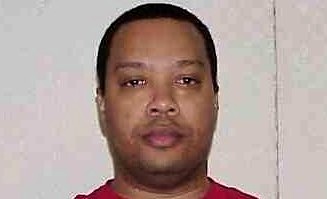
Kevin Stanford
Homicide Jack Kevorkian
Homicide · USA · 1990
Jack Kevorkian (born May 26, 1928) was a controversial American pathologist. He…
130 victims
Jack Kevorkian
Homicide · USA · 1990
Jack Kevorkian (born May 26, 1928) was a controversial American pathologist. He…
130 victims
 Edward Charles Allaway
Homicide · USA · 1976
Edward Charles Allaway Edward Charles Allaway was found not guilty by reason of…
7 victims
Edward Charles Allaway
Homicide · USA · 1976
Edward Charles Allaway Edward Charles Allaway was found not guilty by reason of…
7 victims
 Clinton Bankston
Homicide · USA · 1987
15 August 1987 — Ann Morris (63), her sister Sally Nicholson (59), and Sally’s…
5 victims
Clinton Bankston
Homicide · USA · 1987
15 August 1987 — Ann Morris (63), her sister Sally Nicholson (59), and Sally’s…
5 victims
 Francisco Das Chagas
Serial killer · Brasil · 1989
Francisco das Chagas was a bicycle mechanic in Brazil. He confessed to killing…
42 victims
Francisco Das Chagas
Serial killer · Brasil · 1989
Francisco das Chagas was a bicycle mechanic in Brazil. He confessed to killing…
42 victims
 Jose Martinez High
Homicide · USA
Jose Martinez High · July 26, 1976 — Jose High, Nathan Brown and Judson Ruffin…
1 victim
Jose Martinez High
Homicide · USA
Jose Martinez High · July 26, 1976 — Jose High, Nathan Brown and Judson Ruffin…
1 victim
 Paul David Bailey
Murderer · and make sure he never gets out." Safe-Nz.org.nz Paul David Bailey home last updates contact · 1991
Paul David Bailey was a convicted serial rapist. The Departmental psychologist’…
1 victim
Paul David Bailey
Murderer · and make sure he never gets out." Safe-Nz.org.nz Paul David Bailey home last updates contact · 1991
Paul David Bailey was a convicted serial rapist. The Departmental psychologist’…
1 victim
 Gary Graham
Homicide · USA · 1981
Gary Graham, also known as Shaka Sankofa (born Gary Lee Graham; September 5, 19…
1 victim
Gary Graham
Homicide · USA · 1981
Gary Graham, also known as Shaka Sankofa (born Gary Lee Graham; September 5, 19…
1 victim
 Monique Lee
Murderer · USA · 2010
Monique Lee was the tenant whose eviction led to the killing of her landlord, O…
1 victim
Monique Lee
Murderer · USA · 2010
Monique Lee was the tenant whose eviction led to the killing of her landlord, O…
1 victim
- Gender
- male
- Country
- USA
- Location
- Jefferson County, Kentucky, USA
- Date of birth
- August 23, 1963
- Age at first offence
- 18
- Characteristics
- rape, robbery, juvenile (17)
- Victim profile
- Baerbel Poore, 20 (service station attendant)
- Method of murder
- Shooting
- Date(s) of murder
- January 7, 1981
- Years active
- 1981
- Date of arrest
- —
- Status
-
Life imprisonment
Sentence commuted to life in prison on 8 December 2003
Case record: Kevin Stanford
Status and clemency
Kevin Stanford was sentenced to death in 1982. The death sentence was commuted to life in prison by outgoing Governor Paul Patton on 8 December 2003.
The offence
In 1981, a 17-year-old killer robbed a Checker gasoline station during the evening in southwestern Jefferson County, stealing cigarettes, two gallons of fuel, and a small amount of cash. During and after the commission of the robbery, the killer took the attendant, a young mother of an infant child, and repeatedly raped and sodomized her on the restroom floor of the gas station.
After the robbery and assault, the victim was taken from the station and driven a short distance to an isolated area where she was shot twice: once in the face and once in the back of the head. The proceeds from the robbery were roughly 300 cartons of cigarettes, two gallons of fuel, and a small amount of cash.
Victim
The victim was Baerbel Poore, a 20-year-old service station attendant and a single parent working nights at a Louisville gas station to support an 11-month-old daughter.
Perpetrator identity and age
Kevin Stanford was an African American and was 17 years of age at the time of his arrest. The crime occurred on January 7, 1981, when he was approximately 17 years and 4 months of age.
Trial
Stanford received incoherent and weak representation at both the guilt/innocence and sentencing phases of the trial.
At the guilt/innocence phase, no attempt was made to either challenge prejudicial testimony that accused Stanford of bragging about the killing, or to pursue evidence of two eyewitnesses who had positively identified someone else as being at the murder scene. Stanford was easily convicted of murder.
Stanford was convicted of murder, first-degree sodomy, first-degree robbery, and receiving stolen property. He was sentenced to death and 45 years in prison.
Appeals and post-conviction proceedings
A motion for a new trial and sentencing pursuant to Kentucky Rule of Criminal Procedure 11.42 was filed in the Jefferson Circuit Court in April 1990. Less than two months after it was filed, the court denied Kevin's motion without an evidentiary hearing. The Supreme Court of Kentucky affirmed in Stanford v. Commonwealth, Ky., 854 S.W.2d 742 (1993).
Stanford's petition for a writ of habeas corpus was then denied, without an evidentiary hearing, by the United States District Court for the Western District of Kentucky in December 1999. The United States Court of Appeals for the Sixth Circuit denied his habeas appeal on September 20, 2001, in Stanford v. Parker, 266 F.3d 442 (6th Cir. 2001). Rehearing en banc was denied on November 29, 2001. The U.S. Supreme Court denied cert on October 7, 2002.
Review on the juvenile death penalty issue, in the form of an original habeas, was denied on October 21, 2002, by the United States Supreme Court. Four justices (Stevens, Souter, Ginsburg, and Breyer) dissented from the denial of review. Stanford exhausted his appeals.
Supreme Court opinions: Stanford v. Kentucky; Wilkins v. Missouri
Oral arguments were heard 26 March 1989.
In both Stanford v. Kentucky and the parallel case Wilkins v. Missouri, the Supreme Court affirmed the capital punishments handed down in lower courts. Justice Antonin Scalia wrote for the majority.
“We discern neither a historical nor a modern societal consensus forbidding the imposition of capital punishment on any person who murders at 16 or 17 years of age. Accordingly, we conclude that such punishment does not offend the Eighth Amendment's prohibition against cruel and unusual punishment.”
Justice Sandra Day O'Connor agreed that no national consensus forbade the imposition of capital punishment on 16- or 17-year-old murderers but concluded the court had a constitutional obligation to conduct proportionality analysis and should consider age-based statutory classifications relevant to that analysis (citing Penry v. Lynaugh).
Justice Brennan filed a dissenting opinion, joined by Justices Marshall, Blackmun, and Stevens.
Hearing materials and amicus briefs
Prior to the hearing, briefs of amici curiae pushing for reversal were filed by the American Baptist Churches, the Child Welfare League of America, and the West Virginia Council of Churches. Briefs supporting the affirmation of the capital sentence were filed by the Attorney General of Kentucky, and a number of attorneys general from other states.
In both cases, briefs of amici curiae were also put forth by the American Bar Association, the American Society for Adolescent Psychiatry, the International Human Rights Group, and Amnesty International.
The arguments in defense of petitioners Stanford and Wilkins were that the application of capital punishment upon defendants who were minors at the time of the offense was unconstitutional because it violated the prohibition of “cruel and unusual punishment” under the Eighth Amendment to the United States Constitution.
Sentencing and mitigation issues
Owing to the fact that Kevin's attorneys had done little investigation, there was minimal mitigating evidence presented at Stanford's sentencing phase, which was the last opportunity the attorneys had to save his life. No in depth social history investigation was carried out, a fundamental responsibility as a trial attorney. Owing to this error, the jury never heard an accurate portrayal of Kevin Stanford's life.
The record included claims that the jury never heard an accurate portrayal because, if the attorneys had conducted mitigation investigation, they would have located numerous witnesses who would have testified about severe neglect and abuse shaping Kevin's life.
The Kentucky Supreme Court affirmed the death sentence and rejected Stanford's “deman[d] that he has a constitutional right to treatment.” It found that “there was no program or treatment appropriate for the appellant in the juvenile justice system,” and held the juvenile court did not err in certifying Stanford for trial as an adult. The court also stated that Stanford's “age and the possibility that he might be rehabilitated were mitigating factors appropriately left to the consideration of the jury that tried him.”
Background and childhood history (mitigation)
Kevin Stanford was born in Louisville, Kentucky on August 23, 1963. He grew up without knowing his father. His mother frequented a local motorcycle club, and he was exposed to neglect, maltreatment, and violence at a very young age. His mother and other motorcycle members used cocaine and speed freely in front of him, and the members gave him his first shot of whiskey at age five. His mother never took responsibility for or care of him, shuffling him from relative to relative, where he was beaten in most of these homes.
When he lived with his aunt, he was severely beaten with long extension cords, and he still bore scars. At age three or four, he and his young cousins inadvertently set his aunt's house on fire while trying to cook themselves a meal. The narrative also stated that he lacked normal access to basics of life including food, medicine, and adult supervision, and that at four years old he understood he had to barter in order to survive by going to restaurants and working for food to eat that day.
Frequent sexual assaults were described as part of his childhood. He was first molested at age five by his babysitter, with continued assaults for many months. The narrative stated that neighborhood boys intimidated him into performing oral sex on them and neighborhood girls also coerced him into having sex.
He was also described as abused for over three years by the stepfather's nephew. It stated that, to survive, he began to perform sexual acts in exchange for drugs, money, and a place to stay, and that this exchange continued up to the day of his arrest.
Drug use and juvenile facility history
With the onset of adolescence, the narrative stated he used drugs and alcohol more frequently. At twelve, he was using alcohol and marijuana on a daily basis. When he entered juvenile facilities, he was introduced to LSD, hashish, and amphetamines. It also stated that at one juvenile facility he attempted suicide but failed.
IQ test scores
The narrative described a range of IQ test scores. It said an IQ score between 90 and 100 is considered average, while a score below 70 is indicative of mental retardation. His scores ranged from a high of 116 at age six to a low of 70 at ages ten and fifteen. It stated that later scores rose to 92 and 94 at ages seventeen and twenty-nine respectively. It asserted that two IQ scores of 70 strongly indicated intellectual and scholastic problems resulted from trauma from sexual and physical abuse, neglect and isolation, environmental deprivation, and constant disruptions and uncertainties of family life, compounded by drug and alcohol abuse. It further stated that his attorney failed to adequately present and explain these findings and the possible causes for the varying test scores, giving the jury a woefully inadequate and incomplete picture of who Kevin Stanford was.
Appellate and execution-related reporting details
It was stated that Stanford was convicted at age 17, and the execution issue involved whether juvenile offenders could be executed. It was stated that the Supreme Court of the United States sanctioned the imposition of the death penalty on offenders who were at least 16 years of age at the time of the crime, and that this decision came one year after Thompson v. Oklahoma, where a 15-year-old offender could not be executed because to do so would constitute cruel and unusual punishment.
It was also stated that in 2003 Governor Paul Patton commuted the death sentence of Kevin Stanford, followed by Roper v. Simmons overruling Stanford and holding that all juvenile offenders were exempt from the death penalty.
Governor Paul Patton clemency decision
The plan to commute was announced by Governor Paul Patton. It was stated that Patton said:
“That is a case, in my opinion, where the justice system perpetuated an injustice.”
It was also stated Patton said:
“As you will note, I have not set an execution date for Mr. Stanford and he is certainly one of the people that I will correct an injustice for.”
Patton revealed his plans during an afternoon news conference in which he pardoned his chief of staff Andrew “Skipper” Martin and 3 others accused of breaking campaign finance laws in 1995.
It was reported that Patton said he would not sign a death warrant for Kevin Stanford because of Stanford's age at the time of the crime. It was also stated that Governor Paul Patton said:
“I don't know what action that I will take on that case.”
It was further stated he said:
“But I will settle that case once and for all before I leave office.”
Marriage and family
While incarcerated, it was stated Kevin Stanford worked hard to educate himself. He and his wife Eileen had been married for six years. Their daughter, Lakiesha, was born within the month following his arrest, and was almost 21 years old and a sophomore at Northern Kentucky University.
Other details
The proceeds and facts of the robbery and assault were described as involving the murder of Baerbel Poore and her being shot twice. It was reported that she was left kneeling in the back seat of her mother's Chevrolet Impala, with jeans and underwear around her ankles.
It was also stated that Stanford's sentencing involved the Kentucky Legislature considering the issue of the juvenile death penalty, and that Patton announced he would support a bill that would end the execution of juvenile offenders.
Timeline
- 7 January 1981 — Kevin Stanford committed the murder, robbery, sodomy, and theft of Baerbel Poore.
- April 1990 — A motion for a new trial and sentencing pursuant to Kentucky Rule of Criminal Procedure 11.42 was filed in Jefferson Circuit Court.
- December 1999 — Stanford's petition for a writ of habeas corpus was denied, without an evidentiary hearing, by the United States District Court for the Western District of Kentucky.
- September 20, 2001 — The United States Court of Appeals for the Sixth Circuit denied Stanford's habeas appeal in Stanford v. Parker, 266 F.3d 442 (6th Cir. 2001).
- November 29, 2001 — Rehearing en banc was denied.
- October 7, 2002 — The U.S. Supreme Court denied cert.
- October 21, 2002 — Review on the juvenile death penalty issue, in the form of an original habeas, was denied; four justices dissented.
- 8 December 2003 — Outgoing Governor Paul Patton commuted Stanford's death sentence to life in prison.

Spotted an error, or have more information about this case?