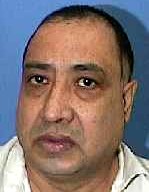
Ramiro Rubi Ibarra
Murderer Brian Kevin Rosenfeld
Murderer · USA · 1985
Brian Kevin Rosenfeld Brian Kevin Rosenfeld was sentenced to three concurrent l…
23 victims
Brian Kevin Rosenfeld
Murderer · USA · 1985
Brian Kevin Rosenfeld Brian Kevin Rosenfeld was sentenced to three concurrent l…
23 victims
 Yahweh ben Yahweh
Murderer · USA · 1980
Yahweh ben Yahweh was born and legally named Hulon Mitchell Jr. (October 27, 19…
23 victims
Yahweh ben Yahweh
Murderer · USA · 1980
Yahweh ben Yahweh was born and legally named Hulon Mitchell Jr. (October 27, 19…
23 victims
 Russell Ellwood
Murderer · USA · 1991
Russell Ellwood was a former taxi driver. Authorities suspected him of killing…
20 victims
Russell Ellwood
Murderer · USA · 1991
Russell Ellwood was a former taxi driver. Authorities suspected him of killing…
20 victims
 Nicholas Yarris
Justice miscarriage · USA · 1981
Nicholas Yarris Nicholas Yarris was sentenced to death on January 23, 1983. His…
0 victims
Nicholas Yarris
Justice miscarriage · USA · 1981
Nicholas Yarris Nicholas Yarris was sentenced to death on January 23, 1983. His…
0 victims
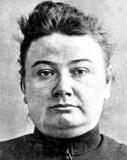 Jeanne Weber
Serial killer · France · 1905
Jeanne Weber (born 7 October 1874) was a French child-care provider and serial…
10 victims
Jeanne Weber
Serial killer · France · 1905
Jeanne Weber (born 7 October 1874) was a French child-care provider and serial…
10 victims
 Salvador Tapia
Mass murderer · USA · 2003
Salvador Tapia, 36, returned to Windy City Core Supply after being fired from t…
6 victims
Salvador Tapia
Mass murderer · USA · 2003
Salvador Tapia, 36, returned to Windy City Core Supply after being fired from t…
6 victims
 John S. Williams
Murderer · USA · 1910
John S. Williams was convicted of murder and sentenced to life imprisonment on…
18 victims
John S. Williams
Murderer · USA · 1910
John S. Williams was convicted of murder and sentenced to life imprisonment on…
18 victims
 Frank Basil McFarland
Murderer · USA · 1988
Frank Basil McFarland was executed by lethal injection in Texas on April 29, 19…
1 victim
Frank Basil McFarland
Murderer · USA · 1988
Frank Basil McFarland was executed by lethal injection in Texas on April 29, 19…
1 victim
- Gender
- male
- Country
- USA
- Location
- McLennan County, Texas, USA
- Date of birth
- May 10, 1954
- Age at first offence
- 33
- Characteristics
- rape, convicted rapist
- Victim profile
- Maria Zuniga (female, 16)
- Method of murder
- Strangulation with an electrical cord
- Date(s) of murder
- March 6, 1987
- Years active
- 1987
- Date of arrest
- October 10, 1996
- Status
-
Sentenced to death
Sentenced to death December 10, 1997
Case record: Ramiro Rubi Ibarra
Background
Ramiro Rubi Ibarra was a Hispanic male. His hair color was black, and he weighed 200. His eye color was brown, and his height was 5-6. His date of birth was 05/10/54. His education level was 12/10/97 (43). His race was Hispanic, and his gender was male. He was a native county and state from Chalchihuites, Zacatecas Mexico.
Ibarra’s prior occupation was laborer in Chalchihuites, Zacatecas Mexico. He had no prior prison record.
Ibarra’s TDCJ number was 999247.
Ibarra was living in Bell County when he was arrested on October 10, 1996.
The offence
On 03/06/1987, Ibarra sexually assaulted and murdered a 16-year-old Hispanic female. The victim was looking after her two young nephews inside her home when she was attacked by Ibarra, a family acquaintance. The victim was beaten, raped, and then strangled with an electrical cord.
Ibarra was found with scratches on his face and torso when questioned. Skin from under the victim’s fingernails was later identified as Ibarra’s.
Investigation
Ibarra’s arrest followed forensic and evidence issues in the case. Hair and blood sample evidence taken from him were thrown out by a judge after Ibarra’s lawyer, John Segrest, showed the search warrant used by police was improper. Ibarra was released.
A change in state law in 1995 allowed police to go back into the case, obtain another warrant, and get evidence to tie Ibarra to the slaying.
Arrest
Ibarra was arrested the day her body was found. He was arrested in October 1996, and he was living in Bell County at that time.
Trial
The jury found appellant guilty of the offense of aggravated sexual assault of a child younger than fourteen years of age.
The indictment alleged the offense occurred "on or about June 15, 1990." Trial was held in December 1997, when the victim was 15 years of age.
The trial court assessed punishment at confinement for life.
Ibarra asserted four points of error, contending that Ibarra was denied a fair trial because:
- the State's attorney engaged in prosecutorial misconduct;
- a witness made a nonresponsive answer that alluded to an inadmissible extraneous offense;
- the trial court refused appellant's request for a limiting instruction concerning extraneous offenses; and
- the trial court caused the life sentence in the instant cause to run consecutively with a death penalty previously assessed by another court.
Prosecutorial misconduct and related rulings
Appellant’s complaint of prosecutorial misconduct was based on the prosecutor:
- asking a witness leading questions which injected the prosecutor's personal opinion;
- insinuating that appellant was deceiving the jury by exercising his right to have an interpreter; and
- making a jury argument that injected new and harmful facts.
The appellate discussion included the following verbatim exchange regarding the prosecutor’s argument:
What kind -- what is in your heart and in your mind when you do those sort of things to a young man, and you do it over and over?
You think it was for sexual gratification? He's got a wife in the other room. It's because he's big into pain, he's big into hurting people, he's big into robbing you of your dignity, and anything else he can take from you.
MR. HURLEY [defense counsel]: Your Honor, I'm going to object to this. This is outside the evidence. He's arguing matters that are not in evidence.
THE COURT: Your objection is overruled. But, ladies and gentlemen, what the attorneys say, either side, is not the evidence in the case. You're the judges of the evidence, and it's your recollection of the evidence and testimony that controls. Go ahead, Mr. Carroll
MR. CARROLL [prosecutor]: It wasn't a crime for sex. This is a crime where he can dominate, abuse, inflict pain, and hurt people. That's what he's into. That's what's in his heart. That's what's in his mind. That's what he lives for.
The appellate decision overruled all four points of error and affirmed the judgment of the trial court.
Witness testimony about extraneous offenses
During defense counsel's cross-examination of the victim’s mother, the following occurred: Q: Ms. Gandara, I believe you stated that when Mr. Ibarra [appellant] and your sister, Maria, moved from Waco into the house on North Main that they had a child who was sick at that time and that it shortly thereafter died; is that correct? A: Okay. Not that time. He died before he got incarcerated.
The trial court instructed the witness to "just answer the questions he asks." Appellant’s objection to the answer was sustained, but the trial court overruled defense counsel's request for an instruction to the jury to not consider the witness' response.
Limiting instruction on extraneous offenses
The appellate discussion addressed the timing and use of limiting instructions concerning extraneous offenses. The trial court gave appellant's requested instruction limiting the purpose for which the jury might consider the testimony of the extraneous offenses at the conclusion of the victim's testimony, and the trial court's charge to the jury included a like instruction.
Appellant raised no question about the sufficiency of the trial court's instructions, only that the oral instruction following the victim's testimony was not timely.
Consecutive sentence issue
Appellant urged that the trial court granted the State's request to have the life sentence in the instant cause run consecutively with a death penalty that appellant had previously received in McLennan County. Appellant argued that the law did not compel doing what was impossible, because appellant could not serve a life sentence if he is put to death. The trial court had the discretion to order a sentence in the cause before it to begin when a sentence in a prior case ceases to operate.
Sentencing
In the case reflected by the appellate decision, the trial court assessed punishment at confinement for life.
A death penalty had previously been assessed by another court in McLennan County, and the life sentence was ordered to run consecutively with that death penalty.
Ibarra was sentenced to death on December 10, 1997.
Appeals
Ibarra’s direct appeal was decided by the Texas Court of Appeals, Third District, at Austin, in cause number 03-98-00017-CR.
The appellate court overruled each of appellant’s four points of error and affirmed the judgment of the trial court.
Later, a federal district judge had issued a stay for Ibarra pending the outcome of the Medellin case. State attorneys said the outcome of the Medellin case should allow the stay to be lifted.
Ibarra later lost an appeal before the U.S. Supreme Court; the justices refused to review Ibarra’s case.
Ibarra had argued he was mentally retarded and ineligible for capital punishment under Supreme Court guidelines. The Supreme Court in March rejected the consular-violation claim in another Texas case involving condemned prisoner Jose Medellin.
Outcome
The U.S. Supreme Court refused to review Ramiro Rubi Ibarra’s case, moving him closer to execution. Ibarra did not have an execution date.
Relief was denied on a claim that Ibarra was mentally retarded and may not be executed.
A later subsequent application was dismissed because Ibarra did not meet the requirements of Section 5 under Article 11.071 in relation to claims about Vienna Convention consular rights and related review.
Aftermath
A stay had been in place pending the outcome of Medellin and was expected to be lifted following that outcome.
Ibarra’s lawyer at the Supreme Court-related stage was Russell Hunt Jr. In an earlier stage, Ibarra’s lawyer was John Segrest, who later was elected district attorney in McLennan County and recused his office from the trial.
Timeline
- 03/06/1987 — Ibarra sexually assaulted and murdered a 16-year-old Hispanic female.
- 03/06/87 — Ibarra’s age at the offense was 32; the county listed was McLennan.
- 06/15/1990 — The indictment alleged the offense occurred "on or about June 15, 1990."
- October 10, 1996 — Ibarra was arrested and was living in Bell County at the time of arrest.
- December 1997 — Trial was held; the victim was 15 years of age; the jury found Ibarra guilty of aggravated sexual assault of a child younger than fourteen years of age; the trial court assessed punishment at confinement for life.
- January 14, 1999 — The appellate court affirmed the judgment of the trial court.
- April 4, 2001 — Relief was denied on an initial application for writ of habeas corpus (Ex parte Ibarra WR-48,832-01).
- 2006 — A state court hearing occurred in which Ibarra’s lawyers argued he had an IQ of 65; the judge denied the claim based on the only evidence being an unsworn affidavit from a psychologist in Puerto Rico.
- May 19, 2008 — Ibarra lost an appeal before the U.S. Supreme Court.
- September 26, 2007 — A per curiam order dismissed a second subsequent application and denied relief on mental-retardation grounds (relief denied; second subsequent application dismissed).
Other details
Ibarra’s co-defendants were listed as none.
The appellate decision included the case styling: TEXAS COURT OF APPEALS, THIRD DISTRICT, AT AUSTIN NO. 03-98-00017-CR Ramiro Rubi Ibarra, Appellant v. The State of Texas, Appellee FROM THE DISTRICT COURT OF BELL COUNTY, 264TH JUDICIAL DISTRICT NO. 46,608 HONORABLE RICK MORRIS, JUDGE PRESIDING
The appellate decision noted "Affirmed" and referenced that the justices were: Tom G. Davis, Justice Before Justices B. A. Smith, Powers * and Davis ** Filed: January 14, 1999

Spotted an error, or have more information about this case?