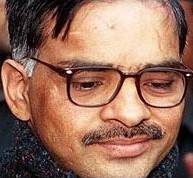
Javed Iqbal
Serial killer Amir Qayyum
Serial killer · Pakistan · 2005
Amir Qayyum was described as a psychopathic drug addict who wanted to take reve…
14 victims
Amir Qayyum
Serial killer · Pakistan · 2005
Amir Qayyum was described as a psychopathic drug addict who wanted to take reve…
14 victims
 Muhammad Yousaf
Serial killer · Pakistan · 2010
Muhammad Yousaf was convicted in a notorious murder case registered by the Mura…
13 victims
Muhammad Yousaf
Serial killer · Pakistan · 2010
Muhammad Yousaf was convicted in a notorious murder case registered by the Mura…
13 victims
 Luis Alfredo Garavito
Serial killer · Colombia/Ecuador · 1992
Luis Alfredo Garavito Cubillos, also known as "La Bestia" ("The Beast") or "Tri…
192 victims
Luis Alfredo Garavito
Serial killer · Colombia/Ecuador · 1992
Luis Alfredo Garavito Cubillos, also known as "La Bestia" ("The Beast") or "Tri…
192 victims
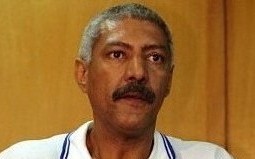 Edson Isidoro Guimaraes
Serial killer · Brazil · 1999
Edson Isidoro Guimarães was a Brazilian nursing assistant and nurse’s aide at S…
131 victims
Edson Isidoro Guimaraes
Serial killer · Brazil · 1999
Edson Isidoro Guimarães was a Brazilian nursing assistant and nurse’s aide at S…
131 victims
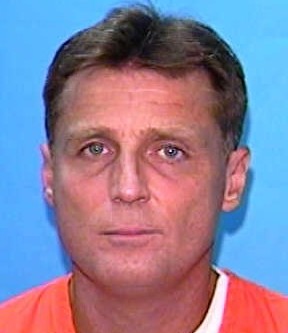 Glen Edward Rogers
Serial killer · USA · 1993
Glen Edward Rogers was a spree killer whose cross-country rampage in 1994-95 le…
70 victims
Glen Edward Rogers
Serial killer · USA · 1993
Glen Edward Rogers was a spree killer whose cross-country rampage in 1994-95 le…
70 victims
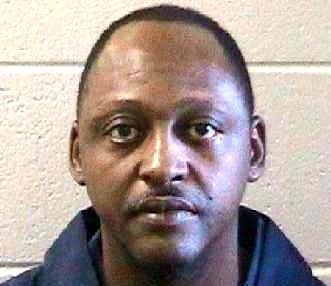 Ronnie Thornton
Murderer · USA · 1991
Ronnie Thornton was sentenced to death on January 11, 1993. His convictions wer…
1 victim
Ronnie Thornton
Murderer · USA · 1991
Ronnie Thornton was sentenced to death on January 11, 1993. His convictions wer…
1 victim
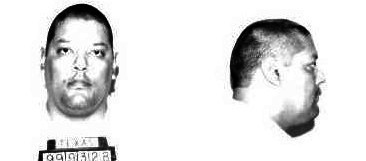 Louis Castro Perez
Murderer · USA · 1998
Louis Castro Perez was listed as a condemned killer with TDCJ Number 999328. He…
3 victims
Louis Castro Perez
Murderer · USA · 1998
Louis Castro Perez was listed as a condemned killer with TDCJ Number 999328. He…
3 victims
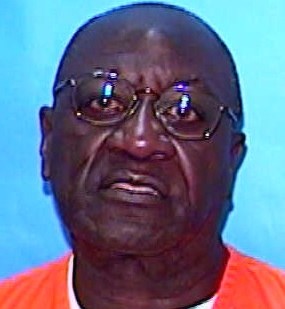 Theodore Rodgers
Murderer · USA · 2001
Theodore Rodgers was sentenced to death on June 16, 2004 for the murder of his…
1 victim
Theodore Rodgers
Murderer · USA · 2001
Theodore Rodgers was sentenced to death on June 16, 2004 for the murder of his…
1 victim
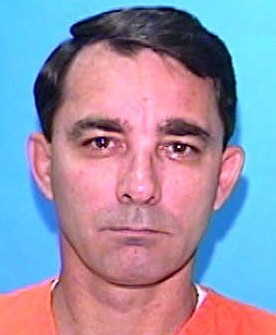 Joel Dale Wright
Murderer · USA · 1983
Joel Dale Wright was sentenced to death on September 23, 1983 after a jury conv…
1 victim
Joel Dale Wright
Murderer · USA · 1983
Joel Dale Wright was sentenced to death on September 23, 1983 after a jury conv…
1 victim
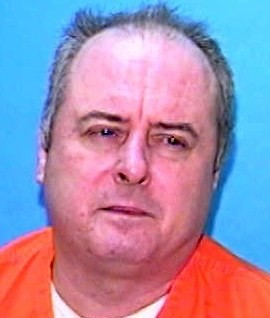 Ernest Suggs
Murderer · USA · 1990
Ernest Suggs (born 08/08/55) was tried in the First Judicial Circuit, Walton Co…
1 victim
Ernest Suggs
Murderer · USA · 1990
Ernest Suggs (born 08/08/55) was tried in the First Judicial Circuit, Walton Co…
1 victim
- Gender
- male
- Country
- Pakistan
- Location
- Lahore, Punjab, Pakistan
- Date of birth
- 19 56
- Characteristics
- rape, child abuse, torture
- Victim profile
- Children
- Method of murder
- Strangulation
- Date(s) of murder
- 1998 - 1999
- Years active
- 1998–1999
- Date of arrest
- December 30, 1999
- Status
-
Sentenced to death
Sentenced to death on March 16, 2000; Javed Iqbal was found dead in his cell in Kot Lakhpat prison on October 8, 2001, apparently by hanging with bedsheets; autopsies revealed he had been beaten prior to death
Case overview
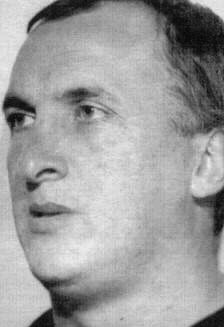
Javed Iqbal (born 1956 in Lahore, Punjab, Pakistan; died October 8, 2001, in Lahore, Punjab, Pakistan) was a Pakistani serial killer who was found guilty of the sexual abuse and murder of 100 children.
Background
Javed Iqbal was the sixth child (fourth son) of Mohammad Ali Mughal, a well-off trader. He did his matriculation from Islamia High School. He started his own business in 1978 when he was an intermediate student at Islamia College, Railway Road. His father bought two villas in Shadbagh. Iqbal set up a steel recasting business in one of the houses and lived there for years along with boys.
People described Javed Iqbal as a “pampered child” who developed bad habits early and later spent most of his life keeping a brigade of teenaged boys around him. He was also described as a “boy hunter” who would go to any extent to satiate his lust for sodomy. Since his teens when he owned a 200 CC motorbike, he was described as using different ways to lure boys, including making pen-friends through magazines. He was said to spend thousands of rupees on sending gifts such as perfumes, tickets, coins, and other items.
The offence
Javed Iqbal was convicted of abducting, sodomizing, and killing 100 children, and dissolving their bodies in acid. At his trial, he was said to have strangled the victims using an iron chain, dismembered them, and disposed of their bodies using vats of hydrochloric acid. The remains were described as being dumped in a local river. Police also said they recovered decomposed bodies of three children from his house.
Police found the remains of two bodies in a blue vat at his home after his arrest. Investigators also recovered clothes and shoes of the young victims, and an album of photographs of young boys. Families identified their children’s pictures, shoes, and other evidence.
Javed Iqbal kept a detailed account of the murders, listing victims’ names, ages, and dates of their deaths. He also kept victims’ shoes and bundles of their clothing. He recorded the exact cost of disposing of each child, including acid, writing: “In terms of expense, including the acid, it coast me 120 rupees ($2.40) to erase each victim,” he wrote.
He was also said to have been involved in a previous case registered against him: “carnal intercourse with young boys” pending in another court.
Investigation
Confession and evidence found at his house
In December 1999, Javed Iqbal sent a letter to police and a local Lahore newspaper confessing to the murders of 100 boys, all aged between six and 16.
In the letter, he claimed to have strangled and dismembered the victims, mostly runaways and orphans living on the streets of Lahore, and disposed of their bodies using vats of hydrochloric acid. He then dumped the remains in a local river.
In his house, police and reporters found bloodstains on the walls and floor, with the chain on which Iqbal claimed to have strangled his victims. They also found photographs of many victims in plastic bags. The items were described as neatly labelled with handwritten placards. Two vats of acids with partially dissolved human remains were also left in the open for police to find, with a note claiming: “the bodies in the house have deliberately not been disposed of so that authorities will find them.”
A series of placards was described as being pinned to the interior walls, including:
- “All details of the murders are contained in the diary and the 32-page notebook that have been placed in the room and had also been sent to the authorities. This is my confessional statement.”
- “The bodies in the house have deliberately not been disposed of so that the authorities will find them after my suicide.”
- “I am going to jump into the river Ravi to commit suicide.”
A letter bearing the confessional statement read: “I had sexually assaulted 100 children before killing them, and had disposed of their bodies in barrels of acid.”
Police said the surrender brought the end to a manhunt that followed details conveyed through parcels filled with evidence and pictures of victims, including a personal diary and a notebook with details of the murders.
Manhunt and deaths in custody
Javed Iqbal planned to drown himself in the Ravi River after his crimes, but after unsuccessfully dragging the river with nets, police launched a manhunt.
Four accomplices were arrested in Sohawa. Within days, one accomplice died in police custody, apparently by jumping from a window.
During investigation, an accomplice Ishaq, alias Billa, died in CIA custody after reportedly jumping down from a window at the third floor of the CIA headquarters on Dec 7, 1999.
The administration of Lahore police was changed as a punishment after the incidents.
Arrest
Javed Iqbal turned himself in at the offices of the Urdu-language newspaper Daily Jang on December 30, 1999. He surrendered there rather than directly to police, stating that he feared for his life and was concerned that police would kill him.
Trial
Charges and framing
The case against Javed Iqbal was registered at the Ravi Road police station under sections 302, 34, 201, 377 and 364-A of the Pakistan Penal Code and Section 12(7) of the Hudood Ordinance in 1979.
Judicial Magistrate Ghulam Husain extended the judicial remand of Javed Iqbal. The accused said in court he would be killed by slow poisoning.
An additional district and sessions judge fixed Feb 22 for framing of charges in the case registered at the Lower Mall police station in 1998. That earlier case was described as involving alleged sodomy of two teenagers at gunpoint at a place near Data Darbar. The victims were among the 16 children of a fish seller. The complainant said Javed Iqbal gave the boys Rs 113 after sodomizing them and asked them to return a week later. The boys informed their father, who waited for Iqbal at the given spot and got him arrested when he turned up in a car. Javed Iqbal was released on bail granted by the Lahore High Court on April 6, 1998 after the parties reached a compromise. A challan was submitted before a judicial magistrate on June 15, 1998, with delay because no private witness appeared.
Javed Iqbal Mughal and three co-accused pleaded not guilty when they were formally indicted. The case was charged with abducting, sodomizing and killing 100 children besides dissolving their bodies in acid. Before framing charges, the judge dismissed a defence plea that the case be dropped for lack of complainant or eyewitness, lack of corroborative or circumstantial evidence, and no recovery from the accused. A petition filed by lawyer Aftab Ahmad Bajwa challenging jurisdiction and demanding transfer to an anti-terrorist court was dismissed. The judge determined that chemicals were used only to dispose of bodies, while the killing was described as strangulation.
During proceedings, the judge rejected requests including that power of attorney be accepted on behalf of the heirs of three killed children, which was accepted.
Javed Iqbal made statements about his innocence and described alleged injustices and duress in the context of his confessional statements. He also claimed he was implicated in a fabricated case of sodomy by Inspector Karamat Bhatti. He claimed he had been punished because he was writing a story exposing Bhatti’s alleged involvement in fake police encounters during the Punjab government of Mian Shahbaz Sharif. He said his implication destroyed his business and he had to sell his house to pump money into it.
He claimed that one night, he was asleep at his house with his employees who were runaway children when two of them attacked him, almost killing him and his employee Arab, a child. He said area people nabbed one accused while the other fled. He claimed Ghaziabad SHO Haji Shakoor did not register the case against the nabbed accused and kept him at his residence as a personal servant. He claimed he was kicked out of the hospital after being seriously injured. He said he consulted Prof Dr Iftikhar Raja for treatment of an injured backbone. Prosecution counsel objected to the relevance of this story, and defence counsel intervened.
Parents of missing children were prevented from entering the courtroom. One mother of a missing child fell unconscious when stopped by police.
Evidence hearings
A prosecution witness’s evidence was recorded on Feb 21, 2000. The court ordered the jail superintendent to provide the accused facilities prescribed in the jail manual. The court directed that he should be given a small sized pencil and paper to note down points for his lawyers, with the pencil potentially taken back in the evening.
The hearing started at midday due to a writ petition requesting trial by an anti-terrorist court.
A photo shop owner, Shafiq, testified to identifying photographs from a total of 57 shown to him from the record. He identified photographs and described that 31 negatives were developed at his shop. The witness said he did not develop the negatives personally, but had two employees for the purpose. He said he did not keep copies of receipts issued for developing negatives.
Cross-examination included defence counsel questioning whether photographs were developed at his shop and whether he was testifying at the behest of police.
On March 1, 2000, defence counsel completed cross-examination of Judicial Magistrate Mian Ghulam Husain who had recorded confessional statements, and statements of relatives of three missing children were also recorded in the presence of accused and co-accused. The judicial magistrate said he had not recorded confessional statements of the accused, which defence counsel considered obligatory under relevant law.
Defence counsel said he was being pressurized not to independently cross-examine prosecution witnesses, or he would not be paid agreed fees of Rs 30,000. He sought one hour to decide whether he would withdraw or continue to defend Javed Iqbal in his personal capacity. Proceedings then continued and he began cross-examining.
The judicial magistrate said the accused were produced before him for remand by police for the first time on December 31, 1999. He said he took handwriting specimens on January 5 and 6, 2000. He said the accused remained in police custody until January 13, when they recorded confessional statements and were sent to jail. He said the accused never moved a written application for recording their confessional statements and made verbal requests instead. He said confessional statements were recorded after a court warning that they would be used against them during trial.
He said he wrote the statements himself, obtained signatures and thumb impressions of the accused after attesting every page, and asked questions to Nadeem and Sabir, described as minors to him, to check whether they knew the implications.
The magistrate said he had not administered oath to the accused while recording their statements. He said he was not an area magistrate of Model Town CIA on January 13, but was area magistrate of Ravi Road police station, and explained that under an order he could record statements for cases involving remand in police custody, confessional statements, or identification of a murder site anywhere within Lahore district.
ASI Sadiq said police raided the locked house and broke locks of the main gate and a room to come around drums of chemicals and other items, but did not take broken locks into custody. He said lists of items were prepared by him as the SHO could not write due to injury to his right hand. He said the SHO sustained a bullet injury before joining the police station in August and he did not know how it happened. He said items were removed the next day and left at the house under supervision of a sub-inspector.
Photo studio owner Khalil Shahzad testified that prints of photographs were made by his employee, not him.
Extra-judicial confession video/audio evidence
The statement of a witness to an extra-judicial confession made at the newspaper office was recorded and audio/video recordings of the confession were played before Additional District and Sessions Judge Allah Bakhsh Ranjha. Three witnesses recorded their statements, taking the total number of witnesses examined so far to 97.
The daily Jang editor (crime) Jameel Chishti’s testimony included details that:
- he was present in his office on December 30, 1999 when he was told that a person had come at reception who introduced himself as Javed Iqbal, the killer of 100 children;
- he did not hear the accused introduce himself to the receptionist;
- Javed was interviewed in the presence of colleagues;
- Javed told him that Ghaziabad SHO Abdul Shakoor Khokhar had injured him seriously when he had gone to complain against his servant who beat him up;
- Javed confessed he decided to avenge his mother’s death;
- Javed bought a house in the Ravi Road area;
- the accused confessed to killing 100 children and said he was assisted by three boys, Sajid, Nadeem and Sabir, and that he made victims unconscious before killing them by strangulation and disposed bodies in a drum containing acid;
- police and army personnel were present at the start of the interview and later asked to leave as it was supposed to be an exclusive story.
The witness also said he handed over cassettes to police on January 14 and said Javed’s interview was published in Jang on December 31, 1999. He said he delivered the newspaper to DSP Masood Aziz at Qila Gujjar Singh police station.
The court played the film twice to verify what the witness claimed and found the accused’s response included the words: “haan khud mar dia tha (yes I had killed myself)”.
The witness described that there was another portion of the film of about 30 minutes duration in the custody of his boss which was not shown to anybody including police, and said it was concealed because it was an important case and would be part of an exclusive Jang documentary film.
Defence claims during trial
On March 8, 2000, Javed Iqbal submitted before the trial court that the missing children were alive and that he did not murder any boy. He submitted a written statement spread on 20 pages, and all accused denied having killed anyone and said the judicial confession was recorded under duress. He said he staged the affair to highlight issues of runaway children of poor families who became victims of evil people.
He claimed some children had returned to their homes and that the police were responsible for finding children still missing. He wrote that four presumed missing individuals could be proved alive and named co-accused Sajid, Sabir, and Nadeem among those he said were alive. He also claimed the fourth boy was one of the 100 children and that Ishaq Billa’s son could recognize the boy and be summoned for confirmation.
He claimed he feared police would kill him and said he wrote to army officials, and a captain visited the police station. He said he refused initially to make a statement and later an SP handed him a statement to read before the magistrate.
He said he staged the barrels of acid with mobile oil and beef to mislead police and said he completed this job on Nov 22 and wrote five letters to higher officials the same day.
He said his head injury affected his memory. He claimed police involvement in fake cases, extortion from his family and friends’ blackmailing, and that he was beaten by his servants and that police did not help.
He said he was operated upon five times, during which his house and car were sold, and his business suffered badly. He claimed his mother became ill and he sought religion and shrines.
He said the idea to stage the drama developed as his friends searched for a boy who had beaten him up, and his aim was to highlight the issue of runaway children. He described involvement of friends Murshid Naseem, Ashiq Husain, and Ishaq Billa in caring for him and in tracing boys around Minar-i-Pakistan, bringing boys home, feeding them, giving them new clothes, and inquiring about their whereabouts while visiting shrines. He said he bought a camera to photograph boys and write their whereabouts in detail.
Sentencing
March 16, 2000 sentence
On March 16, 2000, a Pakistani court in Lahore found Javed Iqbal guilty of murdering 100 boys. Javed Iqbal and a co-accused were sentenced to death.
Judge Allah Bukhsh Ranjha added that the death sentence would be carried out “in front of the parents whose children you killed,” and ordered that:
- the judge stated: “You will be strangled to death in front of the parents whose children you killed,” and
- “Your body will then be cut into 100 pieces and put in acid, the same way you killed the children.”
Police said the judge caused controversy by ordering Javed to be strangled, then cut into pieces, describing it as a requirement of Islamic law. The government moved to stem criticism by saying it would not be implemented. A leading Islamic affairs advisory body also declared the sentence un-Islamic.
Javed Iqbal was sentenced to die by strangulation with the same iron chain he used as a weapon of offence. His body was ordered to be cut into pieces and dissolved in acid.
Additional sentences were described:
- Sajid Ahmad (17 years old) was also sentenced to death for participation in the murders.
- Mamad Nadeem (15 years old) was found guilty of murders of 13 victims and sentenced to 182 years in prison (14 years for each murder).
- Mamad Sabir (13 years old) was sentenced to 63 years in prison.
In another account of the sentencing, Sabir was sentenced to 42 years in jail, and the other two accomplices were sentenced to death; two of the boys received life sentences.
Appeals
Javed Iqbal filed an appeal before the Lahore High Court against his death sentence. After being pending for many months, the Lahore High Court referred the appeal to the Shariat Court, saying it did not fall under its jurisdiction.
The circumstances in October 2001 also described that the country’s highest Islamic Court agreed to hear their appeal against the death sentence four days before the prisoners’ deaths.
On March 16, 2000, a Pakistan’s chief religious advisory body said the sentence of cutting the serial child murderer into 100 pieces ran counter to Islamic tenets and would desecrate the killer’s body. The council released a statement under the signatures of its Director General, Research, Dr Ghulam Murtaza Azad.
Outcome
Suicide claims and findings on October 8-9, 2001
On the morning of October 8, 2001, Javed Iqbal and accomplice Sajid Ahmad were found dead in their cell in Kot Lakhpat prison. Authorities claimed they had apparently committed suicide by hanging themselves with bedsheets.
An inquiry was launched into the death of convicted serial killer Javed Iqbal reported to have committed suicide in prison.
Javed Iqbal and Sajid Ahmad were reported to have been found hanging at 5am in separate but adjacent cells in Block 7. The jail superintendent Mian Farooq said they were being investigated and “nothing has so far been ascertained,” and an AIG prison official Abdussattar Ajiz claimed the two had committed suicide sometime between 10pm and 2am when guard Iftikhar Husain was on guard duty outside the cells.
The guard’s reported statement was: “I was asleep when the incident took place”. The guard was described as having untied knots of the bedsheets and laid the bodies on the floor to create an impression they were asleep, to save his skin, and then left at 2am without informing authorities.
Doctors in the mortuary found strangulation marks around the blood splashed necks, and said hands, feet and nails had gone blue. They said they were bleeding from mouth and nostrils, and that tongue of one of them had a cut mark. They also found countless healed wounds inflicted with a blunt weapon all over Javed Iqbal’s body, and an injury mark around Sajid’s neck.
AIG prisons Abdussattar Ajiz stated that the guard did not check on the prisoners, and another official Liaquat Ali replaced the first guard without checking.
Nobody from Javed’s family turned up to collect his body. Javed’s brothers Parvez Mughal and Saeed Mughal said they would not collect the body and said they had “nothing to do with him”.
A jail official claimed that Javed had made over dozen attempts to commit suicide and said his behaviour was strange, including that he would demand milk at midnight and demand fruit not available in the market.
Lawyer’s doubts
Javed Iqbal’s lawyer Faisal Najib Chaudhry told the BBC that he was questioning the official version of his death. He said Javed had written a letter warning that he might be killed by prison authorities, and he said the letter was on record at the federal sharia court where Iqbal’s appeal against conviction was pending. He said he was waiting for the post-mortem report.
Another account stated that police investigators believed suicide this way was not easy and especially when two people were doing so at the same time. The circumstances remained under investigation.
Aftermath
Autopsies revealed that the prisoners had been beaten prior to death, contradicting the official suicide narrative. Several officials of Kot Lakhpat Jail were suspended from service after the deaths were announced.
Javed Iqbal’s death occurred after public criticism of his death sentence and after controversy over ordering a strangling and acid dissolution punishment under Islamic law. The verdict’s un-Islamic character was declared by the Council of Islamic Ideology, and multiple statements described that the government would not implement the sentence.
A BBC correspondent described that many in Pakistan continued to question how nothing came to light about 100 deaths until Javed sought publicity himself and surrendered.
Spotted an error, or have more information about this case?