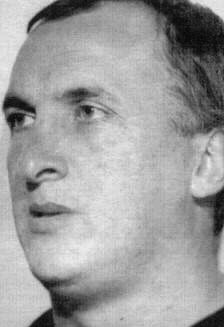
Colin Ireland
Serial killer Colin Norris
Serial killer · United Kingdom · 2002
Colin Campbell Norris (born 1976) was a Scottish nurse described in the British…
7 victims
Colin Norris
Serial killer · United Kingdom · 2002
Colin Campbell Norris (born 1976) was a Scottish nurse described in the British…
7 victims
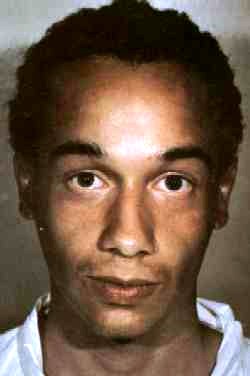 Kenneth Erskine
Serial killer · United Kingdom · 1987
Kenneth Erskine (born 1962) was an English serial killer known as the “Stockwel…
7 victims
Kenneth Erskine
Serial killer · United Kingdom · 1987
Kenneth Erskine (born 1962) was an English serial killer known as the “Stockwel…
7 victims
 Stephen Akinmurele
Serial killer · United Kingdom · 1995
Stephen Akinmurele was accused in connection with the deaths of multiple pensio…
5 victims
Stephen Akinmurele
Serial killer · United Kingdom · 1995
Stephen Akinmurele was accused in connection with the deaths of multiple pensio…
5 victims
 Michael Lupo
Serial killer · United Kingdom · 1986
Michael Lupo was a former choir boy in his native Italy. He served in an Italia…
4 victims
Michael Lupo
Serial killer · United Kingdom · 1986
Michael Lupo was a former choir boy in his native Italy. He served in an Italia…
4 victims
 Peter Moore
Serial killer · United Kingdom · 1995
Peter Moore (born 1940) was a Welsh serial killer who murdered four men in 1995…
4 victims
Peter Moore
Serial killer · United Kingdom · 1995
Peter Moore (born 1940) was a Welsh serial killer who murdered four men in 1995…
4 victims
 Steven John Grieveson
Serial killer · United Kingdom · 1993
Steven John Grieveson (born 1970) was an English serial killer. Grieveson murde…
4 victims
Steven John Grieveson
Serial killer · United Kingdom · 1993
Steven John Grieveson (born 1970) was an English serial killer. Grieveson murde…
4 victims
 Martin Robles
Murderer · USA · 2002
Martin Robles (Hispanic male) Robles dropped out of school after the eighth gra…
2 victims
Martin Robles
Murderer · USA · 2002
Martin Robles (Hispanic male) Robles dropped out of school after the eighth gra…
2 victims
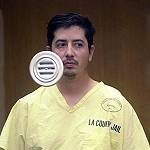 Adair Javier Garcia
Mass murderer · USA · 2002
February 19, 2002 — Adair Javier Garcia killed five of his children in their li…
5 victims
Adair Javier Garcia
Mass murderer · USA · 2002
February 19, 2002 — Adair Javier Garcia killed five of his children in their li…
5 victims
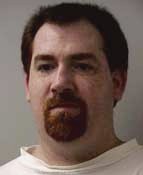 Jack Foster Outten
Murderer · USA · 1992
Jack Foster Outten, Jr. was a white male born 03/23/1966. He was sentenced to d…
1 victim
Jack Foster Outten
Murderer · USA · 1992
Jack Foster Outten, Jr. was a white male born 03/23/1966. He was sentenced to d…
1 victim
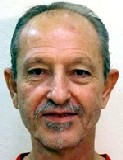 James Hunt
Murderer · USA · 2004
James Hunt was sentenced to death on July 28, 2006 in Floyd County for Burglary…
1 victim
James Hunt
Murderer · USA · 2004
James Hunt was sentenced to death on July 28, 2006 in Floyd County for Burglary…
1 victim
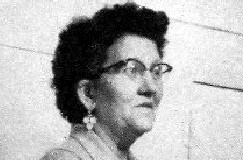 Rhonda Bell Martin
Serial killer · USA · 1937
Rhonda Bell Martin was an American serial killer known for poisoning multiple f…
6 victims
Rhonda Bell Martin
Serial killer · USA · 1937
Rhonda Bell Martin was an American serial killer known for poisoning multiple f…
6 victims
 John Taylor
Murderer · United Kingdom · 2000
John Taylor Leeds teenager Leanne Tiernan, 16, disappeared at around 5pm on Sun…
1 victim
John Taylor
Murderer · United Kingdom · 2000
John Taylor Leeds teenager Leanne Tiernan, 16, disappeared at around 5pm on Sun…
1 victim
- Gender
- male
- Country
- United Kingdom
- Location
- London, England, United Kingdom
- Date of birth
- March 16, 1954
- Age at first offence
- 39
- Characteristics
- serial rapist, torture, domestic violence
- Victim profile
- Peter Walker, 45 / Christopher Dunn, 37 / Perry Bradley III, 35 / Andrew Collier, 33 / Emanuel Spiteri, 41 (gay men)
- Method of murder
- Strangulation
- Date(s) of murder
- March-June 1993
- Years active
- 1993
- Date of arrest
- July 19, 1993 (surrenders)
- Status
-
Life imprisonment
Sentenced to life in prison December 20, 1993
Case information
- Name: Colin Ireland
- Also known as / tabloid name: London's "Gay Slayer"
- Criminal status: Sentenced to life in prison on December 20, 1993
- Sentencing disposition stated in the record: He received life imprisonment for each of five killings.
Background
Colin Ireland was a British serial killer known as the “Gay Slayer.” He was described as a serial murder “WANNA-BE.” He was said to have decided to become a serial killer as a New Year resolution at the beginning of 1993.
The record described Ireland as born in 1954 and also stated a birth date of March 16, 1954. It described him as the illegitimate child of a news agent's assistant. It said he was raised by his mother and maternal grandparents in Dartford, Kent. It described him as reporting childhood experiences as being bullied at school, and as being in trouble during adolescence. It said he logged convictions for theft, burglary, and blackmail while still in his teens.
The record stated that Ireland served two terms in Borstal reformatory and that he was rejected in a bid to join the French Foreign Legion. It described him as developing a taste for paramilitary garb and survivalist training and frequently camping out on the Essex moors.
The record stated that Ireland was twice married and divorced. It said he volunteered to manage a homeless shelter in London, but that an explosive temper cost him the job in December 1992. It said a colleague recalled that Colin was “troubled, frustrated, and didn't know what to do with his life.”
The record described Ireland as selecting gay sadomasochists as preferred victims, based on an idea that they would be “easy targets,” and that they would be less likely to arouse public sympathy. The record also included material stating that he claimed to be heterosexual and to have feigned homosexuality to lure patrons of a gay pub. It further included statements that it was unknown whether his murders were sexually motivated.
The record included a long biographical section describing Ireland’s family background, schooling, evictions, care with foster arrangements, and incidents involving older men seeking sex. It described that he later committed his first crime at age 16 in 1970, including theft and being issued with a “fit person order” and sent to Finchton Manor School in Kent. It stated he set fire to one of the boys’ belongings and later admitted to an unusual interest in fire from a young age and recurring nightmares about fire throughout his life. It said a teacher managed to put the fire out, and that Ireland was sent away from Finchton Manor with a social worker and no charges were brought against him. It also stated he ran away to London again, became homeless, and resorted to robbery.
The record described the following prison history in that biographical section:
- At age 17, he was caught and sentenced to spend time at Hollesly Bay (stated as a borstal).
- It stated he escaped in early one summer’s morning and was then caught and sent to serve the remainder of his sentence from 1971 to 1972 in more strict borstals of Rochester and Grendon.
- After release at age 18, it said he met his first girlfriend and described his mental state as confused and unhappy.
- In December 1975 (age 21), it stated he was found guilty of two counts of burglary, stealing a car and damage to property, and was sentenced to 18 months in prison; he served 12 months in crowded London prisons before being transferred to Lewes prison.
- On release in November 1976, it said he went to live in Swindon, met a second girlfriend, and began his first sexual relationship.
- In 1977, it stated he was found guilty of ‘demanding with menace’ and sentenced to a further 18 months in prison.
- It stated he was sentenced to two years imprisonment for robbery in 1980, two months for ‘attempted deception’ in 1981, and six months for ‘going equipped to cheat’ in 1985.
The record described employment and other activities during times outside prison, including working as a volunteer fireman, a restaurant chef, a volunteer at a homeless shelter, and a bouncer at bars and a gay nightclub. It stated that during a stint as a chef in London, Ireland met Virginia Zammit in 1981 at a lecture on Survivalism; it described her age and background, including that she had been confined to a wheelchair after a motor vehicle accident at age 24. It stated they were married in 1982, and it said the couple were divorced in 1987 after Ireland admitted to having an affair with another woman.
The record stated that in 1989 Ireland met Janet Young, the landlady of the Globe pub in Buckfast, Devon, and that within a week he moved in with Young, and within three months they were married at Newton Abbot Register Office. It stated that after only four months of marriage, he took his wife’s car, withdrew money from their joint bank account, and disappeared. It stated that by 1991 his second marriage had failed and he moved to Southend-on-Sea, Essex, where he worked at a shelter for the homeless while being homeless himself. It said by December 1992 staff began making unfounded allegations against Ireland and he resigned.
The record described that in early 1993, when he was aged 39, a fraught and rage-filled Ireland who had committed only minor offences made a New Year’s resolution to become a serial killer. It said he chose London as his “murder ground,” deliberately misleading police and keeping them far away from his Southend-on-Sea home.
The offence
The record stated that Ireland murdered five men whom he selected from gay venues. It gave details of multiple homicides, each described with a similar pattern of binding, beating, and killing, and with post-murder actions including cleaning and leaving posed objects.
Murder 1: Peter Walker
The record stated that on 8 March 1993, Ireland met his first victim, 45-year-old theatre director/choreographer Peter Walker, at a London gay bar called The Coleherne. It stated that after being invited back to Walker’s flat, Ireland tied Walker to his bed, beat and whipped him, and then killed him.
The record described multiple details of the killing and staging:
- It said Ireland killed Walker by suffocation using a plastic bag.
- It said reports differed on plastic bag.
- It stated Ireland left the body with “knotted condoms iammed into the mouth and nostrils.”
- It stated that two teddy bears were arranged on the bed “in a sex position.”
- It described that Ireland lingered to watch TV and tidy the crime scene.
The record stated that Walker’s body was undiscovered for two days and was still undiscovered when Ireland telephoned the tabloid newspaper The Sun on March 5, 1993. It stated Ireland said he was concerned about the dead man’s dogs, left unattended in the flat. It also included Ireland’s quotation:
- “lt was my New Years resolution to murder a human being.”
The record also stated that police had no evidence of any substance, and that a March 6 judicial ruling held that acts of sadomasochistic sex were illegal for consenting British adults. It stated potential victims were thus reluctant to cooperate, and that autopsy results were inconclusive as to whether Walker’s death had been deliberate or accidental. It stated police learned the dead man was HIV-positive.
The record further stated that Ireland pushed condoms into Walker’s mouth and nostrils. It stated it discovered Walker was HIV positive while searching through personal effects, and that it then said Ireland was enraged and pushed a condom into the dead man’s mouth. It also stated Ireland left two teddy bears in an approximation of a “69” position on the bed next to Walker’s body. The record stated that Ireland called the Samaritans to alert them where Walker’s dogs were.
Murder 2: Christopher Dunn
The record stated that in late May, Ireland returned to The Coleherne and picked up 37-year-old librarian Christopher Dunn. It stated Dunn’s body was found at his northeast London home on May 30, and it said police recorded his death as a probable accident. The record stated Dunn’s body was bound and gagged, nude except for a leather bondage harness, and that it was found on May 30.
The record also stated that no link was made to Walker’s death, three months earlier, and that the “accident” theory took a hit soon after Dunn’s death when cash was removed from Dunn’s bank account using his ATM card.
The record stated that a few days later, police received an anonymous call from Dunn’s killer taunting them for failing to link the two crimes. (No quotation was included for this anonymous call in the record.)
The record repeated additional details in a later biographical section:
- It said Dunn was wearing a body harness and had been willingly handcuffed; it stated his feet were tied together.
- It said Ireland beat, tortured and suffocated Dunn by stuffing pieces of cloth into his mouth after holding a lighter flame to Dunn’s testicles.
- It stated Ireland forced Dunn to hand over his bank cash-card and PIN and used the card to extract money; the record stated he withdrew £200 from Dunn’s account.
Murder 3: Perry Bradley III
The record stated that on June 7, authorities found the corpse of 35-year-old Perry Bradley III, described as an American businessman and a “closet homosexual,” in his Kensington apartment. The record stated he was naked and bound and was apparently strangled, with credit cards missing. It described a plastic doll left atop the body, posed to simulate a sex act.
The record stated that when the killer telephoned police again days later, he said:
- “l did the American. You've got some good leads on my identity from clues at the scene.”
The record described detectives as inclined to disagree but worried about the killer’s anonymous callers’ desire to become a serial killer. It included the record’s quotation about the FBI manual:
- “l have got the book,” he said. “l know how many you have to do.”
The record stated that mention of the “FBI manual” prompted transatlantic calls to ex-FBI Agent ROBERT RESSLER, coauthor of Sexual Homicide (1988) and the FBI Crime Classification Manual (1992), as well as a memoir of his own career profiling serial killers for the Bureau’s Behavioral Science Unit. The record stated that Ressler cooperated with Scotland Yard on a profile.
The record also included a quotation from Ireland about accelerating:
- “l was reaching a point where 1 was just accelerating,” he said. “lt was just speeding up, getting far worse. lt was just like a roller-coaster effect.”
The record stated the killer’s next anonymous call asked about the death of Peter Walker and included the following quotations:
- “Are you still interested in the death of Peter Walker?”
- “Why have you stopped the investigation? Doesn't the death of a homosexual man mean anything? 1 will do another. 1 have always dreamed of doing the perfect murder.”
The biographical section repeated additional details:
- It said Perry Bradley III was the son of a serving US congressman and a businessman from Texas.
- It said Bradley was not into S&M and relented after Ireland told him it was a necessary element in his arousal.
- It said Ireland tied Bradley face down on the bed, placed a noose around his neck, demanded the cash-card and PIN, and threatened to torture him with a cigarette lighter.
- It said Ireland delayed killing until Bradley fell asleep and then strangled him slowly with the noose.
- It stated Ireland placed a doll on Bradley’s dead body.
- It stated it left the apartment with £100, then withdrew a further £200 from Bradley’s account.
Murder 4: Andrew Collier
The record stated that a 33-year-old victim, Andrew Collier, was picked up on June 7, when Ireland returned to The Coleherne. The record stated that upon returning to the victim’s flat, Ireland handcuffed and tied Collier to the bed, then strangled Collier.
The record described staging involving Collier’s cat:
- It said Ireland choked the cat and arranged its carcass atop Collier’s corpse with the tip of its tail in Collier’s mouth.
- It said the cat’s mouth was fastened on Collier’s penis.
- It said both the tall and the penis were fitted with latex condoms.
The record stated that while cleaning, Ireland missed one fingerprint found by police on a window frame.
The record’s additional biographical section stated:
- Ireland met Collier at the pub and courted him; it described Collier as a housing warden.
- It said the pair went to Collier’s home in Dalton.
- It said Collier refused to comply with bank details and Ireland strangled him with a noose.
- It said Ireland left the following morning with £70 in cash.
- It also said Ireland killed Collier’s cat in an angry reaction to finding out his victim was HIV positive while rummaging for the bank card number.
- It stated Ireland left a clue by putting “a condom in Collier’s mouth,” creating a link to Walker’s murder.
The record also stated police later linked Walker and Collier due to similarities and the use of condoms.
Murder 5: Emanuel Spiteri
The record stated that on June 15, Ireland met Emanuel Spiteri, described as a 41-year-old Maltese chef. It said Ireland went with him to Spiteri’s southeast London flat for sex. It stated that once there, he bound and strangled his victim, and then spent the night watching television and eating Spiteri’s food.
The record described arson and attempts to stage the scene:
- It stated Ireland set fire to the apartment before he left, and that the flames went out after causing only minor damage.
- It said police were unaware of the crime when he telephoned them next day, asking:
- “Have you found the body in southeast London yet, and the fire?”
- It stated that authorities were then prepared to admit there was a serial killer at large.
- It included the killer’s quotation after that:
- “l have read a lot of books on serial killers,” he said.
- “l think ¡t is from four people that the FBI classify as serial, so I may stop now 1 have done five. I just wanted to see if ¡t could be done. 1 will probably never reoffend agaln.”
The biographical section repeated additional details that differed from the earlier “minor damage” framing:
- It stated that on the night of 12 June 1993 they met at the Coleherne, then went via trains to Spiteri’s flat in Catford.
- It stated that upon arrival, Ireland bound Spiteri to his bed, handcuffed him, put a noose around his neck and demanded his cash-card and PIN.
- It stated Ireland strangled Spiteri with the noose.
- It stated he cleaned up, watched television until he felt safe to leave, then attempted to set fire to the flat; it stated the fire went out in Spiteri’s bedroom, where it had been started.
- It said Spiteri’s death led to a landlady calling police on 15 June 1993.
- It stated the earlier sequence also included Ireland ringing the police to look for a body at the scene of a fire and saying he would probably not kill again.
The biographical section also stated that Ireland said serial killers needed at least five victims to qualify as such.
Investigation
The record described police response and investigative steps.
It stated that once authorities admitted a serial killer at large, Scotland Yard launched a mass-publicity campaign. It included televisad pleas for the killer to give himself up.
It stated detectives learned that Spiteri had traveled by train with another man to Catford on the night he was killed. It stated a British Rail security camera yielded blurry photos of the victim with an unidentified heavyset man. It stated that after the photos were published, several London gays reported meetings with a man matching the suspect description.
The record stated:
- On July 19, 1993, Ireland approached his solicitor, admitting he was the man in the photo and claiming Spiteri was alive at his home with another unidentified man when they parted company.
- Police later matched his fingerprint to the Collier crime scene.
- It stated he hung tough until August 19, when he confessed to all five homicides.
The record also contained investigative activity earlier than the confessions:
- It stated that a huge publicity campaign began, with a press conference being called for the head of the police inquiry, Detective Superintendent Ken John, to report that five homosexual men had been murdered and were linked as a series, both pathologically and forensically.
- It stated John appealed to the gay community to be on the alert and to let friends know of their whereabouts if they went anywhere with a stranger.
- It stated John speculated the killer may have AIDS and that the possible motive was revenge.
- It stated that on June 17, 1993, John made a direct appeal via the media to the killer to give himself up to talk and offer help.
- It stated that on June 19, 1993, police handed out flyers at the London Gay Pride festival, attended by 50,000 people, appealing for anyone with information to come forward.
- It stated that psychologist Dr Mike Berry was approached to draw up a profile of the killer.
- It stated that another psychologist, Dr Jonas Rappeport, agreed with the synopsis and added his belief that the killer was not himself homosexual but posing as a gay man.
- It stated the police gained further advice from criminal psychologists Paul Britton and Dick Walter, as well as ex FBI Agent and serial killer specialist Robert Ressler.
- It stated that on June 24, 1993, police issued a description of a man seen with Spiteri on the train from Charing Cross to Hither Green, describing him as a white male, age 30-40, over 6 feet tall, clean shaven, a full to fattish face, short dark brown hair and dirty, discoloured teeth.
- It stated that from this they produced an E-Fit, and that “a week later,” on 2 July 1993, police released a picture of the man taken on the train’s security camera and appealed for him to come forward for questioning; it stated police received over 40 calls the following day.
The record also included that on 19 July 1993, Ireland went to his solicitor in Southend-on-Sea and told him he was with Spiteri on the night in question, confirming it was he in the train’s security camera picture but that he had not killed Spiteri and claimed he left Spiteri with another man. It stated that this information combined with fingerprints left on Collier’s window ledge was enough for arrest and charging with Collier’s murder on 21 July 1993, and that he was charged with Spiteri’s murder on 23 July 1993. It stated he was sent to prison and maintained innocence.
Arrest
The record stated Ireland was arrested and charged based on fingerprint evidence and his account to his solicitor:
- It stated he was arrested and charged with Collier’s murder on 21 July 1993.
- It stated he was charged with Spiteri’s murder on 23 July 1993.
- It stated he was sent to prison and continued to maintain innocence.
Trial
The record stated that no trial was held because while in remand in prison Ireland confessed on 19 August 1993 to the murders of five homosexual men. It described that he showed no emotion and gave police calculated descriptions.
It also stated that on 20 August 1993, at the Old Bailey, London, Ireland was charged with the murders of Walker, Dunn, Bradley, Collier and Spiteri and sentenced to life imprisonment for each of the five killings.
The record included Ireland’s emphasis in his full and frank confession:
- He said he had not been under the influence of drugs or alcohol at the time of the murders.
- He said he was not gay or bisexual.
- He said he had not undressed or engaged in any sexual activity with his victims and had gained no sexual thrill from the murders.
- He said he held no grudge against the gay community and chose gay men because they were easy targets.
It included additional explanations attributed to the record:
- It said he claimed “extreme male deviancy” triggered his anger beginning with brushes with paedophiles in his youth, and that he said his victims were deviants into S&M sexual behaviour who happened to be gay.
- It said psychologists saw symbolic placement of childhood-related items on the victims’ bodies: teddy bears, the doll and the cat.
Judge’s remarks
The record included a quoted statement attributed to the judge:
“To take one human life ¡S an outrage; to take five is carnage.”
It also included another quoted statement attributed to the judge:
“In my view, ¡t is absolutely clear you should never be released.”
The record also included a separate quote attributed to the judge in the later sentencing section:
“To take one human life ¡S an outrage; to take five is carnage. In my view, ¡t is absolutely clear you should never be released.”
It also included a quoted characterization of Ireland attributed to the judge:
“exceptionally frightening and dangerous”
Sentencing
The record stated sentencing outcomes for five life sentences:
- It stated that on December 20, 1993, after pleading guilty on all counts, Ireland was sentenced to five terms of life imprisonment.
- It stated he pleaded guilty to all charges and was given life sentences for each of the five killings.
The record also stated he was on a last published list of “whole life tariff prisoners” meaning he would have to stay in prison for the rest of his natural life. It also mentioned that the Home Secretary had powers to impose such tariffs removed by the European Court of Human Rights, while stating that the record did not clarify his position, because the judge did not publicise any recommendation for how long he should spend in prison concurrently or otherwise. No alternative sentence was stated.
Appeals
No appeal information was present in the record.
Outcome
The record stated Ireland confessed to all five homicides and was sentenced to life imprisonment for each killing. It stated he was expected to remain in prison for the rest of his natural life due to whole life tariff status as described.
Aftermath
The record stated that Ireland was transferred to maximum-security lodgings at Whitemoor Prison, Cambridgeshire, two weeks after a reported killing in cell at Wakefield Prison, Yorkshire. It stated there were rumors that Ireland strangled his cellmate, described as a convicted child-killer, and that no charges were filed because he was already serving life without parole and no harsher penalty was available under British law. It also stated that the story was officially unconfirmed.
The record also stated:
- Ireland was mentioned in the song ‘Archives of Pain’ by the Manic Street Preachers.
- It stated no book had been written nor film made of his story and that no substantial written articles existed.
- It stated British author Anna Gekoski contacted Ireland directly and in correspondence put forward questions, which he answered, supposedly truthfully.
- It stated that what Ireland wanted was recognition, and that once he had committed enough murders to qualify as a serial killer, he was ready to be caught and his story be known.
The record also stated debate about whether Robert Ressler’s book ‘Whoever Fights Monsters’ (1992) should be removed from shelves, and it stated Ressler argued that if a person was going to commit murder, his book could not be blamed.
Other details
Victim descriptions and relationships
- Peter Walker: theatre director/choreographer; 45 years old. The record described him as HIV-positive. The record stated his dogs were left unattended in his flat.
- Christopher Dunn: librarian; 37 years old. The record stated he was bound and gagged, nude except for a leather bondage harness. The record stated cash was removed from his bank account using his ATM card.
- Perry Bradley III: American businessman; 35 years old; described as closet homosexual; son of a serving US congressman; described as from Texas in the biographical section. The record stated credit cards were missing.
- Andrew Collier: 33 years old; described as a housing warden in the biographical section; the record described his cat being killed and staged with condoms.
- Emanuel Spiteri: Maltese chef; 41 years old; described as enjoying dressing in leather.
Methods and items mentioned in the record
The record repeatedly described killings involving binding, nooses/plastic bags for suffocation/strangling, beating, and post-murder actions:
- condoms stuffed or placed on victims (including mouth/nostrils and penis),
- teddy bears arranged after Peter Walker’s murder,
- a plastic doll placed atop Perry Bradley III’s body,
- a cat staged with condoms (after Andrew Collier’s murder),
- setting fire to Spiteri’s flat and later calling police about the body and fire,
- cleaning up and removing items to avoid incrimination,
- use of cash withdrawals from victims’ accounts.
Police profiling and descriptions
The record stated the following:
- Dr Mike Berry profiled the killer as fuelled by violent fantasies and driving himself to kill again.
- Dr Jonas Rappeport added that the killer was posing as gay to attract victims.
- The record described police issuing an E-Fit and later releasing train security camera pictures, leading to many calls.
Dates included in the record (non-exhaustive)
- 8 March 1993 — meeting Peter Walker at The Coleherne
- March 5, 1993 — telephone call to The Sun
- March 6 — judicial ruling about illegal S&M acts for consenting adults
- May 30 — discovery of Christopher Dunn’s body (year implied by context)
- June 7 — discovery of Perry Bradley III’s body; later meeting Andrew Collier mentioned
- June 15 — meeting Emanuel Spiteri and later landlady called police (with additional variant stating 15 June 1993)
- July 19, 1993 — Ireland approached his solicitor admitting it was he in the train photo
- August 19 — Ireland confessed to all five homicides (as stated in the narrative)
- September 19, 1993 — a confession date was also given in the “Trial” narrative as 19 August 1993 (the record contained these dates as part of separate passages)
- December 20, 1993 — pleaded guilty on all counts and sentenced
Included quote list (verbatim)
- Colin Ireland:
- “l have got the book,” he said.
- 1 will do another.
- “l did the American.
- Judge (quoted):
- Colleague of Ireland (quoted):
- “troubled, frustrated, and didn't know what to do with his life.”
Spotted an error, or have more information about this case?