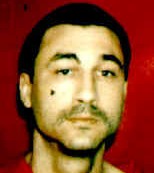
Phillip Lee Ingle
Murderer Brian Kevin Rosenfeld
Murderer · USA · 1985
Brian Kevin Rosenfeld Brian Kevin Rosenfeld was sentenced to three concurrent l…
23 victims
Brian Kevin Rosenfeld
Murderer · USA · 1985
Brian Kevin Rosenfeld Brian Kevin Rosenfeld was sentenced to three concurrent l…
23 victims
 Russell Ellwood
Murderer · USA · 1991
Russell Ellwood was a former taxi driver. Authorities suspected him of killing…
20 victims
Russell Ellwood
Murderer · USA · 1991
Russell Ellwood was a former taxi driver. Authorities suspected him of killing…
20 victims
 Robert Martines Perez
Murderer · USA · 1994
Name: Robert Martines Perez · Other name used in proceedings: Robert Martinez P…
15 victims
Robert Martines Perez
Murderer · USA · 1994
Name: Robert Martines Perez · Other name used in proceedings: Robert Martinez P…
15 victims
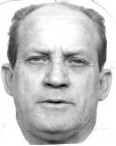 Billy Frank Vickers
Murderer · USA · 1993
Billy Frank Vickers Vickers was executed by lethal injection in Texas on Januar…
14 victims
Billy Frank Vickers
Murderer · USA · 1993
Billy Frank Vickers Vickers was executed by lethal injection in Texas on Januar…
14 victims
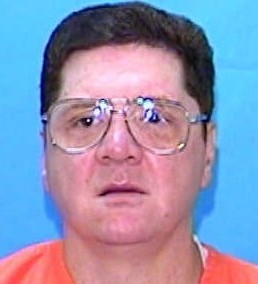 Richard Wallace Rhodes
Murderer · USA · 1984
Richard Wallace Rhodes (date of birth: 10/03/53) was tried in the Six Judicial…
1 victim
Richard Wallace Rhodes
Murderer · USA · 1984
Richard Wallace Rhodes (date of birth: 10/03/53) was tried in the Six Judicial…
1 victim
 Reginald Blanton
Murderer · USA · 2000
Name: Reginald Blanton TDCJ Number: 999395 Date of birth: 6/3/1981 Race: Black…
1 victim
Reginald Blanton
Murderer · USA · 2000
Name: Reginald Blanton TDCJ Number: 999395 Date of birth: 6/3/1981 Race: Black…
1 victim
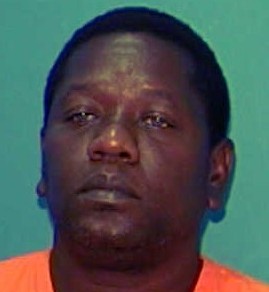 Melvin Trotter
Murderer · USA · 1986
Melvin Trotter was born 12/29/60. The case was in the Twelfth Judicial Circuit,…
1 victim
Melvin Trotter
Murderer · USA · 1986
Melvin Trotter was born 12/29/60. The case was in the Twelfth Judicial Circuit,…
1 victim
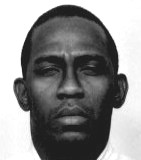 Gerald Cornelius Eldridge
Murderer · USA · 1993
Gerald Cornelius Eldridge (defendant) · Cynthia Bogany (former girlfriend; vict…
2 victims
Gerald Cornelius Eldridge
Murderer · USA · 1993
Gerald Cornelius Eldridge (defendant) · Cynthia Bogany (former girlfriend; vict…
2 victims
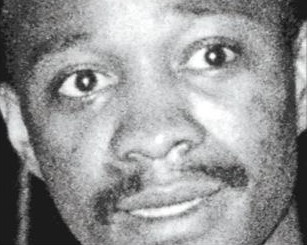 Derick Lynn Peterson
Murderer · USA · 1982
Derick Lynn Peterson was convicted of capital murder and sentenced to death in…
1 victim
Derick Lynn Peterson
Murderer · USA · 1982
Derick Lynn Peterson was convicted of capital murder and sentenced to death in…
1 victim
 António Luís Costa
Serial killer · Portugal · 2005
24 June 2006 — António Luís Costa was arrested by the Polícia Judiciária. · 4 J…
3 victims
António Luís Costa
Serial killer · Portugal · 2005
24 June 2006 — António Luís Costa was arrested by the Polícia Judiciária. · 4 J…
3 victims
- Gender
- male
- Country
- USA
- Location
- Rutherford County, North Carolina, USA
- Date of birth
- August 7, 1961
- Age at first offence
- 30
- Characteristics
- alcohol, drugs, history of mental illness, torture
- Victim profile
- Fred and Margaret Davis / E.Z. and Sarah Willis
- Method of murder
- Beating with an ax handle / Beating with a tire iron
- Date(s) of murder
- July-September 1991
- Years active
- 1991
- Date of arrest
- —
- Status
-
Executed
Executed by lethal injection in North Carolina on September 22, 1995
Case information
- Defendant: Phillip Lee Ingle (34)
- Victims (Rutherford County murders): William Fred Davis (68) and Margaret Shufford Davis (67)
- Victims (Gaston County murders): E. Z. Willis (70) and Sarah Willis (67)
- Method used in the killings (as described):
- Davis victims were beaten to death with an axe handle.
- Willis victims were beaten to death with a tire iron.
- Place of execution: North Carolina (Central Prison)
Timeline
- 28 July 1991 — Ingle entered the unlocked back door of the home of Fred and Margaret Davis in Rutherford County, met Mrs. Davis in her kitchen, and beat her to death with an axe handle; he then attacked Fred Davis from behind and smashed his head in; both died from wounds inflicted by Ingle.
- 30 July 1991 — Autopsies of Mr. Davis and Mrs. Davis were conducted.
- mid-August 1991 — Ingle visited with his friend Jeff Houser; during their conversation Ingle made statements about killing two people and asked if Houser needed anyone killed.
- around the 10th or 12th of September 1991 — Ingle returned to Houser’s residence suffering from a black eye; he told another visitor, Steve White, he “fell and hit a door knob,” and then said he would “take care of” Houser’s neighbor and kill his whole family; Ingle stated he “love[d] to watch people dying in agony.”
- six weeks after 28 July 1991 — The Willis murders occurred; Ingle broke into the rural home of E.Z. and Sarah Willis and beat them to death with a tire iron.
- 14 October 1991 — Ingle was indicted by a Rutherford County grand jury for the first-degree murders of William Fred Davis and Margaret Shufford Davis.
- 12 November 1992 — The court granted Ingle’s motion for change of venue due to pretrial publicity; venue was changed to Cleveland County.
- 8 February 1993 — The offenses were joined for trial.
- 17 February 1993 — The jury returned verdicts of guilty of first-degree murder based on malice, premeditation, and deliberation.
- 19 February 1993 — After a sentencing proceeding pursuant to N.C.G.S. 15A-2000, the trial court imposed the sentence of death in both cases.
- 29 July 1994 — Ingle’s appeal as of right was filed in the Supreme Court of North Carolina as No. 98A93, State of North Carolina v. Phillip Lee Ingle.
- 9 May 1994 — The case was heard in the Supreme Court.
- September 22, 1995 — Ingle was executed by lethal injection in North Carolina.
- September 23, 1995 — The New York Times reported the execution and included statements made by Ingle in his final statement.
Background
Ingle previously rented a mobile home from the Davises in 1987, and Mrs. Davis’s daughter-in-law, Kathy Davis, had conversations with Mrs. Davis and saw Mr. Davis stop by her home to deliver vegetables. Ingle later learned the Willises were his third cousins.
There was no motive for the murders, and the killings were described as involving victims whom Ingle said were “demons with red eyes” and described as having “horns and tails.”
Ingle was described as having an extremely troubled childhood, including witnessing his mother overdose on drugs and attempt suicide on a number of occasions. He attempted suicide on more than one occasion, including attempting to hang himself from a tree at age five or six, and at age nineteen shooting himself in the stomach with a rifle.
There was evidence that Ingle had been sexually abused by an older man while a child.
There was evidence that Ingle had a borderline personality disorder, experienced a psychotic episode at the time of the murders, and had continuous drug and alcohol abuse, with periodic admissions to hospitals and mental institutions for problems associated with drug and alcohol abuse.
A week or two prior to the Davis murders, Ingle had been involved in an argument involving his grandmother, and his psychiatric expert opined that it could have triggered the psychotic episode resulting in the murders.
Ingle later said he did not offer any motive for the murders, and he stated he did not kill the victims for sexual gratification or to steal from them.
The offence
Davis murders (Rutherford County)
Ingle approached the Davis home on 28 July 1991. The back door was unlocked. He entered through the unlocked back door, met Mrs. Davis in her kitchen, and began beating her on the head with an axe handle until she fell to the floor. After attacking Mrs. Davis, he went into the den where Fred Davis was seated in a recliner watching television. Because Fred Davis was hard of hearing and the television was turned up, the evidence tended to show that he was unaware of the attack on his wife.
Ingle then attacked Fred Davis and beat him on the head with the axe handle. Both Fred and Margaret Davis died as a result of the wounds inflicted by Ingle.
After beating the couple to death, Ingle left the house taking Mrs. Davis’s pocketbook and a floral-patterned dress belonging to her. He went to an area about three miles away, discarded the dress, and set fire to the pocketbook and its contents. He departed the area, returned later, picked up the pocketbook, and threw it and the axe handle into a creek. Ingle later led law enforcement officers to the spot where he disposed of these items. The pocketbook was discovered on the bank of the stream, but the axe handle was never found.
A local resident spotted the burning pocketbook. By the time the resident and a Sheriff's deputy returned to the spot, Ingle had retrieved the pocketbook. The deputy discovered the dress that had belonged to Mrs. Davis. Items found in the pocketbook after its recovery by police and at the site where it was partially burned were identified as items that had customarily been carried by Mrs. Davis. The pocketbook itself was identified as one that had belonged to Mrs. Davis.
Willis murders (Gaston County)
Six weeks later, Ingle climbed through a bedroom window into the Gaston County home of E.Z. and Sarah Willis. He beat them to death with a tire iron.
The evidence indicated Ingle’s black eye had been caused when Mr. Willis hit Ingle in the head with his cane. Ingle later gave statements describing involvement in both the Willis and Davis murders.
Investigation and admissions
A police investigation of the Davis murders did not lead to an arrest for several weeks. During that time, in mid-August of 1991, Ingle visited friend Jeff Houser. Ingle stated: “Man, I killed two people. I beat them to death.” Ingle asked Houser if he needed anyone killed, and Houser jokingly responded by indicating that he did and pointed to his neighbor's house. Ingle then began to ask questions about Houser’s neighbor, and Houser told Ingle the neighbor was “a real big guy and they're heavily armed.” Ingle responded: “That doesn't matter. . . . [T]hey'll never see me coming. All I need is an ax handle.” When Houser told Ingle to forget about it, Ingle responded: “Well, man, I wouldn't be telling you this, but I know I can trust you . . . .”
Around the 10th or 12th of September 1991, Ingle returned to Houser’s residence suffering from a black eye. Another visitor, Steve White, asked about the black eye. Ingle stated he “fell and hit a door knob.” White did not believe that was the truth. Ingle stated: “I'll take care of him for you.” Ingle said, “I'll kill his whole family. . . . I'll get a stick. . . . I'll beat them to death.” Ingle also said: “I love to watch people dying in agony. Pain. Suffering.”
As of the second visit, Ingle had recently committed another double murder in Gaston County. After conversations with Houser and White, the men contacted the State Bureau of Investigation (SBI). Ingle was questioned by law enforcement officers regarding the Willis murders.
When questioned about the Davis murders, Ingle stated: “Yeah, I killed them, too.” Ingle gave a statement that detailed his involvement in both the Willis and Davis murders, and he did not offer motive; he stated he did not kill the victims for sexual gratification or to steal from them.
Arrest and statements
After having been given information that Ingle might have been connected with the Gaston County murders of Mr. and Mrs. Willis, SBI Agent Dan Crawford and Detective Phillips traveled to Ingle’s residence to question him about the murders. In the presence of Ingle’s wife and small children, the officers asked Ingle whether he wanted to discuss the matters outside the mobile home and whether he would accompany them to police facilities in Gaston County. Ingle agreed. No questions were asked until he waived his rights.
During questioning, Ingle chose not to answer certain questions. He eventually decided on his own that he should not proceed further in answering questions without the assistance of an attorney.
The trial court made findings regarding the conditions of the interrogation and the waiver of rights, including that Ingle appeared to be in reasonably good and healthy physical condition except for a black eye, was not under the influence of alcohol or drugs, and had a coherent and understanding mental condition. The trial court also found that answers were reasonable and responsive, there were no promises or offers of reward or inducements, no threats or suggested violence, and once Ingle desired to stop talking and requested a lawyer, no further questions were asked. The court further found responses were logical, straightforward, sensible, and not bizarre.
Trial
Indictment, venue, and joinder
On 14 October 1991, Ingle was indicted by a Rutherford County grand jury for the first-degree murders of William Fred Davis and Margaret Shufford Davis.
On 12 November 1992, the court granted a motion for change of venue due to pretrial publicity, and venue was changed to Cleveland County.
The offenses were joined for trial on 8 February 1993.
Verdict and sentencing
On 17 February 1993, the jury returned verdicts of guilty of first-degree murder on the basis of malice, premeditation, and deliberation.
After a sentencing proceeding pursuant to N.C.G.S. 15A-2000, the jury recommended death, and on 19 February 1993 the trial court imposed the sentence of death in both cases.
Lesser included offence instruction (second-degree murder)
Ingle argued the trial court erred by refusing to submit the lesser charge of second-degree murder regarding the killing of Mr. Davis. The trial court did submit the offense regarding the killing of Mrs. Davis.
The Supreme Court found that the trial court correctly refused to submit the charge of second-degree murder regarding the killing of Mr. Davis.
Insanity evidence and motion to dismiss/directed verdict
Ingle argued the evidence of insanity at the time of the killings was uncontroverted and that the trial court erred in denying a motion to dismiss at the close of all the evidence or the equivalent directed verdict. The Supreme Court disagreed, noting that there was a presumption of sanity and that other evidence supported it, and it held there was sufficient evidence of sanity to withstand the motion to dismiss.
Admission of Willis murders
Ingle argued it was error to allow the State to introduce evidence of the Willis murders committed about six weeks after the Davis murders. The Supreme Court held the Willis murders evidence was properly admitted for purposes including corroboration of Ingle’s confession and admissibility under relevant evidence rules, including Rule 404(b) and Rule 403 determinations.
Suppression motion (inculpatory statement after arrest)
Ingle argued the trial court erred in denying his motion to suppress the inculpatory statement made subsequent to his arrest, contending he lacked capacity to waive his rights due to insanity. The Supreme Court held that the trial court correctly concluded that Ingle knowingly and understandingly waived his rights and properly admitted his inculpatory statements.
Closing argument issues during guilt/innocence phase
The Supreme Court addressed claims related to prosecutor statements.
Prosecutor preference for first-degree guilty verdict
The prosecutor argued in anticipation of an instruction for second-degree murder regarding Mrs. Davis. The record included the following exchange:
[MR. LEONARD (Prosecutor):] And with respect to Mrs. Davis, they say, Oh, you ought to water this thing down. You ought to go back there and trade it out somehow. You ought to find him guilty--not guilty; but I suppose they're hoping at a very minimum in her case that you'll say he's guilty of no murder--of no more than murder in the second degree. I tell you what. With respect to either one of these people--with respect to this lady right here, with respect to Mrs. Davis, I hope you'll do this. Before you come back in this case-- MR. BURWELL [Defense Counsel]: Objection. MR. DAVIS [Defense Counsel]: Objection. MR. LEONARD: --and say he's guilty-- THE COURT: Wait. Wait. Wait a minute. MR. DAVIS: He's saying I hope. THE COURT: Well, overruled. Go ahead. MR. LEONARD: My gosh. My gosh. No wonder we're in the mess we're in. No wonder we're in a mess. I hope you'll say with respect to this lady right here that this man is guilty also of murder in the first degree. And before you say in the death of this woman that this defendant's guilty of murder in the second degree, before you give him that benefit--or rather than give him that benefit, I'd rather see you just-- MR. BURWELL: Objection. MR. LEONARD: --throw the whole thing out of the courtroom. THE COURT: Overruled. MR. LEONARD: Just throw the whole thing out. That's how strongly we feel about this. That's my contention. I contend that both cases ought to be thrown slam out of this courtroom before you water down either one of them based on this evidence. I would rather see you do that-- MR. BURWELL: Objection. THE COURT: Overruled. MR. LEONARD: --and turn him loose and return his ax handle to him-- MR. BURWELL: Objection. MR. LEONARD: --and if he wants to, let him go to work-- THE COURT: Sustained. MR. LEONARD: --all the way to seven [future victims].
The Supreme Court held there was no impropriety in requesting the jury return the highest degree of conviction and rejecting a verdict of the lesser crime.
Improper suggestion of future crime
Ingle argued an improper suggestion that he would commit a crime if acquitted. The Supreme Court found the prosecutor comment, when taken in context, was based upon fair inferences drawn from the evidence and not improper.
Aggravating circumstance (especially heinous, atrocious, or cruel)
Ingle argued the trial court erred when it submitted the aggravating circumstance that the murder of Mr. Davis was especially heinous, atrocious, or cruel, including claims that the jury instructions were unconstitutionally vague and that the evidence did not warrant submission.
The Supreme Court held the instructions were properly given and the evidence supported submission. It stated the trial court was correct to consider evidence in the light most favorable to the State, and it discussed injuries and the nature of the attack, including skull fractures, brain tissue, blood spattering, and the manner of beating an elderly victim by surprise without provocation.
Mitigating circumstance (no significant history of prior criminal activity)
Ingle argued the trial court erred in submitting the mitigating circumstance that he had no significant history of prior criminal activity under N.C.G.S. 15A-2000(f)(1). The Supreme Court held it was properly submitted because evidence presented at trial warranted submission.
Prosecutor sentencing phase argument objections
The Supreme Court addressed multiple claims regarding sentencing phase argument, including:
- Prosecutor scenario about what might have occurred when the Davises’ grandson Paul discovered their bodies. The court discussed that Paul, age seven, entered ahead of his mother, later ran from the house “screaming that everybody was dead,” and that Paul was terrified and upset.
- Prosecutor references to the Willises as “victims . . . in this case,” which the Supreme Court held were not improper in context because the Willis murders were relevant for sentencing issues including course of conduct and depravity.
- Prosecutor religious references during argument. The record included the following statements by Mr. Leonard:
MR. LEONARD: I'm going to go back to Polk County, if the Lord will let me live long enough to get there. I'm going back to Polk County and I'm going to lay my head down on my pillow tonight and I'm going to sleep a good sleep, I believe and hope. And when I lay my head down on that pillow, I'm going to say, Lord, I did my best. MR. BURWELL: Objection. THE COURT: Overruled. MR. LEONARD: I did everything I could do. I did everything I could do, and I hope I'll get a good night's sleep. See, that's my privilege. That's the luxury that I have right now because I've had my say. I've done everything I can do for the citizens of the state, the citizens of this county, the other counties and people affected. I've done everything I can do for these folks. I've done all I can do for you. MR. BURWELL: Objection. THE COURT: Overruled. MR. LEONARD: I've done all I can do. And I'll lay my head down on my pillow and when I say my prayers, that's what I'll say to the Lord and I'll have a good conscience about it. I'm fortunate, though, because I'm about to sit down and leave you to these gentlemen and then submit you to your obligations as jurors. When you go to bed tonight or tomorrow night, whenever it is, you do back in that jury room what you think you need to do and what you think will enable you to lay your head down on your pillow and your bed in your home here in Cleveland County and to feel satisfied that what you did was just, was justice. Coming back to justice. That's what we've wanted you to do all the way along. You've done justice all along. And as I say, we're simply asking that you extend justice to its logical conclusion.
The Supreme Court held the argument did not improperly appeal to religious beliefs in a manner warranting relief.
- Prosecutor statement that Ingle “authored and wrote his own death warrant” and that jurors should “affix your signature as jurors and representatives of the citizens of Cleveland County.” The Supreme Court held it did not diminish the jury’s sense of responsibility.
- The Supreme Court rejected cumulative-error claims regarding these alleged sentencing-phase argument errors.
Parole comments in sentencing proceedings
Ingle argued improper commentary on parole. The Supreme Court discussed that parole status is irrelevant to sentencing determinations and that it was improper for the prosecutor to raise, by implication, the possibility of parole if given a life sentence. The Supreme Court, however, held the comment did not amount to prejudicial error, and it also held the trial court properly declined to instruct the jury on meaning of a life sentence absent inquiry.
Appeals
Ingle brought forth twenty-nine assignments of error. The Supreme Court addressed the arguments and concluded that Ingle received a fair trial and sentencing proceeding free from prejudicial error.
The Supreme Court also conducted proportionality review and affirmed that the death sentence was not imposed under the influence of passion, prejudice, or any other arbitrary factor, and it was not excessive or disproportionate.
Proportionality review and aggravating circumstances findings
For the murder of William Fred Davis, aggravating circumstances submitted and found by the jury included:
- Was the murder of William Fred Davis especially heinous, atrocious or cruel? (N.C.G.S. 15A-2000(e)(9) (1988)).
- Was the murder part of a course of conduct including commission of other crimes of violence against another person or persons? (N.C.G.S. 15A-2000(e)(11) (1988)).
The jury responded “yes” to each inquiry.
For the murder of Margaret Davis, the aggravating circumstance submitted and found by the jury included the course of conduct including commission of other crimes of violence against another person or persons (N.C.G.S. 15A-2000(e)(11)).
The Supreme Court also stated that the jury rejected four statutory mitigating circumstances including that Ingle had no significant history of prior criminal activity, that the murder was committed while Ingle was under the influence of mental or emotional disturbance, that his capacity to appreciate the criminality of his conduct or to conform his conduct was impaired, and the catchall circumstance. It described nonstatutory mitigating circumstances the jury found.
Outcome
The Supreme Court concluded there was no error and declined to set aside the death penalty imposed. Ingle’s appeals were stopped, including a decision by Judge Peter McHugh of Superior Court denying a request for a stay by Ingle’s sister Tina Thompson, and the United States Supreme Court rejected a similar petition for a stay.
Aftermath
On September 22, 1995, Ingle was executed by lethal injection in North Carolina. Ingle was described as shouting “I'm going to Heaven!” after he was rolled into the death chamber on a gurney at Central Prison.
In his final statement, Ingle said he did not believe in capital punishment but had stopped his appeals “so that the victims'


Spotted an error, or have more information about this case?