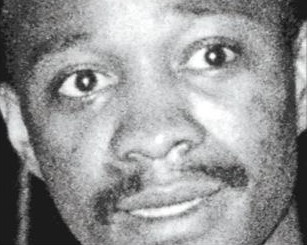
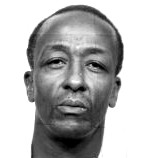
Derick Lynn Peterson
Murderer Ervil LeBaron
Murderer · USA · 1972
Ervil Morrell LeBaron (1925 to August 16, 1981) was the leader of a polygamous…
35 victims
Ervil LeBaron
Murderer · USA · 1972
Ervil Morrell LeBaron (1925 to August 16, 1981) was the leader of a polygamous…
35 victims
 Brian Kevin Rosenfeld
Murderer · USA · 1985
Brian Kevin Rosenfeld Brian Kevin Rosenfeld was sentenced to three concurrent l…
23 victims
Brian Kevin Rosenfeld
Murderer · USA · 1985
Brian Kevin Rosenfeld Brian Kevin Rosenfeld was sentenced to three concurrent l…
23 victims
 Marvin Gray
Murderer · USA · 1975
Marvin Gray was convicted killer who claimed responsibility for 23 slayings and…
23 victims
Marvin Gray
Murderer · USA · 1975
Marvin Gray was convicted killer who claimed responsibility for 23 slayings and…
23 victims
 Yahweh ben Yahweh
Murderer · USA · 1980
Yahweh ben Yahweh was born and legally named Hulon Mitchell Jr. (October 27, 19…
23 victims
Yahweh ben Yahweh
Murderer · USA · 1980
Yahweh ben Yahweh was born and legally named Hulon Mitchell Jr. (October 27, 19…
23 victims
 Russell Ellwood
Murderer · USA · 1991
Russell Ellwood was a former taxi driver. Authorities suspected him of killing…
20 victims
Russell Ellwood
Murderer · USA · 1991
Russell Ellwood was a former taxi driver. Authorities suspected him of killing…
20 victims
 Randy Haight
Murderer · USA · 1985
August 22, 1985 — Randy Haight murdered Patricia Vance and David Omer. · August…
2 victims
Randy Haight
Murderer · USA · 1985
August 22, 1985 — Randy Haight murdered Patricia Vance and David Omer. · August…
2 victims
 Darren Vann
Serial killer · USA · 2013
Darren Deon Vann — suspected perpetrator; arrested in October 2014; confessed t…
7 victims
Darren Vann
Serial killer · USA · 2013
Darren Deon Vann — suspected perpetrator; arrested in October 2014; confessed t…
7 victims
 Randall Eugene Cannon
Murderer · USA · 1985
Name: Randall Eugene Cannon Randall Eugene Cannon and his co-defendant Loyd LaF…
1 victim
Randall Eugene Cannon
Murderer · USA · 1985
Name: Randall Eugene Cannon Randall Eugene Cannon and his co-defendant Loyd LaF…
1 victim
 Dennis Sweeney
Homicide · USA · 1980
Dennis Sweeney (born in 1943) was an anti-Vietnam War protestor and civil right…
1 victim
Dennis Sweeney
Homicide · USA · 1980
Dennis Sweeney (born in 1943) was an anti-Vietnam War protestor and civil right…
1 victim
 Shaquan Duley
Murderer · USA · 2010
Shaquan Duley (30) was a South Carolina mother who pleaded guilty to two counts…
2 victims
Shaquan Duley
Murderer · USA · 2010
Shaquan Duley (30) was a South Carolina mother who pleaded guilty to two counts…
2 victims
 Nathaniel Brazill
Homicide · USA · 2000
Nathaniel Brazill Nathaniel Brazill was an American. He was born September 22,…
1 victim
Nathaniel Brazill
Homicide · USA · 2000
Nathaniel Brazill Nathaniel Brazill was an American. He was born September 22,…
1 victim
- Gender
- male
- Country
- USA
- Location
- Hampton, Virginia, USA
- Date of birth
- 1961
- Age at first offence
- 21
- Characteristics
- robbery, financial gain
- Victim profile
- Howard Kauffman, 45 (grocery store manager)
- Method of murder
- Shooting
- Date(s) of murder
- February 7, 1982
- Years active
- 1982
- Date of arrest
- —
- Status
-
Executed
Executed by electrocution in Virginia on August 22, 1991
Case overview
Derick Lynn Peterson was convicted of capital murder and sentenced to death in Virginia. He was executed by electrocution in Virginia on August 22, 1991.
Timeline
- February 7, 1982 — Peterson walked into the office cubicle of the Pantry Pride on West Pembroke Avenue in Hampton, grabbed several thousand dollars in checks and cash, and fatally shot Howard Kauffman once in the stomach before leaving.
- 1982 — Peterson was tried before a jury and found guilty of capital murder, robbery, and use of a firearm in the commission of a felony.
- 1983 — The Virginia Supreme Court affirmed Peterson’s convictions and sentences on direct appeal.
- March 7, 1990 — The United States Court of Appeals for the Fourth Circuit heard argument in Peterson v. Murray, No. 89-4012.
- May 24, 1990 — The United States Court of Appeals for the Fourth Circuit decided Peterson v. Murray, 904 F.2d 882.
- June 18, 1990 — Rehearing and rehearing in banc were denied in Peterson v. Murray.
- November 26, 1990 — The United States Supreme Court denied Peterson’s petition for a writ of certiorari.
- August 20, 1991 — Peterson unsuccessfully petitioned for a writ of habeas corpus from the Virginia Supreme Court.
- August 21, 1991 — Peterson filed an almost identical petition in the United States District Court for the Eastern District of Virginia on the evening of August 21, 1991 and included a request for a stay of his execution set for August 22, 1991.
- August 22, 1991 — The district court granted a “temporary” stay, and the United States Court of Appeals for the Fourth Circuit vacated the stay of execution; Peterson was executed shortly after 11 P.M.
Background
Peterson was convicted of capital murder and sentenced to death. Through a habeas corpus proceeding, Peterson collaterally attacked a Virginia state court judgment convicting him of capital murder and sentencing him to death.
The offence
Peterson was convicted of fatally shooting Howard Kauffman during the robbery of a Hampton, Virginia, grocery store on February 7, 1982.
- On the afternoon of Feb. 7, 1982, Peterson walked into the office cubicle of the Pantry Pride on West Pembroke Avenue in Hampton, grabbed several thousand dollars in checks and cash, then fatally shot the 45-year-old Kauffman once in the stomach before leaving.
Investigation
The record described the substantial testimony of eyewitnesses that Peterson shot at close range an employee of a Pantry Pride supermarket, Howard Kauffman, who was offering no resistance.
Trial
Charges and findings
Peterson was tried before a jury and found guilty of capital murder, robbery, and use of a firearm in the commission of a felony.
Sentences fixed by the jury
The jury fixed Peterson’s punishment at:
- life imprisonment for the robbery
- three years for the firearm count
A separate proceeding was then held before the same jury to set Peterson’s penalty for the capital murder. The Commonwealth sought the death penalty, urging that there was a probability Peterson “would commit criminal acts of violence that would constitute a continuing serious threat to society.”
Penalty trial evidence
During the penalty trial, the Commonwealth presented three witnesses.
- Sheila Coffey and Carrie Ann Baize were victims of other armed robberies by Peterson.
- Baize testified that Peterson held up a drug store the morning after Kauffman’s murder and—apparently by accident—shot a woman.
- Baize also said Peterson had threatened her when she testified at a preliminary hearing.
- The Commonwealth’s third witness was a probation officer who testified about Peterson’s record, including several adult felony convictions and a number of juvenile charges, some of which were resolved at intake, dismissed, or not prosecuted. Peterson’s trial counsel did not object.
Defence evidence
Peterson’s mother testified on his behalf.
Jury question and court response
During its deliberations, the jury asked the court whether it was possible to give a life sentence without parole. The court responded:
The only response I can give you on that, Mrs. [Forewoman], is that it's the function of the jury, duty of the jury, to impose such sentence as they consider just under the evidence and the instructions of the Court. And you should not concern yourself with what may thereafter happen. It may not be a very satisfactory answer, but it's the only one I can give you
The jury recommended the death sentence.
Sentencing
Virginia death penalty proceedings required proof beyond a reasonable doubt of the defendant’s future dangerousness or that the conduct in committing the offense was “outrageously or wantonly vile, horrible or inhuman....” The Commonwealth sought the death penalty solely on the basis of Peterson’s future dangerousness.
Appeals
Direct appeal
Peterson’s convictions and sentences were affirmed on direct appeal.
- Peterson v. Commonwealth, 225 Va. 289, 302 S.E.2d 520, cert. denied, 464 U.S. 865, 104 S.Ct. 202, 78 L.Ed.2d 176 reh’g denied, 464 U.S. 1004, 104 S.Ct. 515, 78 L.Ed.2d 702 (1983).
State habeas proceedings and related procedural rulings
Peterson petitioned for a writ of habeas corpus in the Circuit Court of the City of Hampton. The petition was dismissed, and Peterson appealed to the Virginia Supreme Court, which transferred the case to the Virginia Court of Appeals. A panel of the intermediate appeals court dismissed the death penalty part of the appeal, holding it did not have jurisdiction to consider a case in which a sentence of death had been imposed. Peterson v. Bass, 2 Va.App. 314, 316-18, 343 S.E.2d 475, 477-78, aff’d en banc by an equally divided court, 349 S.E.2d 409 (1986). Peterson appealed that jurisdictional question to the Virginia Supreme Court, which affirmed the decision of the Court of Appeals but also “reviewed the issues presented to but not decided by the Court of Appeals” and concluded they were without merit. Peterson’s petitions for rehearing and certiorari were denied. 484 U.S. 933 (1987).
Federal habeas corpus and appeals
Peterson sought relief in federal district court, which denied his petition for a writ of habeas corpus. Peterson then appealed the order dismissing the habeas corpus petition.
Peterson v. Murray, 904 F.2d 882 (4th Cir.)
In Peterson v. Murray, No. 89-4012, the United States Court of Appeals for the Fourth Circuit:
- affirmed the decision of the district court dismissing the habeas corpus petition
- concluded that it found no constitutional error
The appellate court addressed Peterson’s constitutional challenges, including:
- Future Dangerousness — Peterson submitted that imposition of the death penalty based on a jury finding of future dangerousness was unconstitutionally arbitrary because future dangerousness could not be accurately or reliably predicted. The court cited Jurek v. Texas and held the constitutionality of Virginia’s future dangerousness provision was “beyond question.” The cases it cited included Briley v. Bass and Giarratano v. Procunier.
- Juvenile Records — Peterson asserted constitutional rights were violated when a probation officer recounted Peterson’s juvenile record during the penalty trial. The court concluded there was no merit and noted the Virginia Supreme Court had held that “evidence relating to juvenile offenses and unadjudicated criminal activity” was admissible because “a trier of fact called upon to decide whether or not to impose the death sentence is entitled to know as much relevant information about the defendant as possible.”
- Parole — Peterson asserted the sentencing jury should have been “told of the effects of parole.” The court relied on the Virginia Supreme Court’s rejection of informing the jury about parole and also relied on the approach to similar instructions regarding commutation, pardon, and parole.
- Proportionality Review — Peterson argued the proportionality review conducted by the Virginia Supreme Court was constitutionally flawed. The court addressed whether the Virginia Supreme Court considered only cases in which the death penalty had been imposed and cited the Virginia Supreme Court’s description that it examined all capital-murder cases reviewed with particular emphasis on cases with the probability that defendants would be continuing threats to society. The appellate court adopted the district court’s reasoning.
- Ineffective Assistance of Counsel — The court applied Strickland v. Washington standards and concluded Peterson was not prejudiced by counsel’s alleged failures.
The Fourth Circuit entered: “AFFIRMED.”
United States Supreme Court
The United States Supreme Court denied Peterson’s petition for writ of certiorari on November 26, 1990.
Stay of execution and vacatur
Peterson filed an almost identical petition in the United States District Court for the Eastern District of Virginia on the evening of August 21, 1991, including a request for a stay of execution set for August 22, 1991. Today, August 22, 1991, with no detailed explanation, the district court granted a “temporary” stay. On August 22, 1991, the United States Court of Appeals for the Fourth Circuit entered an order:
- The court vacated the stay of execution.
The order stated:
The court hereby vacates the stay of execution.
The order also stated that Peterson:
- was convicted of capital murder in a Virginia Circuit Court in 1982 and was sentenced to death
- petitioned for and was denied post-conviction relief in the Virginia courts and filed a petition for a writ of habeas corpus in the United States District Court for the Eastern District of Virginia in 1989
- had the habeas corpus petition dismissed, and the Fourth Circuit later affirmed dismissal on May 24, 1990
- had the United States Supreme Court deny certiorari on November 26, 1990
- had unsuccessfully petitioned for a writ of habeas corpus from the Virginia Supreme Court on August 20, 1991
- filed the request for a stay in the United States District Court for the Eastern District of Virginia on August 21, 1991
Outcome
Execution
Peterson was executed shortly after 11 P.M. at the Greensville Correction Center near Jarratt, Va.
Repeated electrocution procedure and medical checks
Officials had to repeate the electrocution procedure. A doctor at the prison checked Peterson’s pulse and determined that he was still alive after being given the normal amount of electricity used to execute people:
- 1,725 volts for 10 seconds
- 240 volts for about 90 seconds Peterson was pronounced dead after the entire process was repeated.
Witnesses including an Associated Press reporter observed that:
- after the first series of jolts Peterson’s heart continued to beat
- a second surge was sent Peterson wheezed and finally died.
Named prison staff and comments
Jean Clarke, operations director at the prison, confirmed observations by witnesses but would not comment on them. Russ Ford, director of chaplain services for state prisons, complained after the execution that his final moments with Peterson were interrupted by prison workers, who opened the blinds to the condemned man’s cell. Ford said:
“I'm in rage,” Mr. Ford said.
Ford added that he had been with 11 condemned men just before they died and that this was the first time their last moments were intruded upon.
When asked about Ford’s complaints, Clarke said:
“I'm not aware of that.”
Description of the electrocution and quotations
One expert in the field described Peterson’s death as occurring after thirteen minutes and two separate jolts of electricity. A commentator provided an in depth account quoting details of the sequence:
At 11:01 p.m., an officer behind a one-way mirror starts the 1,725-volt current. After 10 seconds, it drops to 240 volts and runs for 110 more seconds. Peterson's hands and feet clench; his head jerks. His feet relax; he moans softly. . . . Dr. David Barnes, a Corrections Department doctor, checks Peterson's carotid arteries for a pulse. He rests his stethoscope against Peterson's bony chest. The doctor turns to the warden: "He hasn't expired." Four minutes later, Dr. Barnes pokes the breast bone, then the left chest with the stethoscope. "This man has not expired." Peterson has lived for 7 1/2 minutes. The witnesses gasp. The executioner would send a second surge to the chair. Peterson wheezes. Peterson finally died.
Department of Corrections explanation and other statements
The Director of Virginia’s Department of Corrections explained:
"We're dealing with brand new equipment. I think you have to make adjustments as you use the equipment."
The director added that in future executions a second jolt would immediately follow the first.
The jail officials had planned:
Jail officials had "planned all along to do a second cycle if they felt it was necessary. "
Jay A. Wiechert, owner of the Arkansas company that designed the wiring for Virginia’s electric chair, stated:
"Many years ago, (two doses) was not uncommon at all. . . . With modern equipment, that would be uncommon.'
After Virginia’s announcement of its new “two-jolt policy,” prison officials installed new electrical equipment on the chair and changed the dose of current. Edward C. Morris, Virginia’s Deputy Director of the Department of Corrections, said:
"the old chair used a much higher voltage. This new system is less likely to cause some of the burning of the body that happened in the old high-voltage system."
Other details
Howard Kauffman
Howard Kauffman was a 45-year-old supermarket manager and was fatally shot once in the stomach during the robbery.
Other robbery-related evidence presented at trial
During the penalty trial, witnesses described that Peterson held up a drug store the morning after Kauffman’s murder and apparently by accident shot a woman, and that Peterson threatened a witness who testified against him.
Juvenile and prior criminal history referenced in appellate proceedings
The Fourth Circuit described Peterson’s “constant difficulty with the juvenile authorities from an early age,” including:
- as a juvenile, Peterson was committed to detention for armed robbery at age 15
- as an adult, Peterson was convicted of breaking and entering and grand larceny It also referenced convictions for:
- armed robbery and a related offense committed approximately three weeks before the shooting at the Pantry Pride store
- armed robbery and a related offense committed the next day after the Kauffman slaying The order also stated that Peterson threatened a witness who testified against him.
Quoted jury instruction language challenged on appeal
Peterson challenged jury instructions. The disputed instruction during the guilt phase stated:
You may infer malice from the deliberate use of a deadly weapon unless, from all the evidence, you have a reasonable doubt as to whether malice existed.
The instruction further defined:
A "deadly weapon" is any object or instrument, not a part of the human body, that is likely to cause death or great bodily injury because of the manner, and under the circumstances, in which it is used.
The penalty-phase instruction stated:
If you find from the evidence that the Commonwealth has proven beyond a reasonable doubt either of the two alternatives, then you may fix the punishment of the defendant at death or if you believe from all the evidence that the death penalty is not justified, then you shall fix the punishment of the defendant at life imprisonment. If the Commonwealth has failed to prove either alternative beyond a reasonable doubt, then you shall fix the punishment of the defendant at life imprisonment.
Peterson’s statements
In an interview, Peterson said the shooting was accidental. In an interview, Peterson said he received the death penalty because he was black.
Federal court conclusion on habeas review and procedural default
The Fourth Circuit stated that claims raised were procedurally defaulted and that it was satisfied there was no question of actual innocence involved.
Additional procedural history and dates referenced in the appellate order
The order referenced that the United States Supreme Court denied Peterson’s certiorari petitions and that his last state habeas petition had been unsuccessfully petitioned after the district court’s “temporary” stay. The order also described the practice of discouraging last-minute new claims and successive habeas petitions.

Spotted an error, or have more information about this case?