
Alis Ben Johns
Murderer Russell Ellwood
Murderer · USA · 1991
Russell Ellwood was a former taxi driver. Authorities suspected him of killing…
20 victims
Russell Ellwood
Murderer · USA · 1991
Russell Ellwood was a former taxi driver. Authorities suspected him of killing…
20 victims
 Robert Martines Perez
Murderer · USA · 1994
Name: Robert Martines Perez · Other name used in proceedings: Robert Martinez P…
15 victims
Robert Martines Perez
Murderer · USA · 1994
Name: Robert Martines Perez · Other name used in proceedings: Robert Martinez P…
15 victims
 Billy Frank Vickers
Murderer · USA · 1993
Billy Frank Vickers Vickers was executed by lethal injection in Texas on Januar…
14 victims
Billy Frank Vickers
Murderer · USA · 1993
Billy Frank Vickers Vickers was executed by lethal injection in Texas on Januar…
14 victims
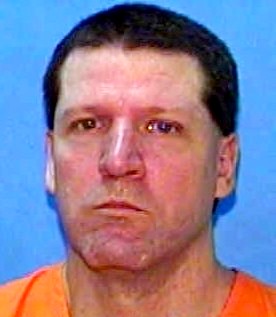 Daniel Lee Doyle
Murderer · USA · 1981
Daniel Lee Doyle was sentenced to death on May 13, 1982. He was convicted of fi…
1 victim
Daniel Lee Doyle
Murderer · USA · 1981
Daniel Lee Doyle was sentenced to death on May 13, 1982. He was convicted of fi…
1 victim
 Teófilo Medina
Murderer · USA · 1984
Teofilo Medina, Jr. stole a gun from a pawn shop in Santa Ana, California. In t…
4 victims
Teófilo Medina
Murderer · USA · 1984
Teofilo Medina, Jr. stole a gun from a pawn shop in Santa Ana, California. In t…
4 victims
 Michael Monert
Serial killer · USA · 1989
Michael Monert was a serial killer who was convicted for killing three women in…
3 victims
Michael Monert
Serial killer · USA · 1989
Michael Monert was a serial killer who was convicted for killing three women in…
3 victims
 Guo Zhongmin
Mass murderer · China · 2003
Guo Zhongmin was a Chinese mass murderer. He killed 13 people in Yangxiaoxiang,…
13 victims
Guo Zhongmin
Mass murderer · China · 2003
Guo Zhongmin was a Chinese mass murderer. He killed 13 people in Yangxiaoxiang,…
13 victims
 Juan Moreira
Murderer · Argentina · 1856
Juan Moreira (? - April, 1874) was a well-known figure in the history of Argent…
16 victims
Juan Moreira
Murderer · Argentina · 1856
Juan Moreira (? - April, 1874) was a well-known figure in the history of Argent…
16 victims
- Gender
- male
- Country
- USA
- Location
- Pulaski County, Missouri, USA
- Date of birth
- August 21, 1961
- Age at first offence
- 36
- Characteristics
- drug addict, murder for hire, rape
- Victim profile
- Thomas Stewart / Leonard Voyles / Wilma Bragg
- Method of murder
- Shooting
- Date(s) of murder
- 1 996 - 1997
- Years active
- 1997
- Date of arrest
- April 7, 1997 (wounded by police)
- Status
-
Sentenced to death
Sentenced to death on February 22, 1999
Case overview
Alis Ben Johns began spending time with Thomas Stewart in the spring of 1996. Both men traveled in the same circles and spent considerable time drinking alcohol together. On the night of October 1, 1996, Johns accepted a ride from Stewart's girlfriend, Deborah Tedder.
The offence
Stewart, who had been fighting with Tedder earlier in the day, followed in his truck and eventually confronted Johns and Tedder on rural Highway KK in Pulaski County. All three individuals were intoxicated. The confrontation became violent, and two of Tedder's car windows were shattered.
At some point, Johns exited the automobile with a .22 caliber pistol. Johns shot Stewart seven times, killing him.
At 10:00 p.m., Robert and Christina Deardeuff passed by the scene while returning home from a family gathering. They saw Stewart's gray Chevrolet truck stopped in the northbound lane with a small white car in close proximity. Robert also noticed a man lying face down between the automobile and the truck. As they approached the second vehicle, Robert slowed down to offer his assistance. But Johns admonished them several times, "Everything's all right -- just go on."
After the Deardeuffs left the scene, Johns and Tedder fled in Tedder's car.
Approximately one hour later, Kristine Brockes came upon Stewart's truck while returning from her job at Ft. Leonard Wood. She found Stewart's body lying face down behind the truck and called the police. Paramedics and law enforcement officers arrived shortly thereafter. Police were unable to find the murder weapon.
Police recovered seven .22 caliber shell casings resting in close proximity to one another approximately fifteen feet from Stewart's body. Police found a pile of glass and two spots of blood where Tedder's car had been parked. The next morning, police found an eighth shell casing that had come to rest within a few feet from where the victim's body had been.
Investigation
The police apprehended Tedder the next morning. Tedder indicated that Johns might have been involved in Stewart's death. While questioning Tedder, the officers noticed two types of damage to Tedder's car: two shattered windows and a puncture to the left rear quarter that looked like a bullet hole. The officers also found what appeared to be a splatter of blood on the fender.
Local law enforcement began searching for Johns. Johns had been living on a small farm owned by Pearl Rose. When police arrived at the farm, Johns was already on the run. Officers searched the premises and recovered several .22 caliber shell casings, which were sent to the Missouri State Highway Patrol Crime Lab and compared to shells found at the scene of Stewart's death. The lab could not confirm that the shells were used in the same gun, but it identified class characteristics of the casings consistent with the shells found at the murder scene.
Johns evaded capture for the next six months.
During this time, Johns was implicated in two murders and several robberies.
On February 7, 1997, Ron Wilson returned to his home to find Johns standing on the front porch with a shotgun that he had just stolen from inside. Johns fired once into the ceiling and once at Wilson. Johns fled with Wilson's car, two guns, a hunting knife, and a watch. On February 26, 1997, Johns forcibly entered the home of Bud and Melinda Veverka and held the couple at gunpoint while he warmed himself by the stove.
This robbery proved largely unsuccessful. Johns was only able to steal two dollars, a wallet, and some juice. Though no one was injured in these robberies, Johns’ next victims were less fortunate.
On February 28, 1997, police found Leonard Voyles lying dead in his Camden County home. He died of a single .22 caliber gunshot wound to the head. An inventory of the home revealed that Voyles' Ford Ranger truck and his .22 caliber rifle were missing. The subsequent police investigation uncovered a shoe print on the property that identically matched Johns' right boot. In addition, officers recovered Johns' fingerprints from Voyles' stolen truck, which was found on March 8, 1997.
Three miles away, police also found the dead body of Wilma Bragg on March 9, 1997. The investigation revealed that Bragg's assailant shot her two times in the back of the head while she lay face down on her bed with her hands tied behind her back. DNA testing of a cigarette butt implicated Johns in the murder and impression analysis confirmed that the rifle stolen from Voyles' home was subsequently used to kill Bragg. Johns left with Bragg's 1991 Toyota, which was later recovered with the rifle still inside.
During the following weeks, Johns and his girlfriend, Beverly Guehrer, burglarized four additional homes. At each home, Johns left fingerprints or took property that was later found in his possession.
Arrest
On April 7, 1997, the crime spree came to an end when officers of the Missouri Water Patrol encountered Johns in a cabin while searching Cole Camp Creek in Benton County. As the officers approached the cabin, Johns threw open the door and emerged with Guehrer held in front of him as a human shield.
With one arm around Guehrer's neck and the other aiming a rifle at her head, Johns said, "I've got a hostage. I'll shoot her." As Johns made a sudden movement to escape, Officer Eric Gottman shot him in the abdomen and placed him under arrest.
Trial
Johns was convicted of first degree murder and sentenced to death in Pulaski County. The Supreme Court of Missouri case style was State ex rel. Alis Ben Johns, Relator v. The Honorable Greg Kays, Respondent. The Supreme Court case number was SC86936. The handdown date was 01/10/2006.
This Court affirmed that judgment in State v. Johns, 34 S.W.3d 93 (Mo. banc 2000).
Sentencing and eligibility for the death penalty
Johns then filed a post-conviction motion. The motion court determined that Johns was mentally retarded and, therefore, not eligible for the death penalty under Atkins v. Virginia, 536 U.S. 304 (2002), and section 565.030, RSMo 2000. The state did not appeal the motion court’s judgment, which became final.
Johns was later charged with first degree murder in Camden County. Johns sought to prohibit the state from seeking the death penalty in the Camden County case, relying on the prior finding that he was mentally retarded.
Appeals
Johns relied on collateral estoppel. In deciding whether collateral estoppel applied, the Court considered four factors:
- whether the issue in the present case was identical to the issue decided in the prior adjudication;
- whether there was a judgment on the merits in the prior adjudication;
- whether the party against whom collateral estoppel was asserted was the same party or in privity with a party in the prior adjudication; and
- whether the party against whom collateral estoppel was asserted had a full and fair opportunity to litigate the issue in the prior suit.
The doctrine applied only to those issues that were necessarily and unambiguously decided, citing State v. Nunley, 923 S.W.2d 911, 922 (Mo. banc 1996).
Respondent acknowledged the factors existed in the case. Respondent argued, relying on State v. Lundy, that collateral estoppel also required that a party seeking to take advantage of collateral estoppel must be bound by an adverse judgment in the prior adjudication. The Court concluded that the reading overlooked that Lundy involved different defendants and that it generally applied if the defendant was the same person in both cases, citing State v. Lundy, 829 S.W.2d 54, 56 (Mo. App. 1992).
The Court also addressed whether the writ was appropriate because Johns was not yet subject to the death penalty, given that a prosecutor might waive the penalty or the jury might not impose it. The Court stated that a writ was appropriate where a lower tribunal lacked the power to act as contemplated, citing State ex rel. Riverside Joint Venture v. Missouri Gaming Com'n, 969 S.W.2d 218, 221 (Mo. banc 1998). The Court stated that whether the death penalty was available affected preparation for trial and the conduct of the trial, giving an example that if the death penalty was not available, each party was entitled to three fewer peremptory challenges, citing State v. Boston, 910 S.W.2d 306, 312 (Mo. App. 1995).
Outcome
The preliminary writ, as modified, was made absolute, prohibiting the state from seeking the death penalty in the underlying cause.
The opinion was per curiam and written by PER CURIAM. The vote was WRIT MADE ABSOLUTE AS MODIFIED. All concur. A separate opinion was none.
Other details
Johns was described as living on a small farm owned by Pearl Rose when police began searching for him.

Spotted an error, or have more information about this case?