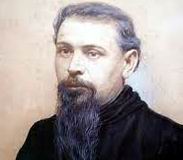
Juan Moreira
Murderer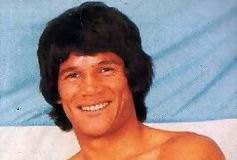 Carlos Monzón
Murderer · Argentina · 1988
Carlos Monzón (August 7, 1942 – January 8, 1995) was an Argentine professional…
1 victim
Carlos Monzón
Murderer · Argentina · 1988
Carlos Monzón (August 7, 1942 – January 8, 1995) was an Argentine professional…
1 victim
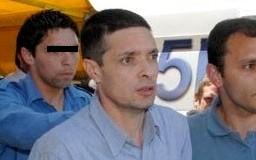 Mario Cesar Frieiro
Murderer · Argentina · 1998
Mario Cesar Frieiro was an Argentine murderer. Frieiro had a discussion with hi…
1 victim
Mario Cesar Frieiro
Murderer · Argentina · 1998
Mario Cesar Frieiro was an Argentine murderer. Frieiro had a discussion with hi…
1 victim
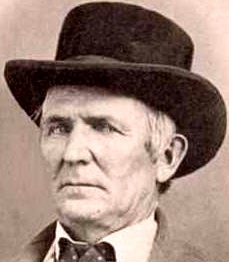 John Doyle Lee
Murderer · USA · 1857
Name: John Doyle Lee Lifespan: September 12, 1812 - March 23, 1877 Legal outcom…
120 victims
John Doyle Lee
Murderer · USA · 1857
Name: John Doyle Lee Lifespan: September 12, 1812 - March 23, 1877 Legal outcom…
120 victims
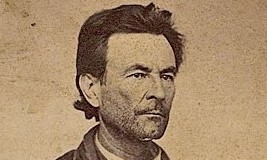 Champ Ferguson
Murderer · USA · 1861
Champ Ferguson was born November 29, 1821 in Clinton County, Kentucky, near the…
100 victims
Champ Ferguson
Murderer · USA · 1861
Champ Ferguson was born November 29, 1821 in Clinton County, Kentucky, near the…
100 victims
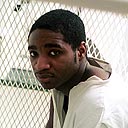 Anzel Keon Jones
Homicide · USA · 1995
Anzel Keon Jones was a 17-year-old at the time of his arrest for the May 1995 m…
1 victim
Anzel Keon Jones
Homicide · USA · 1995
Anzel Keon Jones was a 17-year-old at the time of his arrest for the May 1995 m…
1 victim
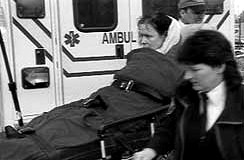 Rachel Capra Craig
Homicide · Canada · 2001
Rachel Capra Craig was a Canadian woman accused of the murder of her fourteen-y…
1 victim
Rachel Capra Craig
Homicide · Canada · 2001
Rachel Capra Craig was a Canadian woman accused of the murder of her fourteen-y…
1 victim
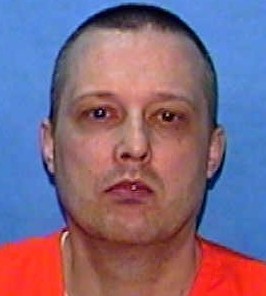 Robin Lee Archer
Murderer · USA · 1991
Robin Lee Archer was tried in the First Judicial Circuit, Escambia County, Case…
1 victim
Robin Lee Archer
Murderer · USA · 1991
Robin Lee Archer was tried in the First Judicial Circuit, Escambia County, Case…
1 victim
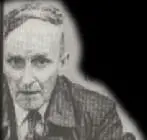 Harold Loughans
Murderer · United Kingdom · 1943
Harold Loughans was associated with Mrs Rose Ada Robinson’s pub, The John Barle…
1 victim
Harold Loughans
Murderer · United Kingdom · 1943
Harold Loughans was associated with Mrs Rose Ada Robinson’s pub, The John Barle…
1 victim
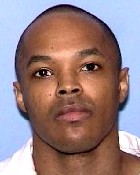 Terry Darnell Edwards
Murderer · USA · 2002
Name: Terry Darnell Edwards TDCJ Number: 999463 Date of birth: 08/10/1973 Gende…
2 victims
Terry Darnell Edwards
Murderer · USA · 2002
Name: Terry Darnell Edwards TDCJ Number: 999463 Date of birth: 08/10/1973 Gende…
2 victims
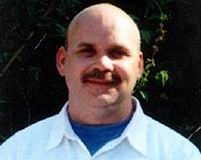 Douglas Donald Moore
Murderer · Canada · 2003
Douglas Donald Moore died of an apparent suicide in a cell at the Maplehurst De…
3 victims
Douglas Donald Moore
Murderer · Canada · 2003
Douglas Donald Moore died of an apparent suicide in a cell at the Maplehurst De…
3 victims
- Gender
- male
- Country
- Argentina
- Location
- Argentina
- Date of birth
- 1819 ?
- Age at first offence
- 37
- Characteristics
- gangs
- Victim profile
- Men
- Method of murder
- Stabbing with knife - Shooting
- Date(s) of murder
- 1856 - 1874
- Years active
- 1856–1874
- Date of arrest
- —
- Status
-
Died in custody
Killed by police on April 30, 1874
Case record: Juan Moreira
Background
Juan Moreira (? - April, 1874) was a well-known figure in the history of Argentina, an outlaw, gaucho and folk-hero. He was one of the more renowned Argentinian rural bandits.
Moreira was born in the administrative area of La Matanza, in the Province of Buenos Aires, Argentina. He worked in rural areas for about the first thirty years of his life. He later bought his own ranch, some cattle, and land for farming.
Moreira rarely drank. He devoted his free time to perfecting his skill on the guitar, which attracted the attention of Vicenta, the daughter of a local rancher. Vicenta fell in love with Moreira and eventually married him with the full consent of her father.
The offence
After Moreira married Vicenta, his troubles began. The Deputy Mayor of the area, known as Don Francisco, had also fallen in love with La Vicenta. As a form of vengeance, Don Francisco began charging Moreira fines for everything he could think of, real or imaginary. The first thing he did was charge Moreira 500 pesos for having his wedding celebration without proper authorization.
About that time, Moreira had lent Mr. Sardetti, a grocery-store owner, the sum of 10,000 pesos to buy merchandise. Fed up with asking for his money back, Moreira went to the Deputy Mayor without documentation, as was the custom at that time between men of their word, and reported what had happened in hopes that the Deputy Mayor would insist that Sardetti pay him back.
It was unclear if Sardetti and Don Francisco were conspiring against Moreira, but Sardetti denied the story. Moreira was thrown in jail for 48 hours for a form of attempted robbery.
This situation made Moreira so angry that he swore that he would stab Sardetti for every single peso he had lost. Moreira fulfilled his oath when he killed Mr. Sardetti in a knife duel at Sardetti's grocery store.
Returning home after a night of wandering, he found Don Francisco and four other soldiers waiting to arrest him. He resisted, and during the fight Don Francisco and two soldiers were killed.
Investigation
After the killing of Don Francisco and two soldiers, Moreira became widely known for his ability in knife fights. Men looked for him and picked fights with him to gain the glory of defeating him, but he never lost. He avoided fights whenever he could, and only killed after repeated provocation and in self-defense.
Moreira eventually served as a bodyguard for powerful politicians who promised to clean Moreira's reputation, but they never did so.
It was said that Moreira never took the saddle off his horse, just in case he had to make a quick escape. He spent much of this part of his life wandering through different towns and cities of the Province of Buenos Aires, Argentina, including Navarro, Las Heras, Lobos, Veinticinco de Mayo and the lands of the Indian Cacique Coliqueo.
Death
In April 1874, Casimiro Villamayor, the justice of the peace in Lobos, was ordered by Mariano Acosta, governor of the Province of Buenos Aires, to send a posse led by Commander Bosch from the police department in Buenos Aires to arrest Moreira.
They surrounded the grocery and saloon (pulpería) named La Estrella where Moreira was holed up. Moreira fought against the police. He was at the point of leaping over the wall which separated him from his horse when he was bayoneted in the left lung by one of the officers, Sergeant Chirino. Moreira managed to shoot at Chirino, who lost an eye, and he also injured one other officer before he died.
Moreira was killed on April 30, 1874.
He was survived by his wife and a child, also named Juan. He was buried at the Lobos cemetery.
Aftermath
Juan Moreira was one of the most important figures in the popular history of Argentina. His life was described as being marked by violence and injustice which typified the unfair treatment received by gauchos, treatment said to have led to his death.
His skull and some personal belongings could be seen at the Juan Domingo Perón Museum. His life inspired a very popular novel by romantic author Eduardo Gutiérrez, which in turn inspired at least four biographical films entitled Juan Moreira. The most important of these films, Juan Moreira (1973 film), was directed by Leonardo Favio and starred Rodolfo Bebán as the title character.
The night of his death was fictionalized by Jorge Luis Borges in a short story, La noche de los dones.

Spotted an error, or have more information about this case?