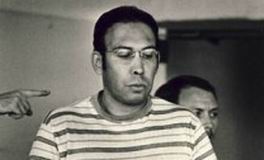
Teófilo Medina
Murderer Brian Kevin Rosenfeld
Murderer · USA · 1985
Brian Kevin Rosenfeld Brian Kevin Rosenfeld was sentenced to three concurrent l…
23 victims
Brian Kevin Rosenfeld
Murderer · USA · 1985
Brian Kevin Rosenfeld Brian Kevin Rosenfeld was sentenced to three concurrent l…
23 victims
 Marvin Gray
Murderer · USA · 1975
Marvin Gray was convicted killer who claimed responsibility for 23 slayings and…
23 victims
Marvin Gray
Murderer · USA · 1975
Marvin Gray was convicted killer who claimed responsibility for 23 slayings and…
23 victims
 Yahweh ben Yahweh
Murderer · USA · 1980
Yahweh ben Yahweh was born and legally named Hulon Mitchell Jr. (October 27, 19…
23 victims
Yahweh ben Yahweh
Murderer · USA · 1980
Yahweh ben Yahweh was born and legally named Hulon Mitchell Jr. (October 27, 19…
23 victims
 Russell Ellwood
Murderer · USA · 1991
Russell Ellwood was a former taxi driver. Authorities suspected him of killing…
20 victims
Russell Ellwood
Murderer · USA · 1991
Russell Ellwood was a former taxi driver. Authorities suspected him of killing…
20 victims
 Virginia Krall
Murderer · USA · 2006
Virginia Ann Krall was the defendant and appellant. The case was titled: The Pe…
1 victim
Virginia Krall
Murderer · USA · 2006
Virginia Ann Krall was the defendant and appellant. The case was titled: The Pe…
1 victim
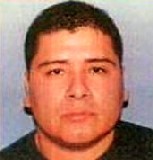 Gabriel Avila
Murderer · USA · 2003
Gabriel Avila was a 27-year-old Mexican national. Katie Sepich was 22 and from…
1 victim
Gabriel Avila
Murderer · USA · 2003
Gabriel Avila was a 27-year-old Mexican national. Katie Sepich was 22 and from…
1 victim
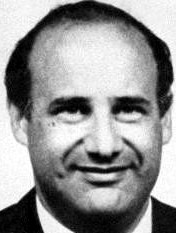 Jean-Claude Romand
Spree killer · France · 1993
Jean-Claude Romand (born February 11, 1954) was a French impostor and murderer…
5 victims
Jean-Claude Romand
Spree killer · France · 1993
Jean-Claude Romand (born February 11, 1954) was a French impostor and murderer…
5 victims
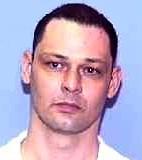 Donald Newbury
Murderer · USA · 2000
Donald Newbury (TDCJ Number 999403) was born on 05/18/1962. He was white, male,…
1 victim
Donald Newbury
Murderer · USA · 2000
Donald Newbury (TDCJ Number 999403) was born on 05/18/1962. He was white, male,…
1 victim
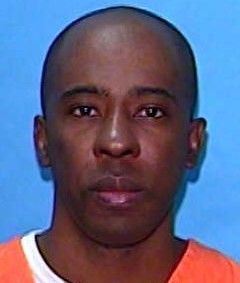 Paul Augustus Howell
Murderer · USA · 1992
Paul Augustus Howell was a Florida death row prisoner identified as Black, male…
1 victim
Paul Augustus Howell
Murderer · USA · 1992
Paul Augustus Howell was a Florida death row prisoner identified as Black, male…
1 victim
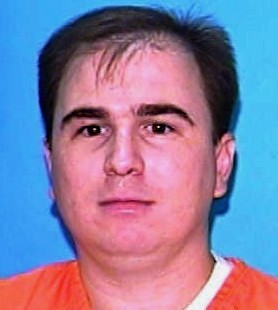 Eric Scott Branch
Murderer · 1993
Eric Scott Branch · 01/11/93 — Eric Scott Branch attacked Susan Morris in the u…
1 victim
Eric Scott Branch
Murderer · 1993
Eric Scott Branch · 01/11/93 — Eric Scott Branch attacked Susan Morris in the u…
1 victim
- Gender
- male
- Country
- USA
- Location
- Orange/Riverside Counties, California, USA
- Date of birth
- 1943
- Age at first offence
- 41
- Characteristics
- robbery, crime spree, rape, mentally ill
- Victim profile
- Horacio Ariza Jr., 20 / Craig Christopher Martin, 18 / Douglas Michael Metal, 23 / Victor Rea, 20 (all clerks at gas stations or drive-in dairies)
- Method of murder
- Shooting
- Date(s) of murder
- October 1984
- Years active
- 1984
- Date of arrest
- —
- Status
-
Sentenced to death
Sentenced to death in 1987
Background
Teofilo Medina, Jr. stole a gun from a pawn shop in Santa Ana, California. In the weeks that followed, he held up two gas stations, a drive in dairy, and a market. He murdered three employees of those establishments, attempted to rob a fourth employee, and shot at two passersby who attempted to follow his getaway car. Medina was apprehended less than one month after his crime spree began and was charged with a number of criminal offenses, including three counts of first degree murder.
Medina had previously been released from the Arizona Department of Corrections where he served a term for rape. During the competency proceedings, Medina engaged in verbal and physical outbursts, including overturning the counsel table.
Medina claimed that as a youth he learned he was a “high priest” after a revelation in which he saw Jesus Christ and the Virgin Mary, according to the defense.
The offence
Medina began a robbery and murder spree on Oct. 18, 1984. Within two weeks, four young men, all clerks at gas stations or drive-in dairies in Orange and Riverside counties, were dead. Horacio Ariza Jr., 20, Craig Christopher Martin, 18, Douglas Michael Metal, 23, and Victor Rea, 20 were shot in the head. The robberies netted less than $400.
Medina committed three robbery murders of young men in Orange County. He was convicted of the three murders that occurred in Orange County. He then shot and killed an 18-year-old gas station attendant in Corona who was working to save enough money to go to college. Medina was convicted of the Corona murder case and received his fourth death sentence. His murder of a fourth clerk in Corona was not part of the case, but was introduced to jurors during the penalty phase of the trial.
Investigation
Medina was apprehended less than one month after his crime spree began.
Arrest
Trial
Medina was charged with a number of criminal offenses, including three counts of first degree murder. Before trial, petitioner's counsel moved for a competency hearing under Cal. Pen. Code Ann. § 1368 (West 1982) on the ground that he was unsure whether petitioner had the ability to participate in the criminal proceedings against him. Under California law, "[a] person cannot be tried or adjudged to punishment while such person is mentally incompetent." Cal. Pen. Code Ann. § 1367 (West 1982). A defendant was mentally incompetent if, as a result of mental disorder or developmental disability, the defendant was unable to understand the nature of the criminal proceedings or to assist counsel in the conduct of a defense in a rational manner.
The statute established a presumption that the defendant was competent, and the party claiming incompetence bore the burden of proving that the defendant was incompetent by a preponderance of the evidence: § 1369(f) ("It shall be presumed that the defendant is mentally competent unless it is proved by a preponderance of the evidence that the defendant is mentally incompetent").
The trial court granted the motion and the preliminary issue of petitioner's competence to stand trial was tried to a jury. Over the course of the six day hearing, in addition to lay testimony, the jury heard conflicting expert testimony about petitioner's mental condition. The Supreme Court of California gave this summary:
"Dr. Gold, a psychiatrist who knew defendant while he was in the Arizona prison system, testified that defendant was a paranoid schizophrenic and was incompetent to assist his attorney at trial. Dr. Echeandia, a clinical psychologist at the Orange County jail, doubted the accuracy of the schizophrenia diagnosis, and could not express an opinion on defendant's competence to stand trial. Dr. Sharma, a psychiatrist, likewise expressed doubts regarding the schizophrenia diagnosis and leaned toward a finding of competence. Dr. Pierce, a psychologist, believed defendant was schizophrenic, with impaired memory and hallucinations, but nevertheless was competent to stand trial. Dr. Sakurai, a jail psychiatrist, opined that although defendant suffered from depression, he was competent, and that he may have been malingering. Dr. Sheffield, who treated defendant for knife wounds he incurred injail, could give no opinion on the competency issue." 51 Cal. 3d 870, 880, 799 P. 2d 1282, 1288 (1990).
During the competency hearing, petitioner engaged in several verbal and physical outbursts. On one of these occasions, he overturned the counsel table. The trial court instructed the jury in accordance with § 1369(f) that:
"the defendant is presumed to be mentally competent and he has the burden of proving by a preponderance of the evidence that he is mentally incompetent as a result of mental disorder or developmental disability." App. 87.
The jury found petitioner competent to stand trial. A new jury was impaneled for the criminal trial, and petitioner entered pleas of not guilty and not guilty by reason of insanity. At the conclusion of the guilt phase, petitioner was found guilty of all three counts of first degree murder and a number of lesser offenses.
Petitioner moved to withdraw his insanity plea, and the trial court granted the motion. Two days later, however, petitioner moved to reinstate his insanity plea. Although his counsel expressed the view that reinstatement of the insanity plea was "tactically unsound," the trial court granted petitioner's motion. A sanity hearing was held, and the jury found that petitioner was sane at the time of the offenses.
At the penalty phase, the jury found that the murders were premeditated and deliberate, and returned a verdict of death. The trial court imposed the death penalty for the murder convictions and sentenced petitioner to a prison term for the remaining offenses.
Medina was tried and convicted for the three slayings that occurred in Orange County. Jurors convicted him in October, 1986, of three first-degree murder counts, plus special circumstances of multiple murder, robbery and burglary.
His attorney Ron Kreber, now a Superior Court judge, argued unsuccessfully that his client was mentally ill and could not even remember the murders. The jury ruled Medina was legally sane in 1987, and he was given the death penalty.
Sentencing
Medina received three separate death sentences for the three Orange County murders and received his fourth death sentence for the Corona murder. Sentencing Medina to death four months after the October 1986 conviction occurred. Superior Court Judge James K. Turner called his crimes "cruel, depraved and violent" and said the case represented "a classic, textbook example of why there is a need for the death penalty."
Appeals
The U.S. Supreme Court agreed to review the case of Teofilo Medina, who was on Death Row for the execution-style killings of three Orange County convenience store clerks in 1984. The high court agreed to use Medina's case to decide whether the prosecution must prove that a defendant is mentally competent to stand trial.
Defense lawyers argued that it should not be up to them to prove that he was mentally incompetent. "How can an incompetent person prove he's incompetent?" asked James D. Stone, the Anaheim lawyer who represented Medina in his Orange County Superior Court trial in 1986. In the Medina case, the defendant's lawyers argued that it should not be up to them to prove that he was mentally incompetent.
Deputy Atty. Gen. Holly D. Wilkens, who represented the Orange County district attorney's office on appeal, said that in California state courts it was up to defense attorneys to prove their clients were mentally incompetent. Deputy Dist. Atty. Bryan F. Brown said forcing prosecutors to prove a defendant mentally competent would place a tremendous burden on taxpayers and bog down an already overcrowded court calendar:
"It would have a tremendous impact," Brown said. "All a defendant would have to do is say, 'I'm incompetent,' and the prosecutor would have to go through a long, expensive hearing."
A host of constitutional protections make it difficult for prosecutors to obtain information about a defendant, according to Wilkens. Myrna Raeder said making prosecutors prove mental competence as another element of their case shows respect for an accused person's rights:
"We don't put someone on trial for their life unless we can show that everything, including the required state of mind, is present," she said.
The U.S. Supreme Court decided Medina v. California and affirmed the judgment of the Supreme Court of California. The Court held that the Due Process Clause permits a State to require that a defendant claiming incompetence to stand trial bear the burden of proving so by a preponderance of the evidence, and that the presumption of competence did not violate due process. The judgment of the Supreme Court of California was affirmed.
Kennedy, J., delivered the opinion of the Court. O'Connor, J., filed a concurring opinion. Blackmun, J., filed a dissenting opinion.
Outcome
Medina’s conviction and sentencing were affirmed.
Aftermath
Medina was on Death Row following his 1987 death sentences.
Other details
Medina was described as a paroled rapist and he had shot three young men in holdups.
The case involved Medina v. California, certiorari to the supreme court of california. It listed the procedural details that before trial the California court granted a motion for a competency hearing pursuant to a state law that forbids a mentally incompetent person to be tried or punished, establishes a presumption of competence, and placed on petitioner the burden of proving incompetence by a preponderance of the evidence. The jury found Medina competent, and petitioner was convicted and sentenced to death.
The U.S. Supreme Court’s syllabus included: "Held: 1. The Due Process Clause permits a State to require that a defendant claiming incompetence to stand trial bear the burden of proving so by a preponderance of the evidence." It further stated that "51 Cal. 3d 870, 799 P. 2d 1282, affirmed."
Spotted an error, or have more information about this case?