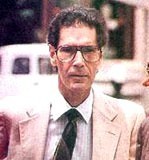
Robert Lee Bennett
???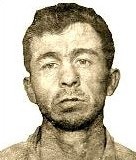 Donald Henry Gaskins
Serial killer · USA · 1969
Donald Henry Gaskins, also known as Donald “Pee Wee” Gaskins, was a serial kill…
200 victims
Donald Henry Gaskins
Serial killer · USA · 1969
Donald Henry Gaskins, also known as Donald “Pee Wee” Gaskins, was a serial kill…
200 victims
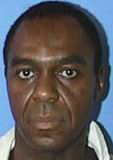 Carl Eugene Watts
Serial killer · USA · 1974
Carl Eugene Watts (born November 7, 1953; died September 21, 2007), also known…
100 victims
Carl Eugene Watts
Serial killer · USA · 1974
Carl Eugene Watts (born November 7, 1953; died September 21, 2007), also known…
100 victims
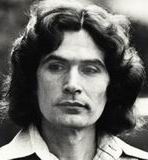 Rodney Alcala
Serial killer · USA · 1977
Rodney James Alcala (born August 23, 1943) was also known as Rodrigo Jacques Al…
100 victims
Rodney Alcala
Serial killer · USA · 1977
Rodney James Alcala (born August 23, 1943) was also known as Rodrigo Jacques Al…
100 victims
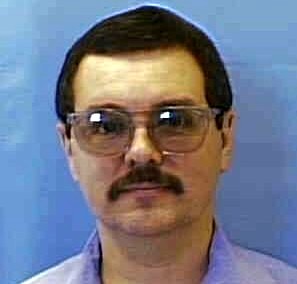 Donald Harvey
Serial killer · USA · 1970
Donald Harvey was known as an American serial killer and a self-professed “Ange…
87 victims
Donald Harvey
Serial killer · USA · 1970
Donald Harvey was known as an American serial killer and a self-professed “Ange…
87 victims
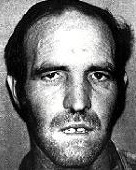 Ottis Toole
Serial killer · USA · 1961
Ottis Elwood Toole (sometimes misspelled as “Otis”) was an American serial kill…
65 victims
Ottis Toole
Serial killer · USA · 1961
Ottis Elwood Toole (sometimes misspelled as “Otis”) was an American serial kill…
65 victims
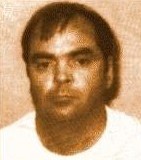 Donald Leroy Evans
Serial killer · USA · 1975
Donald Leroy Evans (born July 5, 1957) was an American serial killer who murder…
60 victims
Donald Leroy Evans
Serial killer · USA · 1975
Donald Leroy Evans (born July 5, 1957) was an American serial killer who murder…
60 victims
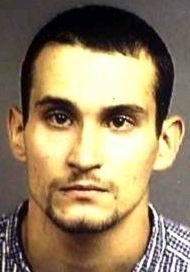 William Joseph Berkley
Murderer · USA · 2000
William Josef Berkley was a white male. His hair color was brown and his eye co…
1 victim
William Joseph Berkley
Murderer · USA · 2000
William Josef Berkley was a white male. His hair color was brown and his eye co…
1 victim
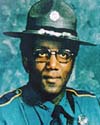 Richard Wayne Snell
Murderer · USA · 1983
Richard Wayne Snell (1931 – April 19, 1995) was executed in Arkansas on April 1…
2 victims
Richard Wayne Snell
Murderer · USA · 1983
Richard Wayne Snell (1931 – April 19, 1995) was executed in Arkansas on April 1…
2 victims
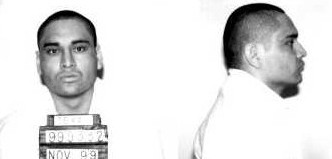 Juan Carlos Alvarez
Murderer · USA · 1998
Juan Carlos Alvarez, born on March 9, 1977, in San Luis, Mexico, was a Hispanic…
5 victims
Juan Carlos Alvarez
Murderer · USA · 1998
Juan Carlos Alvarez, born on March 9, 1977, in San Luis, Mexico, was a Hispanic…
5 victims
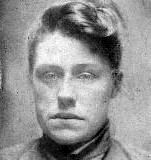 Frances Knorr
Murderer · Australia · 1891
Frances Lydia Alice Knorr (also known as Minnie Thwaites) was born in 1868 in L…
2 victims
Frances Knorr
Murderer · Australia · 1891
Frances Lydia Alice Knorr (also known as Minnie Thwaites) was born in 1868 in L…
2 victims
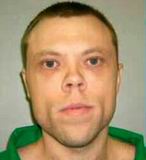 Jeffrey Motts
Murderer · USA · 1995
Jeffrey Brian Motts was executed by lethal injection in South Carolina on May 6…
3 victims
Jeffrey Motts
Murderer · USA · 1995
Jeffrey Brian Motts was executed by lethal injection in South Carolina on May 6…
3 victims
- Gender
- male
- Country
- USA
- Location
- Georgia/Florida, USA
- Date of birth
- ???
- Characteristics
- torture, domestic violence, drug addict, drug dealer, sexual mutilation, rape, rapist, motive unclear
- Victim profile
- Gay male prostitutes and men he apparently thought were prostitutes
- Method of murder
- Burn them with flammable liquids
- Date(s) of murder
- 1968 - 1991
- Years active
- 1968–1991
- Date of arrest
- May 1991
- Status
-
Died in custody
Sentenced to 17 years in prison on February 24, 1992; died in prison on April 1, 1998
Case overview
Robert Lee Bennett Jr. operated in Atlanta, Georgia and Tampa, Florida for decades and preyed upon gay male prostitutes and men he apparently thought were prostitutes.
He picked up young hustlers and offered to pay them vodka as part of a “research” study that he claimed he was conducting. The drinks were spiked. Victims lost consciousness and often awoke handcuffed and burned, including burns on their genitals or legs. He put cigarettes out on victims, used flammable liquids, and sometimes tried to set some of the men’s full bodies on fire while they were awake. Victims were often reluctant to press charges.
He was publicly connected to these attacks through identifications by multiple victims. Afterward, he issued vociferous denials and alleged mistaken identity and that an Atlanta detective led hustlers to identify him.
Timeline
- 1968 — The attacks are believed to have started.
- 1933 — Bennett’s parents married.
- 1943 — Robert Bennett Sr. was appointed president of Citizen and Northern Bank.
- 1969 — Bennett Jr. graduated from the University of Denver.
- 1971 — While studying at the University of Virginia, Bennett was charged with indecent exposure.
- 1974 — Bennett received his law degree from Emory University.
- 1977 — James Crowe testified that in the early part of the summer he met Bennett while hitchhiking to Atlanta.
- 1978 — Bennett proposed to Sandra Powell, and she accepted; Bennett entered a marriage of convenience.
- 1982 — Cleveland Bubb was attacked by a man who asked him to drink vodka; he later described burns. Sandra Powell Bennett left him in September after Bennett’s arrest for murder and armed robbery.
- 1983 — Bennett was barred from the Gallus in Atlanta; on Nov. 4, 1983, he signed a document acknowledging he had been barred and could be arrested for criminal trespass if he returned.
- 1984 — Myers Von Hirschsprung was approached by a driver who offered money to drink and then walk.
- 1985 — Bennett tried handcuffs with Chico; Max Shrader was attacked with a spiked vodka drink followed by burns and a two-month hospital stay.
- June 10, 1986 — Michael Johnson and Anthony “Tony” Poppilia were involved in a drinking-and-mugging attack in which “Jim” pushed Poppilia out of a moving vehicle.
- September 1982 — Bennett was arrested for the murder and armed robbery of James Lee Johnson; charges were later dropped due to insufficient evidence.
- May 1991 — Gary Clapp was attacked in Tampa; Michael Jordan Jr. was attacked in Atlanta; Mathew “Red” Vernon was picked up and escaped.
- February 24, 1992 — Bennett pleaded guilty in an Atlanta courtroom to two counts of aggravated assault and was sentenced to 17 years in prison to run concurrently with Florida.
- March 9, 1992 — He was ordered to report to begin serving his sentence; he broke the agreement and was sent to jail two weeks earlier than scheduled.
- April 1, 1998 — Bennett died in prison of a stroke.
- 1991 — Bennett was caught and sentenced to concurrent sentences of less than 20 years; he was also identified through victim identifications in the Georgia case.
- 1997 — He received a disciplinary write-up for disorderly conduct.
- 1998 — A suit seeking a refund of Bennett’s fee remained pending when he died.
Background
Victim target profile and locations
Bennett operated variously in Atlanta, Georgia and Tampa, Florida and targeted gay male prostitutes and men he believed were prostitutes.
Family and early life
Robert Lee Bennett Jr. was adopted when he was 22 months old. His adoptive parents were Robert Bennett (a successful attorney) and his homemaker wife, Annabelle Maxwell Bennett. They had married in 1933 and set up housekeeping in Towanda, Pa. In 1943, Robert Bennett Sr. Annabelle Bennett volunteered for the Red Cross, and her husband was a fund-raiser for the Boy Scouts.
He traveled for pleasure with the family. As a child, he was a Boy Scout and had a paper route. Leon Wizelman, a friend of the family and a car dealer who sold them cars, recalled: “If the weather was inclement, his father would drive him around in his Fleetwood Cadillac to deliver newspapers.” Wizelman also said: “Both parents were very high-class people.”
He was remembered as an outgoing teenager involved in many organizations, including the Glee Club, the chorus, features editor of the student newspaper, and the science club. He had a lifelong love for botany. The Atlanta Journal Constitution reported that, “He won second place in a science fair for a project about orchids.”
For his high school graduation, his father gave him a picturesque $167,000 house located by Lake Wesauking.
He graduated from the University of Denver in 1969 and earned a master’s degree in political science from the University of Virginia. In 1971, while studying there, he was charged with indecent exposure; records about this case had been expunged. In 1974, he received his law degree from Emory University. He took a job with his father’s law firm of Davis, Murphy, and Bennett in Pennsylvania.
Employment and personal life
Bennett later worked with his father’s law firm of Davis, Murphy, and Bennett in Pennsylvania. When he moved to Atlanta, he worked with the Atlanta law firm of Kidd, Pickens and Tate.
Bennett proposed to Sandra Powell in 1978. Bennett told her he was impotent, and the marriage functioned as a marriage of convenience. Guy Notte described it as: “The marriage was one of convenience for both parties. They enjoyed each others’ company and he treated her like a princess.”
After the marriage, Bennett quit the law firm and got a job as a jewelry salesman at Davison’s department store in Columbia Mall. He later stopped working and, according to Sandra Powell Bennett’s divorce testimony, he “would just hang around the house all day,” and he “would be in his robe when I got home.” She testified that she worked at her paid job and then came home to do cooking and housecleaning.
Sandra Powell Bennett said Bennett often suffered from insomnia. She described their situation as “very stressful,” but she “kept it inside and tried not to let it affect the relationship.” They discussed adopting a child but did not follow through.
Involvement with police under earlier matters
In 1974, Bennett allegedly kidnapped an undercover officer posing as a hustler after mistaking him for one. Backup police soon rescued the undercover officer without injuries. Kidnapping charges were dropped by the time Bennett came to trial. His attorney cut a deal in which Bennett pleaded no contest to simple battery. He received a $75 fine.
A Towanda police officer alleged that another officer “discouraged the alleged victim from pushing an investigation.” The speculation included that Robert Bennett Sr. “held a seat on the Civil Service Board, which reviews police promotions.” Another investigator said: “Nobody wanted to press charges against him because of the influence of his father,” and: “His father was gold.”
Towanda police persuaded Bennett Jr. to leave the area, and he moved to Atlanta.
Bennett’s father said: “He is my cross to bear,” and: “My wife loves him dearly and I love my wife and that’s the only reason I put up with him.”
In 1983, Bennett was banned from the Gallus in Atlanta, after a gay male prostitute complained to Sergeant J. D. Kirkland that Bennett was known to pick hustlers up and injure them. On Nov. 4, 1983, Bennett signed a document that he understood he had “been barred from the premises of the Gallus restaurant” and that he could “be arrested without further notice and charged with Criminal Trespass” if he returned.
The offence
Method and conduct toward victims
Bennett approached hustlers and men he thought were prostitutes. He offered to pay them for drinks of vodka as part of a claimed research study about drinking and tolerance levels. Victims lost consciousness after the drink was spiked.
Victims awoke handcuffed and burned on their genitals or legs. He used cigarettes and flammable liquids. In some cases, he tried to set victims’ full bodies on fire while they were awake.
Victims and specific incidents
James Crowe (19)
James Crowe testified that in the early part of the summer of 1977 he was on Buford highway hitchhiking to Atlanta. He said friends told him gay men hung out in Piedmont Park, so he went there. He met Bennett, who asked “Do you drink?” and Crowe responded: “Yeah.” Bennett asked if Crowe wanted to make some money and Crowe asked “How?” Bennett told him that “all he had to do was drink,” and: “The more shots you drink,” Bennett said, “the more money I’ll give you.”
Crowe stepped into Bennett’s blue Cadillac. Bennett gave him liquor and drove them to a trailer park, where Bennett began playing with Crowe’s penis. Crowe sensed something was wrong. Crowe tried to get out but Bennett grabbed him by his long hair and pulled hard. Crowe unlocked the car door and escaped, but felt sharp, stinging pain on his right shoulder. He ran while his attacker ran after him. Crowe fell and then started screaming and throwing rocks. Crowe got away, but he did not seek medical attention and did not report the attack to police, saying he “doesn’t ‘like doctors’” and did not want his sister to know he had been hustling.
A couple of weeks later, Crowe returned to Piedmont Park with another hustler who was “trying to show me some ropes.” Crowe spotted Bennett, who had stabbed his shoulder, and pointed him out. The other hustler recognized him and said: “He’s got a bad reputation,” adding: “They call him Handcuff Man.”
Cleveland Bubb
In early 1982, Cleveland Bubb stood on an Atlanta street corner. A man in a blue car asked: “Would you drink a bottle of vodka with me?” and: “I’ll give you $100 to do it.” Bubb got in and they drank together. The man wore expensive clothes, had a gold chain, and had the first three buttons open.
They also went to a bar called “The Texas Drilling Company” and downed drinks. Bubb next remembered waking up in the parking lot. He wore only his “parachute pants” and had two cigarette burns, one on his belly and one on an arm. Bubb later said he wanted to “take a bottle and break it over [his attacker’s] fucking head.”
James Lee Johnson (24-year-old dishwasher)
Bennett was arrested in September 1982. Bennett was charged with the murder of 24-year-old James Lee Johnson, a dishwasher who had been shot. Johnson’s body was found with his wallet missing. Although the charges were dropped two months later because of insufficient evidence, Sandra Bennett left the marriage.
“Myers Von Hirschsprung” incident
In 1984, Myers Von Hirschsprung was standing near his home waiting for a bus. A car approached with a driver who said: “Need a ride?” and then told Von Hirschsprung: “I’m a professor at Georgia Tech.” Von Hirschsprung recalled the driver’s speech was slow. The driver said: “I’m doing a study about people’s drinking and their tolerance levels for it. I’ll pay you $100 to drink whatever kind of liquor you want to, Myers, if you’ll drink it as quickly as you can. We’ll go somewhere and you’ll drink and then walk and if you’re walking OK, you’ll drink some more.”
Von Hirschsprung became suspicious and told the driver: “Please just let me out.” He escaped.
“Chico”
In 1985, a gay male prostitute using the name “Chico” was picked up in Atlanta by a dark-haired, bespectacled white man. The customer showed Chico a pair of handcuffs and urged: “Try them on,” saying: “I just want to see how they look on you.” Chico asked: “Please stop the car.” The reply was “No,” and Chico saw the door lock had been removed and the handle covered with duct-tape. Chico dove out of the open window as the vehicle was moving, was badly bruised and scratched, and escaped without other injuries.
Max Shrader
In April 1985, Max Shrader was attacked. A man in a car drove around the block and told Shrader: “Get a hard on for me.” The man then drove off and returned. He asked: “Would you like a drink of vodka?” Shrader agreed. Shrader said the man had handed him a brown drink and explained he had: “I mixed some coke in it.” Shrader began drinking and “Almost immediately he felt woozy, then crumpled to the ground.”
Shrader was pulled into the passenger seat and begged: “Don’t hurt me!” The vehicle took off. The stranger drove Shrader into a wooded area and began taking Shrader’s clothes off. He pored a cold liquid over Shrader’s genitals and then “set Max Shrader’s genitals on fire.” Shrader lay on the ground shrieking for help as the attacker sped away.
Someone heard Shrader’s cries and called police. Shrader spent two months in the hospital in pain and often heavily sedated. He could not walk during much of his hospital stay and wore diaper-like gauze over his genital area.
After the plea identification, Max Shrader later said prosecutors never contacted him about the proposed plea bargain. Shrader also said: “The judge has got to decide if the time fits the crime,” and: “I’m going to be there to tell him it does not.”
Anthony “Tony” Poppilia and Michael Johnson
On June 10, 1986, Anthony “Tony” Poppilia and Michael Johnson were hanging out on Ponce De Leon between the Goofy Gofer and the Pegasus. Poppilia approached a man called “Jim.” The man asked if Poppilia wished to earn $50 by participating in an Emory University study on alcohol effects. Poppilia told Jim to wait a minute and ran back to Michael. Michael warned: “You can do that if you want to, but remember you’ve got to be at work tomorrow at seven,” and said there was a weirdo around attacking guys.
Jim drove Poppilia around serving vodka. Jim stopped behind the Texas Drilling Company bar and asked: “Would you like to put on a pair of shorts so you’ll be more comfortable?” Poppilia peeled off his pants and put on shorts under the emergency stairs and left wallet and personal items in his own pants.
They went into the bar and downed drinks. When they left, Jim seemed to want to get away and Poppilia followed him to the car to retrieve his pants and wallet. Poppilia got into the passenger seat, and Jim took off and pushed Poppilia out while moving. Poppilia called a man carrying a garbage can, and Poppilia said: “I just got mugged,” before losing consciousness. Poppilia later reported several abrasions and bruises and that he could not recall removing his shirt or the shorts he had been loaned.
When Poppilia awoke, he was at a Dunkin’ Donuts with two Atlanta police officers. One asked whether he could identify “the man who called himself ‘Jim’.” Poppilia identified him. Jim was standing in the parking lot, blocked by two men; one was Charles Fallow. Fallow said he had also been mugged by Jim.
Fallow said that about nine months earlier he and Poppilia had been drinking together and the man had handcuffed Fallow, then beat and robbed him.
Gary Clapp
In February 1991, Gary Clapp, an unemployed carpenter engaged to be married and father of a three-year-old daughter, left his home in Massachusetts for Florida seeking work. Waiting outside a Salvation Army office in Tampa, he was approached by a man in a white Lincoln Town Car who offered $50 to drink vodka as part of an experiment. Clapp said: “He was well-spoken,” and: “He seemed like he was on the up and up. I asked him his name, but he wouldn’t tell me.”
The man gave Clapp notes as Clapp drank, and he said: “You need to drink faster,” and: “He was well-spoken,” with the man being described as a “researcher.” Clapp began losing consciousness and did not recall events after getting in the car.
A police officer on Tampa’s Courtney Campbell Causeway spotted what appeared to be an out-of-control bonfire and found the burning body of Gary Clapp. Nelson Garcia III testified: “I was surprised he lived. . . . we really didn’t think he was going to make it.”
Clapp survived but both legs had to be amputated above the knee. His fiancée broke off the engagement. In a wheelchair in a state-run boarding home, Clapp said: “Things fell apart when this happened. I don’t know why the guy didn’t just finish me off. This is not going to be easy.” Clapp said, “If I get an erection,” it “bleeds and they don’t know if I’m going to be normal again there,” and said: “I don’t think he’ll ever feel sorry for anything he’s done. This guy’s a sick puppy,” during the case.
Clapp identified Bennett from photographs, saying: “It took me a minute to say something. I couldn’t believe they got him so quick, and seeing his face again, I went into shock.” Police did not catch Bennett then, and Bennett often returned to Atlanta.
Michael Jordan Jr.
In May 1991, Michael Jordan Jr. was approached in Atlanta by a driver in a white Lincoln who motioned to him. Jordan noticed the tag said “Pinellas County, Florida.” Jordan asked: “How you doing, Clearwater?” The driver said: “No, I’m from St. Pete.” The driver offered: “Do you want to make $50?”
Jordan asked what he had to do. The driver said: “All you got to do is drink,” and Jordan was offered “three pints” if he drank them all for $50. Jordan agreed and the driver instructed him to walk around Fifth Street and Juniper and to take his shirt off, then go to a nearby parking lot.
Jordan took his penis out and tried to get it hard as instructed. The driver told Jordan he was going to the store for Coca Cola and handed him a $20 bill. Jordan put the $20 in his moccasins. Jordan waited, then woke up in the hospital in agony with terrible burns over his genitals, buttocks and legs. Jordan said he had been naked and unconscious when the assailant dropped him behind an Atlanta hotel, and he could not be interviewed at first because of pain and heavy medication.
Jordan said: “If I get an erection,” it “bleeds and they don’t know if I’m going to be normal again there.”
Jordan later had trouble remembering the assault but recalled Bennett as the last person he had been with before losing consciousness. He also selected Bennett from a group of photographs.
Mathew “Red” Vernon
May 1991 also involved Mathew “Red” Vernon. Police learned that on the weekend of May 17, Vernon was picked up by a white male driving a Lincoln Continental who paid $20 for every pint of vodka he could drink. As they drove around, Vernon realized who had picked him up. Vernon said: “I’ll drink the next half pint if you give me the $20 now,” and Bennett gave him the money. Vernon then opened the door and jumped out, telling the driver: “I know you. You’re Handcuff Man.” He then stuck his finger down his throat and vomited up the vodka.
Investigation and identification
Bennett’s identifications came through multiple victims. After the identifications, he was publicly connected to the Handcuff Man case.
Prior to public naming, the Atlanta Journal Constitution held tension about whether to name Bennett because he was neither a fugitive nor officially charged in all stages. Reporter Richard Greer described the name as “meaningless to most Atlantans,” and about privacy as “as great as any other little-known person’s.” Editors decided to run a story naming Robert Lee Bennett Jr. as the suspected Handcuff Man.
The next day, Tampa police requested information from Atlanta counterparts, and Bennett was later charged with an attack on a Florida man who had been doused in gasoline and lit on fire. The victim survived but had severe injuries and both legs had to be amputated.
Legal proceedings
Extradition and detention conditions
In June 1991, Bennett appeared in an Atlanta courtroom and waived extradition to Florida. He complained about incarceration conditions, saying he was given no breakfast and had to go five hours without a blanket, pillow, or cigarettes, and that other prisoners were threatening him. He claimed: “One . . . said he’d cut me,” and his attorney, Guy Notte, requested Bennett be separated from fellow prisoners so his safety could be ensured. Notte said: “We’re not asking for special favors,” and: “We just want to ensure his safety. He’s under a tremendous amount of pressure at the jail. He’s under constant harassment.”
Defense positions and alternative culprit theory
After being publicly named, Bennett issued denials. He told reporters: “I am not the Handcuff Man!” and said: “I think that [the detective] wants desperately to put this Handcuff Man behind bars,” adding: “And he thinks I’m that person. It doesn’t happen to be true.”
Guy Notte called it a “case of mistaken identity.”
Notte suggested an alternative culprit in the Florida attack on unemployed carpenter Gary Clapp. Notte said: “Witchcraft is definitely involved in this,” and stated that near Clapp’s burning body there had been “decapitated chickens, decapitated goats, which smacks of the cult Santeria.” Notte also requested a change of venue because he claimed the publicity had “severely prejudiced potential jurors.” Fulton County prosecutor Dee Downs opposed the motion.
Bennett’s defense preparation included spending $500,000 preparing his defense, but he lost his nerve at the last moment, according to the account given.
Depositions and courtroom interactions
Before trial in Tampa, Gary Clapp gave a deposition at the district attorney’s office with Bennett, Notte, the prosecutor, and a court reporter present. A leg stump began to bleed during the deposition. Notte asked if Clapp was OK and if he wanted to delay the deposition. Notte later recalled Bennett as: “the coldest, most remorseless client I ever worked with.”
Plea agreement and negotiated outcome
Prosecutors in both Tampa and Atlanta negotiated with Bennett’s lawyers for a deal. Bennett agreed to plead guilty to the attempted murder of Gary Clapp and two counts of aggravated assault in Atlanta. He could serve a 17-year sentence in Florida to run concurrently with his sentence for Atlanta crimes.
The result would mean no additional time for the Atlanta crimes, as Georgia’s Fulton County District Attorney Lewis Slaton acknowledged: “he would serve no additional time for the Atlanta crimes.”
Many gay activists criticized the deal as lenient. Larry Pellegrini, president of the Lesbian and Gay Rights Chapter of the ACLU, urged: “Good citizens need to step forward,” and said: “This is horrendous.” Lynn Cothren, co-chair of Queer Nation, said: “It’s a sad situation when people can get away with torture, intimidation and hate. There’s obviously a problem with the system.” Judy Colbs said: “Setting people on fire is setting people on fire, and it should not matter what the sexual orientation is. It goes back to prejudice. It affects and invades all parts of society.”
Jeff Graham of ACT-UP said: “I think clearly if it were a case involving heterosexuals, that if he had done this to a woman [or] a straight man, that his sentence would be much greater than what it is,” and: “It has taken the Atlanta Police Department dozens of years to seriously investigate and solve this case. I think that clearly you’ve got a prejudiced judicial system in Atlanta, in Fulton County. I’m happy Tampa was able to put together the case.”
The Atlanta Journal Constitution denounced the plea agreement in an editorial entitled “Reject ‘Handcuff case’ deal.”
Max Shrader said prosecutors never contacted him to discuss the proposed plea bargain and repeated that the judge should decide if the time fit the crime.
Sentence and court statements
On February 24, 1992, Bennett appeared in an Atlanta courtroom and pleaded guilty to two counts of aggravated assault. The sentence was 17 years in prison to run concurrently with the 17-year sentence he was to serve in Florida for the attempted murder of Gary Clapp. Bennett was also ordered to pay $65,000 in restitution for the medical bills of the two Atlanta victims, was banned for life from ever being in Fulton County, and was ordered to see a psychiatrist.
Fulton Superior Court Judge Isaac Jenrette asked: “Did you pick up these two fellows?” Bennett paused and then Jenrette repeated: “Did you pick up these two fellows?” Bennett answered: “I’m pleading guilty to the two charges.”
At the time of sentencing, Bennett was free on $300,000 bond with conditions including that he was not to leave the home he shared with his mother except on approved business, such as seeing his lawyers. He was to report on March 9, 1992, to begin serving his sentence.
Bail violation and later confinement
Bennett broke his agreement and was spotted cruising the same Tampa street where he had picked up Gary Clapp. Tampa detective Bob Holland testified that he saw Bennett’s car and followed it and observed Bennett “talking with some guy leaning in his car window . . . What was weird was it was about the same time of day [that] he met Gary Clapp there. It was almost a year to [the] date.”
Because of this offense, Bennett was sent to jail two weeks earlier than scheduled. He was initially put into solitary confinement partly because he feared other prisoners. Tom Patterson, a supervisor at the North Florida Reception Center where Bennett was initially kept, described him as “an average inmate” and said he “hasn’t caused any problems.”
Bennett was later moved to Liberty Correctional Institution, described as a “close custody” institution in west Florida.
Later conduct in custody
During imprisonment, in 1997, Bennett got a disciplinary write-up for disorderly conduct. Other than that, he appeared to be inoffensive as a prisoner.
Appeals and related legal actions
Bennett attempted to bring an “ineffective assistance of counsel” claim against his lawyer, Guy Notte. Notte said Bennett believed that “we had told him he would get out in two or three years.”
Bennett found another lawyer to file a suit against Notte to get Bennett’s fee back. That lawsuit was still pending when Bennett died.
Outcome and aftermath
Death in prison
Bennett died in prison of a stroke on April Fool’s Day 1998, which the narrative states as April 1, 1998.
Claims about motives and mental state
The account described Bennett as frequently described as a “gay basher,” and it said his attacks were assumed to be the result of homophobia. It also said Bennett denied being gay for several years and then admitted he was gay. It stated that Notte could not say with certainty whether Bennett was a homophobic homosexual and that Bennett “He never expressed any homophobic sentiments to me,” according to Notte.
It also stated that he never sought out homosexuals “per se,” but targeted men he thought were selling gay sexual services. It noted a description that Bennett was not insane, and that his attorney’s office had psychiatrists in Florida examine him. Notte said: “He was completely sane,” and: “He knew right from wrong. He had a behavioral disorder. That’s an understatement.”
The narrative stated he was known to have chronic impotence and suggested it could have been a factor in burning victims’ genitals. It included a speculative explanation in the narrative about inability to do something he wanted leading him to destroy another person’s ability; it also stated that the cruelty was not fully explained by impotence alone.
It also said there was no evidence Bennett reached an orgasm while torturing victims, and it stated that other interpretations were not ruled out; it described the possibility of sexual sadism and the fact that victims were often unconscious. It also stated Bennett was not known to have expressed remorse.
Gary Clapp said: “I don’t think he’ll ever feel sorry for anything he’s done. This guy’s a sick puppy.” Notte described Bennett as “very cold and clinical” and said he “never would in so many words admit doing these things although he pled guilty.”
Once in prison, Bennett broke with Notte and attempted the ineffective assistance claim, and later the fee refund suit remained pending until his death.
Victims’ reactions during and after proceedings
Max Shrader said: “I’m going to be there to tell him it does not.” He also said prosecutors never contacted him about the plea bargain.
Michael Jordan commented: “I feel sorry for this guy. I don’t feel sorry for him in some ways but I feel sorry for him because I don’t understand why he would do something like this. It’s got to be something that [is] hurting him inside so bad or something.”
Nelson Garcia III testified to the emergency scene survival and said: “I was surprised he lived. . . .
Other details
Identifications, newsroom, and editorial decision
The Atlanta Journal Constitution’s newsroom debated whether to name Bennett as a suspected suspect in the case. Richard Greer described privacy concerns and said Bennett’s name was “meaningless to most Atlantans, his right to privacy as great as any other little-known person’s.” The paper ran the story naming Robert Lee Bennett Jr. as the suspected Handcuff Man, and the next day Tampa police requested information.
Names of people connected in the narrative
- Detective Bob Holland testified about following Bennett in Tampa prior to scheduled sentencing.
- Attorney Guy Notte represented Bennett in the Atlanta cases and Florida-related proceedings.
- Prosecutor Dee Downs opposed the change of venue motion.
- Georgia’s Fulton County District Attorney Lewis Slaton acknowledged the plea deal’s effect on time served.
- Judge Isaac Jenrette sentenced Bennett and asked: “Did you pick up these two fellows?”
- Sergeant J. D. Kirkland received the complaint that led to the Gallus ban.
- Tom Patterson described Bennett in early detention.
- Nelson Garcia III testified at the scene response regarding Clapp.
- Richard Greer was the reporter quoted about newsroom considerations.
Notes on reputation and labeling
The account repeatedly referred to Bennett as “the Handcuff Man.” Bennett later denied he was the Handcuff Man, stating: “I am not the Handcuff Man!” and “It doesn’t happen to be true.”
The narrative also included discussion of whether Bennett’s actions were driven by sexual dysfunction, contempt, or prejudice, including the label “gay basher,” which the account described as incomplete.
Spotted an error, or have more information about this case?