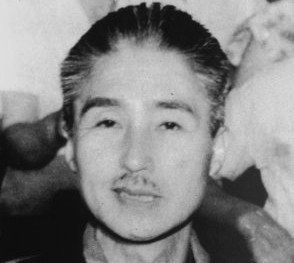
Sadamichi Hirasawa
Mass murderer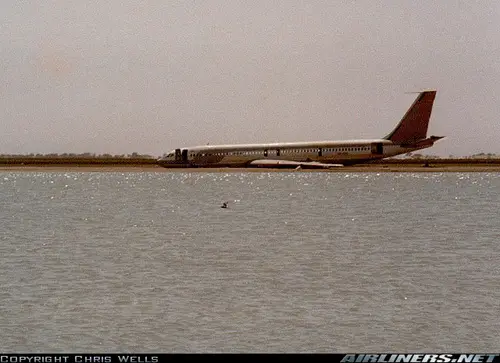 Seiji Katagiri
Mass murderer · Japan · 1982
Seiji Katagiri (片桐 清二 Katagiri Seiji) served as Captain of Japan Airlines Fligh…
24 victims
Seiji Katagiri
Mass murderer · Japan · 1982
Seiji Katagiri (片桐 清二 Katagiri Seiji) served as Captain of Japan Airlines Fligh…
24 victims
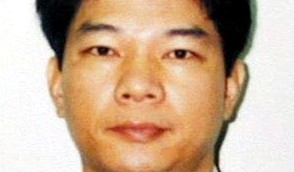 Mamoru Takuma
Mass murderer · Japan · 2001
Mamoru Takuma (宅間 守; November 23, 1963 – September 14, 2004) was a Japanese jan…
8 victims
Mamoru Takuma
Mass murderer · Japan · 2001
Mamoru Takuma (宅間 守; November 23, 1963 – September 14, 2004) was a Japanese jan…
8 victims
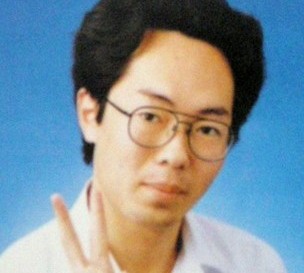 Tomohiro Kato
Mass murderer · Japan · 2008
Tomohiro Katō was held in custody and was in prison awaiting trial. Tomohiro Ka…
7 victims
Tomohiro Kato
Mass murderer · Japan · 2008
Tomohiro Katō was held in custody and was in prison awaiting trial. Tomohiro Ka…
7 victims
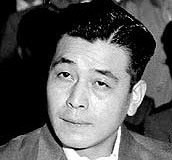 Masaru Okunishi
Mass murderer · Japan · 1961
Masaru Okunishi was a farmer from Kuzuo, a remote mountain village in Nabari ci…
5 victims
Masaru Okunishi
Mass murderer · Japan · 1961
Masaru Okunishi was a farmer from Kuzuo, a remote mountain village in Nabari ci…
5 victims
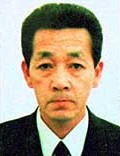 Mitsuhiro Kobayashi
Mass murderer · Japan · 2001
Mitsuhiro Kobayashi was a former taxi driver. During the trial, he admitted set…
5 victims
Mitsuhiro Kobayashi
Mass murderer · Japan · 2001
Mitsuhiro Kobayashi was a former taxi driver. During the trial, he admitted set…
5 victims
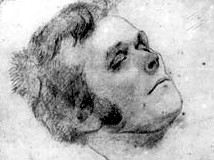 Alexander Pearce
Murderer · Australia · 1822
1819 — Alexander Pearce was sentenced at Armagh in 1819 to penal transportation…
6 victims
Alexander Pearce
Murderer · Australia · 1822
1819 — Alexander Pearce was sentenced at Armagh in 1819 to penal transportation…
6 victims
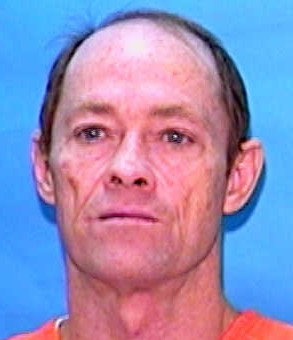
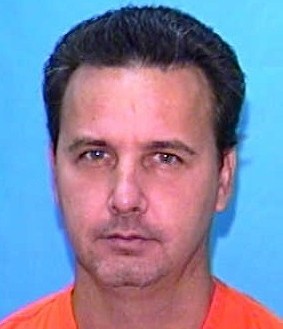 Gary Ray Bowles
Serial killer · USA · 1994
Gary Ray Bowles (b. January 25, 1962) was a Florida death row prisoner. At the…
6 victims
Gary Ray Bowles
Serial killer · USA · 1994
Gary Ray Bowles (b. January 25, 1962) was a Florida death row prisoner. At the…
6 victims
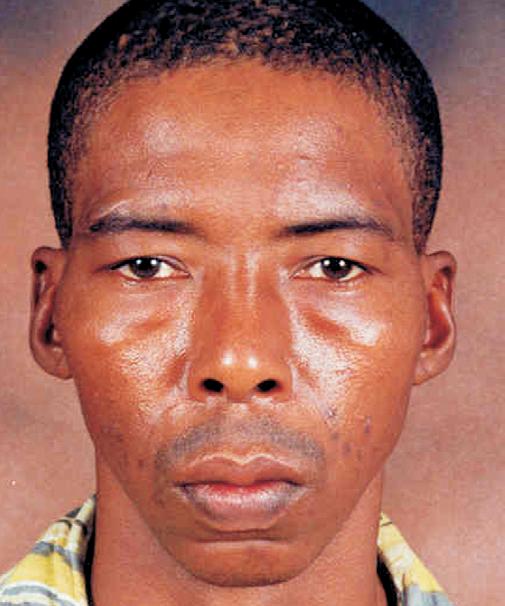 Samuel Sidyno
Spree killer · South Africa · 1998
Samuel Sidyno was a serial killer whose murders involved the Pretoria Zoo area.…
7 victims
Samuel Sidyno
Spree killer · South Africa · 1998
Samuel Sidyno was a serial killer whose murders involved the Pretoria Zoo area.…
7 victims
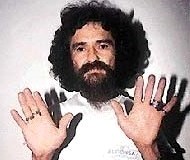 Dorancel Vargas
Serial homicide · Venezuela · 1995
Dorancel Vargas, also known as “el comegente,” was born in 1957. He was describ…
10 victims
Dorancel Vargas
Serial homicide · Venezuela · 1995
Dorancel Vargas, also known as “el comegente,” was born in 1957. He was describ…
10 victims
- Gender
- male
- Country
- Japan
- Location
- Tokio, Japan
- Date of birth
- August 15, 1892
- Age at first offence
- 56
- Characteristics
- poisoner, bank robbery
- Victim profile
- Eleven bank employees and a child of an employee
- Method of murder
- Poisoning ( cyanide )
- Date(s) of murder
- January 26, 1948
- Years active
- 1948
- Date of arrest
- August 21, 1948
- Status
-
Died in custody
Sentenced to death in 1950; he died in a prison hospital on May 10, 1987
Case record
Identification
Sadamichi Hirasawa was a Japanese painter. He was also known as a tempera painter.
The offence
Hirasawa poisoned bank employees during a bank robbery in Tokyo. Hirasawa arrived at a bank in the Teikoku Suburb of Tokyo in January 1948 just before closing time. He passed himself off as a doctor with orders to inoculate the bank staff against dysentery. Sixteen bank employees lined up and drank a concoction given to them. Ten died immediately and two more died in hospital as the result of cyanide poisoning. After immobilizing the bank staff, Hirasawa stole the money he could lay his hands on, which amounted to the equivalent of a mere 720 US dollars.
In another account, on January 26, 1948 a man calling himself an epidemiologist arrived in a branch of the Teigin Bank at Shiina, suburb of Tokyo, before closing time. He explained that he was a public health official sent by US occupation authorities who had orders to inoculate the staff against a sudden outbreak of dysentery. He gave all sixteen people present a pill and a few drops of liquid. Those present drank the liquid he gave, which was a cyanide solution. When all were incapacitated, the robber took all the money he could find, which amounted to 160,000 yen ($1392/£754/1000€). Ten of the victims died at the scene (one was a child of an employee) and two others died while hospitalized.
Investigation
Hirasawa was eventually arrested, having been identified by a scar under his chin, and he made a confession to the murders. Another account stated that Hirasawa was caught by the police due to the Japanese habit of exchanging business cards with personal details. The poisoner used a card marked "Jiro Yamaguchi" in one of two incidents. Yamaguchi did not exist. The poisoner also used a card marked "Shigeru Matsui" in another of the two incidents. Matsui told the police that he had exchanged cards with 593 people, including Hirasawa. The police were also led to Hirasawa through the use of stolen checks and through finding the money of unknown origin. Hirasawa was identified as the poisoner by several witnesses. He was arrested on August 21, 1948. He was also found to be in possession of sizable amount of cash, whose origin Hirasawa refused to divulge.
Doubt about evidence was described. There was originally no conclusive evidence, and although 40 employees saw the crimes, there were only two people who identified him as the criminal. Seichō Matsumoto presumed the true culprit was Unit 731 in his books, including "A story of the Teikoku Bank Incident" in 1959 and "The Black Fog of Japan" in 1960. Matsumoto also suspected that "the money of unknown origin" came from selling pornographic drawings. Kei Kumai protested Hirasawa's innocence by his film "The Long Death" in 1964.
The poison was regarded as potassium cyanide in Hirasawa's trial. Keio University's investigation claimed that the true poison may have been acetone cyanohydrin which Hirasawa could not have obtained. The different symptoms were described as a reason to doubt his guilt.
Arrest
Hirasawa was eventually arrested. One account stated he was arrested August 1948. Another account stated he was arrested on August 21, 1948.
Confession and defence
After police interrogation, which allegedly involved torture, Hirasawa confessed but he recanted soon after. His later defense against confession was based on partial insanity. He had been troubled with Korsakoff's syndrome and could say a made-up story. The court disagreed.
Trial
In January 1948, a court sentenced Hirasawa to death by hanging in Japan under military occupation. In 1948 Japan was under military occupation, and a court sentenced Hirasawa to death by hanging. Hirasawa was given the death penalty in 1950.
A legal row ensued. Japanese lawyers claimed that the sentence violated the Japanese constitution which protected citizens from self-destruction. It was argued that hanging was self-strangulation. Over the following years, Hirasawa's attorneys successfully had the sentence revoked because of a Japanese law that forbade people from suicide. The death penalty in Japan at the time called for hanging, and the lawyers argued that hanging was a form of self-strangulation. Hirasawa’s attorneys argued that the sentence was against the new Japanese constitution.
Over the following years they submitted 18 pleas for retrial. The Supreme Court of Japan upheld the death sentence in 1955.
Sentencing
Hirasawa was convicted and sentenced to death in 1950. The sentence was confirmed in 1955, and he was sent to death row to await execution by hanging.
Multiple ministers of justice in Japan did not sign his death warrant, so the death sentence was never carried out. Even Isaji Tanaka, who on 13 October 1967 announced in front of the press that he had signed death warrant of 23 prisoners in one go, did not sign Hirasawa's death warrant, stating that he doubted Hirasawa's guilt. The death sentence never being carried out was attributed to successive ministers of justice not signing his death warrant.
Appeals
Hirasawa remained in prison for over thirty years until, at the age of eighty-eight, he was granted amnesty by the Emperor.
Makoto Endo became the leader of Hirasawa's lawyers in 1981. Besides the case, Endo took part in controversial trials such as Norio Nagayama.
The defence claimed that the statute of limitations for his death penalty ran out in 1985. The death penalty had a 30-year statute of limitations under the Criminal Code of Japan. Endo appealed for Hirasawa's release. However, the Japanese court refused this argument, pointing out that the statute only applies in the case if a death row inmate escapes from prison and evades capture for 30 years. Japanese courts judged that the punishment begins when the minister signs the death warrant. Over the following years, they submitted retrial pleas: successive pleas were described, including 18 pleas for retrial and later a 19th plea for retrial.
Amnesty
Hirasawa remained in prison as a condemned criminal for 32 years. Shortly before his death, at the age of 94, he was granted amnesty by the Emperor. In one account, at the age of eighty-eight he was granted amnesty by the Emperor.
Death
Hirasawa’s health deteriorated in 1987. On April 30, 1987, Amnesty International petitioned the Japanese government to release him. He died of pneumonia in a prison hospital on May 10, 1987.
After his death
After Hirasawa's death, his stepson Takehiko Hirasawa tried to clear his name. They submitted new evidence to attempt to prove Hirasawa's innocence, including as of 2003 and as of 2008. His brain damage was also proved.
Other details
Hirasawa spent his time in prison painting and writing his autobiography, "My Will: the Teikoku Bank Case" ( 遺書 帝銀事件 ). His earlier works and later references included "My Will: the Teikoku Bank Case ( 遺書 帝銀事件 )". Another phrasing presented his autobiography as "My Will: the Teikoku Bank Case".
Sadamichi Hirasawa’s life dates were presented as August 15, 1892 – March 19, 1988 in one account, and as February 18, 1892 – May 10, 1987 in another account.
A claim was included that several books had cast doubt on evidence used to convict him, and that since 1950 none of Japan's Justice Ministers, who must approve executions, have agreed to order his death.
Spotted an error, or have more information about this case?