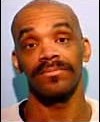
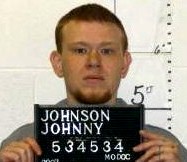
Jesse Lee Johnson
Murderer Russell Ellwood
Murderer · USA · 1991
Russell Ellwood was a former taxi driver. Authorities suspected him of killing…
20 victims
Russell Ellwood
Murderer · USA · 1991
Russell Ellwood was a former taxi driver. Authorities suspected him of killing…
20 victims
 Robert Martines Perez
Murderer · USA · 1994
Name: Robert Martines Perez · Other name used in proceedings: Robert Martinez P…
15 victims
Robert Martines Perez
Murderer · USA · 1994
Name: Robert Martines Perez · Other name used in proceedings: Robert Martinez P…
15 victims
 Billy Frank Vickers
Murderer · USA · 1993
Billy Frank Vickers Vickers was executed by lethal injection in Texas on Januar…
14 victims
Billy Frank Vickers
Murderer · USA · 1993
Billy Frank Vickers Vickers was executed by lethal injection in Texas on Januar…
14 victims
 Mariano Juarez Rosales
Murderer · USA · 1985
Mariano Juarez Rosales was sentenced to death on December 27, 1985. · 1984 — Ma…
2 victims
Mariano Juarez Rosales
Murderer · USA · 1985
Mariano Juarez Rosales was sentenced to death on December 27, 1985. · 1984 — Ma…
2 victims
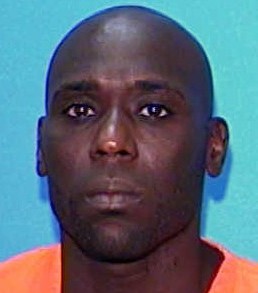 William Earl Sweet
Murderer · USA · 1990
William Earl Sweet was sentenced to death on August 30, 1991. The case was in t…
2 victims
William Earl Sweet
Murderer · USA · 1990
William Earl Sweet was sentenced to death on August 30, 1991. The case was in t…
2 victims
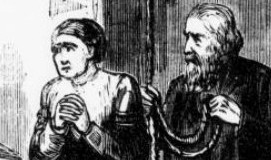 Margaret Waters
Murderer · United Kingdom · 1866
Margaret Waters was an English murderess who was hanged by executioner William…
19 victims
Margaret Waters
Murderer · United Kingdom · 1866
Margaret Waters was an English murderess who was hanged by executioner William…
19 victims
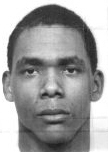 Kenneth Eugene Bruce
Murderer · USA · 1990
Kenneth Eugene Bruce was convicted of capital murder in Texas and was executed…
1 victim
Kenneth Eugene Bruce
Murderer · USA · 1990
Kenneth Eugene Bruce was convicted of capital murder in Texas and was executed…
1 victim
 Jody Lynn Bowman
Homicide · USA · 2003
Jody Lynn Bowman was acquitted of a murder charge by a Florida jury in May 2004…
1 victim
Jody Lynn Bowman
Homicide · USA · 2003
Jody Lynn Bowman was acquitted of a murder charge by a Florida jury in May 2004…
1 victim
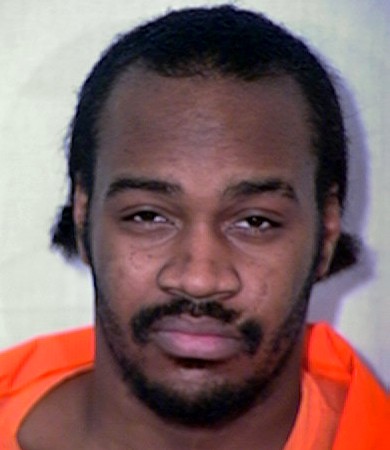 Ruben Johnson
Murderer · USA · 2000
Ruben Johnson was sentenced to death on December 23, 2003 in Maricopa County CR…
1 victim
Ruben Johnson
Murderer · USA · 2000
Ruben Johnson was sentenced to death on December 23, 2003 in Maricopa County CR…
1 victim
- Gender
- male
- Country
- USA
- Location
- Marion County, Oregon, USA
- Date of birth
- February 5, 1961
- Age at first offence
- 37
- Characteristics
- robbery, drugs
- Victim profile
- Harriet Lavern "Sunny" Thompson, 28
- Method of murder
- St abbing with knife
- Date(s) of murder
- March 20, 1998
- Years active
- 1998
- Date of arrest
- 7 days after
- Status
-
Sentenced to death
Sentenced to death on March 26, 2004
Case record: Jesse Lee Johnson
Background
Jesse Lee Johnson was convicted of aggravated murder. He was later sentenced to death.
No plea bargain was reached because Johnson maintained his innocence.
The Supreme Court reviewed the judgment of conviction and sentence of death imposed by the Marion County Circuit Court. The review was on automatic and direct review under ORS 138.012 because the jury imposed a death sentence.
The case was before the Oregon Supreme Court for automatic and direct review on the judgment of conviction and sentence of death.
- Jamese L. Rhoades was the judge.
- De Muniz was Chief Justice.
- Carson, Gillette, Durham, Balmer, and Kistler were among the Justices participating.
- Riggs retired September 30, 2006, and did not participate in the consideration or decision.
- Carson retired December 31, 2006, and did not participate in the decision.
- Walters and Linder did not participate in the consideration or decision.
The offence
On March 20, 1998, the victim was found lying on her living room floor, stabbed to death.
An acquaintance of the victim told the police that Johnson had been in the victim’s home the day before she was murdered.
Another witness reported seeing a person who matched Johnson’s appearance walk away from the victim’s home shortly after the murder.
Police officers later found Johnson’s fingerprints in the victim’s home.
On March 20, 1998, Johnson was connected to the murder and the victim’s home through witness accounts and fingerprints.
Investigation
During the investigation, officers later seized items connected to Johnson that were similar to items described as worn by the person seen leaving the victim’s home.
After the March 27 arrest and interview events, officers also spoke with witnesses who reported seeing Johnson in possession of the victim’s jewelry shortly after her death.
One witness told police that Johnson showed him some of the victim’s jewelry and then said, "I offed the bitch to rob her."
When the officer asked Johnson whether the witness was lying about that statement, Johnson replied, "No, he's not."
Arrest and pretrial detention
On March 27, seven days after the victim’s death, two police officers arrested Johnson for a probation violation.
When the officers arrested him, they seized his jacket, which was similar to the one that the person walking away from the victim’s home had been wearing.
Before leaving with the officers, Johnson put on a pair of heavy work boots.
One officer noticed that the pattern on the soles of Johnson’s boots was consistent with a shoe impression found in blood at the crime scene.
After the officers arrived at the police station, they advised Johnson of his Miranda rights and spoke with him concerning the murder.
During their conversation, Johnson admitted that he had known the victim but maintained that he never had been to her home even after the officers told him that his fingerprints had been found there.
After the interview, officers seized Johnson’s clothing and boots, placed them in an evidence locker, and booked Johnson into the Yamhill County Jail on the probation violation charge.
One officer interviewed Johnson a second time on April 17, 1998.
Pretrial motions and evidentiary rulings
Johnson was indicted for aggravated murder on June 25, 1998, and trial was set to begin on September 8, 1999.
Before trial, Johnson moved to suppress some of the state’s evidence, including the clothing and boots seized during the first interview with him.
On August 20, 1999, the trial court suppressed that evidence, reasoning that the officers did not have a warrant to seize Johnson’s clothing and that the inevitable discovery doctrine did not apply.
The state pursued two pretrial appeals regarding the seized clothing. Neither appeal was successful.
While pursuing the appeal, the state applied to the trial court for a search warrant authorizing the seizure of the boots and clothes. The court issued the warrant authorizing the police to seize and analyze the clothing "located at the Salem Police Department."
After the state lost its appeal, it did not petition for review of the Court of Appeals decision and relied on the seizure pursuant to the warrant. Johnson later moved to suppress evidence seized pursuant to the warrant.
The trial court agreed and again suppressed the evidence.
On October 18, 2002, the state appealed directly to this court from the second order suppressing evidence. The Supreme Court upheld the trial court’s order on July 24, 2003 (Johnson II), affirming the suppression.
Immediately after the Supreme Court issued its decision in Johnson II, the trial court offered Johnson a trial date of November 10, 2003. Johnson agreed to postpone the trial further, pushing it back to February 2004.
Trial
The case against Johnson went to trial on March 8, 2004.
The jury found Johnson guilty of aggravated murder and sentenced him to death.
Johnson appealed, assigning error to 23 trial court rulings.
Right to silence—suppression motion and trial testimony
Johnson filed a pretrial motion to suppress statements he made to police officers on March 27 and April 17, 1998. He contended he had not knowingly and intelligently waived his rights under Miranda v. Arizona.
At the hearing on the suppression motion:
- Evidence showed officers advised Johnson of his Miranda rights and Johnson spoke after receiving that advice.
- The evidence also showed Johnson did not answer all questions.
- Sometimes Johnson responded, "I don't know what you're talking about."
- Other times he paused; officers repeated or clarified; then Johnson responded.
- At other times Johnson remained silent in response to a question.
- Ultimately Johnson told the officers he did not want to talk anymore and, after that point, made no further statements.
After the hearing, Johnson filed a supplemental memorandum based on officers’ testimony, identifying specific instances where he remained silent in response to questions.
Johnson argued silence was inadmissible for two reasons:
- His silence did not qualify as an adoptive admission under the Oregon Evidence Code.
- Introducing evidence of his silence at trial would be an impermissible comment on the exercise of his constitutional right to remain silent.
The state argued it intended to introduce evidence of silence only to prove the voluntariness of Johnson’s statements.
On the constitutional issue, the state argued Johnson’s silence in context did not constitute an invocation of his right to remain silent. The state argued:
"Your honor, I guess what it boils down to on this issue is that the State is asking you to look at all of the circumstances, to recall that the defendant was able to and did exercise certain of his rights or at least rights that he perceived that he had and to, from that, infer that the defendant was not engaging in an invocation of his right to silence when he was not responding to certain questions but was rather simply pausing before answering questions and thinking about them, which is really what I believe the record reflects * * *."
The trial court accepted the state’s argument on the constitutional issue and found the defendant did not implicitly invoke his right to remain silent.
The trial court found concern that testimony regarding Johnson’s silence—even if relevant to prove voluntariness—was more prejudicial than probative. The court ruled that two instances of Johnson’s silence were admissible but other identified instances were not.
At trial, the interviewing officer did not testify regarding the two admissible instances nor about other instances Johnson’s counsel had identified.
The officer testified:
"Well, the first thing that I told [defendant] was -- was that we've continued to investigate this; we've developed more information. And I just simply told him 'I don't have any doubt you were there. I think you were there at the time of the homicide. And -- you know -- the issue with us is that we at this point need to know what your involvement is.' While I'm talking with him saying, 'Hey. I need to talk to you about a murder,' he is almost casual in his appearance. He's got his arms crossed. He's looking away, down, kind of off to the side of his lap. He would be nonresponsive to some statements and questions, so I'd have to repeat them to get him to respond to me. I told him that -- you know -- 'Hey. I really need to talk to you about this situation. And I know you were there when this happened.' And his response to that was to say, 'I don't know what you're talking about.' And I would follow that up with, 'Well, I'm talking about a murder. I'm talking where someone has been stabbed to death. Someone has stolen her jewelry, and people are saying you're the one involved in that.' And he would say, 'I don't know what you're talking about.'"
The Supreme Court rejected Johnson’s argument because the officer did not testify that Johnson remained silent in response to questions; rather, the officer testified Johnson paused before answering and then denied involvement.
Speedy trial—motions to dismiss
The Supreme Court addressed Johnson’s fifth and sixth assignments of error challenging rulings denying motions to dismiss for lack of a speedy trial.
Procedural history relevant to speedy trial
The state indicted Johnson for aggravated murder on June 25, 1998.
On July 13, 1999, Johnson filed a motion to suppress evidence, including clothing and boots seized during the first interview.
On August 20, 1999, the trial court suppressed the clothing and boots. It found officers seized Johnson’s clothing without a warrant and without exigent circumstances and rejected inevitable discovery. The state appealed on September 30, 1999.
The Court of Appeals affirmed suppression on October 17, 2001.
While the state pursued its appeal, it applied for a search warrant authorizing seizure of the boots and clothes; the trial court issued the warrant authorizing seizure and analysis of clothing "located at the Salem Police Department."
After the state lost its appeal, it relied on the warrant. Johnson then moved to suppress evidence seized pursuant to the warrant.
On October 18, 2002, the state appealed directly to the Oregon Supreme Court.
On July 24, 2003, the Supreme Court upheld suppression (Johnson II).
First motion to dismiss (October 2003)
In October 2003, Johnson filed a pretrial motion to dismiss for lack of a speedy trial arguing violations under:
- ORS 135.747
- Article I, section 10, of the Oregon Constitution
- the Sixth Amendment to the United States Constitution
After a hearing, the trial court found the “lion's share” of pretrial delay was caused by two unsuccessful and unduly lengthy state appeals.
The trial court found the first appeal took nearly two years and that the state attorney assigned to the case failed to give the appeal the “highest priority,” working on less serious cases instead.
The trial court found the second appeal “was poorly timed, of questionable value and added eighteen months to an already unnecessarily long pretrial delay.”
Even though the court questioned the value of the state’s pretrial appeals, it denied Johnson’s motion because Johnson failed to prove prejudice. The trial court reasoned:
"Although the length of the delay and the reasons for the delay analysis suppor[t] Defendant's motion, the Court finds the prejudice prong has not been met. Facts supporting a finding of actual prejudice are likely to become apparent only following trial, when a comprehensive analysis can be made of the evidence still available following delay."
Second motion to dismiss (after guilt phase, before penalty phase)
After the guilt phase but before the penalty phase, Johnson renewed his motion to dismiss, arguing again that the state denied him a right to a speedy trial.
Johnson based the motion in part on testimony in the record regarding “numerous instances of faded or absent memories of witnesses.”
He also based the motion on missing evidence regarding cigarette butts and a photo throw-down.
In support, Johnson filed an affidavit describing how delay “substantially affected [his] physical and mental well-being.” The affidavit referred to:
- trouble sleeping due to stress of being in jail
- weight loss due to anxiety
- the loss of “important family members” and “all hope”
- trouble concentrating on helping his attorney with the case
The trial court denied the second motion for the same reasons as the first. The court found:
- Johnson’s anxiety was not atypical for someone facing the death penalty
- Johnson was not having trouble sleeping
- Johnson did not demonstrate that the identified missing or lost evidence was material or favorable
The Supreme Court evaluated the state and federal constitutional claims first in order and rejected both speedy trial claims.
Expert testimony ruling about footprints and suppressed boots
Johnson challenged the trial court’s ruling that introducing expert testimony regarding footprints found at the victim’s home would open the door to evidence regarding Johnson’s boots that the trial court had suppressed.
The trial court had suppressed Johnson’s clothing and boots because the state unlawfully had seized them.
The state tested Johnson’s boots after seizing them, and the suppression orders precluded the state from offering expert testimony that Johnson’s boots were consistent with a footprint left in blood at the crime scene.
Detective Stoelk had observed the soles of Johnson’s boots before seizing them and noticed the pattern on the soles was consistent with a footprint found at the victim’s home.
The trial court ruled that the state would not make reference to Stoelk’s observations of Johnson’s boots.
After the state’s case-in-chief, defense counsel offered proof that there were two distinct sets of footprints in the victim’s house. One set was consistent with the pattern Stoelk noticed on Johnson’s boot soles. A second set was described as present:
- on a broken knife blade
- on some papers lying near the victim’s body
- in the mud outside the victim’s home
Defense counsel wanted to introduce Johnson’s tennis shoes to show they did not match the second set of footprints and wanted to call Detective Stoelk.
The trial court indicated defendant could use lay testimony that two different sets of footprints were found and could call Stoelk to testify that Johnson wore boots consistent with one set.
The trial court later ruled that it was safe to use only lay testimony regarding observations of latent footprints and footwear, and that introducing expert testimony would open the door to suppressed evidence because expert measurements would show that scientific testing had been done.
The trial court’s ruling stated:
"I believe, once again, we get into what will be improper inferences for the jury to draw if we get into expert testimony, particularly because it is true that those same kind of measurements were done [by the state] with regard to defendant's boots. And if we get scientific, the [jury is] going to understand that that's something that gets done and that in fact should have been done in this case, and they're going to conclude that it wasn't. And so I think we're on a safe path if we only have lay testimony with regard to the observations of the latent[ footprints found at the crime scene] and observations of any footwear. And as long as the cross-examination of various witnesses is only lay testimony, then I think that we're still on safe ground."
Johnson chose not to offer expert testimony. Instead, he presented lay and photographic evidence to prove there were two sets of footprints and to show one set was found on:
- the knife blade
- a spot of blood near the knife blade
- papers surrounding the victim’s body
- mud outside the victim’s home
Defense counsel called Stoelk to show Johnson’s boots were consistent with the other set.
During questioning, Stoelk testified:
- defense counsel asked whether Stoelk had seen a “partial shoe impression etched in blood” made by a “full-sized shoe having a heavy, cleated lug sole type design on the shoe sole” at the crime scene
- Stoelk said he had seen such a shoe impression
- defense counsel then asked whether the soles of the work boots Johnson was wearing “appeared to be similar to the heavy, cleated lug type work boot impressions which you observed at the crime scene”
- Stoelk testified that they were
In closing argument, defense counsel argued those points, and the state agreed there were two sets of footprints and only one was consistent with Johnson’s boots, but the state disagreed with the inference about who was personally and intentionally responsible for the murder.
The Supreme Court upheld the conviction and death sentence and held that the trial court did not err in offering Johnson the option to use lay testimony to avoid opening the door to the suppressed evidence.
Sentencing
The jury sentenced Johnson to death following a finding of guilt for aggravated murder.
Appeals
Johnson sought appellate review and assigned error to 23 trial court rulings.
The Oregon Supreme Court affirmed the judgment of conviction and the sentence of death.
Outcome
The Oregon Supreme Court affirmed Johnson’s conviction and sentence of death.
Other details
Jewelry, methamphetamine, and testimony about trading for drugs
At trial, Stacy Satter and Donald Blocker testified about Johnson’s attempts to trade jewelry and other valuables for methamphetamine shortly after the victim’s death.
Satter testified that when she met Johnson in a park, he had a backpack containing jewelry and a Citizens Band radio that he was trying to trade for drugs.
Satter testified that Johnson initially had asked Blocker to make the trade.
Satter testified that Blocker took the jewelry but not the radio to see if he could trade it for drugs.
Satter testified that when Blocker’s efforts proved unsuccessful, she took the jewelry and was able to trade it for a small amount of methamphetamine, which she brought back to Johnson and Blocker.
Blocker testified consistently with Satter.
Blocker did not remember seeing a radio but testified he attempted to trade the jewelry unsuccessfully.
Blocker testified that in talking with Johnson about where he had gotten the jewelry, Johnson “said he offed the bitch for what he had” — i.e., for the jewelry Johnson was trying to trade for drugs.
Satter and Blocker testified that the small amount of methamphetamine was consumed by Blocker and Johnson.
Two other witnesses also testified about encounters with Johnson shortly after the murder:
- Vicki Free testified that while Johnson was visiting her home, Johnson gave her two pairs of earrings similar to earrings the victim owned.
- Earl Jones testified as Free’s fiancé; Jones was not present when Johnson gave Free the earrings, but he testified he saw Johnson later that same day. Jones noticed rings, an Elgin watch, and cell phones that Johnson was trying to trade for drugs.
- Jones testified that Free had not been present and had not seen the watch, but he may have told her about it.
Speedy trial prejudice arguments
Johnson argued that delay caused prejudice by impairing witness memory and that his defense was harmed by faded or absent memories of witnesses.
The Supreme Court explained that:
- even if some witnesses had forgotten details, other witnesses testified to the same facts Johnson argued were missing
- Jones’s testimony covered some details Free could not remember, and Satter remembered a radio detail even though Blocker did not remember seeing it
- Johnson’s inference about trafficking generally in stolen property was considered in light of Johnson’s statement to Blocker that he obtained the jewelry by "off[ing] the bitch"
- Blocker’s inability to remember some cross-examination details did not prejudice Johnson because direct examination covered the relevant substance and Johnson’s own statement supported the incriminating statement reported by Blocker
- Johnson’s argument about an aunt who died during the pendency of the case involved speculative testimony
Additional witnesses and trial evidence
At trial, the Supreme Court noted the evidence about the jewelry trading and the testimony from Free and Jones as part of its analysis of prejudice and memory issues relevant to speedy trial claims.
Spotted an error, or have more information about this case?