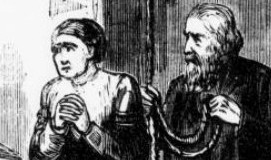
Margaret Waters
Murderer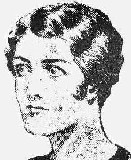 Christiana Edmunds
Murderer · United Kingdom · 1871
Christiana Edmunds (3 October 1828–1907) was an Englishwoman known as The Choco…
1 victim
Christiana Edmunds
Murderer · United Kingdom · 1871
Christiana Edmunds (3 October 1828–1907) was an Englishwoman known as The Choco…
1 victim
 Frances Kidder
Murderer · United Kingdom · 1867
Frances Kidder (c. 1843 – 2 April 1868) was executed by hanging in front of Mai…
1 victim
Frances Kidder
Murderer · United Kingdom · 1867
Frances Kidder (c. 1843 – 2 April 1868) was executed by hanging in front of Mai…
1 victim
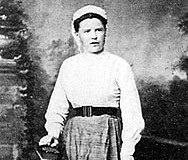 Marguerite Dixblanc
Murderer · United Kingdom · 1872
Marguerite Dixblanc was a Belgian cook. She entered the Park Lane household of…
1 victim
Marguerite Dixblanc
Murderer · United Kingdom · 1872
Marguerite Dixblanc was a Belgian cook. She entered the Park Lane household of…
1 victim
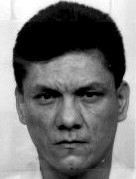 John Reyes Matamores
Murderer · USA · 1990
John Reyes Matamores was sentenced to death on October 29, 1993.
1 victim
John Reyes Matamores
Murderer · USA · 1990
John Reyes Matamores was sentenced to death on October 29, 1993.
1 victim
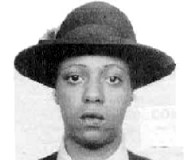 Corrine Sykes
Murderer · USA · 1944
Corrine Sykes was 20 years old when she worked as a housemaid for Mrs. Wodlinge…
1 victim
Corrine Sykes
Murderer · USA · 1944
Corrine Sykes was 20 years old when she worked as a housemaid for Mrs. Wodlinge…
1 victim
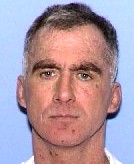 Tracy Lane Beatty
Murderer · USA · 2003
Tracy Lane Beatty was a White male born on 01/23/1961. He was 43 when he was re…
1 victim
Tracy Lane Beatty
Murderer · USA · 2003
Tracy Lane Beatty was a White male born on 01/23/1961. He was 43 when he was re…
1 victim
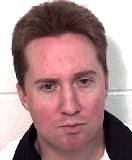 Mark Howard McClain
Murderer · USA · 1994
Mark Howard McClain was a white male. He was known by the aliases “A.K.A. MALAC…
1 victim
Mark Howard McClain
Murderer · USA · 1994
Mark Howard McClain was a white male. He was known by the aliases “A.K.A. MALAC…
1 victim
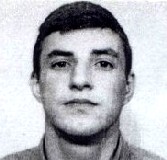 Alexander Greb
Spree killer · Russia · 2004
Alexander Greb was arrested by law enforcement officers of the Rakitinsky depar…
4 victims
Alexander Greb
Spree killer · Russia · 2004
Alexander Greb was arrested by law enforcement officers of the Rakitinsky depar…
4 victims
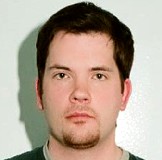 Mark Twitchell
Murderer · Canada · 2008
April 12, 2011 — Mark Twitchell was sentenced to life in prison with no chance…
1 victim
Mark Twitchell
Murderer · Canada · 2008
April 12, 2011 — Mark Twitchell was sentenced to life in prison with no chance…
1 victim
- Gender
- female
- Country
- United Kingdom
- Location
- Brixton, London, England, United Kingdom
- Date of birth
- 1835
- Age at first offence
- 31
- Characteristics
- child abuse, infanticide, rape?, fugitive
- Victim profile
- Infants in her care
- Method of murder
- Drugged the babies with opiates, which suppressed their appetites leaving them to slowly starve
- Date(s) of murder
- 1866 - 1870
- Years active
- 1866–1870
- Date of arrest
- —
- Status
-
Executed
Executed by hanging at Horsemonger Lane Gaol on October 11, 1870
Case details
Margaret Waters was an English murderess who was hanged by executioner William Calcraft on 11 October 1870 at Horsemonger Lane Gaol (also known as Surrey County Gaol) in London. She was born in 1835 and lived in Brixton. She was known for baby-farming, taking in other women’s children for money, a practice often resulting in infanticide.
Background
Waters turned to baby farming in 1864 after the death of her husband to make ends meet. She began by receiving women to be confined, and then undertook the care of their children; she had been reported as having had four children in her care at one time.
She later became involved in chronic impecuniosity and debt. At one point she said her husband left her with £300, and she had done her best to earn an honest living by means of it. She became steadily worse financially and began baby-farming as a business.
The offence
Waters advertised for children to adopt, and she generally got £10 with one. She would advertise herself for children to adopt and then, after receiving a child and the money, she would arrange to put the baby out to nurse. She gained the difference between the £10 paid to her for adopting the child and the fortnight’s payment she received for nursing it.
The practice described was that when the child was placed out to nurse, she was hardly ever asked even for her address if she paid two weeks in advance, and when she went away “of course she never heard anything more of the child.” Her poverty later suggested that she might dispense with a burial charge when children died, and even that she might get rid of them living.
She was described as taking babies one at a time into the streets and approaching little boys and girls at play, telling them:
“Oh, I am so tired! Here, hold my baby, and here is sixpence for you to go into the sweets tuff shop and got something nice.”
According to the description, while the boy or girl went into the shop, she made off. It was also described that the babies were generally taken to the workhouse.
Waters drugged babies with opiates, which suppressed their appetites leaving them to slowly starve. The case description included that five babies were to die in her care of diarrhoea, wasting and convulsions, and she was suspected of murdering up to 19 infants.
Waters wrapped “their frail bodies in brown paper” before dumping them on the streets, described as a common sight in Victorian Britain due to the high cost of burial.
The trial focused on the wilful murder of an infant named John Walter Cowen, described as the illegitimate son of 16-year-old Janet Tassie Cowen.
Investigation
The arresting police officer wrote of findings at Margaret’s house:
“Some half-dozen little infants lay together on a sofa, filthy, starving, and stupefied by laudanum.”
Arrest
Waters was arrested and tried for the wilful murder of John Walter Cowen.
Trial
Waters was charged with five counts of wilful murder as well as neglect and conspiracy. She was convicted of murdering an infant named John Walter Cowen.
Her sister, Sarah Ellis, was convicted in the same case for obtaining money under false pretences and was sentenced to eighteen months’ hard labour.
While awaiting publication of her statement, Waters requested to be allowed to write a statement of her case for it to be published after her death. She said she pleaded guilty to obtaining money by false pretences and admitted that she had laid down “the dead bodies of five infants,” but declared that they all died of convulsions or diarrhoea. Waters said she understood why the case had been “got up,” and she considered the parents of illegitimate children who wanted to get rid of them “by any moans” were more to blame than persons like herself. She said:
“If there were no parents of this class, there would be no baby farmers.”
She did not betray any emotion while being pinioned and appeared to have recovered the firmness that characterised her during the trial.
Sentencing
Waters was condemned and executed by hanging at Horsemonger Lane Gaol on 11 October 1870.
Outcome
Waters was executed by hanging at Horsemonger Lane Gaol (also known as Surrey County Gaol).
Aftermath
On the night before her execution, Waters requested to be allowed to write a statement of her case, which she desired to be published after her death.
At the scaffold, she was described as calm and composed. After the rope had been adjusted, she uttered what was described as a “beautiful extempore prayer.” She then asked the chaplain:
“Mr. Jossopp, do you think I am saved?”
A whispered reply from the clergyman was said to have conveyed his answer to that momentous question.
She was described as having been visited on one occasion by a Baptist minister, to whose persuasion she belonged; she had asked for him not to repeat his visit. It was said she was unused to cases like hers and that his ministrations rather distracted than comforted her. The chaplain of the gaol was described as unremitting in his attentions, and “seemingly with happy effect.”
Waters was described as constantly persisting in saying she was not a murderess in intent, but she was said to have been brought to see her past conduct in its true light. She received the Holy Communion in her cell with one of her brothers.
On Thursday Dr. Edmunds, of Fitzroy-square, communicated to the “Dialectical Society” a voluminous statement of the woman that included her account of her financial circumstances and her baby-farming methods. The narrative included that medical care had been provided when children fell sick and that when they died they were buried properly at first, with the undertaker’s receipts; afterwards she suggested she might dispense with burial charges and even get rid of children living.
The narrative also included specific episodes in which a child to whom she gave a baby was served quickly and returned before she could get away, prompting her to step into an oyster shop, order some oysters, and use the fact that the boy or girl looked up and down with the baby so that after a policeman came up and the policeman walked away with the boy she left the oyster shop and got off safe.
The narrative further stated that one child found by the police at Brixton had been given to her only two days before; she got £20 with it, and the people who gave it promised her “any sum if she only took good care of it.”

Spotted an error, or have more information about this case?