Kenneth Eugene Bruce
Murderer Brian Kevin Rosenfeld
Murderer · USA · 1985
Brian Kevin Rosenfeld Brian Kevin Rosenfeld was sentenced to three concurrent l…
23 victims
Brian Kevin Rosenfeld
Murderer · USA · 1985
Brian Kevin Rosenfeld Brian Kevin Rosenfeld was sentenced to three concurrent l…
23 victims
 Yahweh ben Yahweh
Murderer · USA · 1980
Yahweh ben Yahweh was born and legally named Hulon Mitchell Jr. (October 27, 19…
23 victims
Yahweh ben Yahweh
Murderer · USA · 1980
Yahweh ben Yahweh was born and legally named Hulon Mitchell Jr. (October 27, 19…
23 victims
 Russell Ellwood
Murderer · USA · 1991
Russell Ellwood was a former taxi driver. Authorities suspected him of killing…
20 victims
Russell Ellwood
Murderer · USA · 1991
Russell Ellwood was a former taxi driver. Authorities suspected him of killing…
20 victims
 Robert Martines Perez
Murderer · USA · 1994
Name: Robert Martines Perez · Other name used in proceedings: Robert Martinez P…
15 victims
Robert Martines Perez
Murderer · USA · 1994
Name: Robert Martines Perez · Other name used in proceedings: Robert Martinez P…
15 victims
 Sef Gonzales
Murderer · Australia · 2001
Sef Gonzales (born September 16, 1980) was an Australian man who was convicted…
3 victims
Sef Gonzales
Murderer · Australia · 2001
Sef Gonzales (born September 16, 1980) was an Australian man who was convicted…
3 victims
 David Phillip Smith
Murderer · USA · 1995
David Phillip Smith was 20 years old when he was sentenced to death. He was sen…
1 victim
David Phillip Smith
Murderer · USA · 1995
David Phillip Smith was 20 years old when he was sentenced to death. He was sen…
1 victim
 Jerry Terrell Jackson
Murderer · USA · 2001
Jerry Terrell Jackson was a Black male. He grew up in James City County. He was…
1 victim
Jerry Terrell Jackson
Murderer · USA · 2001
Jerry Terrell Jackson was a Black male. He grew up in James City County. He was…
1 victim
 Horace Rayner
Murderer · United Kingdom · 1907
Horace Raynor was sentenced to death for the killing of William Whiteley. After…
1 victim
Horace Rayner
Murderer · United Kingdom · 1907
Horace Raynor was sentenced to death for the killing of William Whiteley. After…
1 victim
 Jane Andrews
Murderer · United Kingdom · 2000
Jane Andrews (born 1967) was a former Royal dresser for Sarah, the Duchess of Y…
1 victim
Jane Andrews
Murderer · United Kingdom · 2000
Jane Andrews (born 1967) was a former Royal dresser for Sarah, the Duchess of Y…
1 victim
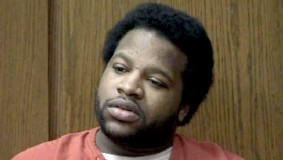 Peter Lucas Moses
Murderer · USA · 2010
Peter Lucas Moses led a small sect called the Black Hebrews in Durham. Prosecut…
2 victims
Peter Lucas Moses
Murderer · USA · 2010
Peter Lucas Moses led a small sect called the Black Hebrews in Durham. Prosecut…
2 victims
- Gender
- male
- Country
- USA
- Location
- Collin County, Texas, USA
- Date of birth
- October 21, 1971
- Age at first offence
- 19
- Characteristics
- robbery, crime spree
- Victim profile
- Helen Elizabeth Hayers (female, 55)
- Method of murder
- Shooting
- Date(s) of murder
- December 10, 1990
- Years active
- 1990
- Date of arrest
- 4 days after
- Status
-
Executed
Executed by lethal injection in Texas on January 14, 2004
Case overview
Kenneth Eugene Bruce was convicted of capital murder in Texas and was executed by lethal injection in Texas on January 14, 2004.
At the time of the killings, Bruce was a 19-year-old high school student working as a pizza delivery driver for Cicci’s Pizza in Celina, Texas. Bruce later left work early and went with two others, including a juvenile, to the home of Richard and Helen Ayers in Prosper, Texas, claiming they had car trouble and were looking for jumper cables.
The offence
On December 10, 1990, Bruce and three accomplices went to the home of Richard and Helen Ayers in Prosper, Texas. They told Mr. Ayers they had car trouble and asked for jumper cables. Mr. Ayers could not find the jumper cables in the garage, so he invited the two men into his home to warm themselves while he called his son at work to see if he knew where the jumper cables were.
Before Mr. Ayers could make the call, Andrews came into the house through the front door and Moore came into the house through the back door. Moore and Andrews both had guns. Moore took Mr. Ayers’s billfold and ordered him to call Mrs. Ayers into the room and to bring her purse. During this time, Bruce and the juvenile ransacked the master bedroom. Moore and Andrews “herded” the Ayers into their master bedroom and ordered them to lay face down on a mattress that had been pulled off of one of the beds and thrown to the floor.
The attackers then shot the Ayers. Mr. Ayers was shot in the back and was paralyzed from the waist down but did not lose consciousness. Mrs. Ayers told her husband she had been shot in the leg. Mr. Ayers told her to hold on until help could come. Mr. Ayers then heard voices in the back of the house, and the men returned. Mr. Ayers heard someone say, “Shoot them again and make sure they are dead.” Mr. Ayers could not tell for sure who said this, but he assumed it was Moore. Mr. Ayers then saw a hand with a gun go down and shoot Mrs. Ayers in the head, killing her instantly. Mr. Ayers was shot again, this time in the shoulder.
After the shootings, the attackers left the house with several jewelry boxes and most of the phones that were in the house. Mr. Ayers remained conscious but could not move because of his paralysis. He lay on the mattress for about three hours looking at his dead wife until his son came home from work and summoned help.
In later proceedings, it was described that only inexpensive jewelry and $10 were taken in the robbery, and that most of the items stolen were relatively inexpensive and were discarded.
Victims
Richard Ayers and Helen Ayers were the victims. Helen Ayers was 55-year-old at the time of the capital murder sentencing reference and was also described as 54 or 58 in different parts of the provided material. Richard Ayers was described as 58 and also as 54 in different parts of the provided material. Both victims were shot, and Helen Ayers died instantly after being shot in the head. Richard Ayers survived, but he was paralyzed from the waist down.
Investigation and arrest
The police arrested Kenneth Eugene Bruce on December 14 after stopping him in his car close to where he went to school. Upon arrest, Bruce initially gave an oral statement and a videotaped statement in which he denied participating in any of the shootings, although he admitted he was present when they occurred. Police later found property of the victims in the front seat of Bruce’s car.
Police later found property of the victims discarded in a field after Bruce led them to it. Bruce also led police to a field where most of the victims’ property had been discarded.
On December 19, when Bruce was confronted with inconsistencies from his accomplices’ statements, police obtained another videotaped statement in which Bruce admitted shooting Mrs. Ayers during the second round of shooting. Bruce claimed that he aimed for her leg or the lower part of her body. Forensic evidence proved otherwise, and it was stated that Mrs. Ayers suffered three gunshot wounds from a single weapon: one to the head and two to the thigh. The thigh wounds were described as inflicted before the head wound based on extensive hemorrhaging. The head wound caused death almost instantly because the bullet passed through the brain stem, destroying parts of the brain that controlled heartbeat and respiration. It was stated that Mrs. Ayers could have survived the thigh wounds with proper treatment.
People involved
Kenneth Eugene Bruce
Kenneth Eugene Bruce was the defendant. He was described as a 19-year-old high school student and later as 32 at the time of execution. He initially denied participating in any of the shootings while admitting he was present when they occurred. In a later statement, he admitted shooting Mrs. Ayers during the second round of shooting, while claiming he aimed for her leg or the lower part of her body. He also led police to a field where most of the victims’ property had been discarded and police later found additional items of the victims’ property in the front seat of Bruce’s car.
Richard and Helen Ayers
Richard Ayers was shot in the back and shoulder and was paralyzed from the waist down but remained conscious and did not lose consciousness. Helen Ayers was shot in the head and died instantly after the head shot. She was also described as having suffered gunshot wounds to her thigh before the head wound.
Accomplices
Accomplice Eric Lynn Moore received a death sentence. Accomplices Sam Andrews and Anthony Quinn Bruce received life sentences. The juvenile was described as a juvenile accomplice and was also included as “a juvenile” in the description of who accompanied Bruce to the Ayers’ home. Different parts of the provided material describe Anthony Quinn Bruce as 15 at the time of the offence and refer to him as Bruce’s cousin.
It was also stated that Bruce and three of his cousins robbed and shot Mr. and Mrs. Ayers, and that the jury convicted Bruce of capital murder and a judge sentenced him to death based on the jury’s answers to special punishment issues.
Trial
Indictment
On Mar. 5, 1991, a Collin County grand jury indicted Kenneth Bruce for the capital offence of murdering Helen Ayers while in the course of committing and attempting to commit the robbery of Helen or Richard Ayers, and while committing and attempting to commit the burglary of the habitation of Helen and Richard Ayers.
Verdict and sentence
On Feb. 26, 1992, a jury found Bruce guilty of capital murder. On Feb. 27, 1992, following a punishment hearing, the court assessed a sentence of death.
A jury convicted Bruce of capital murder and the judge sentenced him to death based on the jury’s answers to the special punishment issues.
Appeals and federal habeas
Direct appeal and certiorari
On Feb. 8, 1995, conviction and sentence were affirmed on direct appeal by the Texas Court of Criminal Appeals in an unpublished opinion. Bruce’s petition for writ of certiorari was denied by the U.S. Supreme Court on Nov. 27, 1995.
State habeas
On Nov. 3, 1997, Bruce filed an application for writ of habeas corpus in the trial court. On Oct. 27, 1999, Bruce’s application for writ of habeas corpus was denied by the Texas Court of Criminal Appeals.
Federal habeas
On Nov. 13, 2000, a petition for writ of habeas corpus was filed in U.S. District Court for the Eastern District of Texas. On Apr. 24, 2002, the federal court granted summary judgment and denied Bruce’s petition for habeas relief. On Jun. 21, 2002, the federal court granted Bruce permission to appeal.
On Aug. 4, 2003, the 5th U.S. Circuit Court of Appeals affirmed the denial of habeas in an unpublished opinion.
In the habeas proceedings described in the materials, the Court of Appeals held that:
- the claim that trial counsel rendered ineffective assistance was procedurally defaulted;
- the state court did not unreasonably apply Strickland in concluding that Bruce was not prejudiced by counsel’s failure to present, at the punishment phase, evidence of parental abuse and neglect;
- petitioner failed to show cause to excuse his procedural default as to a claim that mitigating evidence could be given only partial effect under the special issues submitted to the jury; and
- alleged appointment of incompetent state habeas counsel was not a ground for relief.
The Court of Appeals affirmed the district court’s judgment and denied Bruce’s request for an expansion of the COA, while also denying Bruce’s COA request.
Bruce’s petition for writ of certiorari in the U.S. Supreme Court was filed on Nov. 3, 2003 and was described as currently pending in one portion of the provided material; another portion states it was denied by a 5-4 vote and that the court did not explain its decision.
Procedural citations included
Bruce v. Texas, 116 S.Ct. 523 (1995) (Cert. Denied). Bruce v. Cockrell, 74 Fed.Appx. 326 (5th Cir. 2003) (Habeas). Bruce v. State, No. 71,466 (Tex.Crim.App. Feb. 8, 1995) (unpublished), cert. denied, 516 U.S. 991, 116 S.Ct. 523, 133 L.Ed.2d 430 (1995).
Sentencing for accomplices
Eric Lynn Moore received a death sentence. Anthony Quinn Bruce and Sam Andrews received life sentences. It was also stated that the juvenile received life in another portion, depending on how the juvenile is described within the material.
Execution
Bruce was executed by lethal injection in Texas on January 14, 2004.
Timing and pronunciation
The lethal injection of chemicals was described as beginning at 6:21 p.m. Bruce was pronounced dead at 6:29 p.m. In one portion, the lethal dose began and he was pronounced dead eight minutes later.
Final meal
Bruce’s final meal was a double cheeseburger, french fires, orange juice and pecan pie.
Final words
Bruce’s final words were:
"Yes sir. I would like to thank God for all the blessings He has given me. And I pray that through His mercy, He will allow me into His grace. And to the family of Ms. Ayers, I would like to apologize for all the pain and suffering and that God gives you closure. And I pray that He blesses you. And to my family, know that I love every single one of you and pray that God gives you peace and strength. I may not be with you in the physical, but by grace, my heart will be with you all and I know God loves every one of you all."
Witnessing and conduct
Bruce addressed the family of his victim, Helen Ayers, and then spoke to his family. His mother was described as weeping and as allowed to sit in a wheelchair when she was unable to stand on her own.
Other details
Evidence at trial (aggravation described in federal opinion material)
At the punishment phase, the State presented evidence of the random selection of the victims, evidence that Bruce and the others had attempted to commit other offences on the same night, evidence that the offence was committed for monetary gain, evidence of Bruce’s lack of remorse and his failure to take responsibility for the offence, and evidence that Bruce possessed a razor blade while in jail awaiting trial.
Medical examiner testimony and gunshot sequencing
It was described that Mrs. The medical examiner testified that the head wound caused death almost instantly because the bullet passed through the brain stem destroying parts of the brain that control heartbeat and respiration. The medical examiner determined Mrs.
Additional quotes included in the materials
Richard Ayers testified that he heard someone say, “Shoot them again and make sure they are dead.”
Claims raised during federal appeals (as described)
Bruce’s lawyers presented claims including ineffective assistance of counsel during the punishment phase for allegedly failing to discover and present mitigating evidence of child abuse and neglect. They also raised claims regarding the failure to find and present mitigating evidence, statistical evidence and expert testimony to rebut future dangerousness, and the constitutionality of the drugs used in lethal injection, contending that the drugs, as administered, resulted in cruel and unusual punishment.
Criticism and statements by named individuals in the materials
David Dow, described as a University of Houston law professor involved in the appeals, said:
"None of these guys is challenging the legality of the conviction or sentence,"
"They're all saying you can execute me but just can't torture me. The question is how to get a court to address this."
Randall Price, described as a clinical forensic psychologist, testified that Bruce had the best potential for rehabilitation that he had ever seen, “given the proper motivation.” Price also stated:
“based on Mr. Bruce’s potential for rehabilitation, his higher than average intelligence and lack of criminal history, he did not constitute a threat of future dangerousness. Mr. Bruce was a young man who had been abused and abandoned by his parents and was very susceptible to peer pressure.”
David Ayers, described as the victim’s son, said:
"It seemed to be a little more heartfelt than I expected it to,"
"I still thought he got what he had coming to him."
Property and theft description
The attackers left with several jewelry boxes and most of the phones that were in the house. It was also described that prosecutors said that only inexpensive jewelry and $10 was taken, and that the criminals stole only a few relatively inexpensive items and discarded most of those.
Spotted an error, or have more information about this case?