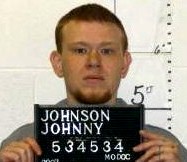
Johnny Johnson
Murderer Robert Martines Perez
Murderer · USA · 1994
Name: Robert Martines Perez · Other name used in proceedings: Robert Martinez P…
15 victims
Robert Martines Perez
Murderer · USA · 1994
Name: Robert Martines Perez · Other name used in proceedings: Robert Martinez P…
15 victims
 Billy Frank Vickers
Murderer · USA · 1993
Billy Frank Vickers Vickers was executed by lethal injection in Texas on Januar…
14 victims
Billy Frank Vickers
Murderer · USA · 1993
Billy Frank Vickers Vickers was executed by lethal injection in Texas on Januar…
14 victims
 Meriel Bemis
Murderer · USA · 2014
Meriel Bemis was a 21-year-old mother in DeKalb County, Georgia. She lived with…
1 victim
Meriel Bemis
Murderer · USA · 2014
Meriel Bemis was a 21-year-old mother in DeKalb County, Georgia. She lived with…
1 victim
 Pamela Smart
Murderer · USA · 1990
Pamela Ann Smart (née Wojas) (born August 16, 1967) was convicted in New Hampsh…
1 victim
Pamela Smart
Murderer · USA · 1990
Pamela Ann Smart (née Wojas) (born August 16, 1967) was convicted in New Hampsh…
1 victim
 Norman & Joseph Jones
Murderers · United Kingdom · 2008
Norman Jones and Joseph Jones were convicted and jailed for life for the abduct…
1 victim
Norman & Joseph Jones
Murderers · United Kingdom · 2008
Norman Jones and Joseph Jones were convicted and jailed for life for the abduct…
1 victim
 Jacques Delisle
Murderer · Canada · 2009
Jacques Delisle (born 1935, Montreal, Canada) was a Canadian judge who sat on t…
1 victim
Jacques Delisle
Murderer · Canada · 2009
Jacques Delisle (born 1935, Montreal, Canada) was a Canadian judge who sat on t…
1 victim
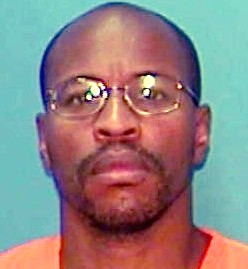 Robert Rimmer
Murderer · USA · 1998
Robert Rimmer was indicted in a case involving 11 counts: two counts of First-D…
2 victims
Robert Rimmer
Murderer · USA · 1998
Robert Rimmer was indicted in a case involving 11 counts: two counts of First-D…
2 victims
- Gender
- male
- Country
- USA
- Location
- St. Louis, Missouri, USA
- Date of birth
- March 16, 1978
- Age at first offence
- 24
- Characteristics
- rape, kidnapping, drugs, domestic violence
- Victim profile
- Casey Williamson (female, 6)
- Method of murder
- Lifted a basketball-sized boulder and brought it down on the girl's head and neck
- Date(s) of murder
- July 26, 2002
- Years active
- 2002
- Date of arrest
- Same day
- Status
-
Sentenced to death
Sentenced to death on March 7, 2005
Case identification
Johnny Johnson was the defendant in the case styled State of Missouri, Respondent, v. Johnny A. Johnson, Appellant.
- Missouri Supreme Court Case Number: SC86689
Victim
The victim was a six-year-old girl, Casey Williamson.
- The girl disappeared in July 2002 from her Valley Park home after Johnny Johnson stayed the night in the home.
Timeline
- July 2002 — A six-year-old girl disappeared from her Valley Park home after Johnny Johnson stayed the night in the home.
- July 24, 2002 — Johnson went to Michelle's house to look for Eddy and Ernie and was seen following Casey's sister Chelsea and her friend Angel when they were riding bikes on Benton Street.
- July 25, 2002 — Angie awoke and found Casey on the couch watching cartoons with Johnson.
- July 26, 2002 — Ernie awoke around 6:00 a.m. and prepared for work; Casey and Johnson went to the glass factory location and Johnson killed Casey.
- Around 8:30 a.m. — Police encountered Johnson; he spoke in a police car with Officer Chad Lewis and with Officer Louis.
- Around 9:25 a.m. — Johnson signed a waiver form after being advised of his rights at a police substation.
- About 1:30 p.m. — Johnson agreed to submit to a rape kit; he later said Casey was in the old glass factory and that she was dead and it was an accident.
- Around 8:30 p.m. — Johnson repeated his version of events in an audiotaped statement.
- Around 11:30 p.m. — While awaiting booking, Johnson discussed the Bible and eternal salvation with Detective John Newsham.
- 11:30 p.m. — Johnson returned to police headquarters after being told he needed to be “completely truthful and honest,” waived his rights again, and made verbal and audiotaped statements admitting he intended to take Casey to have sex with her and planned to kill her after doing so.
- 07/11/2006 — Handdown date of the Missouri Supreme Court opinion.
- March 7, 2005 — Sentencing date stated in the status field: sentenced to death.
Background
Casey lived with her mother, Angie, and her siblings at her grandfather's home on Benton Street in Valley Park. Casey's parents were separated, and her father, Ernie, lived across the street in the home of Michelle Rehm and her boyfriend Eddy so that he could remain close to his children. Two days before Casey's murder, on July 24, 2002, Johnson went to Michelle's house to look for Eddy and Ernie. On the same day, Johnson was seen by Casey's sister Chelsea and her friend Angel riding bikes on Benton Street; Chelsea and Angel noticed Johnson was following them and sped up as they returned home. On the night of July 24, 2002, Angie took the children to Michelle's house to spend the night with Ernie; Johnson also stayed at Michelle's house that evening. The next morning, July 25, 2002, Angie awoke to find Casey on the couch watching cartoons with Johnson. Johnson told Angie that Casey was not bothering him. Unbeknownst to anyone at the time, Johnson had begun to think Casey was “cute” and had “ideas” of wanting to have sex with her. That day, Angie took the children back to her father's house. At one point during the day, Casey, her sister, and other friends, including Angel, were at the home by themselves. Angel noticed Johnson sitting on a chair by the deck and locked the door. Angel later heard knocking but did not answer the door. On the evening of July 25, 2002, Johnson joined in a barbeque at Michelle's house; that evening, Casey and her siblings again spent the night with their father at Michelle's house.
The offence
On the morning of July 26, 2002, Ernie awoke around 6:00 a.m. to prepare for work. Casey awoke and said she was hungry; Ernie told her he would take her to her grandfather's house for breakfast and told her to wait upstairs while he went downstairs to get ready. Downstairs, Ernie noticed Johnson asleep on the couch. Casey did not stay upstairs. Johnson awoke to find Casey standing near the couch watching television and sensed this was his best opportunity to have sex with her. He had decided that to avoid being caught for sexually assaulting her, he would kill her after having sex with her. Johnson asked Casey if she wanted to go to the glass factory to play games and have fun; Casey said she would go and they left. Casey was wearing only her nightgown and underwear. As they walked down Benton Street and into an alley, Casey complained her feet hurt and Johnson picked her up and carried her. When they came to the woods leading to the glass factory, they walked along one of the paths to a sunken pit with brick and concrete walls more than 6 feet high. Casey and Johnson crawled through a small tunnel and dropped into the pit. Johnson asked Casey if she wanted to see his penis; she said no, but he pulled down his shorts and exposed himself. Casey turned her head away. Johnson then asked Casey to pull down her panties so he could see her vagina; she said no. Johnson grabbed her underwear, tore it off her, and forced her to the ground. Pinning her to the ground with his chest, Johnson attempted to achieve an erection by rubbing his penis on Casey's leg. Casey started screaming, kicking, and pushing at Johnson, scratching his chest. Even though he had not yet raped Casey, Johnson decided to kill her. He grabbed a brick and hit Casey in the head with it at least six times, causing bleeding and bruising. Casey was not yet dead or knocked unconscious and started to run around the pit. Johnson hit her with the brick again; she fell to her knees and tried to crawl away. He struck her with the brick again, eventually knocking her to the ground and fracturing the right side of her skull. Because she was still moving, Johnson then lifted a basketball-sized boulder and brought it down on the back left side of Casey's head and neck, causing multiple skull fractures. Casey inhaled and exhaled “really fast” and then stopped breathing. Johnson wiped blood from Casey's face with her underpants and threw them in an opening in the wall. He buried Casey with rocks, leaves, and debris from the pit. Johnson then went to the nearby Meramec River to wash Casey's blood and other evidence from his body.
Investigation
The police were looking for Johnson. A private citizen who had joined the search for Casey chanced upon Casey's body in the pit before police found it. In the middle of the pit, the private citizen saw a pile of rocks, blood around the pile, Casey's foot between the rocks, and saw “a piece of concrete that probably weighed a hundred pounds” where Casey's head would have been. Police arrived and secured the pit.
Officer Chad Lewis met up with Johnson. Lewis made Johnson get in a police car to talk because there were so many people in the area. Without any question being asked, Johnson said he would not hurt “little kids” and that he liked them because he had one of his own. He explained to Officer Louis that he had gone for a swim in the river and explained his route there. Officer Louis thought Johnson's route was unusual because most locals would have cut through the glass factory to get to the river. Officer Louis asked Johnson if he had been in the glass factory; Johnson denied. At Officer Louis's request, Johnson agreed to go to the police station to talk in private.
At the station, Johnson was identified by a witness who had seen him carrying Casey that morning. Around 8:30 a.m., Detectives Neske and Knieb arrived and took Johnson to a police substation with an open interview room. On the ride to the substation, Johnson was informed of his rights and indicated he understood them. Around 9:25 a.m., Johnson signed a waiver form after again being advised of his rights and said he wanted to make a statement. For about an hour, Johnson and Detective Neske conversed; Johnson denied seeing or being with Casey that morning. He continued denying involvement even when confronted with accounts of witnesses seeing him with Casey that morning. When Detective Neske brought up a hypothetical about Johnson's son being missing, Johnson became angry. Johnson said he was being treated for schizophrenia and had been hospitalized for it in the past. Johnson denied hearing voices and said he usually saw shadows, and he denied having hallucinations at that time. Johnson said he had not taken any medication for a month and was not suffering from it anymore. Detectives took a break from talking and brought Johnson food.
In the early afternoon, about 1:30 p.m., Johnson agreed to submit to a rape kit. Before the samples were collected, Detective Neske told Johnson the samples would determine his involvement and said he needed “to be a man and tell me where she's at.” Johnson started crying and said, “She's in the old glass factory.” When asked if Casey was alive, Johnson said she was dead and it was an accident. He said Casey wanted to go to the glass factory with him and that a rock had fallen from the pit wall when he was climbing it and hit Casey's head, killing her. Johnson said he then “freaked out,” thinking he would not be believed, and buried Casey. He said he went to the river to kill himself but could not. Johnson drew two maps to help officers find Casey's body, but officers at the scene were unable to find the body and Johnson was taken there. Before Johnson arrived, the private citizen had found Casey's body and Casey's foot and other physical details noted above were observed. After securing the pit, Johnson was taken to police headquarters. Detective Neske observed the pit and spoke with an officer processing evidence at the scene. The evidence officer told Detective Neske there was no place to climb out of the pit and said there was blood all over the floor of the pit, contradicting Johnson's story.
Detective Neske returned to police headquarters to talk with Johnson and again advised him of his rights and waivers. Neske told Johnson he had been to the scene and did not think it was an accident. Johnson then told Neske that once he and Casey were in the pit he asked Casey if she wanted to see his penis and pulled down his pants. Johnson said he asked Casey to show him her vagina and pulled off her underwear, which caused her to start “freaking out” and saying she would tell her parents. Johnson said this caused him to start “freaking out” as well, and he picked up the brick and hit her a couple of times in the head, then dropped the “boulder” on her head. Johnson said he wanted her to expose herself so he could masturbate. He said he wiped blood from Casey's face with the underwear, discarded it, buried the body, and went to the river to wash off the blood. Around 8:30 p.m., Johnson repeated this version of events in an audiotaped statement. In these statements, Johnson did not admit that he intended to take Casey, rape her, or kill her prior to entering the pit.
Later that night, around 11:30 p.m., Detective John Newsham was instructed to take Johnson to the county jail. While Johnson awaited booking, Newsham began discussing reading with him. Johnson said he liked to read the Bible and was concerned about his “eternal salvation.” Johnson said he was “fine,” and he “felt he was going to receive the death penalty and that he wanted to be executed.” Johnson asked Newsham, “[D]o you think I'll ever achieve eternal salvation[?]” Newsham thought Johnson was indicating he had not been completely honest earlier and took this as an opportunity to get more information. Newsham told Johnson that to be forgiven he had to be completely truthful and honest and not leave out details. Johnson admitted he had not been completely honest. Johnson was returned to police headquarters, waived his rights again, and made verbal and audiotaped statements in which he admitted he intended to take Casey for the purpose of having sex with her and planned to kill her after doing so.
Arrest and custody
Johnson was encountered by Officer Chad Lewis. Johnson was taken by police to the station, was identified by a witness, and was taken to a police substation interview room. Johnson signed waivers and made statements after being advised of rights. Later, around 11:30 p.m., Detective John Newsham was instructed to take Johnson to the county jail, and Johnson made additional statements after returning to police headquarters.
Statements made by Johnson
Johnson made multiple statements after being advised of rights and waiving them. Early in the day, Johnson denied seeing or being with Casey that morning. Johnson later said Casey was in the old glass factory and that she was dead and it was an accident, and he described a supposed rock-fall and his “freaked out” reaction, burial, and an attempted suicide by river. After being told by Detective Neske that he did not believe the death was an accident, Johnson gave a version describing exposure and tearing underwear and “freaking out,” striking her with a brick and dropping the “boulder,” wiping blood with the underpants, burying the body, and going to the river. Around 8:30 p.m., Johnson repeated this version in an audiotaped statement. Later at around 11:30 p.m., Johnson discussed “eternal salvation” with Detective John Newsham, asked “[D]o you think I'll ever achieve eternal salvation[?]”, and, after being told he needed to be “completely truthful and honest,” he admitted in verbal and audiotaped statements that he intended to take Casey to have sex with her and planned to kill her after doing so.
Forensic evidence
An autopsy showed Casey died from blunt force injuries to her head. The autopsy showed skull fractures and bruising of her scalp and brain. Casey suffered injuries to her arms, shoulders, legs, and back. Her blood was found on Johnson's shirt. A brick and a large rock were recovered from the pit. Johnson's semen was found on his shorts.
Trial
At trial, Johnson did not deny killing Casey, but he disputed that he deliberated before doing so. Johnson presented a diminished capacity defense asserting that he could not deliberate because of schizo-affective disorder that caused command hallucinations to rape and kill Casey. The State presented rebuttal testimony from an expert that Johnson was capable of deliberation and that any hallucinations were due to methamphetamine intoxication, not psychosis. Johnson was convicted of first-degree murder, armed criminal action, kidnapping, and attempted forcible rape.
Penalty phase
The jury recommended a sentence of death for the murder conviction, finding all three statutory aggravating factors submitted. The jury recommended life sentences for the remaining convictions. In accord with the jury's recommendations, the court sentenced Johnson to death for the murder and, as a persistent offender, to consecutive life sentences for the other crimes.
Appeals
Johnson appealed. The Missouri Supreme Court affirmed. The Supreme Court held en banc:
- The trial court did not err in overruling Johnson's Batson challenges regarding the State's peremptory strikes of an African-American male juror and an Asian female juror. The court found Johnson failed to show the State's reasons were pretextual or racially motivated, and it found the trial court's premature ruling was error of process that did not prejudice Johnson.
- The trial court did not abuse its discretion in precluding defense counsel from asking prospective jurors whether they could consider a sentence of life imprisonment without probation or parole given the concept that first-degree murder involved coolly reflected-upon, deliberated killing. The trial court found the questions did not give a full and complete definition of first-degree murder and improperly attempted to instruct the jury as to the law.
- The trial court did not abuse its discretion in allowing the State to elicit evidence of uncharged crimes of “stalking” children in the days preceding the murder.
- Given evidence of drugs and alcohol before the jury, the trial court did not err in submitting a voluntary intoxication instruction that clarified the jury's consideration of that evidence.
- The trial court did not err in overruling Johnson's motion to suppress statements made to Detective Newsham on reliability grounds, and the court found the statements voluntary under the totality of circumstances.
- The trial court did not err in overruling Johnson's objections and submitting the statutory aggravating instruction that the murder was “outrageously or wantonly vile,” including limiting language about depravity of mind.
- The trial court did not err in overruling objections to Instructions 24 and 26 concerning how the jury weighed mitigating and aggravating factors.
- The trial court did not err in overruling Johnson's motion to quash the information or to preclude the death sentence.
- The trial court did not plainly err in failing to admonish the prosecutor and give a corrective instruction when the prosecutor stated during guilt-phase closing argument that the jury “for once” should hold Johnson responsible.
- The trial court did not err in overruling Johnson's motion for a new trial and in sentencing him to death. The court found no evidence the punishment was imposed due to passion, prejudice, or other arbitrary factors and found evidence supported the jury's findings beyond a reasonable doubt for the wantonly vile, horrible or inhuman aspect involving depravity of mind and for murder committed while engaged in kidnapping and attempted forcible rape. The court stated the jury rejected mental illness defenses and that the record did not require the death penalty to be precluded on mental illness allegations.
- Opinion author: William Ray Price, Jr., Judge
- Vote: AFFIRMED
- Court en banc: All concur
Outcome
The Supreme Court affirmed the judgment. Johnson remained sentenced to death and consecutive life sentences for the other convictions.
Other details
The communications summary included procedural and publication statements that it was “not part of the opinion of the Court,” prepared “for the convenience of the reader,” not reviewed or approved by the Supreme Court, and should not be quoted or cited. The case involved Missouri Supreme Court exclusive jurisdiction because Johnson was sentenced to death.
Spotted an error, or have more information about this case?