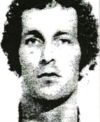
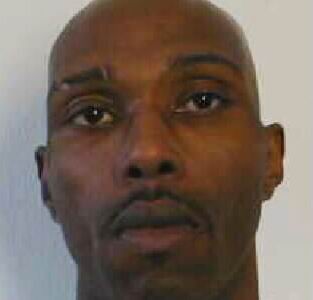
Russell Maurice Johnson
Serial killer William Patrick Fyfe
Serial killer · Canada · 1979
William Patrick Fyfe was a Canadian serial killer who was convicted of five cou…
25 victims
William Patrick Fyfe
Serial killer · Canada · 1979
William Patrick Fyfe was a Canadian serial killer who was convicted of five cou…
25 victims
 Clifford Olson
Serial killer · Canada · 1980
Clifford Robert Olson was a Canadian serial killer who abducted, sexually abuse…
11 victims
Clifford Olson
Serial killer · Canada · 1980
Clifford Robert Olson was a Canadian serial killer who abducted, sexually abuse…
11 victims
 Gilbert Paul Jordan
Serial killer · Canada · 1965
Gilbert Paul Jordan (born December 12, 1931; died July 7, 2006) was known as th…
10 victims
Gilbert Paul Jordan
Serial killer · Canada · 1965
Gilbert Paul Jordan (born December 12, 1931; died July 7, 2006) was known as th…
10 victims
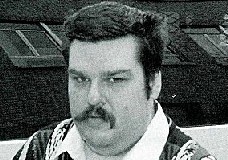 John Martin Crawford
Serial killer · Canada · 1981
John Martin Crawford was a Canadian serial killer. · 1981 — John Martin Crawfor…
4 victims
John Martin Crawford
Serial killer · Canada · 1981
John Martin Crawford was a Canadian serial killer. · 1981 — John Martin Crawfor…
4 victims
 Léopold Dion
Serial killer · Canada · 1963
Léopold Dion (c. 1921 - 17 November 1972, Québec) was a Canadian sex offender a…
4 victims
Léopold Dion
Serial killer · Canada · 1963
Léopold Dion (c. 1921 - 17 November 1972, Québec) was a Canadian sex offender a…
4 victims
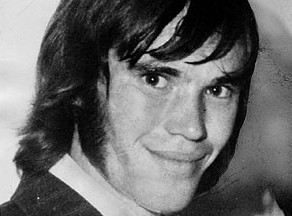 Christian Magee
Serial killer · Canada · 1974
Name: Christian Magee Aliases/nicknames: “Mad Slasher” Christian Magee was foun…
3 victims
Christian Magee
Serial killer · Canada · 1974
Name: Christian Magee Aliases/nicknames: “Mad Slasher” Christian Magee was foun…
3 victims
 Landon May
Murderer · USA · 2001
Landon May was convicted of killing Lucy Smith and Terry Smith in their Ephrata…
2 victims
Landon May
Murderer · USA · 2001
Landon May was convicted of killing Lucy Smith and Terry Smith in their Ephrata…
2 victims
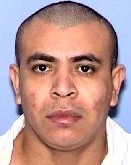 Walter Sorto
Murderer · USA · 2002
Name: Walter Alexander Sorto TDCJ Number: 999465 Date of Birth: 08/10/1977 Gend…
2 victims
Walter Sorto
Murderer · USA · 2002
Name: Walter Alexander Sorto TDCJ Number: 999465 Date of Birth: 08/10/1977 Gend…
2 victims
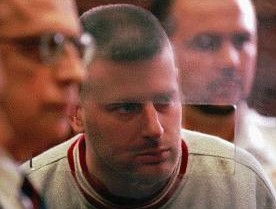 Peter Contos
Murderer · USA · 1997
Peter Contos was convicted on three indictments charging murder in the first de…
3 victims
Peter Contos
Murderer · USA · 1997
Peter Contos was convicted on three indictments charging murder in the first de…
3 victims
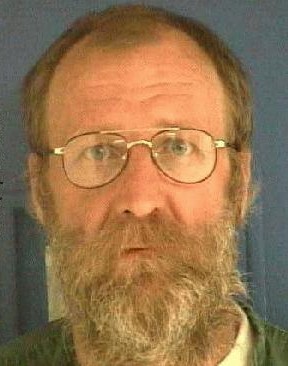 Devon Stuart Olson
Murderer · USA · 1986
Devon Stuart Olson was a transient. Texas authorities arrested California parol…
2 victims
Devon Stuart Olson
Murderer · USA · 1986
Devon Stuart Olson was a transient. Texas authorities arrested California parol…
2 victims
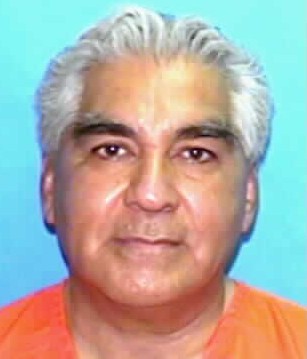 Peter Ventura
Murderer · USA · 1981
Peter Ventura was convicted and sentenced to death for the murder of Robert Cle…
1 victim
Peter Ventura
Murderer · USA · 1981
Peter Ventura was convicted and sentenced to death for the murder of Robert Cle…
1 victim
- Gender
- male
- Country
- Canada
- Location
- London, Ontario and Guelph, Ontario, Canada
- Date of birth
- 1947
- Age at first offence
- 26
- Characteristics
- rape
- Victim profile
- Mary Hicks, 20 / Alice Ralston, 42 / Eleanor Hartwick / Doris Brown, 49 / Diane Beitz, 23 / Luella George, 22 / Donna Veldboom, 22
- Method of murder
- Strangulation - St abbing with knife
- Date(s) of murder
- 1973 - 1977
- Years active
- 1973–1977
- Date of arrest
- —
- Status
-
Acquitted / overturned
Found not guilty by reason of insanity in February 1978; committed to the maximum-security wing of the Ontario Mental Health Centre and later confined to Oak Ridge maximum-security facility of the Mental Health Centre in Penetanguishene, Ontario; awaiting transfer to the Brockville, Ontario Mental Health Centre Medium Secure Forensic Unit.
Overview
Russell Maurice Johnson (born 1947) was confined to maximum security at the Oak Ridge psychiatric institution of the Ontario Mental Health Centre in Penetanguishene, Ontario, after a February 1978 finding of not guilty by reason of insanity.
Johnson was dubbed the “Bedroom Strangler.” The confinement and legal outcome related to murders of three women in 1978, and he later confessed to additional killings and sexual assaults.
Other details
Confined facilities and pending transfer
Johnson was incarcerated at the Oak Ridge maximum-security facility of the Mental Health Centre in Penetanguishene, Ontario. He was awaiting transfer to the Brockville, Ontario Mental Health Centre Medium Secure Forensic Unit.
A temporary treatment consultation was ordered by the Ontario Review Board following a hearing last October. Dr. John Bradford said Monday that Russell Johnson would be transferred to the medium security forensic unit at the Brockville Mental Health Centre for what Bradford called a temporary treatment consultation, which would examine what types of treatment were suitable for Johnson and their possible effectiveness. Bradford said he would conduct the assessment and would not say when the temporary move would happen or if it had already.
Bradford described the transfer as “certainly happening” and “a matter of months rather than a year.” Bradford dismissed the suggestion that the assessment was necessarily a step toward Johnson being permanently transferred to medium security. He described the difference between “coming for consultation” and a “permanent basis with rehabilitation over time being put in place.”
Johnson’s request for a transfer to Brockville from Penetanguishine had been turned down in the past. A London Free Press article on a transfer request Johnson made during a hearing in 2000 quoted counsel for the attorney general as opposing the move. Geoff Beasley said: “He’s too great of a risk to be released from maximum security - the problem being that in medium security facilities, there are women patients,” and Beasley added: “He represents a risk to women patients.”
Bradford conceded on the question of risk management: “there is never such a thing as no risk. ... What the issue is is a risk-management approach to it.”
Bradford said measures including separating Johnson from female patients could be taken, and he said he did not say whether risk-management steps would be taken ahead of Johnson’s arrival.
Bradford said unlike some patients who come for assessment, Johnson had “a long-standing institutional record which has been very good.” Bradford noted Johnson had been temporarily released to other psychiatric facilities in the past for treatment consultations.
Bradford stated on the possibility of community release: “A number of them now who have been in the community for more than 10 years and have never committed another offence,” and Bradford added: “The opportunity of ever being able to treat and rehabilitate somebody with a serious history of sexually motivated homicide is pretty rare.”
Police position regarding community access
Brockville Police Deputy Chief Adrian Geraghty said the force was aware of Johnson’s pending transfer. Geraghty said the serial killer’s move to the Brockville psychiatric facility was not currently a concern to police. Geraghty said: “No we don’t have any concerns. He's got restricted conditions on him and the mental health people will advise us if there are any concerns.”
Bradford said that if Johnson had any access to the community during his temporary stay, it would be under police escort. Geraghty said: “Brockville Mental Health Centre will notify us at such time if he is ever to enter the community.”
The hearing included input from the Crown on public safety concerns, information about security at the Brockville facility, and Johnson’s decades-long record while institutionalized.
Timeline
- February 1978 — Johnson was found not guilty by reason of insanity for the murders of three women and was committed to the maximum-security wing of the Ontario Mental Health Centre.
- 1978 — Johnson was confined to the maximum security Oak Ridge psychiatric institution in Penetanguishene.
- October (year referenced but not specified in the text) — The Ontario Review Board ordered the transfer for a temporary treatment consultation after a hearing.
- 2000 — Johnson made a transfer request to Brockville from Penetanguishine; the request was turned down, with counsel for the attorney general opposing the move.
- Monday (date referenced but not provided in the text) — Dr. John Bradford said Johnson would be transferred to the medium security forensic unit at the Brockville Mental Health Centre for a temporary treatment consultation.
- September 10, 2008 — A narrative described Johnson as making a temporary move to Brockville and described details of the proposed consultation and review.
Legal outcome and current status
Johnson was found not guilty by reason of insanity in February 1978 for the murders of three women: Diane Beitz, Louella Jeanne George, and Donna Veldboom. He was committed to the maximum-security wing of the Ontario Mental Health Centre and later confined to Oak Ridge maximum security in Penetanguishene, Ontario.
The Ontario Review Board ordered a temporary treatment consultation involving a transfer to the Brockville Mental Health Centre Medium Secure Forensic Unit, and Johnson was awaiting that transfer.
The offence
Victim-related killings and related circumstances
The legal outcome involved murders in 1978 of three women. In addition, Johnson was said to have confessed to additional killings and attacks.
The first group of deaths was initially treated as “natural” deaths in the late 1970s before being attributed to Johnson after he was caught and confessed. The narrative listed the following known victims with locations and months of death:
- Mary Hicks — London — October 1973
- Alice Ralston — Guelph — November 1973
- Eleanor Hartwick — London — March 1974
- Doris Brown — Guelph — August 1974
- Diane Beitz — Guelph — December 1974
- Luella George — London — April 1977
- Donna Veldboom — London — July 1977
Details described about how deaths were discovered and characterized
The narrative stated that four women were found dead in their homes with no suspicion of foul play and that, in each case, the victim apparently died peacefully in her sleep.
For Mary Hicks, a 20-year-old student, it stated she was found dead in bed in London on 19 October 1973, was in a natural sleeping position, and there were no obvious marks of violence. It stated a pillow partly covering her face was not considered suspicious. It stated the death was attributed to suffocation caused by a reaction to a prescription drug.
For Alice Ralston, a 42-year-old in Guelph, it stated she was found dead in bed in her Guelph apartment one month later. It stated she was known to have suffered from hardening of the arteries, which was thought to have caused her untimely death.
For Eleanor Hartwick, it stated she died at her home in London on 4 March 1974, and it stated her death was put down to a reaction to prescription drugs.
For Doris Brown, it stated that when the last of the deaths was reported in August and Doris Brown was 49 years old, a pathologist found minor abrasions and some blood in her throat and rectum. It stated police were not called in to investigate and death was certified as from pulmonary edema.
The narrative stated that a later killing “could be no doubt.” It stated that on 31 December, Diane Beitz was found strangled with her own brassiere in her apartment in Guelph, and it stated she had been sexually assaulted after death.
The narrative stated that in April 1977, Louella Jeanne George was strangled and robbed of some jewellery and underwear later found dumped in a garbage can a few blocks away.
The narrative stated that Donna Veldboom, described as 22 years old, was found strangled in her apartment just a short distance from the previous murder site, and it stated this time the victim had been slashed in the chest with a knife.
Connection to investigation and sexual assaults
When police investigating the killing of Donna Veldboom compared a list of tenants of the apartment block with details of sexual deviants on record, Johnson’s name emerged. It stated Johnson had also once lived in the building where Louelia George had been strangled.
Further inquiries established a number of non-fatal sexual assaults on women by Johnson, both before and after he had been admitted to a psychiatric hospital diagnosed as a compulsive sex attacker.
A narrative stated Johnson started attacking and raping in 1969 and that it progressed to murder. It stated Johnson strangled the first six killings and stabbed the last one. It stated that between five and six there were at least two attacks in which the women survived, and that they later identified Russell as the person who attacked them and probably would have been killed also but in both instances he was interrupted and fled.
Investigation and arrest-related conduct described
Victim access described
The narrative stated that Johnson would often watch his victims sleep for hours before attacking them. It stated he worked in an auto factory during the day and a bouncer by night.
It stated Johnson would stalk potential victims, climbing up to 13 stories on the sides of buildings to attack them.
It stated Johnson scaled apartment walls as high as 15 storeys to reach his victims in some attacks.
It stated Johnson would often watch his victims sleep for hours before attacking them.
It stated he used to scale the balconies to gain access to the apartments.
Confessions and number of admitted crimes described
After the trial, police authorities published a complete dossier on the crimes admitted by Johnson, including the four “natural” deaths.
The narrative said Johnson confessed to seven additional murders and 17 attacks. Another part of the narrative stated that since the 1978 court decision, he confessed to killing four other women and several sexual assaults.
Trial
Charges and verdict
At his trial in February 1978, Johnson was charged with the Beitz, George and Veldboom murders. He was found not guilty by reason of insanity. He was committed to the maximum-security wing of the Ontario Mental Health Centre.
Aftermath
A narrative described Johnson as operating in London/Guelph, killing seven women and being suspected in 10 other deaths, and it stated he remained institutionalized at Oak Ridge maximum security at the Ontario Mental Health Centre in Penetanguishene.
Spotted an error, or have more information about this case?