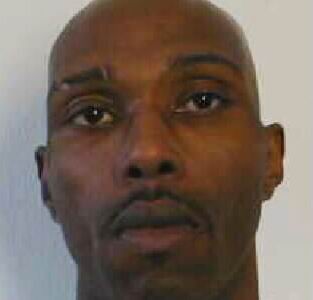
Stacey Eugene Johnson
Murderer Brian Kevin Rosenfeld
Murderer · USA · 1985
Brian Kevin Rosenfeld Brian Kevin Rosenfeld was sentenced to three concurrent l…
23 victims
Brian Kevin Rosenfeld
Murderer · USA · 1985
Brian Kevin Rosenfeld Brian Kevin Rosenfeld was sentenced to three concurrent l…
23 victims
 Russell Ellwood
Murderer · USA · 1991
Russell Ellwood was a former taxi driver. Authorities suspected him of killing…
20 victims
Russell Ellwood
Murderer · USA · 1991
Russell Ellwood was a former taxi driver. Authorities suspected him of killing…
20 victims
 Robert Martines Perez
Murderer · USA · 1994
Name: Robert Martines Perez · Other name used in proceedings: Robert Martinez P…
15 victims
Robert Martines Perez
Murderer · USA · 1994
Name: Robert Martines Perez · Other name used in proceedings: Robert Martinez P…
15 victims
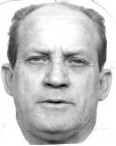 Billy Frank Vickers
Murderer · USA · 1993
Billy Frank Vickers Vickers was executed by lethal injection in Texas on Januar…
14 victims
Billy Frank Vickers
Murderer · USA · 1993
Billy Frank Vickers Vickers was executed by lethal injection in Texas on Januar…
14 victims
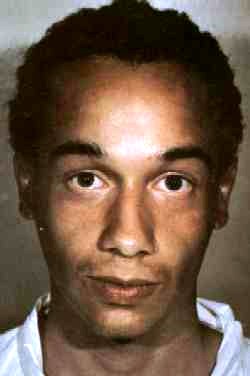 Kenneth Erskine
Serial killer · United Kingdom · 1987
Kenneth Erskine (born 1962) was an English serial killer known as the “Stockwel…
7 victims
Kenneth Erskine
Serial killer · United Kingdom · 1987
Kenneth Erskine (born 1962) was an English serial killer known as the “Stockwel…
7 victims
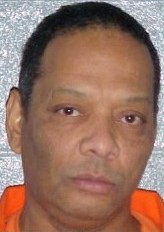 Bernard Smith
Murderer · USA · 1983
Bernard Smith was convicted in Superior Court (Yuma) of first-degree murder and…
1 victim
Bernard Smith
Murderer · USA · 1983
Bernard Smith was convicted in Superior Court (Yuma) of first-degree murder and…
1 victim
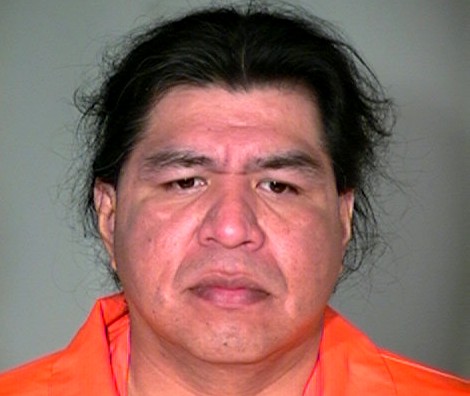 Eldon Schurz
Murderer · USA · 1989
Eldon Schurz was tried in Arizona in connection with the attempted robbery and…
1 victim
Eldon Schurz
Murderer · USA · 1989
Eldon Schurz was tried in Arizona in connection with the attempted robbery and…
1 victim
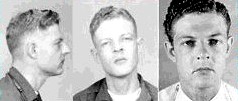 Richard Lewis Jordan
Murderer · USA · 1954
Richard Lewis Jordan was convicted of murder in Tucson, Arizona, involving the…
1 victim
Richard Lewis Jordan
Murderer · USA · 1954
Richard Lewis Jordan was convicted of murder in Tucson, Arizona, involving the…
1 victim
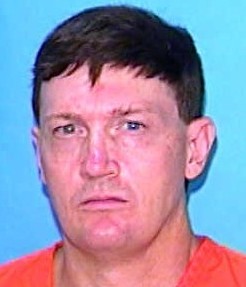 Harold Lee Harvey
Murderer · USA · 1985
Harold Lee Harvey was born on 12/30/62. He was tried in the Nineteenth Judicial…
2 victims
Harold Lee Harvey
Murderer · USA · 1985
Harold Lee Harvey was born on 12/30/62. He was tried in the Nineteenth Judicial…
2 victims
- Gender
- male
- Country
- USA
- Location
- Sevier County, Arkansas, USA
- Date of birth
- November 26, 1969
- Age at first offence
- 24
- Characteristics
- rape
- Victim profile
- Carol Jean Heath
- Method of murder
- Cutting her neck, strangulation, and blunt-force head injuries
- Date(s) of murder
- April 1, 1993
- Years active
- 1993
- Date of arrest
- —
- Status
-
Sentenced to death
Sentenced to death on September 23, 1994
Case name
Stacey Eugene Johnson v. State of Arkansas
Parties
- Defendant: Stacey Eugene Johnson
- Victim: Carol Heath
- Key child witness: Ashley Heath (daughter of Carol Heath)
- Other related individuals named in the proceedings: Jonathan Heath (child), Rose Cassidy (victim’s sister-in-law), Sergeant Keith Tucker (DeQueen Police Department), DeQueen Chief of Police James Smith, Dr. Frank Peretti (associate medical examiner), Officer James Behling (DeQueen Police Department), Kenneth Bryan, Lisa Sakevicius (State Crime Laboratory trace evidence), Jane Parsons (forensic serologist), Melisa Weber (Cellmark Diagnostics), Officer Hayes McWhirter (Arkansas State Police), Cynthia Emerson (Department of Human Services supervisor), Warren Eckert (victim-impact witness), Carolyn Pullen (statement reader), Cordelia Vinyard (Branson Ramsey’s ex-wife), Branson Ramsey, Dr. Carnelle Barnes, Jill Smith, Mickey Buchanan (trial counsel), David L. Clark (trial counsel), Dorcy Corbin (current counsel), Jeff Rosenzweig (current counsel)
Timeline
- April 1, 1993 / April 2, 1993 (night of April 1 or early morning hours of April 2) — Carol Heath was brutally murdered in her duplex apartment in DeQueen; she was beaten, strangled, and had her throat slit while her two young children, Ashley (age six) and Jonathan (age two), were home.
- April 2, 1993 (approximately 6:45 a.m.) — Rose Cassidy knocked on the victim’s door; she entered (because the door was unlocked) and found Carol Heath’s partially nude body lying on the living room floor in a pool of blood.
- April 5, 1993 — Kenneth Bryan found a purse in the woods between DeQueen and Horatio which he later realized belonged to the victim.
- November 1997 — A retrial was held in Pike County after venue was changed; Ashley Heath was found competent to testify and did testify.
- September 23, 1994 — Stacey Eugene Johnson was sentenced to death.
- May 18, 2006 — Arkansas Supreme Court affirmed the circuit court’s denial of a DNA motion in Johnson v. State, ___ S.W.3d ___, 2006 WL 1349052.
- 2006 — Petition for habeas corpus remained pending in U.S. District Court, E.D. Ark., Case No. 5:06-CV-00185.
- October 5, 2000 — Opinion delivered in Stacey Eugene Johnson v. State of Arkansas, CR 98-743, ___ S.W.3d ___; the court affirmed the conviction and death sentence after retrial.
Background
In 1994, Stacey Eugene Johnson was convicted of capital murder in Sevier County Circuit Court in the death of Carol Heath. He was sentenced to death.
In Johnson v. State, 326 Ark. 430, 934 S.W.2d 179 (1996) (“Johnson I”), the Arkansas Supreme Court reversed Johnson’s conviction on the ground that the trial court improperly admitted an out-of-court statement allegedly made by six-year-old Ashley Heath in which she claimed to have witnessed the murder of her mother and purported to identify Johnson as the murderer. The court had held Ashley Heath had been found incompetent to testify at the first trial. A retrial was held in November 1997 in Pike County after venue was changed. At the retrial, Ashley Heath was found competent to testify and testified. Appellant was again sentenced to death, and the appeal addressed that conviction and sentence.
The offence
Carol Heath was murdered in her duplex apartment in DeQueen either the night of April 1, 1993, or the early morning hours of April 2, 1993.
Assault and injuries
Dr. Frank Peretti testified that Carol Heath’s death was caused by:
- cutting her neck,
- strangulation, and
- blunt-force head injuries.
Dr. Peretti observed:
- a four-inch by two-inch cut wound on her neck that went one-quarter inch into her spine,
- several bruises and abrasions on her head and face,
- injuries on her hands and arms consistent with defensive wounds,
- a bite mark on the nipple of her right breast and an abrasion on her left breast,
- a one-quarter-inch contusion on her right labia minora.
Dr. Peretti testified that he could not conclude, based on the physical evidence, that Carol Heath had been either sexually assaulted or raped.
Children present in the home
The victim’s two young children were present: Ashley, age six, and Jonathan, age two.
Investigation
Discovery of the body
At approximately 6:45 a.m. on April 2, 1993, Rose Cassidy knocked on the victim’s door but did not receive an answer. Because the door was unlocked, she entered and found Carol Heath’s partially nude body lying on the living room floor in a pool of blood. Cassidy ran across the street to call the police and then returned to check on her niece (Ashley) and nephew (Jonathan), whom she saw looking out the bedroom window.
Cassidy testified that she asked Ashley what had happened. Ashley responded, according to Cassidy:
- "[S]omebody had broke in, and I said who, and she (Ashley) said a [b]lack man."
Scene observations
Sergeant Keith Tucker testified he found Carol Heath’s body nude except for a t-shirt pushed up around her neck, and that the body was located between a couch tilted up on its back legs and a coffee table that had apparently been moved toward the middle of the room.
DeQueen Chief of Police James Smith arrived later. He testified that when he pulled the t-shirt away from the victim’s neck, he saw that her throat had been slashed.
Physical evidence tied to sexual/biological material
Officer James Behling testified that he observed a pair of panties next to Carol Heath’s right thigh, an area of lighter-colored liquid between and around the legs and below the genital area, and that an empty douche bottle and an empty “Lifestyles” condom box were found in the bathroom sink.
Officer Behling’s testimony included the setup of those items at the scene.
Jane Parsons testified that no semen was found. She admitted that semen would be unlikely if the perpetrator used a condom and douched the victim.
Items found in the woods
On April 5, 1993, Kenneth Bryan found a purse in the woods between DeQueen and Horatio which he later realized belonged to the victim. Bryan took Officer Behling to the location. Officer Behling examined the area and found:
- a bloody pullover green shirt,
- a bloody white t-shirt, and
- a bloody towel.
Trace evidence and origin
Lisa Sakevicius testified that hairs microscopically similar to the victim’s hair were found on all three items.
She also testified that hairs retrieved from:
- under the victim’s left breast,
- the floor by the victim, and
- the white t-shirt were of Negroid origin.
DNA evidence
DNA evidence was introduced at trial.
Melisa Weber (Cellmark Diagnostics) conducted:
- an RFLP test on the green shirt for the State, and she testified that, to a reasonable degree of scientific certainty, the blood matched Carol Heath;
- PCR tests on several items, including:
- the white t-shirt found in the park,
- a cigarette butt found in the green shirt,
- hairs taken from the body of Carol Heath and near to where the body was located.
Weber’s testimony included:
- White t-shirt blood: the victim could not be excluded as the source of the blood; the probability of this DNA having come from another Caucasian was 1 in 12,000.
- Cigarette butt and hairs: Weber opined that Johnson could not be excluded; the probability that another African-American was the donor of the DNA in question was 1 in 250.
Statements and identification by the child witness
Officer Hayes McWhirter talked with Ashley Heath on the afternoon of April 2, 1993. Cynthia Emerson, a supervisor with the Department of Human Services, was also present.
Officer McWhirter made notes from that conversation and used them to refer to at pretrial hearings and at trial. The notes included:
- "Ashley stated her mother and I were on the couch when someone knocked on the door. She got up and opened the door. The picture No. 3, Stacey Johnson, is the one that came in the door. 1 Ashley looked at six different pictures of black males. Mother likes Branson. He works at In Your Ear. The black male asked where Branson was. The black male used a girl sounding name. He had on a black hat withsomething hanging down in the back. He had on a green shirt and sweater. When they were talking, the black male said he had just got out of jail. The black male was mad at mother for dating Branson. He had been over two other times, but it was a while or a long time ago. The black male had about as much hair as [McWhirter]. I saw them fighting. Then I saw mother laying on the floor. I saw the black male leave and he got up and he got in a brown truck, I think. I saw a knife and a gun. The brown truck was parked beside the house. Mother looked out the window. When he knocked, then she let him in. While mother was laying on the floor, the black male walked into the bathroom. We were hiding in the closet. I came out the door to the bathroom and the black male had a knife in his hand beside mommy. She was on the floor bleeding. After he left, I went in and saw momma bleeding. Jonathan looked at mommy twice. She was covered in blood. We went to bed and then this morning when someone knocked on the door, I was scared to open the door. When Rose screamed, I knew she saw mommy with blood all over her. Every time I saw the black male, he had clothes on."
Officer McWhirter testified that he handed Ashley a stack of seven photographs, and she picked Johnson out of the photo lineup twice.
Arrest
Johnson was subsequently arrested in Albuquerque, New Mexico.
Trial
Venue and retrial
A retrial occurred in November 1997 in Pike County after venue was changed.
At the second trial, Ashley Heath was found competent to testify and she testified.
Competency hearing issues and psychotherapist privilege
Prior to the first trial in this matter, Ashley Heath waived the psychotherapist/patient privilege, allowing the defense access to records obtained by and through her psychotherapist at the time, Dr. Carnelle Barnes. The record describes that at the competency hearing Dr. Barnes testified about psychological trauma Ashley had experienced and trauma she would experience if compelled to testify. It also describes that Ashley would not answer questions for competency purposes in the first trial, leading to a finding of incompetence based on Dr. Barnes’s testimony and the prosecutor’s statements.
After the reversal of the first conviction and prior to retrial, Ashley obtained a new therapist, Jill Smith, for treating the emotional condition brought on by her mother’s death.
At the second trial:
- Ashley’s attorney ad litem asserted the psychotherapist/patient privilege on Ashley’s behalf, denying defense access to any records of therapy Ashley received subsequent to the first trial.
- Johnson moved for access to those records, contending discovery was necessary for an adequate defense.
- The trial court denied the motion, ruling the information was privileged.
The trial court’s rationale, as described in the proceedings, included:
- for the issue of competency to testify, access to records of the second therapist would not aid the defense because the child was present and available for cross-examination on the point;
- records sought were deemed irrelevant for challenging competency and were inadmissible for that purpose;
- for veracity impeachment and related uses, the court ruled the records were privileged under Ark. R. Evid. 503 and not admissible.
The Arkansas Supreme Court’s analysis addressed:
- competency being within the trial court’s discretion (and the court not reversing absent clear abuse),
- the irrelevance of the records for competency challenge at the second trial because Ashley was present for cross-examination on truth appreciation,
- the rules for psychotherapist-patient privilege and waiver,
- the holding that waiver in one proceeding did not constitute waiver at subsequent proceedings,
- that the privilege existed between the patient and the psychotherapist.
Victim-impact evidence and objections
During the sentencing phase, the State elicited victim-impact testimony from Warren Eckert.
When the State asked about the victim’s religious activities, the appellant responded:
- "Your Honor, I object to any introduction with religion."
The trial court overruled the objection, allowing Eckert to testify about Ms. Heath’s involvement in her church.
During Eckert’s subsequent testimony, the appellant requested a bench conference and made the following objection:
- "Your Honor, I object to this entire line of testimony. This is not permissible under any circumstances. It's not an aggravating circumstance of any statute and its [sic] not a victim-impact statement by law. This is just him telling the jury about the victim and her tactics and such."
After a brief discussion, the trial court overruled the objection again.
Eckert then testified that Ms. Heath regularly rode to church with her children on the church bus and that she had volunteered to substitute for an absent Bible class teacher on more than one occasion.
Reading of a statement by Carolyn Pullen
The appellant also asserted error regarding the allowance of a purported hearsay statement to be read into evidence by Carolyn Pullen. The appellant admitted no objection had been made at trial, which the court held precluded appellate review due to the absence of a contemporaneous objection and unsupported assignments.
Ex post facto challenge to victim-impact evidence
The appellant asserted that introduction of victim-impact evidence violated prohibitions against ex post facto evidence because Ark. Code Ann. § 5-4-602(4) (Repl. 1997) was enacted after Ms. Heath’s murder but prior to trial. The appellant admitted failure to object on this ground at trial, and the court treated the issue as barred and precluded by the law-of-the-case doctrine from Johnson I.
Evidence that another person may have committed the offence
The appellant sought to introduce testimony of Cordelia Vinyard, ex-wife of Branson Ramsey, asserting Ramsey murdered Ms. Heath.
The evidence adduced at trial included:
- the victim had bite marks on her breasts;
- appellant elicited testimony from Dr. Carnelle Barnes indicating Ashley Heath may have seen Ramsey and Johnson together at Ms. Heath’s home on the night of the murder.
The trial court refused to allow Ms. Vinyard to testify, and the Arkansas Supreme Court addressed the standard for third-party culpability evidence, stating evidence of mere motive or opportunity is inadmissible absent direct or circumstantial evidence linking the third person to the actual perpetration of the crime. The court concluded the trial court did not abuse its discretion in refusing Vinyard’s testimony.
Out-of-court statements and excited utterance
The appellant contended the trial court erroneously permitted the State to introduce Ashley Heath’s statement to Hayes McWhirter and Cynthia Emerson as an excited utterance.
The Arkansas Supreme Court held the issue was unsupported by adequate argument or authority and also precluded by law-of-the-case doctrine because Johnson I had held the statement was not inconsistent with spontaneity and impulsiveness associated with an excited utterance given its timing (stating it was made more than nine hours after her mother’s body was discovered and she was removed from the apartment).
Confession suppression
The appellant asserted that the trial court should have suppressed his confession. The Arkansas Supreme Court noted the appellant admitted the confession-suppression argument was not preserved for appellate review and must await retrial or an Ark. R. Crim. P. 37 hearing. The court held it would not reverse for plain error and concluded it could not be held that the trial court erred in refusing to suppress the confession.
Compliance review and disposition
The record was reviewed for prejudicial error pursuant to Ark. Sup. Ct. R. 4-3(h), and no reversible errors were found.
The Arkansas Supreme Court affirmed the conviction and death sentence of Stacey Eugene Johnson on the charge of capital murder.
Dissenting opinion
A dissenting opinion by ROBERT L. BROWN, Justice, stated that the waiver of the medical privilege by Ashley’s guardian ad litem for Dr. Carnelle Barnes’s records and testimony should extend to records of a second therapist, Jill Smith. The dissent stated that the court’s reasoning allowed the guardian and State to pick and choose which therapist would be most helpful at trial, and described an alleged trial strategy effect.
The dissent discussed:
- that Ashley began seeing Jill Smith on November 12, 1996, and treatment lasted through the second trial in November 1997 and up until April 9, 1998;
- that the guardian ad litem refused to waive the medical privilege for Smith over defense counsel’s objection;
- that defense counsel subpoenaed Smith but the trial court quashed the subpoena based on privilege;
- that denied access to Smith’s records prevented confrontation and cross-examination about duress and bias due to family and prosecutorial pressure (as described in the dissent);
- and the dissent quoted or summarized selected notations submitted to the court under seal.
The dissent included a discussion of Rule 510 of the Arkansas Rules of Evidence (waiver of privilege by voluntary disclosure/consent) and criticized reliance on Maryland Casualty Co. v. Maloney. The dissent concluded Johnson was hamstrung in cross-examination of Ashley and denied a fair trial, and Imber and Thornton, JJ., joined the dissent.
Sentencing
Stacey Eugene Johnson received a death sentence.
The record includes the jury’s punishment phase context with victim-impact testimony and objections at sentencing, including testimony by Warren Eckert.
Appeals
Direct appeal after retrial
- Stacey Eugene Johnson v. State of Arkansas, CR 98-743 — Opinion delivered October 5, 2000 — affirmed the conviction and death sentence.
- The opinion referenced prior direct appeal history including reversal and remand for new trial and later affirmance:
- Johnson v. State, 934 S.W.2d 179 (Ark. 1996) — conviction reversed and remanded for a new trial (Johnson I), and
- Johnson v. State, 27 S.W.3d 405 (Ark. 2000) — conviction and sentence affirmed on direct appeal following retrial, with certiorari denied 532 U.S. 944 (2001).
Post-conviction proceedings and DNA motion
- Post-conviction relief: denial of post-conviction relief was affirmed in part, reversed in part, and remanded by Johnson v. State, 157 S.W.3d 151 (Ark), with cert. denied 125 S.Ct. 326 (2004).
- DNA motion: Arkansas Supreme Court affirmed the circuit court’s denial of a DNA motion in Johnson v. State, ___ S.W.3d ___, 2006 WL 1349052 (Ark. May 18, 2006).
Habeas corpus
A petition for habeas corpus was pending in U.S. District Court, E.D. Ark., Case No. 5:06-CV-00185, with (J. Holmes, J.) listed as the judge.
Outcome
The Arkansas Supreme Court affirmed the conviction and death sentence.
Aftermath
Current counsel and addresses were listed as:
- Dorcy Corbin, Arkansas Public Defender, 101 E. Capitol, Suite 201, Little Rock, AR 72201, (501)-682-9070
- Jeff Rosenzweig, 300 Spring St., Suite 310, Little Rock, AR 72201, (501)-372-5247
Reported opinions referenced included:
- Johnson v. May 18, 2006)* (DNA motion denied; denial affirmed),
- Johnson v. State, 157 S.W.3d 151 (Ark) (post-conviction relief affirmed in part, reversed in part, and remanded; cert. denied 125 S.Ct. 326 (2004)),
- Johnson v. State, 27 S.W.3d 405 (Ark. 2000) (conviction and sentence affirmed on direct appeal after retrial; cert. denied 532 U.S. 944 (2001)),
- Johnson v. State, 934 S.W.2d 179 (Ark. 1996) (conviction and sentence reversed on direct appeal and remanded for new trial; cert. denied 520 U.S. 1242 (1997)).
Significant legal issues discussed in the appealed decisions included:
- trial court’s exclusion of a child-witness’s therapist’s testimony as privileged and that waiver in one proceeding did not extend to a second therapist,
- ineffective assistance of counsel,
- DNA evidence.
Other details
Trial counsel
- Trial Counsel: Mickey Buchanan; David L. Clark
Court officials and names used in the opinion
- Ted Capeheart, Judge (Sevier Circuit Court)
- W.H. "Dub" Arnold, Chief Justice
- Mark Pryor, Att’y Gen., by James R. Gowen, Jr., Ass’t Att’y Gen., and Michael C. Angel, Ass’t Att’y Gen. for appellee
- Jeff Rosenzweig for appellant
Dissenting-opinion related statements and quoted material
The dissent included a quoted statement from a defendant’s counsel and presented sealed notations, including:
- "The DA says she's the only one who can "keep him behind bars."
- "I'm the only one who can put him behind bars."
- "has to keep him behind bars," because if he gets out he'll try to kill Ashley next.
- "keep him behind bars."
- "So much of what Ashley says is parroting other family members."
- "Atty emphasized to her that all she has to say is that she saw Jason (sic) murder her mom, period."
Footnote numbering present in the narrative
The narrative included “1” and “2” annotations tied to the note and to the dissent, including:
- a note that a statement was the basis of reversal of Johnson I but no objection was made to such statement at the appellant’s second trial,
- and an acknowledgement by the dissent that notations were submitted under seal.
Spotted an error, or have more information about this case?