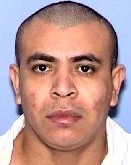
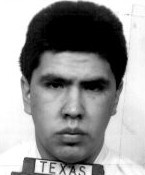
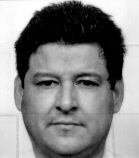
Walter Sorto
Murderer Robert Martines Perez
Murderer · USA · 1994
Name: Robert Martines Perez · Other name used in proceedings: Robert Martinez P…
15 victims
Robert Martines Perez
Murderer · USA · 1994
Name: Robert Martines Perez · Other name used in proceedings: Robert Martinez P…
15 victims
 Billy Frank Vickers
Murderer · USA · 1993
Billy Frank Vickers Vickers was executed by lethal injection in Texas on Januar…
14 victims
Billy Frank Vickers
Murderer · USA · 1993
Billy Frank Vickers Vickers was executed by lethal injection in Texas on Januar…
14 victims
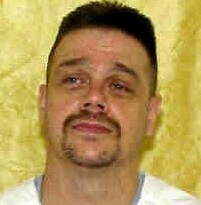 William Sapp
Murderer · USA
William Sapp was convicted of rape, kidnapping, and aggravated murder with deat…
3 victims
William Sapp
Murderer · USA
William Sapp was convicted of rape, kidnapping, and aggravated murder with deat…
3 victims
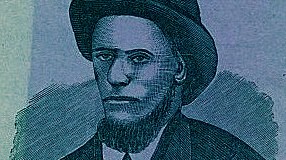 Joseph LaPage
Murderer · USA · 1874
Joseph LaPage was described as a French-Canadian trapper who donned a bearskin…
2 victims
Joseph LaPage
Murderer · USA · 1874
Joseph LaPage was described as a French-Canadian trapper who donned a bearskin…
2 victims
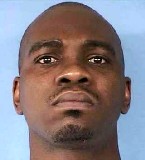 Kelvin Jordan
Murderer · USA · 1995
Kelvin Jordan (also known as Kelvin L. Jordan) was convicted of capital murder…
2 victims
Kelvin Jordan
Murderer · USA · 1995
Kelvin Jordan (also known as Kelvin L. Jordan) was convicted of capital murder…
2 victims
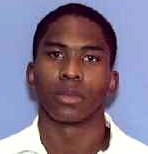 Christopher Solomon
Homicide · USA · 1997
Christopher Julian Solomon (TDCJ Number 999311) was born on 01/30/1980. He was…
1 victim
Christopher Solomon
Homicide · USA · 1997
Christopher Julian Solomon (TDCJ Number 999311) was born on 01/30/1980. He was…
1 victim
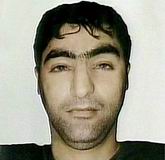 Farda Gadirov
Murderer · Azerbaijan · 2009
Farda Gadirov (also given as Farda Asad oglu Gadirov; Azeri: Fərda Qədirov; Geo…
12 victims
Farda Gadirov
Murderer · Azerbaijan · 2009
Farda Gadirov (also given as Farda Asad oglu Gadirov; Azeri: Fərda Qədirov; Geo…
12 victims
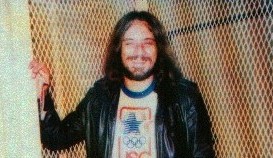 John Plath
Murderer · USA · 1978
John Plath John Plath was executed by lethal injection in South Carolina on Jul…
1 victim
John Plath
Murderer · USA · 1978
John Plath John Plath was executed by lethal injection in South Carolina on Jul…
1 victim
- Gender
- male
- Country
- USA
- Location
- Harris County, Texas, USA
- Date of birth
- August 10, 1977
- Age at first offence
- 25
- Characteristics
- kidnapping, rape
- Victim profile
- Maria Rangel and Roxana Capulin
- Method of murder
- Shooting
- Date(s) of murder
- May 31, 2002
- Years active
- 2002
- Date of arrest
- August 21, 2002
- Status
-
Sentenced to death
Sentenced to death on December 11, 2003
Case details
Name: Walter Alexander Sorto TDCJ Number: 999465 Date of Birth: 08/10/1977 Gender: Male Race: Hispanic Hair Color: Black Height: 05'07" Weight: 170 Eye Color: Brown Native County/State: El Salvador Education Level: 12 Prior Occupation: Laborer Prior Prison Record: None Age at time of receiving: 26 Date received: 12/11/2003 Date of offense: 05/31/2002 Age at offense: 24 County: Harris Race and gender of victims (charged murders):
- Maria Rangel — Hispanic/Female
- Roxana Capulin — Hispanic/Female
Co-defendants named in the incident:
- Edgardo Cubas
- Eduardo Navarro (described as a juvenile)
Timeline
- 05/31/2002 — Maria Rangel and Roxana Capulin worked at El Mirador restaurant on Canal Street in Houston; Sorto and co-defendants Cubas and Navarro kidnapped the two women, sexually assaulted them, and shot them in the head, resulting in their deaths.
- 06/01/2002 — Roxana Capulin’s car was found in the morning; police found the bodies inside the car.
- 01/18/2002 — Extraneous murder occurred involving fifteen-year-old Esmeralda Alvarado.
- 08/20/2002 — Deputy Miguel Gonzalez contacted by a confidential informant with information about the murders; Gonzalez and Detective Alejandro Ortiz met with the informant and Sorto at a Marriott hotel room at about 7:30 p.m.
- 08/21/2002 — At about 1:00 a.m., Detective Ortiz discovered an outstanding warrant for Sorto’s arrest on a motion to adjudicate stemming from aggravated robbery probation; later at about 7:30 a.m., Sorto was taken before a magistrate and given statutory warnings; officers continued Miranda warnings in Spanish during the evening and into the late evening.
- 08/22/2002 — Sorto was charged with the capital murders of Maria Rangel and Roxana Capulin; at 5:59 p.m., Officer Rodriguez notified the Salvadoran consulate by fax that Sorto had been detained on capital murder charges.
- 12/11/2003 — Sorto’s date received listed as 12/11/2003 (age at receiving listed as 26).
- 11/2003 — Sorto was convicted in November 2003 of capital murder.
- 12/11/2003 — Trial court sentenced appellant to death following the jury’s answers to the special issues during the punishment stage.
- 12/11/2003 — Delivered opinion indicates punishment sentence and direct appeal posture following conviction.
The offence
On the evening of May 31, 2002, Maria Rangel and Roxana Capulin worked at El Mirador restaurant on Canal Street in Houston. Roxana’s husband testified that Roxana called him at about 10:00 p.m. to tell him that she was closing the restaurant and would be coming home soon. The cook, Gabriel Mello, testified that he left at about 10:15 p.m. and that Maria Rangel and Roxana Capulin stayed behind to close the restaurant.
Ruben Limon testified that he drove by the restaurant at around 11:15 p.m. and saw two men and two women outside. Limon testified that one woman was putting a chain around the door and the other woman was standing nearby talking to one of the men. Limon identified the second man at trial as Walter Alexander Sorto, who was talking on a pay phone. Limon further testified he observed a “red truck” parked outside the restaurant.
When Roxana did not arrive home by 10:30 p.m., Roxana’s husband called the restaurant. When no one answered, he drove to the restaurant to look for her. Upon arriving, he saw that Roxana’s maroon Dodge Durango was gone, the restaurant lights were off, and the restaurant door was chained but unlocked. Maria Rangel’s husband later arrived; they entered the restaurant and found no one inside.
Police later found Roxana Capulin and Maria Rangel dead inside Roxana’s Dodge Durango on the morning of June 1, 2002. Duct tape was found on the victims: Maria Rangel had duct tape on her hands and wrists and over her eyes and mouth; Roxana Capulin had duct tape over her eyes and mouth. The medical examiner testified that:
- Maria Rangel died from two gunshot wounds to her head.
- Roxana Capulin died from a single gunshot wound to her head.
Police recovered a bullet and three cartridge casings from inside the car. The medical examiner also recovered bullet fragments from Roxana Capulin’s head during the autopsy. The firearms expert testified that all three bullets could have been fired from the same 9-millimeter firearm.
Charged theory and indictment framing
Sorto was indicted for intentionally and knowingly causing the deaths of Maria Rangel and Roxana Capulin by shooting them with a firearm during the same criminal transaction.
The charge authorized the jury to convict Sorto on three theories of capital murder:
- as a principal,
- as a party under Section 7.02(a) of the Texas Penal Code, or
- as a conspirator under the law of parties in Section 7.02(b) of the Texas Penal Code.
Because the jury verdict could be sustained under any authorized theory, the appellate analysis addressed sufficiency under at least one theory.
The charge authorized conviction as a party if the jury found beyond a reasonable doubt that, with the intent to promote or assist the commission of the capital murder offense, Sorto “solicited, encouraged, directed, aided or attempted to aid Edgardo Cubas to commit the [capital murder] offense . . . .”
Investigation
Harris County Sheriff’s Deputy Miguel Gonzalez testified that over two months later, on August 20, 2002, he was contacted by a confidential informant with information about the murders. Gonzalez and Detective Alejandro Ortiz met with the informant and Sorto at a Marriott hotel room at about 7:30 p.m. that evening.
Deputy Gonzalez testified that during that meeting, Sorto said he had information regarding the women who were abducted from El Mirador restaurant and that he needed the $5,000 Crimestoppers reward money because his wife was pregnant. Sorto stated that Edgardo Cubas and Eduardo Navarro (described as a juvenile) had abducted and murdered the victims. Sorto said Cubas and Navarro had invited him to go along that night; he said he declined their invitation and followed them instead.
Sorto stated that he parked across the street from the restaurant, saw Cubas and Navarro abduct the women, then followed to a remote location and parked nearby; he said he left after hearing gunshots. He also stated that after returning to public activity, Cubas threatened to kill him and his family if Sorto told anyone what he had seen.
Detective Ortiz originally viewed Sorto as a witness to the double murder and asked whether Sorto and the informant would continue the interview at the Harris County Sheriff’s homicide division office; they agreed. Sorto drove himself and the informant to the office. Upon arrival at about 9:45 p.m., Detective Ortiz and a Detective Brown conducted a videotaped interview with Sorto.
In this videotaped interview, Sorto again stated he witnessed the abduction from across the street. He said Navarro stayed in Cubas’s Honda Accord while Cubas talked to the women outside the restaurant, then Cubas got into a Dodge Durango with the women and Navarro followed as they drove away. Sorto said he followed them to a second location about one hundred twenty feet away. He described Cubas and the women remaining parked in the Durango for about thirty minutes. Sorto stated that one woman got out and tried to run away but Cubas caught her, put her back inside, and that Sorto saw Cubas had a pistol and a large roll of tape. Sorto stated Cubas fired three shots into the Durango. He stated he left and Navarro saw him as he drove away.
During that interview, Detective Ortiz asked if Sorto would agree to provide a saliva sample; after consent, Sorto added that he, Cubas, and Navarro left the club and returned to the scene, where Cubas forced him to have sex with Maria Rangel’s body.
Detective Ortiz testified that he took Sorto into custody after learning of an outstanding warrant for Sorto’s arrest at approximately 1:10 a.m. Sorto agreed to show Ortiz where Cubas and Navarro lived. They left the homicide division office at 2:05 a.m. and returned at 3:10 a.m. At 7:30 a.m., Sorto was taken before a magistrate, who gave statutory warnings. Sorto was taken to the Houston Police Department homicide division office, where he was interviewed by Officers Jesus Sosa and Heraclio Chavez.
Arrest
Detective Ortiz testified that Ortiz took Sorto into custody at approximately 1:10 a.m. after learning of an outstanding warrant for Sorto’s arrest at that time. Sorto later agreed to show Detective Ortiz where Cubas and Navarro lived.
Trial
Conviction
Sorto was convicted in November 2003 of capital murder. During the punishment stage, the jury answered special issues, and the trial court sentenced Sorto to death.
Issues raised on direct appeal
Sorto appealed and raised sixteen points of error; the appellate court stated it would affirm.
Sufficiency of evidence on intent to kill
In point of error two, Sorto argued the evidence was legally insufficient to prove he intended to kill the victims. The appellate court described the sufficiency standard and held the evidence was sufficient.
The appellate court described evidence at trial:
- Maria Rangel and Roxana Capulin were working at El Mirador restaurant and stayed behind to close.
- Witnesses observed two men and two women outside the restaurant, with Sorto identified as one man talking on a pay phone.
- Roxana Capulin’s Dodge Durango disappeared and later was found with the bodies inside on June 1, 2002.
The court also described Sorto’s videotaped statements and the DNA evidence:
- Sorto’s DNA profile was consistent with DNA profile of sperm found on Rangel’s clothing and in her vagina.
- Cubas’s DNA profile was consistent with DNA profile of sperm found on Capulin’s panty hose and in her mouth.
The court also described evidence of the extraneous murder of fifteen-year-old Esmeralda Alvarado on January 18, 2002, including DNA evidence and Sorto’s videotaped admission of participation.
Sorto’s arguments relied on the claim that he denied any intent to kill by urging Cubas to let the victims go and by leaving when Cubas shot them. The appellate court stated that the jury could believe or disbelieve portions of Sorto’s statements and concluded a rational jury could find intent elements beyond a reasonable doubt.
Jury instructions on lesser-included offense
In point of error one, Sorto asserted the trial court erroneously refused to instruct the jury on the lesser-included offense of aggravated kidnapping. The appellate court applied a two-pronged test to determine entitlement to lesser-included instructions and held that aggravated kidnapping was not included within the proof necessary to establish capital murder as charged. Point of error one was overruled.
Law of parties instruction
In point of error three, Sorto argued the trial court erred by instructing the jury on parties theory of liability because the law of parties was not pled in the indictment, alleging Sixth Amendment and due process issues. The appellate court held Sorto’s trial objection did not preserve the issue for review and also stated that law of parties need not be pled in the indictment. Point of error three was overruled.
Vienna Convention issues
In points of error four, five, and six, Sorto argued consular notification rights under the Vienna Convention were violated, including suppression of videotaped statements, failure to charge under article 38.23, and requesting a new punishment trial as a remedy.
The appellate court laid out the Vienna Convention framework and addressed:
- the State’s arguments about standing, the record showing, and lack of causal connection or prejudice,
- the meaning of “without delay” and the timing of consular notification,
- and concluded Texas authorities complied with obligations under Article 36 and that Sorto failed to show causal connection or prejudice.
The appellate court stated that Sorto’s fourth, fifth, and sixth points of error were overruled.
Article 38.23 instruction on voluntariness
In point of error seven, Sorto argued the trial court erroneously refused an Article 38.23 jury instruction on voluntariness of his statements. The appellate court held Sorto failed to establish a factual issue requiring the instruction and overruled point of error seven.
Extraneous offence evidence: Esmeralda Alvarado (January 18, 2002)
The appellate court described the State’s admission of extraneous murder evidence at the guilt phase.
Victim and sequence
The State presented evidence of Sorto’s involvement in the extraneous murder of Esmeralda Alvarado, a fifteen-year-old, on January 18, 2002. Her boyfriend, Osiel Blanco, testified that she came over to his house to watch television and went outside to use a nearby pay phone at about 9:30 p.m. When Blanco went outside about ten minutes later, she was gone. Her body was found four days later. The medical examiner testified she died from a gunshot wound to the head.
DNA evidence and statements
Sorto was included as a possible contributor of DNA obtained from sperm found in Alvarado’s anus. Cubas’s DNA profile was consistent with sperm found in Alvarado’s vagina.
Sorto admitted his involvement in Alvarado’s murder in a videotaped interview with Detectives Chavez and Ortiz. In that admission, Sorto stated:
- he and Cubas were driving around in a truck belonging to Cubas’s father,
- they passed by a young girl talking on a pay phone,
- Cubas said he wanted to have sex with her, turned the truck around, and went back,
- Cubas forced the girl at gunpoint to get into the back seat and Sorto got into the back seat with her,
- Cubas tied a rag over the girl’s eyes and drove them to a deserted area,
- Sorto stayed in the truck while Cubas raped her,
- when they returned to the truck, Sorto made her get into the back seat and Sorto raped her,
- they planned to leave her but she yelled, “Hey, don’t leave me here,”
- they allowed her back into the truck and she asked them to drop her off near her home,
- Cubas drove away but then decided to take her back to where they had raped her,
- they got out and Cubas made her perform oral sex on him,
- Cubas shot her in the head,
- and Sorto and Cubas got into the truck and drove away.
In point of error fifteen, Sorto challenged the admission of this evidence under Rules 404(b) and 403; the appellate court overruled point of error fifteen.
Statements (videotaped accounts)
The appellate court described two different versions Sorto gave in videotaped statements.
First videotaped interview (as presented at trial)
In the videotaped interview conducted on the evening of August 20, 2002, Sorto described himself as a follower and witness to the abduction. He described seeing tape and a pistol and seeing Cubas fire three shots into the Durango. He also described returning to the scene after saliva sampling and stating that Cubas forced him to have sex with Maria Rangel’s body.
Second videotaped statement (after custody and Miranda)
The appellate court described a later videotaped statement in which Sorto gave a different narrative.
In the later videotaped statement, Sorto said Cubas picked him up in Cubas’s Honda Accord at about 8:30 p.m. and they picked up fourteen-year-old Navarro. Sorto said he and Cubas went to bars while Navarro waited in the car while they looked for a bar that would admit Navarro. Sorto said Cubas had a 9-millimeter Beretta pistol and wanted to commit a robbery because he needed money to pay rent.
Sorto stated that while they were driving on Canal Street, they saw two women coming out of a restaurant. Cubas parked in a nearby parking lot, got out, approached the women from behind as they walked toward the Durango, motioned for Sorto to come over, and made Roxana Capulin give Sorto the keys. Sorto stated Roxana Capulin sat in the back seat with Cubas, Maria Rangel sat in the middle seat, and Sorto drove the vehicle. Sorto stated that as he drove to an area near “Dixie and Wayside,” Cubas placed tape over the eyes and mouths of the women and bound Maria Rangel’s hands with tape.
Sorto stated Cubas wanted to sexually assault Roxana Capulin and told Maria Rangel “to get down from the truck” when they stopped. Sorto stated Maria Rangel fell out onto the ground. Sorto stated he got out of the car and Cubas stayed inside with Roxana Capulin. Sorto stated that when Maria Rangel later got too close to the car, Cubas pointed the gun at her and told her to take her clothes off. Sorto stated Cubas told Sorto “to fuck her by force,” and Sorto “gave her like 3 thrusts” and ejaculated. Sorto stated he “fixed . . . her pants” and put her back inside the Durango, where Cubas was forcing Roxana Capulin to perform oral sex on him.
Sorto stated he told Cubas to let the women go, drove the car a short distance, then turned it off, left the key in the ignition, got out, and started walking away. Sorto stated that while he was walking to the Accord where Navarro was waiting, he heard three shots from the direction of the Durango. Sorto stated Cubas then came running toward him and they got into the Accord with Navarro and left.
Sorto stated that when he asked Cubas what happened to the women, Cubas said, “I killed them whores.” Sorto stated Cubas showed him a chain that belonged to one of the victims and said he had taken money and jewelry from the women. Sorto stated Cubas dropped him and Navarro off at the apartment complex where they both lived at about 12:05 a.m.
Sentencing
Punishment-stage procedure and death sentence
The jury answered special issues during punishment, and the trial court sentenced Sorto to death. The appellate decision stated that the trial court sentenced appellant to death pursuant to the jury’s answers to special issues during the punishment stage.
Requested sentencing instruction relating to a single juror’s “No”
In point of error sixteen, Sorto argued the trial court erred by refusing to grant a charge at sentencing about the effect of a single juror’s “No” vote to the future dangerousness question. The appellate court upheld the constitutionality of Article 37.071, Section 2(a)(1) and stated Sorto was not entitled to have jurors informed of the effect of failure to agree on the future dangerousness special issue. Point of error sixteen was overruled.
Appeals
Sorto appealed his conviction and sentence by raising sixteen points of error.
The appellate court:
- overruled point of error two on sufficiency of intent,
- overruled point of error one regarding lesser-included aggravated kidnapping instruction,
- overruled point of error three regarding law of parties indictment pleading,
- overruled points of error four, five, and six on Vienna Convention issues,
- overruled point of error seven on Article 38.23 voluntariness instruction,
- overruled points of error eight, nine, and ten on Apprendi/Ring punishment charge arguments,
- overruled point of error eleven on denial of an evidentiary hearing on cruel and unusual punishment related to administration of death penalty chemicals,
- overruled points of error twelve, thirteen, and fourteen on international conventions and treaties,
- overruled point of error fifteen on admission of extraneous offense evidence,
- and overruled point of error sixteen on the requested instruction about a single juror’s “No” vote on future dangerousness.
The appellate court stated it affirmed the trial court’s judgment.
Aftermath / result
The appellate court stated: “We affirm the judgment of the trial court.”
The opinion was delivered by Cochran, J., and the direct appeal was described as automatic. Meyers, J. did not participate.
Spotted an error, or have more information about this case?