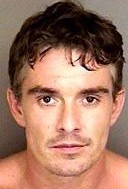
Jeremy Jones
Serial killer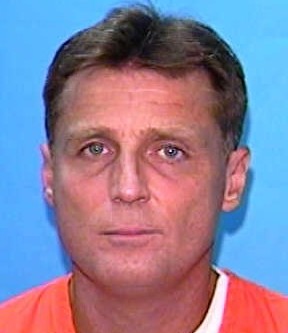 Glen Edward Rogers
Serial killer · USA · 1993
Glen Edward Rogers was a spree killer whose cross-country rampage in 1994-95 le…
70 victims
Glen Edward Rogers
Serial killer · USA · 1993
Glen Edward Rogers was a spree killer whose cross-country rampage in 1994-95 le…
70 victims
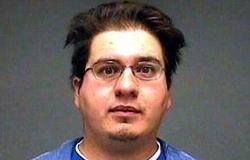 Efren Saldivar
Serial killer · USA · 1989
Efren Saldivar (born 30 September 1969) was an American serial killer who murde…
50 victims
Efren Saldivar
Serial killer · USA · 1989
Efren Saldivar (born 30 September 1969) was an American serial killer who murde…
50 victims
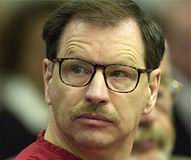 Gary Ridgway
Serial killer · USA · 1982
Gary Leon Ridgway Ridgway was born 18-February-1949 in Salt Lake City, UT. He w…
49 victims
Gary Ridgway
Serial killer · USA · 1982
Gary Leon Ridgway Ridgway was born 18-February-1949 in Salt Lake City, UT. He w…
49 victims
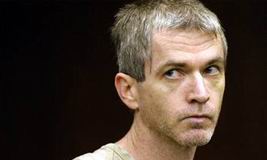 Charles Cullen
Serial killer · USA · 1984
Charles Cullen (born February 22, 1960) was a former nurse and the most prolifi…
45 victims
Charles Cullen
Serial killer · USA · 1984
Charles Cullen (born February 22, 1960) was a former nurse and the most prolifi…
45 victims
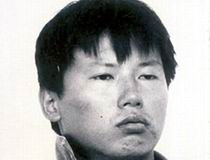 Charles Ng
Serial killer · USA · 1983
Charles Chi-Tat Ng (Chinese: 吳志達/吴志达; born December 24, 1960) was a Chinese-Ame…
25 victims
Charles Ng
Serial killer · USA · 1983
Charles Chi-Tat Ng (Chinese: 吳志達/吴志达; born December 24, 1960) was a Chinese-Ame…
25 victims
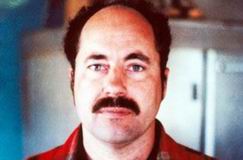 Leonard Lake
Serial killer · USA · 1983
Leonard Lake (October 29, 1945 – June 6, 1985) was an American serial killer. H…
25 victims
Leonard Lake
Serial killer · USA · 1983
Leonard Lake (October 29, 1945 – June 6, 1985) was an American serial killer. H…
25 victims
 Roberto Succo
Serial killer · Italy / France · 1981
Roberto Succo, also known as Roberto Zucco (April 3, 1962 – May 23, 1988), was…
7 victims
Roberto Succo
Serial killer · Italy / France · 1981
Roberto Succo, also known as Roberto Zucco (April 3, 1962 – May 23, 1988), was…
7 victims
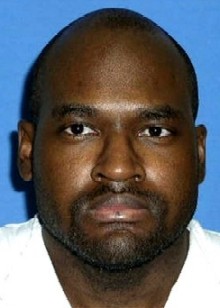 Sean Derrick O'Brien
Murderer · USA · 1993
Name: Sean Derrick O'Brien Sean Derrick O'Brien was executed by lethal injectio…
2 victims
Sean Derrick O'Brien
Murderer · USA · 1993
Name: Sean Derrick O'Brien Sean Derrick O'Brien was executed by lethal injectio…
2 victims
 Andrea Roberts
Murderer · USA · 2007
Andrea Roberts was a 41-year-old stay-at-home mother. Her husband, Michael Lewi…
3 victims
Andrea Roberts
Murderer · USA · 2007
Andrea Roberts was a 41-year-old stay-at-home mother. Her husband, Michael Lewi…
3 victims
 Leung Ying
Mass murderer · USA · 1928
Leung Ying (also known as Loy Yeung, Wong Gay, and Lim Onn) pleaded guilty to k…
11 victims
Leung Ying
Mass murderer · USA · 1928
Leung Ying (also known as Loy Yeung, Wong Gay, and Lim Onn) pleaded guilty to k…
11 victims
- Gender
- male
- Country
- USA
- Location
- Kansas/Alabama/Georgia/Louisiana, USA
- Date of birth
- April 12, 1973
- Age at first offence
- 19
- Characteristics
- rape
- Victim profile
- Women aged between 16 and 44 years
- Method of murder
- Shooting / St abbing with knife
- Date(s) of murder
- 1992 - 2004
- Years active
- 1992–2004
- Date of arrest
- September 19, 2004
- Status
-
Sentenced to death
Sentenced to death in Alabama on November 29, 2005
Case information
- Name: Jeremy Jones
- Aliases/identities mentioned: John Paul Chapman
- Age (as stated): 27-year-old (at the time he was wanted in Oklahoma), 32-year-old (in Alabama proceedings)
STATUS / legal outcome
Jeremy Jones was sentenced to death in Alabama on November 29, 2005. He was convicted of capital murder in the 2004 rape and shooting death of a Mobile County woman, Lisa Nichols, and the jury recommended the death penalty.
Background
Jeremy Jones was wanted in Oklahoma on a rape charge and described himself as trying “to change” and “wanted a new life.” He told detectives he thought “the law had it in for him.” He had prior rape charges in 1996, including one where he allegedly fired a gun to threaten a woman; those charges were reduced and he was given probation. He had to attend sex-offender classes, which he hated, and told his mother: “I don't want to listen to those perverts talk.” He was described as a “gregarious sweet-talker” who bragged he could “talk the panties off a nun.”
Jones described a methamphetamine habit and increasingly aberrant behavior. He told detectives: “It's easier to look in the rearview mirror than to face your problems.” Police said he confessed to killing at least 21 people in a string of murders spanning 12 years and five states; he was described as a serial killer on the path to new prey. At the time of the Alabama capital-murder case, authorities said the number of possible linked killings ranged from 10 to 20, and investigations were ongoing.
Jones also was described as having hepatitis C. He said a doctor in Georgia told him four years earlier that if he didn’t get treatment for the disease and kept using drugs and alcohol, he would be dead in a matter of years.
The offence
Capital murder in Alabama: rape, shooting, and burning (Lisa Nichols)
Jones was convicted of capital murder in the 2004 rape and shooting death of Lisa Nichols, described as 44-year-old and of Turnerville, and as living alone in a rural home near Bentley. The attack occurred in September 2004 during a hurricane blackout after Hurricane Ivan struck the area. According to testimony, the body was splashed with gasoline and burned, and Nichols was shot three times in the head.
In closing arguments, Assistant Attorney General William Dill told jurors: “Blame the dead guy. A guy who can't come in here and defend himself,” and said the truth was that Jones “hates women,” adding: “He's a coward,” and “A vicious murderer.” Assistant Attorney General Don Valeska characterized statements in a taped phone call as not being manipulated and told jurors: “There is no reasonable doubt in this case.”
Charged or investigated Alabama case-related rape-murder context
The case included official charges and investigative links beyond the Nichols case, including other murders in Georgia and New Orleans. Jones was also described as being a suspect in additional unsolved killings connected to alleged confessions.
Investigation and evidence
Detectives spent “hundreds of hours” listening to Jones’s “rambling confessions,” and they found his stories to be a mixture of truth and fantasy. Sgt. Mitch McRae stated: “We spent hours and hours talking about hunting and fishing and girls,” and described Jones as bragging about conquests and affairs, adding: “A lot of that stuff was not true.” Another statement by McRae described the killings in terms of enjoyment: “He grew to enjoy [the killing],” and that “It was as addictive as the meth.”
Mobile County sheriff’s Detective Paul Burch and Sgt. Mitch McRae spent hours with Jones, and McRae said: “He controls them; we cannot control him.” He added: “Nobody, absolutely nobody will ever get the truth. He sugarcoats everything. He just runs all over the place.”
Forensic and courtroom evidence referenced
In the Nichols murder trial, the strongest evidence described by prosecutors was blood on Jones’s clothing that matched the victim’s blood. Prosecutors also presented a taped phone call from Dec. 10, 2004 between Jones and Mark Bentley, in which Jones admitted killing Nichols while high on drugs.
A mannequin’s head and pointers were used in court by Dill, held before the jury with pointers showing the “.25-caliber bullet entries.”
Arrest and pre-trial proceedings
At the time of Alabama arrest on Sept. 21, 2004, Jones was using an alias: John Paul Chapman. Authorities said he later was determined to be a Missouri prisoner. He had been wanted in Oklahoma for rape and for failure to register in 1997 as a sex offender, and he also had 1992 burglary and theft charges in Missouri.
Jones had been arrested multiple times in Georgia, and the FBI’s national computer database failed to detect he was wanted. Jones commented on the fingerprint system: “That little fingerprint system they have is a joke.”
Two mental evaluations of Jones were conducted, and the judge ruled Jones mentally competent to stand trial. Jones opposed a media request for cameras in the courtroom. Circuit Judge Charles Graddick agreed to exclude cameras from the courtroom at Jones’s request, denied a motion for a change of venue after reviewing poll results of potential jurors, and ruled on admissibility of taped statements.
Trial
Jury findings and deliberations
The jury convicted Jones of capital murder in the Nichols case. The jury also recommended death.
- A Mobile County jury recommended the death penalty in the Nichols case.
- Jurors deliberated for about two hours in reaching the verdict.
- A jury vote was reported as 10-2 recommending death.
Jones showed little emotion as verdicts were read. Nichols’s daughter Jennifer Murphy and other family members wept quietly. Murphy said: “This was our goal. We've accomplished our goal.” She also said the hard part was over: “The hard part is over.”
Sentencing
Sentencing date and decision
Circuit Judge Charles Graddick scheduled sentencing for Dec. 1 after the jury recommendation.
On November 29, 2005, Jones was sentenced to death in Alabama.
Appeals
Jones told the Mobile Register by telephone from Mobile County Metro Jail that he believed he may not live long enough for execution and that ill health may prevent him from helping investigators solve other crimes. He also stated he would win his case on appeal and denied he killed anybody in Georgia or any place else, saying: “One day I'll be a free man,” and “I'll write me a book and laugh my ass off.”
Other charges and related matters mentioned in case narrative
Oklahoma case connections involving Danny and Kathy Freeman and missing daughters
The narrative described an Oklahoma case involving Danny and Kathy Freeman who were found shot to death in their burning trailer in 1999 in Welch. Their 16-year-old daughter and her best friend were described as missing. Jones told investigators he took the girls to rural southeastern Kansas, killed them, and dumped their bodies in an abandoned mine, but “their bodies have never been found.”
Jones also was described as having told Oklahoma authorities he drugged or was involved in matters including statements about other individuals, and as being investigated in relation to unsolved cases.
Georgia case: Amanda Greenwell
Jones was charged with the 2004 slaying of Amanda Greenwell, 16, in Douglas County. Jones told detectives he killed her; her remains were found in April 2004. A family member, William Mayberry, the brother of Tina Mayberry, also discussed family impact and sought proof of Jones’s involvement in alleged murders.
Georgia case: Patrice Endres (hairdresser, disappearance)
Jones was claimed to have kidnapped, raped, and killed Patrice Endres, 38, a hairdresser. She disappeared from her Forsyth County salon. Jones was alleged to have gotten lost driving and happened upon her isolated business; he asked for directions and then took advantage of the situation. He claimed he kidnapped her and brought her to Douglas County, raped and killed her, and dumped her body by a creek; she has not been found.
Georgia case: Tina Mayberry (killed outside Douglasville bar)
Jones told investigators he stabbed and killed Tina Mayberry, described as a 38-year-old woman, outside a Douglasville bar in 2002.
Her stepfather Kenneth Timms believed Jones and said Jones had “new information known only to the killer,” stating: “He had new information known only to the killer,” and quoting from Timms’s view of the confession: “She fought furiously. In his confession he said, 'She whipped my ass.' ”
Tina Mayberry’s killing was described as involving stabbing after leaving a bar in Douglasville on October 31, 2002; police said someone stabbed her to death after leaving a bar.
New Orleans case: Katherine Collins (prostitute)
Jones was charged with killing Katherine Collins, described as a 45-year-old New Orleans prostitute, and as February 2004. New Orleans police said Jones confessed to stabbing and strangling her and dumping her body in a vacant lot near the French Quarter. An article published in the New Orleans Times-Picayune was quoted as saying that while New Orleans detectives were questioning Jones, “he 'began furiously picking at sores on his face and neck, symptoms of his advanced case of hepatitis C.' ”
New Orleans case-related descriptions in Alabama trial narrative
Jones also reportedly was charged in New Orleans and Georgia in addition to Alabama, and investigators described him as a suspect linked to multiple killings.
Confessions, interviews, and recantation
Jones was described as controlling interviews and shifting accounts, with investigators unable to determine what was true and what was fantasy. Mobile County sheriff’s Detective Paul Burch said: “He controls them; we cannot control him,” and “He just runs all over the place.” Another quote attributed to McRae described details about hunting and fishing and girls and stated Jones’s bragging about affairs and other claims were not true.
Jones later claimed his confessions were “hogwash,” and said he played the system to get special meals and phone privileges and meetings with his mother and girlfriend.
A recorded phone call in jail included Jones saying:
- “It was like a nightmare, I was in a movie”
- “I was higher than I had ever been in my whole life”
The closing included a taped Dec. 10, 2004 phone call between Jones and former friend Mark Bentley in which Jones admitted killing Nichols while high on drugs. Additional quoted dialogue in that exchange included:
- Bentley: “I thought I knew you, but I don't.”
- Jones: “You knew me. You just didn't know me on drugs,”
Jones also testified in the Nichols trial and shifted blame to the victim’s neighbor; Defense attorney Greg Hughes described that as “covered up” the killing and argued: “That's not capital murder,” adding that “They were slicking him,” and that investigators “manipulated” Jones while he was “messed up” on drugs. Hughes also said Jones felt he could “improve his living situation.” Hughes said Jones was removed from his cell, taken off suicide watch, and given food and phone access in exchange for details on the killing, stating: “They were slicking him.”
Other people
Victim and victim’s relatives (Alabama)
- Lisa Nichols, 44 (Turnerville; Mobile County woman; raped, shot three times in the head, body splashed with gasoline and burned)
- Jennifer Murphy (Nichols’s daughter), who hugged prosecutors after hearing the jury’s penalty decision and said: “This was our goal. We've accomplished our goal.” and “The hard part is over.”
- Jennifer Murphy also gave a quote about justice: not repeated elsewhere beyond the cited statements.
People connected to Jones in the Nichols case
- Mark Bentley (homebuilder; allowed Jones to stay in his home; prosecution witness)
- Kim Bentley (Bentley’s wife; described as feeling violated and worried after learning of allegations; she said: “We were a family,” and “He wanted to fit in with it all. He did. He fit in with everybody he met.”)
- Vicki Freeman (girlfriend; present during trial; reached out to Jones; Freeman’s first date description appears in narrative)
- Jeanne Beard (Jones’s mother; seated in courtroom next to his girlfriend; said: “He's a good boy.” and “I only have two sons.”)
Investigators and attorneys
- Detective Paul Burch (Mobile County sheriff’s detective)
- Sgt. Mitch McRae (Mobile County sheriff’s sergeant)
- Judge Charles Graddick (Mobile County Circuit Court Judge scheduled to pronounce sentence)
- Assistant Attorney General William Dill (prosecutor in closing arguments; described as saying “If ever anybody deserved the death penalty it's Jeremy Jones”)
- Assistant Attorney General Corey Maze (told jurors aggravating circumstances warranted death)
- Assistant Attorney General Don Valeska (helped convict Jones; prosecutor who told jurors “There is no reasonable doubt in this case”)
- Don Valeska also was quoted as saying he was not aware of hepatitis C treatment issues related to Jones.
- Habib Yazdi (one of two court-appointed attorneys defending Jones during Nichols trial)
- Greg Hughes (defense attorney)
Other named people in narrative
- Melissa Tucker (registered nurse, director of epidemiology at Mobile County Health Department)
- Christina Bowersox (Mobile County Sheriff’s Office spokeswoman)
- Troy King (Alabama Attorney General)
- Jack Tillman (Mobile County Sheriff)
- Dateline Producer Marsha Bartel
- Dateline correspondent Victoria Corderi
- Victoria Corderi described FBI fingerprint failures; the quote about the FBI botched fingerprint I-D was included.
Hepatitis C and medical / jail care
Jones said he had hepatitis C diagnosed about four years earlier while working at an oil refinery in Douglasville, Georgia. He said the jail refused treatment and contended: “The jail has never offered to treat me,” and later said “They want the governor to sign my death warrant, and if they don't treat my hepatitis I could die in a couple of years,” adding: “That's f----d up. It's just suicide two years down the road.”
Melissa Tucker explained transmission and risks and stated that even if hepatitis C develops into chronic liver disease, there is only a slim “1- to 5-percent” chance that the person may die.
Christina Bowersox stated: “no inmate is refused medical care at Metro Jail.” Jones agreed to sign a waiver allowing the Register to review his health records; as of Wednesday, the records had not been received from Correctional Medical Services.
Habib Yazdi said Jones told him Jones had hepatitis C; Don Valeska stated he was not aware of whether Jones may or may not be infected.
Timeline
- 1992 — Jones said he stalked, tried to rape, and then stabbed to death Jennifer Bryan Judd in her Baxter Springs, Kansas apartment.
- 1996 — Jones faced 1996 rape charges, including one where he allegedly fired a gun to threaten a woman; the charges were reduced and he received probation.
- 1999 — Jones said a couple was found shot to death in their burning trailer; the Freeman couple’s 16-year-old daughter and her best friend were missing.
- December 1999 — Freeman couple were found dead in their burned mobile home in Welch; their 16-year-old daughter and best friend were still missing.
- December 2000 — Jones was wanted in Oklahoma on a rape charge and fled.
- April 2002 — Jones approached Douglasville man Craig Baxter in May 2002, which was preceded by being beaten up and needing cash (the narrative states “two months later, in May 2002”).
- October 31, 2002 — Police said Tina Mayberry was stabbed to death after leaving a bar in Douglasville; Jones later confessed to killing her.
- September 2003 — Jones and Vicki Freeman moved into an apartment in Villa Rica.
- October 2003 — Villa Rica police arrested Jones for allegedly exposing himself to Brittney Godfrey.
- 2004 — Two separate disappearance and murder events were described: Amanda Greenwell disappeared and her body was found in April 2004; Patrice Endres disappeared from her Forsyth County salon in April 2004.
- Sept. 17, 2004 — Jones raped and shot three times and burned Lisa Nichols after Hurricane Ivan’s blackout.
- Sept. 21, 2004 — Authorities arrested Jones.
- Dec. 10, 2004 — Jones made a phone call from jail in which he admitted killing Lisa Nichols while high on drugs.
- Feb. 2004 — Katherine Collins’s body was found in New Orleans; Jones was charged in relation to her slaying.
- Oct. 26, 2005 — Jurors found Jones guilty of capital murder in the September 2004 rape and slaying of Lisa Nichols.
- October 28, 2005 — A jury voted 10-2 recommending the death penalty.
- Nov. 30, 2005 — Reporting described sentencing as scheduled by Judge Charles Graddick for Dec. 1 and included discussion of prosecutor arguments.
- November 28, 2005 — Reporting described Jones’s hepatitis C condition and his allegations about lack of treatment.
- November 29, 2005 — Jones was sentenced to death in Alabama.
Other details
- Arrests and computer database failure: After arrests in Georgia in 2003 and 2004, the FBI national computer database failed to detect Jones (posing as Chapman) was wanted; the FBI was investigating the foul-up.
- Identity assistance: Jones met the mother of a Missouri inmate in a bar in Joplin, Mo. She lent him her son’s identity; he studied his new birth date and Social Security number during the bus ride.
- Mobile County detectives and jail: Jones was held without bail at Mobile County Metro Jail.
- Family and community relationships in Alabama narrative: Jones stayed with the Bentleys after a bounty hunter tracked him down; Bentley hired him and let him stay at his trailer.
- Villiers and courtroom details: Jones blocked cameras in the courtroom when he went to trial; Graddick excluded cameras at Jones’s request.
- Claims of a different killer: Jones told media earlier in the year that another man who was staying at the same residence where he was living in Mobile County killed Nichols and he came across the murder just after it took place and saw the other man with “a smoking gun.”
- Claims about stalking and victim profile: McRae said Jones was “a stalker; he gets excited about his victims” and described it as enjoying killing like “a 10-point buck,” and “It was as addictive as the meth.”
- Missing victims mentioned: Patrice Endres “has not been found,” and the Freeman girls “their bodies have never been found,” including references that “the bodies were never found” and “the body was never found” in the Oklahoma case narrative.
Spotted an error, or have more information about this case?