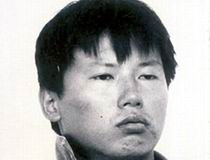
Charles Ng
Serial killer Carl Eugene Watts
Serial killer · USA · 1974
Carl Eugene Watts (born November 7, 1953; died September 21, 2007), also known…
100 victims
Carl Eugene Watts
Serial killer · USA · 1974
Carl Eugene Watts (born November 7, 1953; died September 21, 2007), also known…
100 victims
 Rodney Alcala
Serial killer · USA · 1977
Rodney James Alcala (born August 23, 1943) was also known as Rodrigo Jacques Al…
100 victims
Rodney Alcala
Serial killer · USA · 1977
Rodney James Alcala (born August 23, 1943) was also known as Rodrigo Jacques Al…
100 victims
 Glen Edward Rogers
Serial killer · USA · 1993
Glen Edward Rogers was a spree killer whose cross-country rampage in 1994-95 le…
70 victims
Glen Edward Rogers
Serial killer · USA · 1993
Glen Edward Rogers was a spree killer whose cross-country rampage in 1994-95 le…
70 victims
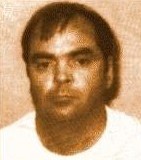 Donald Leroy Evans
Serial killer · USA · 1975
Donald Leroy Evans (born July 5, 1957) was an American serial killer who murder…
60 victims
Donald Leroy Evans
Serial killer · USA · 1975
Donald Leroy Evans (born July 5, 1957) was an American serial killer who murder…
60 victims
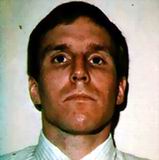 Michael Swango
Serial killer · USA · 1981
Michael Swango (Joseph Michael Swango) was a physician and American serial kill…
60 victims
Michael Swango
Serial killer · USA · 1981
Michael Swango (Joseph Michael Swango) was a physician and American serial kill…
60 victims
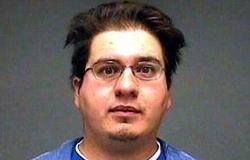 Efren Saldivar
Serial killer · USA · 1989
Efren Saldivar (born 30 September 1969) was an American serial killer who murde…
50 victims
Efren Saldivar
Serial killer · USA · 1989
Efren Saldivar (born 30 September 1969) was an American serial killer who murde…
50 victims
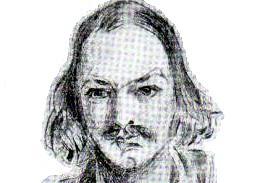 Thomas Wainewright
Murderer ? · United Kingdown / France · 1828
Thomas Wainewright was also known as Thomas Griffiths Wainewright. He was born…
4 victims
Thomas Wainewright
Murderer ? · United Kingdown / France · 1828
Thomas Wainewright was also known as Thomas Griffiths Wainewright. He was born…
4 victims
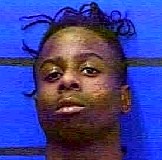 Jessie Campbell
Murderer · USA · 2000
Jessie Campbell was sentenced to death on August 16, 2007. Jessie Campbell shot…
2 victims
Jessie Campbell
Murderer · USA · 2000
Jessie Campbell was sentenced to death on August 16, 2007. Jessie Campbell shot…
2 victims
 Anthony Joe LaRette
Serial killer · USA · 1977
Anthony Joe LaRette was convicted of capital murder and sentenced to death for…
3 victims
Anthony Joe LaRette
Serial killer · USA · 1977
Anthony Joe LaRette was convicted of capital murder and sentenced to death for…
3 victims
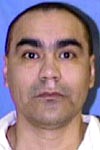 Jesus Ledesma Aguilar
Murderer · USA · 1995
Jesus Ledesma Aguilar was convicted in Texas state court of capital murder and…
2 victims
Jesus Ledesma Aguilar
Murderer · USA · 1995
Jesus Ledesma Aguilar was convicted in Texas state court of capital murder and…
2 victims
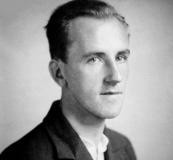 Hans Vollenweider
Murderer · Switzerland · 1940
Hans Vollenweider was born in 1908 in Zurich. He was last in Switzerland. Volle…
3 victims
Hans Vollenweider
Murderer · Switzerland · 1940
Hans Vollenweider was born in 1908 in Zurich. He was last in Switzerland. Volle…
3 victims
- Gender
- male
- Country
- USA
- Location
- Calaveras County, California, USA
- Date of birth
- December 24, 1960
- Age at first offence
- 23
- Characteristics
- torture, rape, robbery
- Victim profile
- Harvey Dubs, his wife Deborah and infant son, Sean / Lonnie Bond Sr., his wife, Brenda O'Connor, and his infant son, Lonnie Bond Jr. / Clifford Peranteau / Jeffrey Gerald / Michael Carroll / Kathleen Allen / Scott Stapley
- Method of murder
- Shooting
- Date(s) of murder
- 1983 - 1985
- Years active
- 1983–1985
- Date of arrest
- July 6, 1985 (in Canada)
- Status
-
Sentenced to death
Sentenced to death on May 3, 1999
Case record: Charles Ng
Background
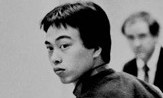
Charles Chi-Tat Ng (Chinese: 吳志達/吴志达; born December 24, 1960) was a Chinese-American serial killer who was suspected, with Leonard Lake, of murdering between 11 and 25 victims at Lake's ranch in Calaveras County, California.
Ng was born in Hong Kong in 1960, the son of a wealthy company executive. As a child, Ng was harshly disciplined and abused by his father. As a teenager, Ng was described as a troubled loner and was expelled from several schools. When he was arrested for shoplifting at age 15, his father sent him to Bentham Grammar boarding school in Yorkshire, England. He was expelled for stealing from other students and returned to Hong Kong. He later moved to the United States and entered Notre Dame de Namur University, but he dropped out after only one semester.
Ng enlisted in the United States Marine Corps in early 1980, but after serving less than a year he was dishonorably discharged for theft of heavy weaponry and machine guns from MCAS Kaneohe Bay. He was further charged with escape from confinement and attempted desertion, though the desertion charge was dropped. Ng was convicted on the remaining charges and was sentenced to 14 years in a military prison. He was released in late 1982, when his sentence was commuted.
Ng met Leonard Lake in 1983 and the two were suspected of murdering between 11 and 25 victims at Lake's ranch in Calaveras County, California.
The offence
Ng and Leonard Lake were suspected of murdering multiple victims at Lake's ranch in Calaveras County, California. They filmed themselves raping and torturing their victims.
In the trial evidence, jurors were shown videotapes depicting violent sexual assaults and torture, including:
- Leonard Lake describing an intention to enslave youthful girls.
- A scene in which Ng cut off Brenda O'Connor’s brassiere after tearing off a red-and-white baseball shirt.
- A warning to a captive that she could “cry and stuff like all the rest of them,” but “it won’t do you no good,” because “we’re pretty cold-hearted.”
- A depiction of Kathleen Allen with her hands tied behind her back, listening in terror to Ng telling her he would “put a round through her head” if she did not submit to their perversions.
Investigation
The crimes became known in 1985 when Lake committed suicide after being arrested and Ng was caught shoplifting at a hardware store. Police searched Lake's ranch and found human remains. Ng was identified as Lake's partner in crime.
Police searched the Honda Prelude and found a .22-caliber revolver equipped with a silencer.
Authorities also later found skeletal remains, fragmented bones, teeth, and partial remains of missing men, women, and children at and around Lake's Wilseyville bunker, along with evidence including jewelry, rotted clothing, driver’s licenses, and other items.
The investigation involved linking video equipment and evidence to missing individuals and matching individuals named in connection with the ranch and tapes. The investigation included references to victims identified as alive from the tapes, others remaining missing, and additional remains uncovered during the search.
Evidence and items found during the initial investigation
After Ng was taken into custody for questioning, police discovered bloodstains on the front passenger’s seat of the Honda, a bullet hole above it near the sun visor, and two spent shell casings under the seat.
Paul Cosner, 39, the original owner of the Honda, had disappeared on November 2, 1984 after telling his girlfriend he was meeting with “a weird looking guy” to show him the car. He was never seen again.
Among the property found in the vehicle were several bank and credit cards and other documents in the name of Robin Scott Stapley, and a Pacific Gas and Electric bill in the name of Claralyn Balasz. The address shown on the bill was a post office box in Wilseyville, California.
On June 3, 1985, detectives went to interview Balasz. Balasz stated that the Wilseyville address related to a cabin her father owned near San Andreas, Calaveras County. Balasz and her mother, Gloria Eberling, led detectives to the cabin after meeting at a grocery store on Highway 88. The cabin was found relatively easily despite Balasz’s earlier direction that it was remote and hard to locate.
At the cabin, officers found bullet holes in a living room ceiling and in the kitchen floor, a four-poster bed with electrical cords tied to each of its posts, heavy eyebolts bolted through the floor at each corner of the bed, and a 250-watt floodlight fastened to the wall. Officers also found women’s lingerie with dark red stains and a second mattress under the first mattress, which appeared heavily stained with what looked like dried blood. Serial numbers on audio duplicating equipment had been erased. The audio equipment belonged to Harvey Dubs, who, with his wife and baby son, had disappeared on July 24, 1984.
The investigation also included an incinerator with thick fireproof walls capable of withstanding extreme temperatures.
Statements and quoted material during the search and investigation
Sheriff Ballard told journalists: “Vicious, Vicious, vicious.”
California Highway Patrol officer Bill Claudino told: “People started locking their doors and listening for noises and wondering who lives next door.”
Terry Parker, who filled in as an elected coroner when he was not operating the area's only two mortuaries, said: “When we started digging, we didn't have a clue what we were getting into, but more and more evidence kept turning-up, a bone here, a shoe there, an entire body in a ditch. It got to the point where you were thinking: 'Am I walking on someone's remains now? There could be more under every rock. How much longer could this go on?”
Clifford Parenteau’s disappearance and $400 winning in a Superbowl pool was discussed in connection with the indictment and missing victims.
Clues from video and photographs included references to victims being identified, some remaining missing, and others being found alive. The investigation included publication efforts with fifteen of 21 photographs released to the news media in hopes that relatives or friends would come forward to identify bodies.
State Attorney General John Van de Kamp said: “Unless we can locate Ng and get him to talk, the chances are slim that we'll never know everything that went on out there,” and also stated: “It has become a case so overwhelming, so enormous and so gruesome that our computer system hasn't been able to keep up with it.”
Arrest
Ng was arrested on July 6, 1985 by the Calgary Police Service after resisting arrest for shoplifting at The Bay department store.
Security guards John Dolyle and George Forster spotted Ng slipping a bottle of soda water under his coat. When they attempted to arrest him, Ng pulled a .38-caliber Cobra. A scuffle occurred and Doyal’s finger was shot off. Calgary, Alberta police arrived and subdued Ng.
A California driver’s license identified him as Charles Chitat Ng.
Ng was housed at the Calgary Remand Centre and placed under 24-hour suicide watch.
Court proceedings and trial
After a long extradition battle in Canada, Ng stood trial in the United States.
Extradition and pretrial
Ng’s extradition took multiple stages following a Canadian court decision. Ng was extradited to the United States in September 1991 for capital murder after the Canadian Supreme Court allowed it.
Ng’s trial began on Monday, October 26, 1998, in the 11th floor of the Orange County Courthouse.
The prosecution included Deputy Attorney General Sharlene Honnaka and Calaveras County District Attorney Peter Smith. Bill Kelley, an assistant Orange County public defender, represented Ng. Robert Fitzgerald presided as the judge.
The trial involved 12 jurors and six alternates.
Charges and verdict
Ng stood trial on 12 counts of murder. He was convicted on February 11, 1999, of 11 murders—six men, three women, and two male infants.
The jury deliberated 15 hours over a three-day period before finding Ng guilty of murdering all but one of 12 victims.
Ng was found guilty and the penalty phase proceeded.
Quotes and statements in opening and trial material
In the opening statements, Deputy Attorney General Sharlene Honnaka said: “Leonard Lake and Charles Ng planned and committed the murders charged in this case.”
Bill Kelley stated in his opening statement: “I'm not saying Charles Ng is an angel,” and also said: “He's certainly not that. That's apparent. But he's charged with murder here, remember -- ending people's lives, not cutting off their clothes.”
Kelley also stated after the verdict that he believed Ng’s decision not to take the witness stand sealed his fate: “When our client decided against our wishes to take the witness stand we felt tactically that wasn't a particularly wise choice on his part,”
In his opening statement, Kelley also said: “Leonard Lake and Charles Ng planned and committed the murders charged in this case,” was said by Honnaka, and in Kelley’s statement Kelley characterized the defense position that Lake alone killed the 12 victims Ng was being charged with murdering.
During the trial, jurors were shown multiple videotape segments, including:
- A quote attributed to Ng in the context of threatening Kathleen Allen: he would “put a round through her head.”
- A quote attributed to Ng in the context of telling Brenda O'Connor: “You can cry and stuff like all the rest of them, but it won't do you no good. We're pretty cold-hearted,”
- A quote attributed to Leonard Lake describing his aim to enslave women: “What I want is an off-the-shelf sex partner,” “ I want to be able to use a woman any way I want. And when I'm bored, I want to be able to simply put her away.”
Ng cursed the judge and the legal system during proceedings in August 1998; the prosecutor said Ng was trying to manipulate the legal system, and one defense attorney said it was evidence of Ng's mental illness.
Ng fired two different defense teams, sued the state over his temporary detainment at Folsom State Penitentiary, and waged a costly court battle over whether he should be allowed to do origami in his holding cell; he lost.
Ng was also caught hiding escape paraphernalia at Folsom State Penitentiary.
Ng challenged four judges assigned to his case, resulting in the removal of three of them. During the course of his trial, he went through 10 attorneys, including some who later defended him a second time.
After losing trust and confidence in Kelley, Judge Robert Fitzgerald allowed Ng to represent himself, delaying the trial another year as Ng studied law and petitioned for changes, after which Kelley was reinstated.
On March 20, 1998, Ng asked Judge Ryan to replace Kelley with Michael Burt, who already represented him on a charge of killing a cab driver in 1985; the deal fell through when Burt refused to say if he would be available by September 1.
On April 20, Ng decided he wanted to represent himself again, but Judge Ryan refused. Ng filed a malpractice suit against two of his former lawyers and filed motions to delay trial.
A reporter said: “After Ng, California's legal system should be placed on trial.”
Alameda County District Attorney Tom Orloff told a talk show audience: “This is just one of those situations where you have a defendant intent on using every mechanism for delay,” and “In a case like this, the system has to return the same kind of focus to stop it from continuing.”
In August 1998, Judge Ryan ended Ng’s legal charade and accused him of “playing games within games within games.”
On July 15, Ng tried for another postponement, claiming that his glasses were “the wrong prescription” and his personal computer was not fully programmed, hampering his defense. Judge Ryan denied the motion and scheduled pretrial hearings to begin on August 21.
At the time of trial, the California cost of the proceeding was approximately $20 million, characterized as the most expensive trial in California's history.
Sentencing
On Monday, May 3, 1999, the jury recommended that Charles Ng be executed for his role in the murders of 11 people.
He had been sentenced to death on May 3, 1999.
Kelley struggled to convince jurors in the penalty phase that Ng’s life was worth saving.
Ng’s father and mother flew in from Hong Kong to testify in his behalf. Ng’s father testified that he mistakenly enforced severe punishment on his son believing it would make him a better citizen. Both parents pleaded for his life.
Ng addressed the jurors against the advice of his lawyers.
Appeals and later status
Ng was described as currently on death row at San Quentin State Prison.
Other details
Initial shoplifting incident and Lake’s suicide
On the “hazy morning of June 2, 1985,” Southern San Francisco police received a routine call about a shoplifting incident involving a $75 vice taken from a store. Officers later encountered a bearded man at the wheel of a tan 1980 Honda Prelude. Police found a .22 revolver equipped with a silencer inside the trunk.
Officer Daniel Wright responded to the call. The clerk pointed out the vice in the trunk and told Wright that another man had placed it there before running off. Wright checked the Honda’s registration and was informed it belonged to a Buick registered in the name of Lonnie Bond. Wright was told the man’s identification was in the name of Robin S. Stapley.
Wright described the suspect as older than the age on the license. Wright asked: “Don't you know it's illegal to carry a silenced weapon.”
The man replied: “It's not mine, it belongs to Lonnie. I just use it to shoot beer cans.”
Wright told the man: “You're under arrest,” and asked: “What for?”; the man replied: “Owning an illegal weapon.”
After handcuffing the man and placing him in the rear of the car, Wright took him to South City police station and interrogated him. Wright asked about the possessions found, including a travel receipt in the name of Charles Gunnar, and asked: “Who's Gunnar,” and the man then wrote a note for his wife.
The man said: “I didn't think a lousy bench vise would bring me to this.”
When Wright asked him to repeat what he said, the man continued: “My friend's name is Charlie Chitat Ng, Chitat, pronounced Cheetah and Ng, pronounced Ing.”
The man told Wright his real name was Leonard Lake and that he was a fugitive wanted by the FBI.
Without further speech, Lake took something from his shirt lapel and placed it in his mouth. Within seconds his eyes rolled back and he went into convulsions. Wright called for help and checked the prisoner’s pulse. Police later discovered Lake had taped two cyanide capsules to the underside of his shirt lapel.
Lake was transported to a hospital and died after being on life-support machines.
Other named individuals and missing persons discussed in connection with the case
The narrative included numerous individuals linked to disappearances and evidence:
- Paul Cosner, 39 (car owner; disappeared on November 2, 1984)
- Robin S. Stapley, 26 (found to have been missing)
- Harvey Dubs and his wife Deborah Dubs and infant son, Sean (Dubs family disappeared; disappearance linked to equipment)
- Brenda O'Connor, husband Lonnie Bond, and their son Lonnie Bond Jr. (disappeared)
- Kathleen Allen (linked to videotapes)
- Mike Carroll (linked to Allen; served time at Leavenworth and later collaborated)
- Randy Jacobson, 34 (linked to remains)
- Donald Giuletti, 38 (disc jockey; found shot three times)
- Cheryl Okoro, 26 (linked to remains)
- Maurice Wock, 38 (linked to remains)
- Clifford Parenteau, 24 (identified on videotapes; linked to missing list)
- Jeff Gerald (drummer; 25-year-old)
- Sunnyvale photographer Jeffrey Askern (linked to vehicle abandoned near the cabin)
- Charles Gunnar was discussed as a travel receipt name and as an alias; Lake’s earlier “best man” reference was described as related to missing persons
- Other unnamed “missing” victims were also discussed, with some counts cited in the narrative (including estimates of missing women and overall victim counts), alongside statements that some bodies were found alive and others remained missing.
Relationships and aliases
The narrative described numerous aliases and identities in connection with individuals:
- Ng was associated with the alias “Mike Kimoto.”
- Lake was described as using an alias “Charley Gunner” and also being known as “Gunnar.”
- “Stapley” was associated with the driver’s license and a person described as a founder of San Diego's Guardian Angels chapter.
- Additional pseudonyms and identity details were discussed in relation to Ng’s fugitive period and communications.
Spotted an error, or have more information about this case?