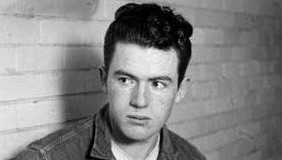
William Edward Hickman
Murderer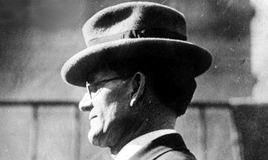 William Hale
Murderer · USA · 1921
Name: William Hale · Known as: the so-called "King of the Osage Hills" · Occupa…
24 victims
William Hale
Murderer · USA · 1921
Name: William Hale · Known as: the so-called "King of the Osage Hills" · Occupa…
24 victims
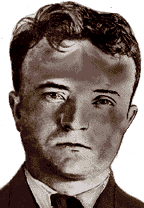 Paul Jaworski
Murderer · USA · 1926
Paul Jaworski was born in Poland as Paul Poluszynski in 1900. He later immigrat…
20 victims
Paul Jaworski
Murderer · USA · 1926
Paul Jaworski was born in Poland as Paul Poluszynski in 1900. He later immigrat…
20 victims
 Edward Adams
Murderer · USA · 1920
Edward J. "Eddie" Adams was born in 1887 on a farm in Hutchinson, Kansas as W.J…
7 victims
Edward Adams
Murderer · USA · 1920
Edward J. "Eddie" Adams was born in 1887 on a farm in Hutchinson, Kansas as W.J…
7 victims
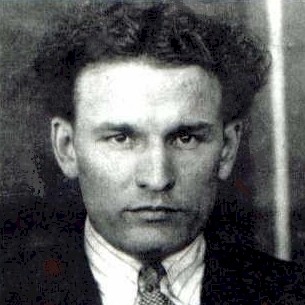 William Kenneth Wagner
Murderer · USA · 1924
William Kenneth (Kinnie) Wagner (born February 18, 1903 in Scott County, VA) wa…
6 victims
William Kenneth Wagner
Murderer · USA · 1924
William Kenneth (Kinnie) Wagner (born February 18, 1903 in Scott County, VA) wa…
6 victims
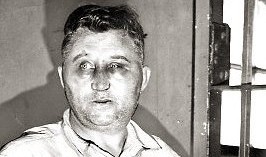 Harry Powers
Murderer · USA · 1931
Harry Powers was executed by hanging on March 18, 1932, at the West Virginia Pe…
5 victims
Harry Powers
Murderer · USA · 1931
Harry Powers was executed by hanging on March 18, 1932, at the West Virginia Pe…
5 victims
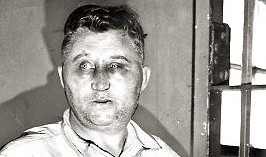 Herman Drenth
Murderer · USA · 1931
Herman Drenth was also known by the aliases Harry F. Powers and Cornelius O. Pi…
5 victims
Herman Drenth
Murderer · USA · 1931
Herman Drenth was also known by the aliases Harry F. Powers and Cornelius O. Pi…
5 victims
 Eva Coo
Murderer · USA · 1934
Eva Coo was an American murderer who was executed by electric chair at Sing Sin…
1 victim
Eva Coo
Murderer · USA · 1934
Eva Coo was an American murderer who was executed by electric chair at Sing Sin…
1 victim
 Miyuki Ishikawa
Murderer · Japan · 1944
Miyuki Ishikawa (石川 ミユキ, Ishikawa Miyuki; born 1897; date of death unknown) was…
169 victims
Miyuki Ishikawa
Murderer · Japan · 1944
Miyuki Ishikawa (石川 ミユキ, Ishikawa Miyuki; born 1897; date of death unknown) was…
169 victims
 Eva Rablen
Murderer · USA · 1929
Eva Rablen was accused in 1929 in Northern California of getting rid of her dea…
1 victim
Eva Rablen
Murderer · USA · 1929
Eva Rablen was accused in 1929 in Northern California of getting rid of her dea…
1 victim
 Daniel Jon Peterka
Murderer · USA · 1989
Daniel Jon Peterka was born on 09/09/67. The case was in the First Judicial Cir…
1 victim
Daniel Jon Peterka
Murderer · USA · 1989
Daniel Jon Peterka was born on 09/09/67. The case was in the First Judicial Cir…
1 victim
 Henry Lee Moore
Serial killer · USA · 1911
Henry Lee Moore was sentenced to life in prison in Missouri in 1913. He was rel…
26 victims
Henry Lee Moore
Serial killer · USA · 1911
Henry Lee Moore was sentenced to life in prison in Missouri in 1913. He was rel…
26 victims
- Gender
- male
- Country
- USA
- Location
- Los Angeles, California, USA
- Date of birth
- 1908
- Age at first offence
- 18
- Characteristics
- kidnapping, dismemberment
- Victim profile
- A 24-year-old man ( druggist) / Marion Parker, 12 (daughter of Perry Parker, a prominent banker in Los Angeles)
- Method of murder
- Shooting / Strangulation
- Date(s) of murder
- 1926 - 1927
- Years active
- 1926–1927
- Date of arrest
- December 22, 1927
- Status
-
Executed
Executed by hanging at San Quentin Prison on October 19, 1928
Case details
William Edward Hickman was a man who tried to solve his financial problems by kidnapping.
The offence
William Edward Hickman abducted Marion Parker, a 12-year-old girl, from Mount Vernon Junior High School in Los Angeles. He called himself “The Fox” in communications connected to the kidnapping.
Hickman took Marion after telling the registrar Mary Holt that Perry Parker had been seriously injured in an accident and wanted to see his daughter. Hickman posed as an employee of the bank where Perry Parker worked as assistant cashier.
Hickman then demanded money for several days, with all communications signed with names including “Fate,” “Death,” and “The Fox.” Telegrams connected to the kidnapping were signed by “George Fox.” A first note demanded a ransom of $1,500 in $20 gold certificates.
A first attempt to deliver the ransom failed because Hickman saw police in the area. Continued communications set up a new meeting to exchange ransom at the corner of 5th Avenue and South Manhattan Street in Los Angeles.
On the exchange date, Perry Parker arrived alone at the place with the ransom money. Parker handed the money to a young man waiting in a parked car. As soon as the money was exchanged, Hickman drove off and pushed Marion’s body out of the car at the end of the street.
Her body was mutilated:
- Her arms and legs were cut off.
- Her internal organs were removed.
- A towel was stuffed into her body to absorb blood.
- Her eyes were wired open so as to appear alive.
- Her body was disemboweled and stuffed with rags.
- Her arms and legs were later found wrapped in newspaper in Elysian Park.
- The autopsy revealed she had been dead for about 12 hours.
- The autopsy stated there were no signs of sexual assault.
- The coroner was unable to determine a cause of death and assumed it was either asphyxiation or loss of blood.
Hickman later said he strangled Marion and cut her throat first, and he believed she was still alive when he began to dismember her.
Hickman also said he originally had no intention of killing Marion, but killed her because she had learned his identity and because he had previously been employed by her father at the bank. He said he cut up the body with the intention of disposing of it, and later realized that the father would want to see his daughter before paying the ransom. He then attempted to reconstruct and disguise the body to appear alive.
Investigation
A massive manhunt began for Marion Parker’s killer. Over 20,000 police officers and American Legion volunteers participated.
A reward was offered for identification and capture of the killer:
- $50,000 was offered for the identification and capture of the killer, dead or alive.
Suspicions settled on William Edward Hickman.
Several years before the abduction, Hickman had been arrested on a complaint by Perry Parker regarding stolen and forged checks. Hickman was convicted and served prison time.
Police traced a laundry mark on a shirt found with Marion’s body to an apartment house in Los Angeles. Police questioned a man named Donald Evans, who matched Hickman’s description. Evans allowed police to search his apartment but no evidence was found and police left. Evans later disappeared and was later identified as Hickman.
Investigators also relied on other evidence:
- The getaway car used at the ransom exchange had been found by police and identified as stolen weeks earlier in Kansas City.
- Investigators had Hickman’s fingerprints on file from his previous arrest and incarceration.
- The fingerprints matched prints found on the ransom notes and on the getaway car.
- During a second, more complete search of Evans’s flat, criminalists found human blood in the apartment.
Arrest and capture
About a week after Marion’s murder, officers Tom Gurdane and Buck Lieuallen found Hickman in Echo, Oregon and recognized him from wanted posters. He was extradited back to Los Angeles.
Hickman confessed to another murder committed during a drug store hold-up and to many other armed robberies.
During extradition and confinement, Hickman pursued an insanity defence:
- He told his attorneys he had killed Marion on the directive of a supernatural being called Providence.
- This was described as one of the first insanity pleas on behalf of an accused killer in California, and it failed to convince the jury that he was insane.
Hickman was arrested in Pendleton, Oregon. Before arrest, a man matching Hickman’s description passed one of the marked $20 bills in a store in Seattle, and another turned up in Portland, Oregon.
Hickman confessed to kidnapping Marion but blamed her murder on a man who was actually in jail during the time of the crime. No accomplice was ever identified. The man Hickman blamed had an alibi and was in jail at the time of the abduction.
At the time of his arrest, Hickman said he planned the kidnapping because he wanted money for college.
He also told a newspaperman: “Don’t you think I will get as much publicity as Leopold and Loeb?”
Trial
Hickman went on trial in Los Angeles. He used a California law allowing pleas of not guilty by reason of insanity.
The trial included psychiatric testimony from multiple “alienists,” and numerous witnesses testified regarding Hickman’s mental state while in custody, including that he appeared rational.
Hickman’s comments included statements about the judge and capital punishment. He said: “He won’t hang me. He doesn’t believe in capital punishment,” and later: “But I guess I’ll throw a fit for him in court anyway.”
Hickman’s mother testified that “insanity ran in the family.”
A detective told about riding with Hickman back from Oregon, and Hickman asked about the judge who would hear his case.
During the trial, jurors were asked to decide whether Hickman was sane or insane at the time of the offence.
Hickman made two suicide attempts to emphasize his insanity plea, but he failed and was found guilty.
The jury found Hickman was sane at the time of the offence.
Hickman was sentenced to death by hanging.
When asked how he felt about the verdict, Hickman said: “The state won by a neck.”
Appeals
In February 1928, a jury rejected Hickman’s claim and he was sentenced to hang. He appealed the conviction.
The law and verdict were upheld by the California Supreme Court.
The California Supreme Court held: “The rule relating to the defense of insanity does not shift the burden of proof from the People to the defendant,” and added: “But only shifts the burden of introducing evidence and declares the amount or quantum of evidence which he must produce to overcome the presumption (of sanity) and show his insanity.”
Outcome
William Edward Hickman was executed by the State of California on October 19, 1928 by hanging at San Quentin Prison.
Victim details
Marion Parker was also known as Marian in some reports. She was born in 1915 and died December 17, 1927, at age 12. She had a twin sister named Marjorie.
Her father was Perry Parker, described as a prominent banker in Los Angeles. The victim’s mother is not separately identified in the provided facts. Marion’s kidnapping and murder were associated with communications signed “George Fox” and “Fox” by Hickman during the course of the case.
Other details
Ransom and exchange communications
Telegram communications received by the Parker family warned Perry Parker not to interfere with the kidnapper’s plans and told the family to expect further communication and ransom demands. They were signed by “George Fox.”
A note header used in communications was: “Δ ε α τ η” which was meant to spell the word “Death” using Greek characters.
In one note, Hickman wrote: “Fox is my name, very sly you know,” and: “Get this straight. Your daughter’s life hangs by a thread and I have a Gillette ready and able to handle the situation.”
In another note, Hickman demanded $1,500 in $20 gold certificates and wrote: “Fox-Fate.”
Marion’s plaintive note to her parents was included in the communications. The note begged her parents to comply and warned that Hickman had already threatened to kill her. Marion wrote: “Please, Daddy, I want to come home tonight,” as a postscript, and the note was signed: “Your loving daughter, Marion Parker.”
On December 17, Hickman blamed Parker for the failure to complete the exchange and wrote: “I will be two billion times as cautious and clever, as deadly from now on,” “You have brought this on yourself and you deserve it and worse.”
He also wrote: “A man who betrays his love for his own daughter is a second Judas Iscariot - many times more wicked than the worst modern criminal.”
He wrote: “If you want aid against me, ask God, not man,”
He included another note from Marion as part of the communications.
Statements associated with the ransom exchange
Perry Parker recalled being approached at the ransom exchange location and said: “He pointed a gun at me and said ‘You know what I’m here for. No monkey business,’”
Parker also said: “I said ‘Can I see my little girl?’”
Parker said: “Hickman pointed to a tightly tied package in the car that revealed only Marion’s head.”
Parker said: “He said she was sleeping,” and: “I assumed she had been chloroformed.”
Parker later described the exchange and what he observed in the car, saying he could see Marion sitting in the passenger seat wrapped up to her neck and “apparently unable to move.”
Perry Parker also said witnesses observed him pick Marion up and cry out in grief after Hickman drove off and pushed out her body.
People named in the case
- Mary Holt was the registrar who interacted with Hickman at the school and testified during trial.
- Perry Parker was Marion Parker’s father and participated in the ransom exchange.
- Donald Evans was the man questioned by police at an apartment house who matched Hickman’s description, and who was later identified as Hickman.
- Edgar Rice Burroughs wrote multiple commentary pieces about the trial and included quotations and statements, including:
- “The crowd was there, too -- most of it on Templestreet across the way from the Hall of Justice.”
- “Hickman is a moral imbecile and moral imbecility is not insanity.”
- “I am like the state—what is good for me is right,” attributed to Hickman in the provided facts.
- “The state won by a neck,” which was Hickman’s own remark at sentencing.
- Asa Keyes appeared in commentary as a person in the trial setting.
- Judge Trabucco was described in commentary as presiding in the courtrooms referenced.
- George Contreras was described in commentary as chief of detectives for the district attorney’s office.
- Dr. Wagner was referenced as an autopsy surgeon in commentary.
- Welby L. Hunt was referenced in commentary.
- Frank R. Peck was referenced in commentary.
- Ol' Doc Keyes was referenced in commentary.
- Michael Newton was referenced as author of an encyclopedia entry in the provided facts.
Influence on Ayn Rand
Hickman was described as an early influence on novelist Ayn Rand. Hickman proclaimed: “I am like the state—what is good for me is right,” which was quoted as admiration by Rand.
The provided facts also stated that Chris Matthew Sciabarra said Rand based the hero of The Little Street—an early unpublished novel—on Hickman’s real-life exploits.
Missing references within the provided facts
Marion Parker’s name appeared as both “Marion” and “Marian” in the provided facts, and some reports were said to misspell her name as “Marian.”
Spotted an error, or have more information about this case?