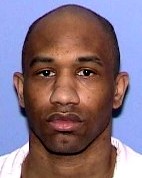
Elijah Joubert
Murderer Robert Martines Perez
Murderer · USA · 1994
Name: Robert Martines Perez · Other name used in proceedings: Robert Martinez P…
15 victims
Robert Martines Perez
Murderer · USA · 1994
Name: Robert Martines Perez · Other name used in proceedings: Robert Martinez P…
15 victims
 Billy Frank Vickers
Murderer · USA · 1993
Billy Frank Vickers Vickers was executed by lethal injection in Texas on Januar…
14 victims
Billy Frank Vickers
Murderer · USA · 1993
Billy Frank Vickers Vickers was executed by lethal injection in Texas on Januar…
14 victims
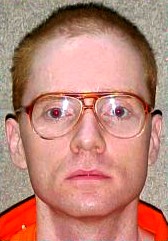 Robert Glen Jones
Murderer · USA · 1996
Defendant: Robert Glenn Jones (ADC#070566) · Co-defendant: Scott Nordstrom (ADC…
7 victims
Robert Glen Jones
Murderer · USA · 1996
Defendant: Robert Glenn Jones (ADC#070566) · Co-defendant: Scott Nordstrom (ADC…
7 victims
 Richard McCroskey
Mass murderer · USA · 2009
Richard McCroskey pleaded guilty. He was sentenced to life in prison on Septemb…
4 victims
Richard McCroskey
Mass murderer · USA · 2009
Richard McCroskey pleaded guilty. He was sentenced to life in prison on Septemb…
4 victims
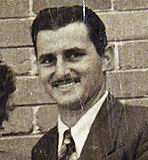 Tony Rawlins
Murderer · Australia · 1955
Tony Rawlins was a former stockman. He was an alcoholic and said he believed “o…
1 victim
Tony Rawlins
Murderer · Australia · 1955
Tony Rawlins was a former stockman. He was an alcoholic and said he believed “o…
1 victim
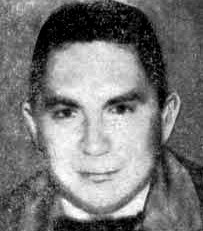 Francisco Paula Gonzales
Mass murderer · USA · 1964
Francisco Paula Gonzales was a passenger on Pacific Air Lines Flight 773. Gonza…
44 victims
Francisco Paula Gonzales
Mass murderer · USA · 1964
Francisco Paula Gonzales was a passenger on Pacific Air Lines Flight 773. Gonza…
44 victims
 Jacques Plumain
Murderer · Germany / France · 1999
Jacques Plumain (né le 14 août 1973, également surnommé le Fantôme de Kehl) was…
2 victims
Jacques Plumain
Murderer · Germany / France · 1999
Jacques Plumain (né le 14 août 1973, également surnommé le Fantôme de Kehl) was…
2 victims
 Christopher Speight
Spree killer · USA · 2010
Christopher Speight was the suspect in the Appomattox shootings, a spree shooti…
8 victims
Christopher Speight
Spree killer · USA · 2010
Christopher Speight was the suspect in the Appomattox shootings, a spree shooti…
8 victims
- Gender
- male
- Country
- USA
- Location
- Harris County, Texas, USA
- Date of birth
- J uly 3, 1979
- Age at first offence
- 24
- Characteristics
- robbery, drugs
- Victim profile
- Charles Clark , 45 (Houston police officer) and Alfredia Jones, 27 ( check-cashing clerk)
- Method of murder
- Shooting
- Date(s) of murder
- April 3, 2003
- Years active
- 2003
- Date of arrest
- —
- Status
-
Sentenced to death
Sentenced to death on January 13, 2005; conviction affirmed on direct appeal with judgment and sentence of death affirmed (delivered October 3, 2007)
Case record: Elijah Joubert
Background
Elijah Joubert was convicted of capital murder in October 2004 and was sentenced to death.
Joubert was the first of three suspects to be tried for the murders of Houston Police Officer Charles Clark and check-cashing clerk Alfredia Jones.
The offence
On April 2, 2003, Dashan Glaspie recruited his longtime friend, the appellant, and another friend, Alfred Brown, to help him commit robbery at a check-cashing business. Glaspie was to act as a lookout while the appellant and Brown went inside. They drove to the business the next morning.
The owner pulled up as the appellant and Brown were approaching. When the owner saw them, he pulled out a handgun. The appellant and Brown returned to the car, and the three decided to abandon the robbery because the owner had displayed a weapon. They decided to rob a different business and drove to a second check cashing location.
When Alfredia Jones arrived to open the store, the appellant approached her at gunpoint and walked her into the store. Shortly thereafter Glaspie and Brown entered the store.
The appellant allowed Jones to make a phone call to another store to inform them that she was "opening Center 24." This was actually a distress code alerting them to the robbery. The appellant held a gun to Jones's head and told her to open the safe, while Glaspie began checking the store for surveillance equipment, and Brown went through Jones's purse.
Police Officer Charles Clark arrived at the scene and entered the store. The appellant accused Jones of tipping off the police, and he shot her. The evidence suggested that Brown shot Officer Clark. Jones and Clark both died as a result of the gunshot wounds.
In the case presented to the jury, the indictment alleged capital murder in either of two ways:
- By causing the death of Jones during the course of committing a robbery of Jones.
- By causing the deaths of Jones and Clark during the same criminal transaction. The jury was authorized to convict the appellant under either paragraph, either as a principal or under the law of parties.
Investigation
Houston Police Officer James Binford interviewed the appellant and Joubert confessed in detail about his involvement in the instant offense. The interview with Binford and another officer was videotaped. The videotaped statement was played for the jury and admitted into evidence.
In the video, the appellant admitted to participating in the instant offense, but he denied shooting either victim. The videotaped statement was found to be sufficient to “tend to connect” him to the offense.
Trial
Prosecution and defence positions
The prosecution’s case was that Joubert and two other men attempted to rob Ace America Check Cashing store. Joubert shot the clerk Alfredia Jones in the head when he realized she had called the police.
Officer Charles Clark was shot in the shoulder as he responded to the call. Clark returned fire, but his gun jammed and one of the other cohorts shot Clark in the head at point-blank range, killing him.
The defense argued that one of the other men shot the clerk and coerced Joubert into participating in the robbery.
Defense attorney Allen Isbell asked the jury to forget about the capital murder charges against Joubert and charge him instead with aggravated robbery. Isbell said: "He participated in the aggravated robbery, he just didn't have a gun or shoot anybody."
The prosecution said Joubert, 25, fired the weapon that killed Jones. A picture of the .44-caliber weapon, which included a laser beam, was shown to jurors.
The defense said Deshon Glaspie was the person who shot the clerk, not Joubert. Isbell said: "I think he's such a liar that he helps us," Isbell said.
Witnesses and co-defendant cooperation
Pursuant to a thirty-year plea bargain, Glaspie testified for the State at the appellant's trial.
Glaspie pleaded guilty to aggravated robbery in exchange for a 30-year sentence and cooperation in testifying against his codefendants. The third suspect, 22-year-old Deshon Glaspie, pointed to both of his friends as the shooters.
Jury findings and sentencing
Jurors found Joubert guilty of capital murder. Jurors deliberated for only one hour before reaching a verdict.
The Court of Criminal Appeals of Texas stated that, based on the jury's answers to the special issues set forth in Code of Criminal Procedure Article 37.071, sections 2(b) and 2(e), the trial judge sentenced the appellant to death.
Appeals
Direct appeal (Court of Criminal Appeals of Texas)
The appellant’s direct appeal was required. The Court of Criminal Appeals of Texas affirmed the trial court’s judgment and sentence of death after reviewing the appellant's seven points of error. The judgment and sentence of death were affirmed. The decision was delivered October 3, 2007.
Points of error addressed by the appellate court
Point of error four: The appellant claimed Glaspie's testimony, as accomplice-witness testimony, was not sufficiently corroborated to support the appellant's conviction as a principal.
Point of error five: The appellant contended Glaspie's testimony was insufficiently corroborated to support his conviction under a parties theory.
The appellate court considered Article 38.14 and held that a conviction cannot stand on accomplice testimony unless there is other evidence tending to connect the defendant to the offense. The court held that corroborating evidence need not be sufficient standing alone to prove beyond a reasonable doubt that a defendant committed the offense and that there needed be only some non-accomplice evidence tending to connect the defendant to the crime.
Houston Police Officer James Binford’s testimony about the appellant’s detailed confession, and the videotaped statement played for the jury, was held sufficient to “tend to connect” the appellant to the offense. The court overruled points of error four and five.
Point of error one: The appellant claimed the trial court erred in overruling his motion to dismiss the indictment for alleged failure to include the special punishment issues, in violation of the right to due process of law. The appellant contended that under Apprendi he was entitled to have the grand jury pass on the special punishment issues before authorizing the State to proceed on a capital murder prosecution. The appellate court overruled point of error one.
Point of error two: The appellant claimed the trial court erred in overruling his motion to dismiss the indictment for alleged failure to include the special punishment issues, in violation of his state constitutional right to indictment by grand jury. The appellate court overruled point of error two.
Point of error three: The appellant claimed the trial court erred in failing to grant his challenge for cause against venireperson Patricia Bloom Wohlgemuth. The appellate court held that a venireperson is not challengeable for cause on the ground that she does not consider a particular type of evidence to be mitigating, and it found that the trial court did not abuse its discretion. Point of error three was overruled.
Point of error six: The appellant claimed the trial court erred in granting the State's motion to prohibit him from arguing that co-defendant Glaspie's thirty-year, plea-bargained sentence was a mitigating factor in assessing his punishment. The appellate court overruled point of error six.
Point of error seven: The appellant claimed the trial court erred by instructing the jury that it could answer special issue two, "Yes," if they found that the appellant had merely anticipated that a death would occur during the underlying robbery. The appellant relied on Enmund v. Florida and Tison v. Arizona. The appellate court held that the argument had been rejected in other cases and overruled point of error seven.
Additional trial-phase ruling described in the appeal
Evidence was presented that Glaspie would receive a thirty-year sentence if he testified truthfully in the appellant's trial. Before summation at the close of the punishment phase, the court ruled that the appellant would not be allowed to argue that Glaspie's sentence was a mitigating circumstance in his case.
Outcome
The appellate court affirmed the trial court’s judgment and sentence of death.
Other details
Clark was killed the day before his 20th anniversary with HPD.
Jones returned to work from maternity leave the day of the shooting.
The jury panel included eight men and six women.
Joubert had a lengthy criminal past, ranging from evading arrest to drug charges to aggravated assault.
People involved
- Elijah Joubert — appellant; convicted of capital murder; sentenced to death.
- Charles Clark — Houston Police Officer, 45; killed.
- Alfredia Jones — check-cashing clerk, 27; killed.
- Dashan Glaspie — recruited participants; lookout; cooperated with prosecutors; testified for the State; pleaded guilty to aggravated robbery in exchange for a 30-year sentence and cooperation.
- Alfred Brown — codefendant; 25-year-old Alfred Dewayne Brown; charged with capital murder for shooting and killing Clark.
- Deshon Glaspie — third suspect, 22-year-old; cooperated with prosecutors; pointed to both friends as the shooters.
- Dan Rizzo — prosecutor.
- Tommy LaFon — prosecutor.
- Allen Isbell — defense attorney.
- Jerome Godinich — defense lawyer.
- Daryl Robertson — lead HPD homicide detective who testified about the crime scene earlier in the trial.
- James Binford — Houston Police Officer who interviewed the appellant; videotaped interview admitted into evidence.
- Patricia Bloom Wohlgemuth — venireperson against whom the appellant challenged for cause.
Spotted an error, or have more information about this case?