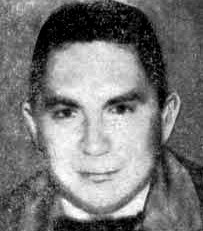
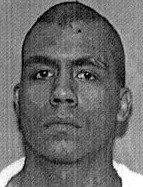
Francisco Paula Gonzales
Mass murderer John Gilbert Graham
Mass murderer · USA · 1955
John “Jack” Gilbert Graham was born on January 23, 1932, at Denver, Colorado. H…
44 victims
John Gilbert Graham
Mass murderer · USA · 1955
John “Jack” Gilbert Graham was born on January 23, 1932, at Denver, Colorado. H…
44 victims
 Thomas Doty
Mass murderer · USA · 1962
Thomas G. Doty was a passenger on Continental Airlines Flight 11. He was a marr…
44 victims
Thomas Doty
Mass murderer · USA · 1962
Thomas G. Doty was a passenger on Continental Airlines Flight 11. He was a marr…
44 victims
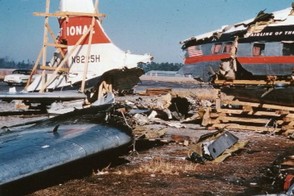 Julian Andrew Frank
Mass murderer · USA · 1960
6 January 1960 — National Airlines Flight 2511 exploded and crashed 1-1/2 miles…
33 victims
Julian Andrew Frank
Mass murderer · USA · 1960
6 January 1960 — National Airlines Flight 2511 exploded and crashed 1-1/2 miles…
33 victims
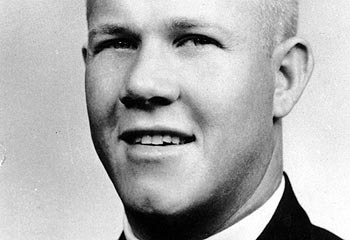 Charles Whitman
Mass murderer · USA · 1966
Charles Joseph Whitman (June 24, 1941 – August 1, 1966) shot and killed 14 peop…
15 victims
Charles Whitman
Mass murderer · USA · 1966
Charles Joseph Whitman (June 24, 1941 – August 1, 1966) shot and killed 14 peop…
15 victims
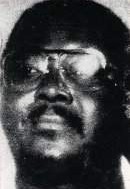 James Edward Pough
Mass murderer · USA · 1971
James Edward Pough (1948 – 18 June 1990) was an American mass murderer. On 18 J…
12 victims
James Edward Pough
Mass murderer · USA · 1971
James Edward Pough (1948 – 18 June 1990) was an American mass murderer. On 18 J…
12 victims
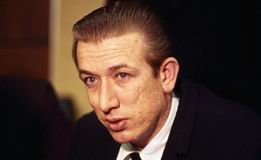 Richard Speck
Mass murderer · USA · 1966
Richard Speck (December 6, 1941–December 5, 1991) was a mass murderer who syste…
8 victims
Richard Speck
Mass murderer · USA · 1966
Richard Speck (December 6, 1941–December 5, 1991) was a mass murderer who syste…
8 victims
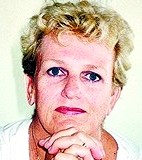 Mariette Bosch
Murderer · Botswana · 1996
Mariette Sonjaleen Bosch was executed in Botswana by hanging at Gaborone's Cent…
1 victim
Mariette Bosch
Murderer · Botswana · 1996
Mariette Sonjaleen Bosch was executed in Botswana by hanging at Gaborone's Cent…
1 victim
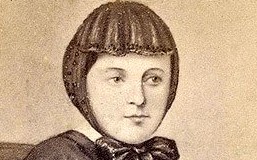 Constance Kent
Homicide · United Kingdom · 1860
Constance Kent was named Constance Emily Kent and was born 6 February 1844. She…
1 victim
Constance Kent
Homicide · United Kingdom · 1860
Constance Kent was named Constance Emily Kent and was born 6 February 1844. She…
1 victim
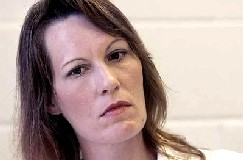 Debra Gindorf
Murderer · USA · 1985
Debra Lynn Gindorf was charged by indictment with six counts of murder for inte…
2 victims
Debra Gindorf
Murderer · USA · 1985
Debra Lynn Gindorf was charged by indictment with six counts of murder for inte…
2 victims
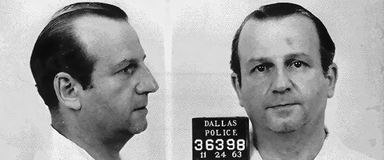 Jack Ruby
Murderer · USA · 1963
Jack Leon Ruby (born Jacob Rubenstein in 1911) was a Dallas nightclub owner who…
1 victim
Jack Ruby
Murderer · USA · 1963
Jack Leon Ruby (born Jacob Rubenstein in 1911) was a Dallas nightclub owner who…
1 victim
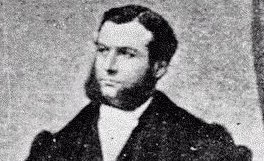 Edmond de la Pommerais
Murderer · France · 1862
Edmond de la Pommerais presented himself as a count and married a woman from a…
2 victims
Edmond de la Pommerais
Murderer · France · 1862
Edmond de la Pommerais presented himself as a count and married a woman from a…
2 victims
- Gender
- male
- Country
- USA
- Location
- In the air - San Ramon, California, USA
- Date of birth
- 1936
- Age at first offence
- 28
- Characteristics
- murder-suicide, rape?
- Victim profile
- 3 crew members and 41 passengers
- Method of murder
- Shot both the pilot and co-pilot before turning the gun on himself causing the plane to crash killing all 44 aboard
- Date(s) of murder
- May 7, 1964
- Years active
- 1964
- Date of arrest
- —
- Status
-
Died in custody
Committed suicide by shooting himself the same day
Case record
Francisco Paula Gonzales was a passenger on Pacific Air Lines Flight 773.
Background
Gonzales, 27, was a San Francisco resident and a former member of the Philippine yachting team at the 1960 Olympics. He lived in San Francisco and worked as a warehouse worker. In the months preceding the crash, he was described as "disturbed and depressed" over marital and financial difficulties. A credit check showed he was deeply in debt, and nearly half of his income was committed to various loan payments.
Investigators found that Gonzales had advised both relatives and friends that he "would die on either Wednesday, 6 May, or Thursday, 7 May." During the week preceding the crash, he referred to his impending death on a daily basis. Before boarding a flight to Reno, Nevada the evening before the crash, he showed a handgun to numerous friends at the airport and told one person he intended to kill himself. He gambled in Reno the night before the fatal flight and told a casino employee that he didn't care how much he lost because "it won't make any difference after tomorrow."
The offence
During the flight, Gonzales shot the pilot and the co-pilot. After shooting both men, he turned the gun on himself, and the aircraft crashed. The official accident report and investigators determined that uncontrolled flight followed the shootings.
Timeline
- 5:54 a.m. — Pacific Air Lines Flight 773 took off from Reno, Nevada for San Francisco International Airport with a scheduled stop in Stockton.
- 6:38 a.m. — The aircraft departed Stockton en route to San Francisco.
- 6:48:15 a.m. — Oakland Air Route Traffic Control Center received a high-pitched, garbled radio message from Flight 773; the aircraft disappeared from radar displays.
- 6:49 a.m. — The crash occurred near San Ramon, California.
Investigation
The Civil Aeronautics Board (CAB) investigated the crash and found in the mangled wreckage a damaged Smith & Wesson .357 Magnum revolver holding six spent cartridges. The Federal Bureau of Investigation soon joined the CAB in a search for evidence.
Investigators determined that when Gonzales left San Francisco for Reno the day before the fatal flight, he was carrying the .357 revolver, and that he had purchased $105,000 worth of life insurance at the airport payable to his wife. The probable cause stated in the CAB accident report was "the shooting of the captain and first officer by a passenger during flight". The FBI determined that the suicidal Gonzales was the shooter.
Flight 773’s last radio message, from First Officer Andress, was deciphered through laboratory analysis: "Skipper’s shot. We’ve been shot. (I was) tryin’ to help."
The official accident report stated that witnesses along the flight path and near the impact area described "extreme and abrupt changes in attitude of Flight 773 with erratic powerplant sounds" before the plane hit a sloping hillside at a relative angle of 90 degrees.
At the impact scene, investigators found bullet damage on a bit of tubing from the pilot's seat. The report stated: "Measurements place the bullet indentation directly in line of fire between the captain's back and anyone standing in the aisleway between and slightly to the rear of the captain's and first officer's seats."
A CAB investigative report concluded: "The total evidence clearly indicates that the captain and first officer of Flight 773 were shot by a passenger. As a result, the uncontrolled aircraft began the descent which ended in impact with the hill."
Arrest
No arrest occurred because Gonzales died in the crash.
Trial
No trial is described.
Sentencing
No sentencing is described.
Appeals
No appeals are described.
Outcome
Pacific Air Lines Flight 773 was a twin-engine Pacific Air Lines Fairchild F-27A airliner. It crashed at 6:49 a.m. on May 7, 1964 near San Ramon, California, USA.
The aircraft was identified as a Fairchild F-27A twin-engine turboprop with Federal Aviation Administration registration number N2770R. It took off from Reno at 5:54 a.m. with 33 passengers and a crew of three for San Francisco International Airport, with a scheduled stop in Stockton. At Stockton, 10 passengers boarded and two passengers deplaned, bringing the plane’s total to 41 passengers.
The crew consisted of Captain Ernest "Ernie" A. Clark (52) as pilot in command, First Officer Ray Andress (31) as copilot, and Flight Attendant Margaret Schafer (30).
About 10 minutes after the aircraft’s 6:38 a.m. departure from Stockton, Oakland Air Route Traffic Control received a garbled radio message from Flight 773 and the aircraft disappeared from radar displays. Oakland Air Route Traffic Control attempted unsuccessfully to contact Flight 773. Oakland Air Route Traffic Control asked United Air Lines Flight 593 if it had Flight 773 in sight; Flight 593 reported: "There’s a black cloud of smoke coming up through the undercast at ... three-thirty, four o’clock position right now. Looks like (an) oil or gasoline fire."
Flying at its assigned altitude of 5,000 feet, Flight 773 went into a steep dive and crashed into a hillside, exploding, near San Ramon (37° 45'34" N 121° 52'24" W) in Contra Costa County.
All aboard died on impact: 44 in total, consisting of 41 passengers and 3 crew members.
A Smith & Wesson .357 Magnum revolver was found in the wreckage, holding six spent cartridges, and the official accident report and investigators stated that all six shots had been fired.
Aftermath
Civil air regulation amendments became effective on August 6, 1964. The amendments required that doors separating the passenger cabin from the crew compartment on all scheduled air carrier and commercial aircraft must be kept locked in flight. An exception remained during takeoff and landing on certain aircraft, such as the Fairchild F-27, where the cockpit door leads to an emergency passenger exit. The amendments had been passed by the Federal Aviation Administration prior to the crash of Flight 773 but had not become effective yet.
In another murder/suicide incident with similarities, PSA Flight 1771 crashed on December 7, 1987 into a rural area near Cayucos, California, killing all 43 on board. That plane went out of control after a passenger shot both pilots. Both crash sites were on sparsely-populated grassy hillsides used for cattle ranching, contributing to the lack of ground casualties.
Julie Clark, one of three daughters of Captain Ernest "Ernie" A. Clark, grew up to become a commercial airline pilot for Northwest Airlines and performed aerobatic displays at airshows. Steven Andress, only son and fourth child of co-pilot Ray Andress, attended the U.S. Air Force Academy and went on to fly with Alaska Airlines.
Other details
A .357 Smith & Wesson Magnum revolver was purchased by Gonzales through a friend of a friend. He purchased $105,000 worth of life insurance at the airport payable to his wife.
Investigators found that Gonzales had purchased a handgun and that it was identified later by the seller as part of Gonzales' purchase on the preceding evening.
Gonzales was seated right behind the cockpit door based on witnesses who got off the plane in Stockton. After the aircraft began its descent for landing, he pulled out his gun and kicked his way into the cockpit, then shot the pilot and the co-pilot.
Spotted an error, or have more information about this case?