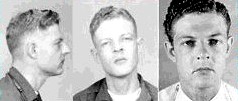
Richard Lewis Jordan
Murderer Gary Duane Rardon
Murderer · USA · 1962
Gary Duane Rardon killed a man in 1962 and later served 4 years for manslaughte…
4 victims
Gary Duane Rardon
Murderer · USA · 1962
Gary Duane Rardon killed a man in 1962 and later served 4 years for manslaughte…
4 victims
 Charles Howard Schmid
Murderer · USA · 1964
Charles Howard Schmid was born on 8 July 1942 and was adopted by Charles and Ka…
3 victims
Charles Howard Schmid
Murderer · USA · 1964
Charles Howard Schmid was born on 8 July 1942 and was adopted by Charles and Ka…
3 victims
 Edgar Ray Killen
Murderer · USA · 1964
Edgar Ray “Preacher” Killen (born 17 January 1925) was an American former Ku Kl…
3 victims
Edgar Ray Killen
Murderer · USA · 1964
Edgar Ray “Preacher” Killen (born 17 January 1925) was an American former Ku Kl…
3 victims
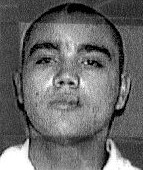 Johnnie Bernal
Homicide · USA · 1994
Aug. 19, 1994 — Johnnie Bernal spent the evening cruising Northwest Houston wit…
1 victim
Johnnie Bernal
Homicide · USA · 1994
Aug. 19, 1994 — Johnnie Bernal spent the evening cruising Northwest Houston wit…
1 victim
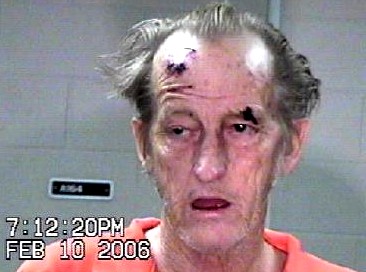 Denny Taylor
Murderer · USA · 2006
Denny O'Dell Taylor Sr., 60, died from a self-inflicted gunshot wound to the he…
2 victims
Denny Taylor
Murderer · USA · 2006
Denny O'Dell Taylor Sr., 60, died from a self-inflicted gunshot wound to the he…
2 victims
 Walter Lee Caruthers
Murderer · USA · 1980
Walter Lee Caruthers was the defendant. Reginald Watkins was his co-defendant.…
1 victim
Walter Lee Caruthers
Murderer · USA · 1980
Walter Lee Caruthers was the defendant. Reginald Watkins was his co-defendant.…
1 victim
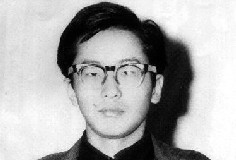 Otoya Yamaguchi
Murderer · Japan · 1960
Otoya Yamaguchi (山口 二矢, Yamaguchi Otoya, February 22, 1943 - November 2, 1960)…
1 victim
Otoya Yamaguchi
Murderer · Japan · 1960
Otoya Yamaguchi (山口 二矢, Yamaguchi Otoya, February 22, 1943 - November 2, 1960)…
1 victim
 Cordell Farrington
Serial killer · Bahamas · 2002
Cordell Farrington was a father of three children, including one who was three…
5 victims
Cordell Farrington
Serial killer · Bahamas · 2002
Cordell Farrington was a father of three children, including one who was three…
5 victims
- Gender
- male
- Country
- USA
- Location
- Pima County, Arizona, USA
- Date of birth
- October 21, 1930
- Age at first offence
- 24
- Characteristics
- mutilation
- Victim profile
- Phyllis Mae Thompson, 23
- Method of murder
- St abbing with knife
- Date(s) of murder
- May 24, 1954
- Years active
- 1954
- Date of arrest
- 2 days after
- Status
-
Executed
Executed by asphyxiation-gas in Arizona on November 22, 1958
Case record: Richard Lewis Jordan
Background
Richard Lewis Jordan was convicted of murder in Tucson, Arizona, involving the death of Phyllis Mae Thompson.
Jordan had no prior felony convictions. An attempted murder charge in Mississippi was dropped by the complaining witness.
Jordan had worked in mental institutions and had also been an inmate. Psychiatrists determined that Jordan was not a psychotic case and knew “right from wrong”. Dr. Wick of Arizona State Hospital had a complete record of Jordan’s case history.
Jordan was married and had a daughter. Jordan served in the Armed Forces of the United States and had been a patient in several Veterans Hospitals throughout the United States.
The offence
Phyllis Mae Thompson, a 23-year-old girl, came to Tucson, Arizona, from California for the express purpose of visiting a friend who operated the Esquire Bar on South 5th Avenue in Tucson. While talking to the woman bartender (owner), Thompson was introduced to a Capt. Ross, Instructor at U. of A in Tucson, and also to Jordan.
Thompson only drank “coke” and Jordan drank beer. Jordan took Thompson and returned about 9 P.M. to the Esquire Club. Jordan departed from the Esquire Bar and went to the Tropical Inn Bar on E. Speedway in Tucson, leaving that bar about midnight. Thompson was never seen again.
Following Thompson’s disappearance, her lifeless body was found the following day at about 5 P.M. on Indians Ruins Road, east of Tucson. Another statement of facts set the discovery location as approximately six or seven miles north, east of Tucson, and approximately sixty feet in the desert from the Indian Ruins Road near Tucson.
The body had 16 stab wounds on the chest area and additional stab wounds elsewhere on the body. Four of the stab wounds were in the upper half of the left breast of the victim and caused death, according to an autopsy report. Her face was mutilated by twelve slashes, evidently made by a knife. There was also evidence that her brassiere strap had been cut.
Thompson’s clothing was found approximately 860 feet north and on the opposite side of the road from where her body was found. There was evidence of a struggle near the body in that the terrain was torn up. Her fountain pen was found in Jordan’s car, and her overnight bag and purse were found near Jordan’s home and had apparently been tossed from a car.
The defendant orally admitted having killed the deceased, but refused to put his admission in writing. He did sign a written statement which alleged that he might or might not have killed the deceased. The statement also alleged that he had been on the Indian Ruins Road with the deceased and that he blacked out and did not remember what happened. In the written statement, Jordan admitted to disposing of Thompson’s fountain pen, overnight bag, and purse on his way from the Indian Ruins Road.
A deposition of events in another statement of facts described the last places where the parties were seen together. On May 24, 1954, at approximately 8:00 P.M., Jordan met Thompson at Club Esquire in downtown Tucson. Thompson had been traveling from San Diego, California, and was returning to her home in Lyons, Colorado. En route, she stopped in Tucson to deliver a message of greeting to the manager of the Club Esquire. She presented a note to the manager’s wife at approximately 8:00 P.M. on May 24, 1954, and was introduced to the defendant by Mrs. Couture, the wife of the manager of the Club Esquire. Thompson remained at the Club Esquire until approximately 9:00 or 9:30 P.M. and while there drank one or more soft drinks, while Jordan was having beer. Thompson and Jordan went to the Tropical Inn, where they remained until approximately 11:00 P.M. They then returned to the Club Esquire and remained there until approximately 11:45 P.M., when they left together. The parties again visited the Tropical Inn the following night May 25, 1954, around 5:00 P.M., as described in the statement of facts; it described the Tropical Inn as the last place where the parties were seen in each other’s company. The record also stated that there was no evidence that Thompson and Jordan argued or fought and that there was no medical evidence of recent sexual intercourse.
Plaster casts of foot prints and tire tracks were taken. There were tire tracks on and off the roadway opposite the point where her clothing was found and opposite the point where her body was found. The footprint measurements matched Jordan’s right shoe and the deceased’s bare foot. A hole in the sole of Jordan’s right shoe also appeared in the plaster casts. The footprint matching Jordan’s shoe measurements was obtained 15 feet from the location of the deceased’s body.
Investigation
During the investigation, Sheriff’s officers marked areas about the body and where the clothes were found. Some 15 or 20 people were moving about the area before the body was moved. Footprints and tire tracks were found in and around the areas.
On May 26, 1954, Jordan was arrested early in the morning at his home. At the time of the arrest, a knife was obtained from the glove compartment of Jordan’s car. There was blood on Jordan’s knife, and examination proved it was of the same type and RH factor as the deceased’s blood. Blood was also found on Jordan’s clothing and gloves, which were found in his clothes hamper at his home. The blood on his clothing and gloves was of the same type and RH factor as Thompson’s blood. There was also some blood on the right-hand side of the front seat of Jordan’s car of the same type and RH factor as the deceased’s blood.
An autopsy was performed by Dr. George Hartman. Dr. Hartman’s opinion stated that death was due to four stab wounds in the upper half of the left breast of the victim, although multiple stab wounds existed elsewhere on the body. Dr. Hartman’s report gave an estimate of the time of death between 6:00 A.M. and 12:00 o’clock noon of May 24, 1954. At trial, Dr. Hartman testified that death could have taken place at a time considerably prior to that set forth in his report. The statement of facts indicated that this was made to refute Jordan’s alibi, where witnesses testified that Jordan was home at the time death took place and returned home at 3:00 o’clock in the morning.
Testimony by investigating officers was described as varied, contradictory, and conflicting regarding descriptions of the scene and the manner of investigation.
Arrest
Jordan was arrested at his home at approximately 6:30 in the morning of Wednesday, May 26, 1954. The record also stated that Jordan was not taken before the magistrate before May 27, 1954, in violation of Section 41-140 of Arizona Code Annotated, 1939.
While Jordan was incarcerated before his appearance before the magistrate, he was thoroughly interrogated by the sheriff’s office and requested to sign a statement, which he did. The statement contained an admission that he might have killed Thompson and might not have done so. Counsel for the defendant objected to introduction of the statement made to the sheriff, but the trial court overruled the objection.
Trial
On August 23, 1954, a trial was held in Superior Court, No. 1. A jury returned a verdict of guilty and imposed a penalty of death.
The case was appealed to the Arizona Supreme Court and reversed, with a new trial ordered. Jordan was tried again in compliance with the Supreme Court decision. In the second trial, a jury found him guilty of Murder, 1st Degree, and assessed the penalty at death. A second trial held and, on October 6, 1956, a jury found Jordan guilty of Murder, 1st degree and assessed the penalty at death.
Sentencing was to die on December 18, 1956. The record also stated that there was a stay of execution due to appeal.
Jordan took the stand in his own behalf and testified that he remembered being with a girl later identified as the deceased until some time that night at the Tropical Inn, but that he had no memory from that point on.
A motion for a new trial was filed and denied, and the appeal was taken.
Throughout the trial, the record described the testimony of investigating officers as varied, contradictory, and conflicting concerning descriptions of the scene of the crime and how they investigated it.
Sentencing
Jordan was sentenced to die on December 18, 1956. Execution of sentence was stayed due to appeal.
Appeals
An appeal was made to the Arizona Supreme Court.
The execution of sentence was stayed by notice of appeal filed with the United States Supreme Court, with order #1101, and execution of sentence stayed by notice of appeal filed with the United States Supreme Court.
Outcome
Jordan was executed by asphyxiation-gas in Arizona on November 22, 1958.
Other offences and related events
The record stated that the next night Jordan shot and critically wounded an acquaintance, James Clark. The reason for the attack was described as unknown. Jordan left Clark wounded and left in the car after striking Clark in the eye and blinding him.
It was further described that, after Jordan’s arrest for shooting Clark, it was then determined that Jordan was the person who had killed Phyllis Mae Thompson.
The record also described that Jordan met a James Clark in one of the bars and that defendant told Clark to look at tires of car, then suddenly got out of the car, pulled a gun, and proceeded to shoot at Clark.
Other details
Jordan’s statement of facts for conviction described that the defendant met the girl (Phyllis Thompson) in a bar, later drove to the desert, and killed her by stabbing with a knife, and mutilated her face.
The record listed “RESPECTFULLY SUBMITTED: LEE GARRETT, Judge of the Superior Court 3-6-58”.
A simultaneous or muted offenses section stated:
- Next night defendant shot and critically wounded acquaintance (James Clark).
The record stated that there was no medical evidence of recent sexual intercourse.
The record included a brief statement of facts indicating that Thompson was returning to her home from a vacation in California and arrived in Tucson, Arizona on the 24th day of May, 1954. Thompson had in her possession a note to the manager of the Club Esquire from the manager’s brother, who lived in Denver, Colorado. It also stated that Thompson worked elsewhere as a stenographer and secretary.
Spotted an error, or have more information about this case?