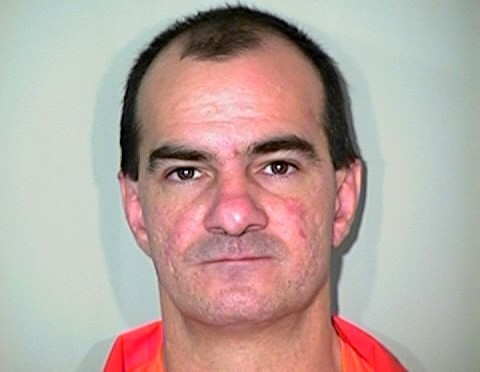
Phillip Bocharski
Murderer Brian Kevin Rosenfeld
Murderer · USA · 1985
Brian Kevin Rosenfeld Brian Kevin Rosenfeld was sentenced to three concurrent l…
23 victims
Brian Kevin Rosenfeld
Murderer · USA · 1985
Brian Kevin Rosenfeld Brian Kevin Rosenfeld was sentenced to three concurrent l…
23 victims
 Russell Ellwood
Murderer · USA · 1991
Russell Ellwood was a former taxi driver. Authorities suspected him of killing…
20 victims
Russell Ellwood
Murderer · USA · 1991
Russell Ellwood was a former taxi driver. Authorities suspected him of killing…
20 victims
 Robert Martines Perez
Murderer · USA · 1994
Name: Robert Martines Perez · Other name used in proceedings: Robert Martinez P…
15 victims
Robert Martines Perez
Murderer · USA · 1994
Name: Robert Martines Perez · Other name used in proceedings: Robert Martinez P…
15 victims
 Billy Frank Vickers
Murderer · USA · 1993
Billy Frank Vickers Vickers was executed by lethal injection in Texas on Januar…
14 victims
Billy Frank Vickers
Murderer · USA · 1993
Billy Frank Vickers Vickers was executed by lethal injection in Texas on Januar…
14 victims
 Misty Stoddard
Murderer · USA · 2012
Misty Stoddard was a 37-year-old resident of Sarasota County. She was the stepm…
1 victim
Misty Stoddard
Murderer · USA · 2012
Misty Stoddard was a 37-year-old resident of Sarasota County. She was the stepm…
1 victim
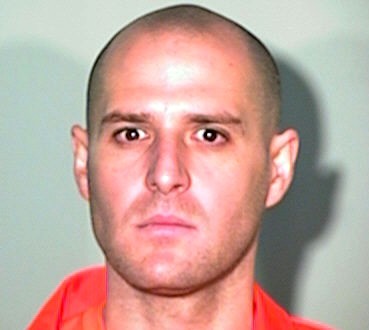 Christopher Spreitz
Murderer · USA · 1989
Christopher John Spreitz was Caucasian. On the night in question, Ruby Reid spe…
1 victim
Christopher Spreitz
Murderer · USA · 1989
Christopher John Spreitz was Caucasian. On the night in question, Ruby Reid spe…
1 victim
 Alexander Williams
Homicide · USA · 1986
Alexander Williams was 17 years old at the time of the offense and was diagnose…
1 victim
Alexander Williams
Homicide · USA · 1986
Alexander Williams was 17 years old at the time of the offense and was diagnose…
1 victim
- Gender
- male
- Country
- USA
- Location
- Yavapai County, Arizona, USA
- Date of birth
- February 22, 1962
- Age at first offence
- 33
- Characteristics
- burglary, alcohol, abuse
- Victim profile
- Freeda Brown, 85
- Method of murder
- St abbing with knife
- Date(s) of murder
- May 10, 1995
- Years active
- 1995
- Date of arrest
- —
- Status
-
Sentenced to death
Commuted to life in prison without the possibility of parole on August 8, 2008, after being sentenced to death on July 27, 1999
Case record
Phillip Bocharski was convicted in Yavapai County of burglary in the first degree and first-degree felony murder for the 1994 death of 84-year-old Freeda Brown at a campground outside Congress. Bocharski lived in a tent near Congress. He had previously done odd jobs for Freeda Brown, including driving her to Wickenburg banks and stores so she could cash checks.
The offence
On May 13, 1995, Freeda Brown’s partially decomposed body was found in her trailer located outside of Congress, Arizona. The cause of death was multiple stab wounds to the head and neck, and she also had a defensive wound on her right hand.
Bocharski told Frank Sukis that they should kill Freeda Brown because she was 85 years old and was complaining of arthritis. Before her death, Bocharski was broke. After her death, he had “hundreds of dollars” that he claimed had been given to him by someone who wanted some work done in the future. He subsequently told Sukis that he had been given $500 in advance “to do a hit job in Prescott.” Bocharski told a friend that he had “murdered an old lady for her money.”
Investigation
Freeda Brown’s partially decomposed body was found on May 13, 1995, in her trailer outside of Congress, Arizona.
Arrest
Bocharski was tried and convicted in the Arizona court system related to Freeda Brown’s death.
Trial
Frank Sukis gave Bocharski a ride to Congress on May 10, 1995, to obtain food handouts from a food bank. Upon returning to Bocharski’s tent, Bocharski and Sukis saw Ms. Brown, and Bocharski told Sukis they should kill her because she was 85 years old and was complaining of arthritis.
- Presiding Judge: William T. Kiger
- Prosecutor: Arthur Markham
- Start of Trial: 8-21-96
- Verdict: 9-13-96
A jury found Bocharski guilty of burglary in the first degree and first-degree felony murder for the death of Freeda Brown.
Sentencing
- Sentencing: 7-29-97
Aggravating circumstances (F-5):
- Pecuniary gain (F-6)
- Heinous and depraved (F-9)
- Age of victim, over 70 years
Mitigating circumstances:
- Traumatic and abusive childhood
A Yavapai County Superior Court judge, William Kiger, sentenced Bocharski to death.
Appeals
The Arizona Supreme Court reversed the death sentence and remanded the case back to Kiger for resentencing. The Court concluded that Bocharski’s attorneys, Tom Kelly and Ray Hanna, did not receive enough money to collect mitigating evidence necessary to adequately defend their client.
Bocharski’s second trial occurred in January 2006. At that trial, a jury found that the prosecution had proven that the murder involved two aggravating factors set out in Arizona statutes:
- the murder was especially heinous or depraved
- Brown was over the age of 70 years at the time of her death
The Arizona Supreme Court disagreed with the jury. Chief Justice Ruth V. McGregor wrote that the State established only one aggravating factor beyond a reasonable doubt: the age of the victim. The Court determined that the State did not prove that Bocharski “had a separate intent to mutilate” Brown’s body, or that “Bocharski intentionally inflicted violence after he knew or should have known of a fatal occurrence.” The Court also determined that the mitigation evidence reviewed at Bocharski’s sentencing trial was “substantial.”
Chief Justice Ruth V. McGregor wrote:
“When there is a doubt whether the death sentence should be imposed, we will resolve that doubt in favor of a life sentence,” McGregor wrote.
Outcome
In a unanimous decision, the Arizona Supreme Court commuted Phillip Alan Bocharski’s sentence from death to life imprisonment without the possibility of parole on August 8, 2008, after he had been sentenced to death on July 27, 1999.
Aftermath
Bocharski’s defense attorneys reacted positively to the Supreme Court’s decision. Tom Kelly said:
“I’m excited. I obviously agree with the decision,” Kelly said. “I am in contact with Bocharski frequently and he is excited as well. “Many criminal defendants present mitigation evidence of a less-than-ideal life, but Bocharski’s mitigation evidence is unique in its depth and breadth. The evidence in the record demonstrates severe neglect, as well as almost unimaginable mental, physical, sexual and emotional abuse throughout his childhood. The record also reveals Bocharski's history of alcohol abuse and intoxication at the time of the crime. Finally, he established the impact of execution on his family and his remorse.”
Ray Hanna said:
“I am pleased.”
Yavapai County Attorney Sheila Polk said she was disappointed with the ruling and stated:
“The system provides for the independent review by the Supreme Court on death penalty cases, and I have great respect for our criminal justice system.”
Tom Kelly also said Bocharski received a letter indicating he would stay on Death Row for quite some time, and Kelly stated:
“I don't swear the accuracy of this letter, but supposedly there is a transition period,” he said. “He has been on Death Row for 12 years, isolated in a small cell. He will be transported to the main prison yard and that could take three years.”
Timeline
- May 10, 1995 — Frank Sukis gave Bocharski a ride to Congress to obtain food handouts from a food bank
- May 13, 1995 — Freeda Brown’s partially decomposed body was found in her trailer outside of Congress, Arizona
- 8-21-96 — Trial began
- 9-13-96 — Jury verdict
- 7-29-97 — Sentencing
- 8-14-2008 — Supreme Court commuted the sentence of Phillip Alan Bocharski from death to life imprisonment without the possibility of parole (reported)
- August 8, 2008 — Sentence commuted from death to life imprisonment without the possibility of parole
- January 2006 — Second trial; jury found two aggravating factors proven
- 1996 (September) — William Kiger sentenced Bocharski to death
- 2004 (United States Supreme Court decision referenced) — United States Supreme Court issued a decision that a jury, rather than a judge, must determine if a criminal defendant deserves the death penalty
Other details
People
- Phillip Alan Bocharski — defendant
- Freeda Brown — victim; 84-year-old (also described as 85 years old in the discussion prior to her death)
- Frank Sukis — provided a ride and was present when Bocharski told him they should kill Brown
- William T. Kiger — presiding judge; later imposed the death sentence
- Arthur Markham — prosecutor
- Tom Kelly — defence attorney
- Ray Hanna — defence attorney
- Chief Justice Ruth V. McGregor — wrote for the Arizona Supreme Court
- Sheila Polk — Yavapai County Attorney
- Joanne C. Twaddell — author of a report dated August 14, 2008
Case identifiers and participants
- Supreme Court of Arizona opinion: CR-97-0306-AP
- Inmate: 129752
- Supreme Court of Arizona opinion: CR-06-0295-AP
- Supreme Court commutation: referenced as an August 8 decision in a unanimous ruling
Methods and injuries
- Freeda Brown suffered multiple stab wounds to the head and neck and had a defensive wound on her right hand.
Financial and motive-related details
- Bocharski claimed he had “hundreds of dollars” after Brown’s death.
- Bocharski told Sukis he had been given $500 in advance “to do a hit job in Prescott.”
- Bocharski told a friend he had “murdered an old lady for her money.”
Mitigation and background details
- Mitigating circumstance included traumatic and abusive childhood.
- The record was described as demonstrating severe neglect and mental, physical, sexual and emotional abuse throughout his childhood.
- The record also revealed Bocharski’s history of alcohol abuse and intoxication at the time of the crime.

Spotted an error, or have more information about this case?