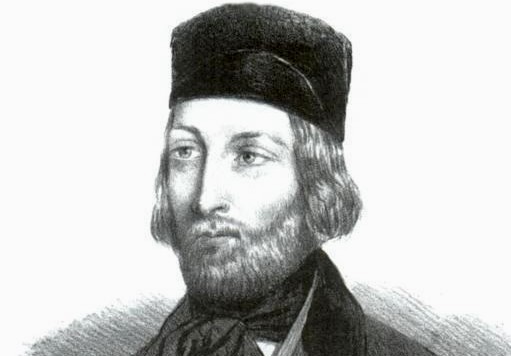
Hippolyte Visart de BOCARMÉ
Murderer John Doyle Lee
Murderer · USA · 1857
Name: John Doyle Lee Lifespan: September 12, 1812 - March 23, 1877 Legal outcom…
120 victims
John Doyle Lee
Murderer · USA · 1857
Name: John Doyle Lee Lifespan: September 12, 1812 - March 23, 1877 Legal outcom…
120 victims
 Juan Moreira
Murderer · Argentina · 1856
Juan Moreira (? - April, 1874) was a well-known figure in the history of Argent…
16 victims
Juan Moreira
Murderer · Argentina · 1856
Juan Moreira (? - April, 1874) was a well-known figure in the history of Argent…
16 victims
 Manuel Blanco Romasanta
Murderer · Spain · 1845
Manuel Blanco Romasanta (18 November 1809 — 14 December 1863) was Spain’s first…
9 victims
Manuel Blanco Romasanta
Murderer · Spain · 1845
Manuel Blanco Romasanta (18 November 1809 — 14 December 1863) was Spain’s first…
9 victims
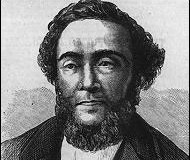 Edward Rulloff
Murderer · USA · 1845
Edward Rulloff was executed by hanging on May 18, 1871. His execution followed…
3 victims
Edward Rulloff
Murderer · USA · 1845
Edward Rulloff was executed by hanging on May 18, 1871. His execution followed…
3 victims
 Uthai Dechawiwat
Murderer · Thailand · 2008
Uthai Dechawiwat — Thai police officer and former sergeant; defendant. · Leo De…
2 victims
Uthai Dechawiwat
Murderer · Thailand · 2008
Uthai Dechawiwat — Thai police officer and former sergeant; defendant. · Leo De…
2 victims
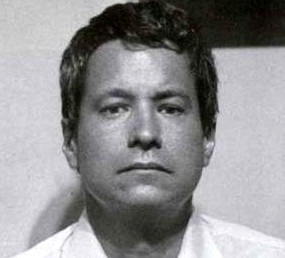 Robert Joseph Zani
Serial killer · USA · 1967
Robert Joseph Zani Current characteristics listed included: Parricide - Robberi…
6 victims
Robert Joseph Zani
Serial killer · USA · 1967
Robert Joseph Zani Current characteristics listed included: Parricide - Robberi…
6 victims
 Richard Allen Jensen
Murderer · USA · 1990
Name: Richard Allen Jensen Sex: M Race: W Type: T Richard Allen Jensen was sent…
3 victims
Richard Allen Jensen
Murderer · USA · 1990
Name: Richard Allen Jensen Sex: M Race: W Type: T Richard Allen Jensen was sent…
3 victims
 Ali Kaya
Serial killer · Turkey · 1997
Ali Kaya was a Turkish serial killer. He was nicknamed "The Babyface Killer" (T…
10 victims
Ali Kaya
Serial killer · Turkey · 1997
Ali Kaya was a Turkish serial killer. He was nicknamed "The Babyface Killer" (T…
10 victims
 Jason Hann
Murderer · USA · 1999
Jason Hann was convicted of killing his 2-month-old daughter, Montana, and also…
2 victims
Jason Hann
Murderer · USA · 1999
Jason Hann was convicted of killing his 2-month-old daughter, Montana, and also…
2 victims
- Gender
- male
- Country
- —
- Location
- —
- Date of birth
- 1818
- Age at first offence
- 32
- Characteristics
- poisoner, to inherit
- Victim profile
- Gustave Fougnies (his brother-in-law)
- Method of murder
- Poisoning (nicotine) Loca tion : Mons, B elgium
- Date(s) of murder
- November 20, 1850
- Years active
- 1850
- Date of arrest
- —
- Status
-
Executed
Executed by guillotine on July 19, 1851
Case name
Hippolyte Visart de Bocarmé
Status
Hippolyte Visart de Bocarmé was executed by guillotine on July 19, 1851.
The offence
Hippolyte Visart de Bocarmé, a Belgian count, poisoned his brother-in-law, Gustave Fougnies, with tobacco leaf extract (nicotine). The poisoning was carried out in order to acquire urgently needed money and to obtain Gustave’s fortune.
The prosecution theory was that Gustave had been restrained by Bocarmé and that the poison had been forcibly poured down his throat. The case required the actions of two people in concert.
Background
Bocarmé married Lydie Fougnies, the daughter of a retired grocer of considerable means. Lydie’s brother, Gustave Fougnies, inherited the bulk of the grocer’s fortune. Bocarmé anticipated that Lydie would inherit much more than “a paltry 5,000 francs per year.”
Bocarmé’s income was described as 2,400 francs a year, and the couple had been borrowing heavily and living in a grand style despite mounting debts. After the grocer died, their finances worsened further. Bocarmé pledged Lydie’s jewels to borrow more money and sold some of his property to stave off creditors. Gustave was described as suffering from ill health and having a weak constitution, including being amputated of a leg.
Bocarmé consulted a physician to find out the chances that Gustave might die soon. Bocarmé’s hope was then dashed when Gustave announced he was getting married. The case described Bocarmé as consulting a professor of chemistry and spending time in the laboratory himself before inviting Gustave to dinner at his château.
Bocarmé was portrayed as having studied chemistry in early 1850, going under a false name to correspond with a professor of chemistry and to work with a manufacturer of alembics. He distilled nicotine from tobacco leaves and carried out experiments on animals.
After Bocarmé’s execution, Jean Stas’s method for demonstrating the presence of vegetable poisons in human tissue was described as a lasting contribution to forensic medicine.
Timeline
- November 20, 1850 — Gustave Fougnies was invited to dinner at Bocarmé’s château; later that day Gustave died in the dining room where both Bocarmé and Lydie were present.
- Early morning (after November 20, 1850) — Bocarmé was described as pouring vinegar down Gustave’s throat and ordering that Gustave be undressed and washed with vinegar; the Countess was described as scrubbing the dining room floor during the night and later washing or preparing Gustave’s clothes for laundering and burning.
- After servants consulted the priest (timing relative to November 20, 1850) — Rumour reached an examining magistrate in Tournai that Gustave Fougnies had died an unnatural death.
- After the arrival of the examining magistrate (timing relative to November 20, 1850) — The examining magistrate Heughebaert arrived with gendarmes and surgeons; organs were removed for chemical examination and sealed in vessels containing pure alcohol.
- Between December 1850 and February 1851 — Jean Stas made the breakthrough method for demonstrating vegetable poisons in human tissue, ruling out sulphuric acid and identifying nicotine.
- May (trial timing) — At the trial the defendants accused each other; the jury found Bocarmé guilty and Lydie acquitted.
- July 19, 1851 — Hippolyte Visart de Bocarmé was executed by guillotine.
Investigation
After Gustave Fougnies’s death, an examining magistrate named Heughebaert arrived in Bury accompanied by three gendarmes and three surgeons. He was sceptical of rumours and, leaving the gendarmes behind in Bury, arrived at the château with only the surgeons and the town clerk for company.
The fireplace of the dining room was filled with ashes, and the dining room floor littered with wood shavings, indicating that books and papers had been burned. When Heughebaert asked to see the body, Bocarmé initially refused. Heughebaert supervised the examination and ordered an immediate examination of the body when it appeared to be anything but a natural death.
The doctors’ verdict at the time was that Gustave had died from drinking a corrosive liquid, “probably sulphuric acid,” because the mouth, tongue, throat and stomach showed distinct corrosive burns. Heughebaert supervised the removal from the body of organs that might be useful for chemical examination, and the organs were sealed in vessels containing pure alcohol.
Heughebaert returned to Tournai and then travelled to Brussels with the specimens. He went to examine the remains through Jean Stas, described as the leading chemist in the country and as teaching at the École Militaire. Stas was said to have established a laboratory in his own home and, by the method developed between December 1850 and February 1851, devised a way to demonstrate vegetable poisons in human tissue.
Stas ruled out sulphuric acid as the cause of death and identified nicotine by experiments that produced a positive laboratory result for pure nicotine.
After receiving Stas’s findings, Heughebaert searched the château and questioned the servants. The gardener said the Count had prepared “eau-de-cologne,” buying enormous quantities of tobacco leaves and making extracts in a laboratory in the castle washhouse. Heughebaert traced chemists Bocarmé had consulted for advice about extracting nicotine. He also found buried bodies of cats and ducks used in experimentation and found distillation equipment hidden behind panelling in the château. Samples were sent for nicotine detection, including animal remains, wood samples from floorboards, and trousers the gardener had worn while preparing “eau-de-cologne.” Traces of nicotine were found in all of them.
Arrest and charges
The aristocrat Hippolyte Visart de Bocarmé and his wife, Lydie, were arrested and charged with murder.
Trial
The trial took place at Mons before the High Criminal Court of Hainault, creating sensation on the Continent in 1851.
The jury returned after considering their verdict for an hour and a half. The foreman declared the finding of the jury in these words: “ ou my honour and conscience, and in the presence of God and man,”.
The verdict was guilty against the Count and not guilty against his wife, Madame Bocarme.
After the verdict, the Procureur du Roi asked Bocarmé if he had anything to say. Bocarmé replied: “ No, except that I am perfectly innocent.” He then entered into conversation with his counsel.
When the Court pronounced sentence, it ordered the sentence of death upon Hippolyte Visart de Bocarmé and decreed the execution would take place in one of the squares of Mons.
Lydie was acquitted. Bocarmé was found guilty and sentenced to death.
Sentencing and appeal
Bocarmé petitioned the King, and his appeal against the judgment was rejected. Bocarmé told the Procureur de Roi after his appeal was rejected: “I ask one favor,” he told the Procureur de Roi after his appeal against the judgment was rejected, “see that the ax is well sharpened. I have read of cases in which, owing to the blunt edge of the knife, two or three strokes were necessary–the idea makes me shudder.”
The Court pronounced that the execution would take place in one of the squares of Mons.
Execution
Count Hippolyte Visart de Bocarmé was executed by guillotine on the 19th of July, 1851, before a crowd of thousands. It was stated that “the blade was very sharp, and it took only a single blow to sever the murderer’s head from his neck.”
Other details
Nicotine was described in forensic and chemical context: it was identified as a rapidly effective poison in the same group as morphine, strychnine and aconitine, with an initial stimulant effect followed in poisonous doses by nausea and cardiac irregularity and then paralysis of the respiratory system. The lethal dose for an adult was given as between 60 and 90 mg, and one cigar was said to contain enough nicotine to kill two adults if administered by injection. It was also stated that death may take place within a few minutes, and that homicidal use of nicotine was rare, with horticultural sprays leading to cases of accidental poisoning through skin absorption.
Orfila was mentioned as having lamented that alkaloid poisons might remain undetectable, and the case was described as proving him wrong only three years later.
Jean Stas was described as earning lasting fame for his method of identifying alkaloid poisons, which was described as fundamentally the same as used today.
A court report of Bocarmé included the quotation: “His air of assurance is prodigious”.

Spotted an error, or have more information about this case?