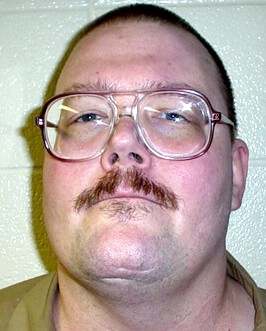
Gregory Scott Johnson
Murderer Brian Kevin Rosenfeld
Murderer · USA · 1985
Brian Kevin Rosenfeld Brian Kevin Rosenfeld was sentenced to three concurrent l…
23 victims
Brian Kevin Rosenfeld
Murderer · USA · 1985
Brian Kevin Rosenfeld Brian Kevin Rosenfeld was sentenced to three concurrent l…
23 victims
 Marvin Gray
Murderer · USA · 1975
Marvin Gray was convicted killer who claimed responsibility for 23 slayings and…
23 victims
Marvin Gray
Murderer · USA · 1975
Marvin Gray was convicted killer who claimed responsibility for 23 slayings and…
23 victims
 Yahweh ben Yahweh
Murderer · USA · 1980
Yahweh ben Yahweh was born and legally named Hulon Mitchell Jr. (October 27, 19…
23 victims
Yahweh ben Yahweh
Murderer · USA · 1980
Yahweh ben Yahweh was born and legally named Hulon Mitchell Jr. (October 27, 19…
23 victims
 Russell Ellwood
Murderer · USA · 1991
Russell Ellwood was a former taxi driver. Authorities suspected him of killing…
20 victims
Russell Ellwood
Murderer · USA · 1991
Russell Ellwood was a former taxi driver. Authorities suspected him of killing…
20 victims
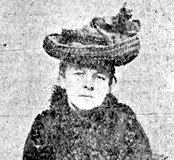 Emily Swann
Murderer · United Kingdom · 1903
Emily Swann (42-year-old mother of 11 children; defendant; convicted of murderi…
1 victim
Emily Swann
Murderer · United Kingdom · 1903
Emily Swann (42-year-old mother of 11 children; defendant; convicted of murderi…
1 victim
 John Frederick Thanos
Murderer · USA · 1990
John Frederick Thanos (c. 1951 – May 17, 1994) was executed in Maryland by leth…
3 victims
John Frederick Thanos
Murderer · USA · 1990
John Frederick Thanos (c. 1951 – May 17, 1994) was executed in Maryland by leth…
3 victims
 Jeffrey Dahmer
Serial killer · USA · 1978
Jeffrey Dahmer lived in Milwaukee and committed multiple murders in which he dr…
17 victims
Jeffrey Dahmer
Serial killer · USA · 1978
Jeffrey Dahmer lived in Milwaukee and committed multiple murders in which he dr…
17 victims
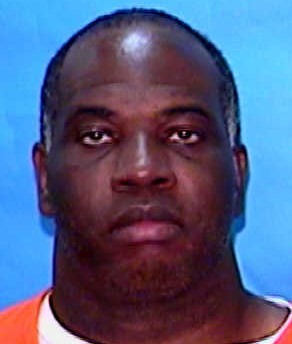 Fred Anderson
Murderer · USA · 1999
Fred Anderson, Jr., was the appellant in Fred Anderson, Jr., Appellant, vs. Sta…
1 victim
Fred Anderson
Murderer · USA · 1999
Fred Anderson, Jr., was the appellant in Fred Anderson, Jr., Appellant, vs. Sta…
1 victim
- Gender
- male
- Country
- USA
- Location
- Madison County, Indiana, USA
- Date of birth
- February 18, 1965
- Age at first offence
- 20
- Characteristics
- robbery, arson
- Victim profile
- Ruby Hutslar (female, 82)
- Method of murder
- Stomping with feet - Beating with broom handle
- Date(s) of murder
- June 23, 1985
- Years active
- 1985
- Date of arrest
- Same day
- Status
-
Executed
Executed by lethal injection on May 25, 2005, at Indiana State Prison
Case record: Gregory Scott Johnson
Background
Gregory Scott Johnson was scheduled to be executed by lethal injection at the Indiana State Prison in Michigan City.
Julie Woodard wanted Gregory Scott Johnson to be known as the cold-blooded killer of her 82-year-old great-aunt, Ruby Hutslar, rather than someone who tried to donate his liver to his ailing sister. Ruby Hutslar was the victim of beating and stomping to death in 1985, and her house was set on fire.
Ruby Hutslar’s relatives also said they believed far too much attention had been given to Johnson’s organ-donation request.
Hutslar lived across the street from Johnson’s mother.
The offence
Ruby Hutslar was 82 years old when she was beaten and stomped to death.
Johnson was convicted of felony murder during commission of burglary, and arson. The prosecution alleged he killed Ruby Hutslar by striking her with a blunt instrument and kicking and hitting her during the commission of a burglary. The prosecution also alleged he knowingly damaged the dwelling by means of a fire, a class B felony.
The death sentence aggravating circumstance was that the killing had been done intentionally while committing the crimes of burglary and arson.
Johnson’s clemency hearing testimony included a version in which he said that after a night of partying, he met another man whom he refused to identify and they decided to break into Hutslar’s house to steal her prescription drugs and money.
Family members described Hutslar as a kind woman who would gladly help someone in need. She had been widowed twice.
During proceedings, the state attorney general’s office said Johnson fully admitted to the murder originally, but changed his story after his conviction. During a hearing before the parole board, Johnson denied killing Hutslar but said he was in the house with an accomplice and set the fire.
Investigation
On June 23, 1985, a boy delivering morning papers at about 6 a.m. in Anderson, Indiana passed the house of 82-year-old Ruby Hutslar. He saw smoke coming out from under the eaves of the roof, roused a neighbor, and reported it.
The boy and two passersby attempted to enter the house but found the main front door locked. They broke open a front window of the house but were unable to enter. They went to the back of the house and found the back door open but were unable to enter because of heat and smoke.
A basement window was observed to have been unscrewed, broken, and removed.
Firemen arrived at 6:30 a.m. One pane of glass in the front door was broken. A fireman was unable to reach in because of intense heat inside. A fully equipped fireman broke open the front door, entered the living room crawling, and found Ruby Hutslar on the floor six feet from the front door. She was carried out of the house.
Efforts to resuscitate her at the scene and later at the hospital were not successful. An autopsy determined the cause of death to be blunt force injuries to the head, neck, and chest. She had not died of smoke inhalation or burning.
The fire had started in the center of the house, climbed a stairway, and concentrated in the attic. The fire was put out in about a half hour. A closet and the stairway on the first floor burned, while the rest of the first floor and its contents suffered mostly smoke and heat damage.
Drawers in furniture had been pulled out and some were dumped out. Some small boxes and containers had been opened and their contents dumped out. The contents of a clothes closet were scattered about and the mattress had been removed from a bed. The house was in disarray, and this had not all been caused by work of the firemen.
An investigation into the cause of the fire resulted in the opinion that the fire had been set.
At approximately 6:40 a.m., a police radio broadcast instructed officers to be on the lookout for Johnson because he was suspected of setting several fires in the area of the Hutslar residence.
Within minutes, Detective Miller saw Johnson standing on the street along with others, watching the fighting of the Hutslar fire.
Johnson was known to Detective Miller. Miller approached Johnson, spoke to him, and observed bloodshot eyes, alcohol smell, unsteady footing, nervousness, and anxiety. Johnson appeared dirty and in disarray. Another onlooker testified that Johnson stood very close behind him and was sweaty.
When the onlooker moved sideways, Johnson did also to stand close behind him again.
The officer placed Johnson under arrest for public intoxication. Johnson made statements at the scene.
Detective Miller testified that after being arrested, Johnson was searched, placed in a squad car, and read his Miranda rights for the first time. Johnson became agitated and cursed and said he understood his rights. Miller testified that Johnson appeared intoxicated from a slight to moderate extent.
Johnson and his girlfriend testified at a hearing on suppression of statements. They said Johnson was an alcoholic, drinking heavily each day, and during the twelve hour period preceding his arrest he ingested huge quantities of alcohol and a variety of drugs.
A pharmacologist testified that it would not be possible to accurately predict the effect of the ingestion of the substances described, but said a person who had done so would suffer loss of muscle coordination. The pharmacologist testified Johnson would have had a blood alcohol level of .15 at the time of his arrest and .10 at 8:20 when he signed a waiver of rights form.
Within ten minutes of the arrest, Officer Adams arrived on the scene. Adams testified Johnson was in the squad car, in cuffs, and was kicking hard on the inside. Adams asked what was wrong and saw Johnson appeared somewhat impaired by alcohol or drugs.
Adams testified Johnson said something about him not having a chance and about his upbringing, and said “Wisehart did not kill the bitch, I did.”
When Adams asked “Did you Scott?”, Johnson replied: “No, but if that's the way you fuckers want to play.”
The statement referred to unrelated prior events in which Johnson had provided testimony for the prosecution at the trial of his friend Wisehart, for the murder of another woman. Wisehart was convicted and received the death penalty.
Johnson was transported to the stationhouse where at 8:20 a.m. he was given Miranda rights for the second time by Captain Hanlon. Johnson signed a written acknowledgement and waiver of rights.
Johnson denied involvement in the Hutslar fire but gave four written statements confessing to having set or attempted to set four fires in the area in recent times.
At the time of the written rights waiver, Johnson smelled strongly of alcohol, his eyes were a little bloodshot, and he manifested anger. Periodically he was left alone and would sleep for a while.
During the morning, he was told Mrs. Hutslar had died. At noon he vomited. He received food, drinks, and cigarettes. He did not appear exhausted and continued sobering up as the day went on.
At 3:30 p.m., Hanlon began an interrogation about the Hutslar fire by asking if the Hutslar fire was not an attempt for Johnson to join his friend Mark, who was then in prison awaiting execution. Johnson responded by placing his head in his hands and becoming emotional.
He then admitted breaking into the Hutslar house. A fuller incriminating statement followed and was completed at 5:45 p.m. In that statement, Johnson said he broke the glass in the pane on the front door, entered, immediately encountered Ms. Hutslar who collapsed on the floor breathing heavily. He searched out and took a watch and silver dollars, stepped on her cheek and neck twice, found matches, started the fire, and ran out the back door. He threw away the watch and coins and then joined those watching the firemen at the house, where he was arrested.
Arrest
Johnson was arrested for public intoxication at the scene.
Trial
Johnson was charged in Count I with felony murder pursuant to I.C. 35-42-1-1(2) for having killed Ruby Hutslar by striking her with a blunt instrument and kicking and hitting her during the commission of a burglary. In Count II, he was charged pursuant to I.C. 35-43-1-1(a) with knowingly damaging the dwelling of the alleged victim by means of fire, a class B felony.
A separate Count III sought the death sentence by alleging, pursuant to I.C. 35-50-2-9(b)(1), the aggravating circumstance that the killing had been done intentionally while committing the crimes of burglary and arson.
A jury trial resulted in verdicts of guilty as charged in both Count I and Count II. Judgment of conviction was entered.
Three days later, the jury reconvened for the sentencing recommendation hearing. After evidence was presented, the jury retired and returned a verdict recommending the death sentence be imposed.
A month later, the sentencing hearing occurred. The trial court made an express and written finding that the state proved the aggravating circumstance beyond a reasonable doubt.
The court considered all categories of mitigating factors and noted that Johnson had a history of prior criminal conduct and had consumed some drugs and alcohol, and found no mitigating circumstances existed, imposing the death penalty for the murder. The court also imposed a ten-year sentence for arson.
At the penalty phase, Johnson presented ten witnesses. Doris Maxey, a Madison County Jailer, testified that Johnson had not been a problem at the jail while awaiting trial and had been somewhat helpful. On cross-examination, over hearsay and confrontation objections, she was permitted to testify she was aware Johnson had been “written up” for three violations of jail rules: attempting to escape, possession of an item that could be used as a weapon, and defacing jail property.
On redirect examination, Maxey testified she had no personal knowledge of the facts alleged in the three reports. The reports were not introduced into evidence. The witness had first hand knowledge that the reports had been made and was subject to full cross-examination about that fact, and she had no knowledge of the truth of the facts asserted in the reports. The court found it was not error to permit this cross-examination.
The Supreme Court of Indiana affirmed the death sentence and the convictions. The Supreme Court held that (1) Johnson’s statements to police were not involuntary; (2) evidence supported conviction; (3) the trial court should have considered intoxication at time of offense as mitigating circumstance; (4) the jury instruction in the penalty phase was not improper; (5) testimony regarding other arsons did not warrant mistrial; (6) Johnson was not entitled to change of judge; (7) failure to produce police and fire investigative reports was not reversible error; (8) admission of testimony describing the deceased victim as having a scared look was not reversible error; (9) evidence of jail disciplinary reports at penalty phase was not hearsay; (10) evidence of Johnson’s past arsons was admissible at penalty phase; (11) Johnson was not denied effective assistance of counsel at penalty phase; (12) the death sentence was appropriate. The court concluded the sentence was properly meted out, and that convictions for murder and arson were affirmed along with the death sentence.
Sentencing
The trial court sentenced Johnson to death for the murder.
In appellate review, the Supreme Court of Indiana noted Johnson had been twenty years old at the time of the crime and had a history including juvenile court protection. The court also referenced alcohol and drugs.
Appeals
Johnson v. State, 584 N.E.2d 1092 (Ind. January 27, 1992): The Supreme Court affirmed the convictions and sentence. The court consolidated and restated numerous issues raised on appeal, including issues about statements made when arrested and interrogated, sufficiency of intent, intoxication as a mitigating factor, jury instructions, mistrial related to other arsons, change of judge, discovery of investigative reports, admission of victim’s scared look, jail disciplinary reports, confession-related evidence at penalty phase, effectiveness of counsel, denial of defense motion to dismiss Count III seeking death, and appropriateness of the death sentence.
Johnson v. State, 693 N.E.2d 941 (Ind. 1998) (PCR): Johnson’s post-conviction relief petition was denied and the denial was affirmed. The Supreme Court held that (1) an assertion about another person being with defendant at the time of the crimes was insufficient to render evidence concerning the other person material; (2) prosecutor failure to disclose various nonexculpatory evidence did not violate Brady; (3) res judicata prevented relitigation of Brady issues related to sentencing under ineffective assistance claims; (4) trial and appellate counsel were not ineffective; (5) facts contended to disqualify a former prosecutor did not disqualify a successor prosecutor or the entire prosecutor’s office; (6) allegedly erroneous factual findings by the post-conviction court could not serve as a basis for reversal. The court affirmed denial of post-conviction relief.
Johnson v. State, --- N.E.2d ----, 2005 WL 1154827 (Ind. 2005) (Successive PCR): A motion for leave to file a successive petition was denied. The Supreme Court held that discovery of a court order concerning hair testing prosecutor did not provide basis for successive post-conviction petition; police investigation of a suspect other than Johnson was not exculpatory evidence; dismissal of a federal habeas petition on late filing was not basis for allowing successive post-conviction petition; Johnson was not entitled to post-conviction DNA testing; and an unsupported contention about a drug protocol for lethal injection did not establish an Eighth Amendment violation.
Johnson v. McBride, 381 F.3d 587 (7th Cir. 2004) (Habeas): The Seventh Circuit affirmed dismissal of Johnson’s federal habeas corpus petition as untimely. The court held that Johnson’s Brady claim was not newly discovered, so the one-year limitations period began running when judgment became final rather than when the factual predicate could have been discovered. The court also held Johnson was not entitled to equitable tolling.
Clemency and parole proceedings
At a parole board hearing, the board considered Johnson’s plea for clemency or a reprieve so that medical tests could be done and he could potentially donate his liver to his sister, Debra Otis.
Sharon Barker told the parole board members during a public clemency hearing that Ruby Hutslar had been stomped to death and her house set on fire. Barker said it was unfair and cruel.
Johnson admitted to the brutal killing and asked the state to delay his execution so he could donate his liver to his ailing sister, Debra Otis. Tests showed the siblings shared the same blood type, B-positive.
The parole board considered testimony from proponents and opponents of the stay request. The board decided not to recommend clemency or a temporary stay by a 4-0 vote.
Parole board chairman Raymond Rizzo stated: “I found no evidence that Mr. Johnson’s plea for clemency could reasonably be based on the quality of evidence introduced and accepted by the courts, or of his legal representation, wrote Raymond Rizzo, Indiana Parole Board chairman, in his decision. “No new evidence of participation by any other person was produced. “I found no basis to believe that the court’s assessment of mitigating and aggravating factors in the death penalty phase was unreasonable or inappropriate. In short, I am convinced that Mr. Johnson did brutally murder 82-year-old Ruby Hutslar, and the imposition of his death sentence was neither flawed in its imposition nor has it been diminished by events over the years.”
Parole board member Thor Miller wrote: “Governor, there are no questions in my mind about Gregory Johnson’s guilt and the imposition of the ultimate punishment of death,” wrote parole board member Thor Miller.
Randall Gentry stated he took a close look at Johnson’s “very public request” to donate his liver. Gentry said: “On the surface this seems to be a noble cause, but the underlying facts make this board member believe otherwise,” Gentry said. “In this board member’s opinion, all requests regarding a delay in carrying out Mr. Johnson’s sentence at this late date seem to be an attempt at postponement for the sake of Mr. Johnson, not his ailing sister.”
Valerie Parker, vice-chairwoman of the board, said: “But instead, he chose to continue his disregard for the laws governing our society and began his rampage on society as an adult.”
Governor’s decision
Gov. Mitch Daniels denied clemency or a reprieve for Johnson.
Daniels said he found “no grounds to second-guess years of court rulings or to reject the recommendation of the parole board.” Daniels also addressed the organ donation request, stating: “In view of the family relationship, I accepted the sincerity of Mr. Johnson’s motivation in making this offer. If his proposal had turned out to create a clear, demonstrated medical advantage to his sister, I might well have considered a brief postponement to seek a way to fulfill the request. But ultimately I was not faced with that decision. The advice of medical experts, including Debra Otis’ own specialist, was definitive that she should not pursue a procedure with Mr. Johnson as donor, but rather will be better served by accepting transplanted organs through the conventional process.”
The governor’s office released a letter Daniels received from transplant doctors at the Indiana University Medical Center saying the presence of a hepatitis B antibody in Johnson’s system and Johnson’s heavy body weight made him unsuitable as a donor. The letter also said that a split liver procedure was risky, and given Otis’ condition and the likelihood she would need a kidney as well, she would be better served receiving a full liver and kidney from the same donor through customary channels.
The governor’s statement was described as being supported by medical experts including Otis’ own specialist.
U.S. Supreme Court
The U.S. Supreme Court denied a stay of execution.
Execution
Johnson was executed by lethal injection at 12:28 a.m. at the Indiana State Prison in Michigan City.
Before the execution, Johnson only said: “Everyone has been professional.”
After the execution, Johnson’s handwrote note was released. In the note he wrote: “There are those who claim that Debbie will have a new liver three weeks after being placed on the list,” the note said. “I'll be watching from above and expect her to be recuperating at that time.”
He also wrote: “They felt that I was not sincere and there had been no change from the Gregory Scott Johnson of 20 years ago. I can understand those sentiments coming from Mrs. Hutslar's family, but am puzzled that it would come from a government board. Thanks to all of you for your prayers, I'll see you on the other side.”
Aftermath
Protesters demonstrated against the death penalty outside the prison and held a candlelight vigil.
During the vigil, Rev. Charles Doyle said: “We don’t see any point in the death penalty except vengeance,” and “Vengeance isn’t healthy.”
Mike Clancy said he was morally opposed to the death penalty and stated: “I can tell you that death row is filled with reasonable doubt,” he said.
Protesters marched carrying placards reading “Thou Shalt Not Kill” and “Murder is Never Right.”
Sharon Barker said she had no interest in attending Johnson’s execution, saying a Department of Correction official planned to call when it was over. Barker said: “I’m just going to stay up with my husband,” and “Sit and wait and be quiet.”
Johnson’s attorney, Michelle Kraus, said she was disappointed that Otis’ sister’s doctor wrote to the governor but did not contact her even though a release signed by Otis existed. Kraus said: “It was her desire her doctor speak to me. It was her desire that we pursue this liver donation. They simply stopped returning my phone calls,” and prison spokesman Barry Nothstine said Johnson seemed at peace.
Prison spokesman Barry Nothstine stated: “I saw him twice today, and he was very much at ease,” he said. “He was smiling, and he seemed at peace.”
Johnson’s mother, Alice Newman, asked for clemency and said: “This is a terrible thing that’s happened, but that doesn’t make me love my child any less. “My son’s ready,” she added. “It’s just that I’m not ready to give him up.”
Also executed in Indiana this year were Donald Ray Wallace and Bill J. Benefiel. Wallace was convicted of the 1982 murder of the Gilligan family in Evansville and was executed March 10. Benefiel was convicted in the 1987 rape, murder, and confinement of Delores Wells and was executed April 21.
The next execution set for June 22 involved Michael A. Lambert, who was convicted of fatally shooting Muncie patrol officer Gregg Winters in 1990.
Other details
Prosecutors and appellate materials described Johnson as having consumed drugs and alcohol and having a history of prior criminal conduct.
In the direct appeal opinion, the Supreme Court noted Johnson’s history including addiction to alcohol at age twelve, arrests as an adult for illegal consumption and an attempted burglary charge pending at the time of the offense, and that during the three month period preceding the killing he set a house and three garages on fire.
The direct appeal opinion also described that Johnson met Mark Wisehart and testified at Wisehart’s trial for a murder that resulted in Wisehart being convicted and receiving the death penalty.
A description in the direct appeal opinion stated: “The jury deliberated for seven days.”
Spotted an error, or have more information about this case?