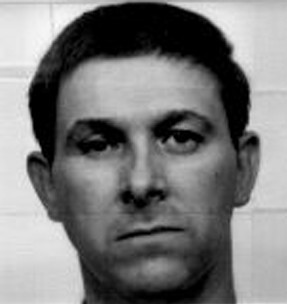
Gary James Johnson
Murderer Brian Kevin Rosenfeld
Murderer · USA · 1985
Brian Kevin Rosenfeld Brian Kevin Rosenfeld was sentenced to three concurrent l…
23 victims
Brian Kevin Rosenfeld
Murderer · USA · 1985
Brian Kevin Rosenfeld Brian Kevin Rosenfeld was sentenced to three concurrent l…
23 victims
 Yahweh ben Yahweh
Murderer · USA · 1980
Yahweh ben Yahweh was born and legally named Hulon Mitchell Jr. (October 27, 19…
23 victims
Yahweh ben Yahweh
Murderer · USA · 1980
Yahweh ben Yahweh was born and legally named Hulon Mitchell Jr. (October 27, 19…
23 victims
 Russell Ellwood
Murderer · USA · 1991
Russell Ellwood was a former taxi driver. Authorities suspected him of killing…
20 victims
Russell Ellwood
Murderer · USA · 1991
Russell Ellwood was a former taxi driver. Authorities suspected him of killing…
20 victims
 Ponchai Wilkerson
Murderer · USA · 1990
Ponchai Wilkerson was executed by lethal injection in Texas on March 14, 2000.…
1 victim
Ponchai Wilkerson
Murderer · USA · 1990
Ponchai Wilkerson was executed by lethal injection in Texas on March 14, 2000.…
1 victim
 James Edward Smith
Murderer · USA · 1983
James Edward Smith (age 37) was executed in Texas by lethal injection on June 2…
1 victim
James Edward Smith
Murderer · USA · 1983
James Edward Smith (age 37) was executed in Texas by lethal injection on June 2…
1 victim
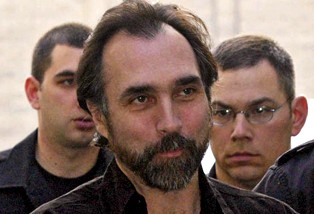 Ralph James Phillips
Murderer · USA · 2006
Ralph James Phillips, also known as “Bucky” Phillips, was a convicted murderer.…
1 victim
Ralph James Phillips
Murderer · USA · 2006
Ralph James Phillips, also known as “Bucky” Phillips, was a convicted murderer.…
1 victim
 Bartolomeo Gagliano
Serial killer · Italy · 1981
Bartolomeo Gagliano was mentally ill and was serving time for multiple murders…
3 victims
Bartolomeo Gagliano
Serial killer · Italy · 1981
Bartolomeo Gagliano was mentally ill and was serving time for multiple murders…
3 victims
 Joshua Maxwell
Murderer · USA · 2000
Joshua Maxwell was convicted of capital murder and sentenced to death for the r…
2 victims
Joshua Maxwell
Murderer · USA · 2000
Joshua Maxwell was convicted of capital murder and sentenced to death for the r…
2 victims
- Gender
- male
- Country
- USA
- Location
- Walker County, Texas, USA
- Date of birth
- October 17, 1950
- Age at first offence
- 36
- Characteristics
- robbery
- Victim profile
- Ranch foreman James Hazelton, 28, and his brother-in-law, Peter Sparagana, 23
- Method of murder
- Shooting
- Date(s) of murder
- April 30, 1986
- Years active
- 1986
- Date of arrest
- —
- Status
-
Executed
Executed by lethal injection in Texas on January 12, 2010
Case record: Gary James Johnson
Background
Gary James Johnson was executed by lethal injection in Texas on January 12, 2010.
Johnson was convicted of capital murder for the 1986 murders of James Hazelton and Peter Sparagana during a burglary at the Triple Creek Ranch near Huntsville. A Walker County jury sentenced Johnson to death in August 1989 for the murders of James Hazelton, a ranch manager, and Peter Sparagana, Hazelton’s brother-in-law. At the time of the execution, Johnson was described as 59 or 59 and had been on death row for more than 20 years.
The offence
On the evening of April 30, 1986, Bill and Shannon Ferguson were in their pasture waiting for a mare to foal. Sometime before 10:00 p.m., they saw a truck pull over near a gate of the adjacent Triple Creek Ranch. They saw someone get out of the truck, heard a chain rattle on the gate, and observed someone from the truck go through the gate and onto the ranch. The truck’s headlights had been turned off. Mrs. Ferguson noticed an unusual brake light pattern on the truck: “four large round lights, two on each side, one above the other.” Other evidence showed that the original chain had been cut and a new lock had been placed on the gate.
Concerned there was a burglary in progress, Mrs. Ferguson ran to her house to call the ranch managers, the Hazeltons. She spoke to the wife of Jim Hazelton, the ranch manager, and told her that a burglary might be taking place because a truck had entered the ranch with its lights off. Mrs. Hazelton told Mrs. Ferguson that her husband would be right out.
Fifteen minutes later, the Fergusons observed Jim Hazelton’s truck appear at the same gate on Highway 30. Unable to enter that gate, Hazelton backed up and entered the ranch from another location. Eventually, the Fergusons heard Hazelton’s truck stop. After a gunshot, Mrs. Ferguson rushed back to call the Walker County Sheriff’s Department and Mrs. Hazelton while Mr. Ferguson remained in the pasture watching to see if anyone exited the gate.
Several minutes after the first gunshot, Mr. Ferguson heard several shots fired in rapid succession. After a brief silence, Mr. Ferguson heard someone plead for his life. The pleas were silenced by two more shots. When the police arrived, they discovered the bodies of Jim Hazelton and Peter Sparagana dead from bullet wounds fired at close range.
At trial, Hazelton and Sparagana discovered Terry Johnson but did not see his brother. Terry Johnson’s statements and evidence indicated that Terry opened fire with a .44-caliber Magnum pistol and shot Sparagana, while Hazelton tried to run but was caught by Gary Johnson, who once worked for Hazelton. Frank Blazek, the prosecutor at Johnson’s trial, stated:
“He put the gun in Hazelton’s mouth,” Frank Blazek of Huntsville, the prosecutor at Johnson’s trial, told the Associated Press. “Hazelton begged for his life and people across the way, in the nearby pasture, couldn’t see all this but could hear a man begging for his life.”
The medical examiner testified that Hazelton died from a contact bullet wound to the mouth, and evidence described Hazelton as having been shot from close range. The trial evidence also described that Hazelton received multiple close-range gunshot wounds, including a contact wound to the mouth/face region and other injuries including graze and head wounds.
Investigation
Walker County Deputy Sheriff Allen McCandles saw a truck matching Shannon Ferguson’s description of the truck driven by the intruders in Johnson’s pasture after the shootings and saw Johnson driving the truck numerous times. Another law enforcement officer testified that two of the lights on the back of Johnson’s truck were removed in the two weeks after the murders. Investigators took about two years to assemble their case against Johnson and his brother, Terry.
The murder weapon was recovered at the home of another Johnson brother in Union, Mo.
Arrest
Johnson and his brother, Terry, were arrested for the murders two years later.
Trial
Johnson was indicted for capital murder by a Walker County grand jury. A Walker County jury convicted him of capital murder, and a district judge sentenced him to death.
Evidence presented at trial
At trial, the State presented evidence from three of Johnson’s brothers: Tracey, Randy, and Ricky.
Tracey Johnson testified that Johnson came to Missouri during the fall of 1986, returned Tracey’s .44 caliber pistol, and asked Tracey to destroy it because the pistol had been involved in a double murder in which Johnson and their brother Terry had participated.
Ricky Johnson testified that during that same visit to Missouri Johnson was in possession of the .44 caliber pistol; Johnson admitted killing one man with the gun; and Johnson and Terry had also killed a second man.
A state firearms examiner identified a bullet fragment retrieved from Hazelton’s body as being fired from the same .44 caliber pistol Johnson returned to Tracey.
Randy Johnson testified that Johnson told him of the events that transpired at the Triple Creek Ranch. Randy testified that Johnson told him that Johnson and Terry were out at the Triple Creek to steal something when two men “got the drop on them.” While Terry distracted them, Johnson shot one of the men. Johnson and Terry caught the other man, brought him back to the barn, made him kneel, and tied his hands behind his back. While the second man pleaded for mercy, Johnson shoved the gun in his mouth. Randy testified that the medical examiner later testified the second man died from a contact bullet wound to the mouth. Randy testified that Johnson explained the two men were killed because “Dead men don’t talk.”
Johnson explained the reason for killing the two men to Randy:
“Dead men don’t talk.”
At trial, the defense called Terry Johnson as a witness. Terry testified that Gary Johnson killed both victims. Terry Johnson testified that Johnson’s favorite expression was “kill them all, let God sort them out.”
The defense also presented testimony from two inmates in the Walker County Jail that Terry Johnson told them that he (Terry) had killed both of the victims.
Evidence of future dangerousness (penalty phase)
At the penalty phase of the trial, the State presented evidence that Johnson shot and killed a neighbor’s dog from a distance of 75 to 100 yards while the dog was standing a few feet from the neighbor.
The State also presented evidence that Johnson was carrying a loaded handgun when he was arrested for the murders of Hazelton and Sparagana.
Dr. James P. Grigson testified for the State as a psychiatrist. Based on a hypothetical question summarizing testimony about Johnson, the psychiatrist concluded that Johnson would be a future danger to society.
At the penalty phase, Johnson’s uncle testified for the defense that he had never seen Johnson act violently. Johnson’s former boss and a co-worker testified that Johnson was hard-working, respectful, and non-violent. Johnson’s ex-wife testified that Johnson was never violent toward their children, and never drank or used drugs. Additional defense testimony came from Dr. James Marquart, a professor of criminology at Sam Houston State University, who testified about post-conviction criminality research involving murderers whose sentences were later reduced or commuted, and that none had ever killed again. Dr. Wendell Lee Dickerson, a psychologist, testified that the American Psychiatric Association takes the position that psychiatrists engaging in practice to predict future dangerousness with a high degree of certainty were “engaging in practice little short of quackery.” Marquart and Dickerson testified to challenge the future dangerousness assessment and the reliability of such predictions.
The jury found that Johnson had acted deliberately and with a reasonable expectation that death would result, and that it was probable that Johnson would commit future acts of criminal violence that constitute a continuing threat to society. The trial court sentenced Johnson to death.
Sentencing
A Walker County jury sentenced Johnson to death after convicting him of capital murder.
The record also described that co-defendant Terry Johnson was convicted of murder and sentenced to 99 years after testifying against his brother and accepting a plea bargain to avoid a death sentence.
Appeals
Direct appeal
Johnson appealed his capital murder conviction and death sentence. The Court of Criminal Appeals affirmed.
The Court of Criminal Appeals held that:
- the defendant was not entitled to an accomplice-witness instruction where the defendant called the accomplice himself;
- the evidence was sufficient for the jury to return an affirmative finding on future dangerousness;
- law of parties was applicable in determining whether two persons were murdered in the same transaction, but the defendant could not be put to death for being party to murder absent finding of deliberateness;
- there was no egregious error in an instruction on the special issue concerning deliberateness; and
- the defendant’s mitigating evidence was sufficiently taken into account in connection with the future dangerousness issue.
The judgment was affirmed.
Federal habeas proceedings
After affirmance on direct appeal, Johnson filed for state and federal habeas relief, and the denials were affirmed through the federal appellate process.
The United States Supreme Court denied Johnson’s petition for a writ of certiorari.
In 2007, the United States District Court denied habeas relief. A certificate of appealability was granted on two issues, and the Fifth Circuit affirmed the denial of habeas relief. The United States Supreme Court denied Johnson’s petition for certiorari review on October 5, 2009.
In Johnson v. Quarterman, the United States Court of Appeals for the Fifth Circuit affirmed the denial of federal habeas relief, holding:
- the State’s suppression of evidence of the hypnosis of one witness and the attempted hypnosis of another witness did not violate Brady;
- defendant was not deprived of effective assistance of counsel; and
- exclusion of expert witness affidavits was warranted.
The Fifth Circuit affirmed the district court’s denial of federal habeas relief, stating:
We AFFIRM.
Outcome
Johnson was executed by lethal injection in Texas on January 12, 2010.
Execution and last statements
Johnson’s execution proceeded after the lethal dose began at 6:15 p.m., and he was pronounced dead at 6:26 p.m.
George Hazelton, Hazelton’s brother, was among those who watched the execution through a glass window. Johnson declined the warden’s offer to make a final statement at first. Johnson was described as directing his comments to family members and friends in the personal witness room.
Johnson said:
“Tell my family goodbye,”
He then told relatives:
“... you tell the rest of them what they did was wrong for letting me fall for what they did. I never done anything in my life to anybody.”
At another point described in separate reporting, Johnson said:
“Just tell my family good bye.”
He also urged relatives:
“what they did was wrong for letting me take the fall for what they did.”
He said:
“I never done anything in my life to anybody.”
Other details
- Procedural history in the record included: April 30, 1986: Johnson killed James Hazelton and Peter Sparagana; June 23, 1988: a Walker County grand jury indicted Johnson for capital murder; August 19, 1988: a Walker County jury convicted Johnson of capital murder; August 19, 1988: a Walker County district judge sentenced Johnson to death; December 16, 1992: the Texas Court of Criminal Appeals affirmed Johnson’s conviction and sentence; October 4, 1993: the United States Supreme Court denied certiorari; August 30, 1996: Johnson filed an original application for a state writ of habeas corpus; October 20, 2004: the Texas Court of Criminal Appeals denied state habeas relief; October 19, 2005: Johnson filed a petition for a federal writ of habeas corpus; September 28, 2007: a Houston U.S. district court denied habeas relief; September 9, 2008: the Fifth Circuit granted a certificate of appealability on two issues; January 7, 2009: the federal appeals court affirmed the federal district court’s denial of habeas relief; October 5, 2009: the United States Supreme Court denied Johnson’s petition for certiorari review; and September 30, 2009: the trial court scheduled Johnson’s execution for Tuesday, January 12, 2010. The record also stated Johnson filed a petition for a writ of certiorari and an application for stay of execution on January 5, 2010.
- The record described a prior incident from 1972 in Johnson’s native Missouri in which he paid $150 in restitution to a man whose dog he shot and killed, and the dog’s owner was a few feet away at the time.
- The record described that investigators found a slogan etched in concrete outside Johnson’s home and on a T-shirt in a photograph: “Kill them all and let God sort them out.”
- During sentencing phase testimony, the record included references to a neighbor’s dog being shot at a distance of 75 to 100 yards, with the dog standing a few feet from the neighbor, and included psychiatric testimony about future dangerousness.
- The record included testimony at federal habeas proceedings relating to alleged hypnosis of witnesses, including findings from state habeas proceedings regarding suppression, the hypnosis sessions, and the absence of enhancement to trial testimony.
Spotted an error, or have more information about this case?