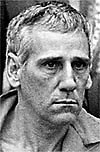
James Rodney Johnson
Murderer Brian Kevin Rosenfeld
Murderer · USA · 1985
Brian Kevin Rosenfeld Brian Kevin Rosenfeld was sentenced to three concurrent l…
23 victims
Brian Kevin Rosenfeld
Murderer · USA · 1985
Brian Kevin Rosenfeld Brian Kevin Rosenfeld was sentenced to three concurrent l…
23 victims
 Russell Ellwood
Murderer · USA · 1991
Russell Ellwood was a former taxi driver. Authorities suspected him of killing…
20 victims
Russell Ellwood
Murderer · USA · 1991
Russell Ellwood was a former taxi driver. Authorities suspected him of killing…
20 victims
 Robert Martines Perez
Murderer · USA · 1994
Name: Robert Martines Perez · Other name used in proceedings: Robert Martinez P…
15 victims
Robert Martines Perez
Murderer · USA · 1994
Name: Robert Martines Perez · Other name used in proceedings: Robert Martinez P…
15 victims
 Billy Frank Vickers
Murderer · USA · 1993
Billy Frank Vickers Vickers was executed by lethal injection in Texas on Januar…
14 victims
Billy Frank Vickers
Murderer · USA · 1993
Billy Frank Vickers Vickers was executed by lethal injection in Texas on Januar…
14 victims
 Jacquelyn Greco
Murderer · USA · 1979
Jacquelyn Greco (also known as Jackie; formerly Jacquelyn Gaimari) — defendant;…
1 victim
Jacquelyn Greco
Murderer · USA · 1979
Jacquelyn Greco (also known as Jackie; formerly Jacquelyn Gaimari) — defendant;…
1 victim
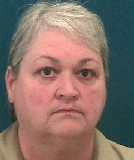 Martha Ann Johnson
Murderer · USA · 1977
Martha Ann Johnson (also known as Martha Ann Bowen) was an American serial kill…
4 victims
Martha Ann Johnson
Murderer · USA · 1977
Martha Ann Johnson (also known as Martha Ann Bowen) was an American serial kill…
4 victims
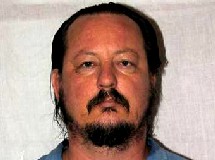 Troy Adam Ashmus
Murderer · USA · 1984
Troy Adam Ashmus was a 22-year-old carnival worker at the time of the crime. Ma…
1 victim
Troy Adam Ashmus
Murderer · USA · 1984
Troy Adam Ashmus was a 22-year-old carnival worker at the time of the crime. Ma…
1 victim
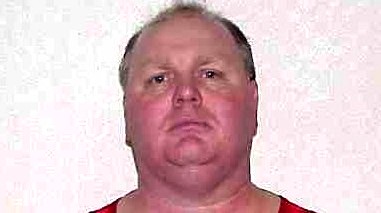 Michael Dale St. Clair
Serial killer · USA · 1990
Michael Dale St. Clair was born on 1-15-57. St. Clair called himself the “$5 mi…
6 victims
Michael Dale St. Clair
Serial killer · USA · 1990
Michael Dale St. Clair was born on 1-15-57. St. Clair called himself the “$5 mi…
6 victims
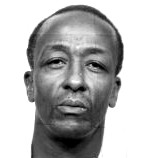 Clifford Phillips
Murderer · USA · 1972
Clifford Phillips was executed by lethal injection in Texas on December 15, 199…
2 victims
Clifford Phillips
Murderer · USA · 1972
Clifford Phillips was executed by lethal injection in Texas on December 15, 199…
2 victims
- Gender
- male
- Country
- USA
- Location
- Cooper/Moniteau Counties, M issouri, USA
- Date of birth
- April 18, 1949
- Age at first offence
- 42
- Characteristics
- revenge, domestic violence
- Victim profile
- Deputy Leslie Roark; Pam Jones, wife of the county Sheriff; Sheriff Charles Smith, and Deputy Sandra Miller
- Method of murder
- Shooting
- Date(s) of murder
- December 8-9, 1991
- Years active
- 1991
- Date of arrest
- December 10, 1991
- Status
-
Executed
Executed by lethal injection in Missouri on January 9, 2002
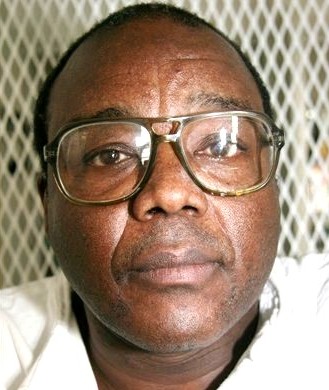
Case record: James Rodney Johnson
STATUS / outcome
James Rodney Johnson was executed by lethal injection in Missouri on January 9, 2002.
Timeline
- 12/8/1991 — Johnson had an argument at his home with his wife, Jerri Wilson, and Jerri’s 19-year-old daughter, Dawn Becker.
- 12/10/91 — James Johnson was arrested for four counts of Murder First Degree in Moniteau County, Missouri.
- 02/01/93 — Johnson was convicted on four counts of Murder First Degree following a ten day trial; the jury recommended death.
- 04/23/93 — Johnson was sentenced to each of the four counts of Murder First Degree.
- 08/26/93 — Johnson filed a post-conviction motion for relief in the Circuit Court.
- 10/10/96 — Johnson’s post-conviction motion for relief was denied by the Circuit Court.
- 04/30/98 — The Missouri State Supreme Court affirmed Johnson’s conviction and sentence.
- 10/15/99 — Johnson filed a petition for writ of habeas corpus in the United States District Court.
- 02/23/00 — The United States District Court denied Johnson’s petition for writ of habeas corpus.
- 06/14/00 — The Eighth Circuit Court of Appeals declined to review denial of petition for writ of habeas corpus.
- 03/19/01 — The United States Supreme Court denied Johnson’s petition for writ of certiorari.
- 12/11/01 — The Missouri State Supreme Court set January 9, 2002 as Johnson’s execution date.
- 01/9/2002 — Johnson was executed by lethal injection in Missouri.
Background
James Rodney Barker was born April 18, 1949. His adoptive parents were Ward and Mary Johnson. His natural mother was described as unmarried, mentally ill, and unable to care for him; he and his slightly older brother, Tommy, were sent to the Missouri Baptist Children’s Home shortly after his birth. The brothers were separately placed in various foster homes.
Ward and Mary Johnson became foster parents for Tommy, and the family lived on a small farm in California, Missouri. Jim continued to be in the Children’s home or with other families until April 1951, when he went to live with the Johnsons. Tommy was later sent back to the Children’s Home. The Johnsons adopted Jim when he was eight years old.
Jim graduated from California High School in 1967. He was inducted into the army in 1969 after his draft number came up.
Jim worked as a sales clerk and auto mechanic at an auto sales business and then at a pool table manufacturing company. Jim and Jean purchased a small house in California. Jean Reed and Jim divorced in 1974.
Jim got a job as a livestock feed salesman for Biozyme, Inc. in 1974. He sold feed to farmers and veterinarians throughout central Missouri, and parts of Oklahoma, Arkansas, and Illinois, and worked for Biozyme for over eight years.
Jim joined the Missouri National Guard in 1977, trained as a mechanic, and in 1982 went to work for the National Guard full time as a helicopter mechanic. He earned a reputation as a conscientious and reliable worker.
Jim married twice after divorcing Jean Reed. In 1975, he married Brenda Sommers; that marriage lasted until 1978. In 1990, he married Jerri Weed.
In 1979, Jim was reunited with his brother, Tommy.
Jim was described as an active member of the Salem Baptist Church in California, Missouri, where he sang in the choir, helped enlist new church members, and participated in church.
After entering prison, Jim’s faith in God was described as having strengthened. He became active in the prison ministry program.
The offence
Johnson lived in rural Moniteau County with his wife, Jerri Wilson, and Jerri’s 19-year-old daughter, Dawn Becker. Johnson and Becker had an uneasy relationship and fought a great deal. On the evening of December 8, 1991, Johnson cried out that “he couldn't take it anymore” and told his wife that her daughter had to move out. His wife replied that if her daughter moved out, so would she. Johnson then told her to choose between her daughter and him, and when his wife chose her daughter, Johnson ordered them both out of the house. They refused to be forced out, and Johnson produced a loaded rifle and pointed it at his wife. When she did not back down, Johnson pointed the rifle at Becker. Johnson then grabbed Becker in a choke hold and forced her out of the door; Becker fled.
Within a few minutes, Johnson loaded some guns and ammunition into his car and drove away. He returned later with Becker in his car and told his wife that he wanted to work things out.
Shortly thereafter, Deputy Les Roark of the Moniteau County Sheriff’s Department arrived to investigate a domestic disturbance. Roark asked to speak with Becker, but Johnson refused. His wife brought Becker to the door and told Roark that they were both fine. As Roark was walking back to his patrol car, Johnson stepped onto the porch, pulled out a .38 caliber pistol, and shot Roark twice, once in the rear and once in the back of the hand. Johnson stepped back inside, but when he heard Roark moaning, he went again to the porch and shot Roark in the forehead, killing him.
Johnson soon left the house in his car with his guns and ammunition, along with clothes and a thermos, and drove to the home of Sheriff Kenny Jones, whose family was having a Christmas party. Using a .22 caliber semi-automatic rifle, Johnson opened fire on a group of people he saw through the bay window. Pam Jones, the wife of Sheriff Jones, was shot five times: once in the shoulder, once in the face, once in the neck, and twice in the back of the head. She died in her home in front of her family.
Johnson next appeared outside the home of Moniteau County Deputy Sheriff Russell Borts. Johnson shot Borts through a window while Borts was talking on the telephone. Borts was shot four times: once in the hand, twice in the chest, and once in the face. Although Borts survived, he remained under medical care at the time of trial.
After shooting Borts, Johnson went to the sheriff’s office where peace officers from numerous jurisdictions had gathered. Officers rushed out when word arrived of Borts being shot. Johnson, who was lying in wait, fired on emerging officers. Cooper County Sheriff Charles Smith was shot four times with a .22 caliber semi-automatic rifle: once in the face, once in the right side, once in the upper back, and once in the head. Smith died from the shot to the head.
Moments later, Miller County Deputy Sandra Wilson arrived at the sheriff’s office, stopped her patrol car in the street, and slid to the passenger side. As she started to climb from the car onto the pavement, Johnson shot her through the heart with an 8-millimeter, bolt-action Mauser rifle. Deputy Wilson died on the pavement.
Johnson then fled to the back porch of the home of an elderly woman, Dorthy Mae Miller, and hid there for the rest of the night. The next morning, he confronted Mrs. Miller and hid in her house for most of the day, holding her hostage. During that time, Johnson admitted to Mrs. Miller that he had shot five people. That evening, Johnson allowed Mrs. Miller to leave the house so she could attend a Christmas party where she was expected. Upon her release, Mrs. Miller notified authorities that Johnson was in her house. Soon thereafter, law enforcement officers surrounded her house and negotiated Johnson’s surrender.
Investigation and arrest
Johnson was arrested for four counts of Murder First Degree in Moniteau County, Missouri on 12/10/91.
Trial
Johnson entered a plea of not guilty by reason of mental disease or defect under Chapter 552, RSMo. At trial, he admitted the killings and defended on a plea of not guilty by reason of mental disease or defect. As a Vietnam veteran, Johnson claimed to be a victim of Post Traumatic Stress Disorder (PTSD) that rendered him incapable of knowing and appreciating the nature, quality, or wrongfulness of his conduct.
He was convicted by a Laclede County jury of four counts of first degree murder on 02/01/93 and the jury recommended death.
Defence position and perimeter evidence
Johnson’s defence presentation included a perimeter concept involving rope and tin cans set up around Johnson’s property, a foil wrapper in the garage, and flattened tires on his car. The defence theorized that Johnson had set up the tin-can-rope perimeter to warn him of anyone approaching, that he ate a baked potato cooked in foil while preparing to go out on a military mission, and that he disabled his vehicle by slashing the tires so the enemy could not use it.
In the appeal decision, the court described the perimeter issue as the primary thrust of Johnson’s appeal as a combined claim of prosecutorial misconduct and ineffective assistance of counsel arising from mistaken use of certain evidence to support the PTSD defence. The court stated that Johnson’s claims of prosecutorial misconduct and ineffective assistance of counsel were denied.
The Missouri Supreme Court’s opinion included a dissent by Judge Ronnie L. White describing defence counsel’s “unprofessional failure to interview Officers Opperman and Breen” and concluding that there was a reasonable likelihood of a different result absent those errors.
Sentencing
Johnson was sentenced on 04/23/93 to death on each of the four counts of Murder First Degree.
Appeals
Post-conviction relief
Johnson filed a post-conviction motion for relief in the Circuit Court on 08/26/93. On 10/10/96, the Circuit Court denied his post-conviction motion for relief.
Missouri Supreme Court
On 04/30/98, the Missouri State Supreme Court affirmed Johnson’s conviction and sentence. The court’s opinion stated that the judgments were affirmed.
Federal habeas corpus and higher review
On 10/15/99, Johnson filed a petition for writ of habeas corpus in the United States District Court. On 02/23/00, the United States District Court denied Johnson’s petition for writ of habeas corpus.
On 06/14/00, the Eighth Circuit Court of Appeals declined to review denial of petition for writ of habeas corpus.
On 03/19/01, the United States Supreme Court denied Johnson’s petition for writ of certiorari.
Execution date
On 12/11/01, the Missouri State Supreme Court set January 9, 2002 as Johnson’s execution date.
Outcome
Last statement
Johnson’s final words were:
"I know that I caused irreparable damage to each surviving family member. I earnestly pray for your forgiveness."
"I know that I have caused irreparable damage to each surviving family member. I also feel responsible for the unexpected deaths of Mrs. Charles Smith and Mr. Elba Roark. I am truly sorry that I have caused each family member along with their friends so much pain and suffering. I earnestly pray for your forgiveness. I can only hope that taking me out of this world will somehow bring closure to this devastating time in your life, and fulfill your healing process. May God grant you his strength and bring total healing and complete restoration in your lives. To all my loved ones; family, friends, brothers and sisters in Christ; I am so sorry for all the pain, confusion, heartache and mental duress that I have brought upon your lives. Please find it in your hearts to forgive me. The news reports today will say Jim Johnson is dead, those reports will be untrue. Today I will meet the one who gave his life for my sins. The one who extended to me mercy. Today I shall meet Jesus my Lord and Savior face to face. When the executioners have done their worst, God will be shown to have done his best. May the God of all grace bring peace to your hearts."
Other details
Victims and injuries
The killing of Deputy Leslie Roark occurred after Johnson shot Roark twice and then shot him in the forehead, killing him. Deputy Russell Borts survived being shot four times. Sheriff Charles Smith was killed after being shot four times. Deputy Sandra Wilson died after being shot through the heart.
Materials introduced as part of the PTSD defence
Johnson’s opening statement involved perimeter evidence described as “rope and tin cans,” a “foil wrapper in the garage,” and “flattened tires” to support a PTSD theory.
Post-conviction and appeal dissent language
Judge Ronnie L. White’s dissent included:
"Defense counsel's unprofessional failure to interview Officers Opperman and Breen led the defense to make demonstrably false claims in its opening statement, claims that utterly destroyed the credibility of the PTSD theory before the defense even presented any evidence..."
and further stated: "I find it reasonably likely that a jury that had not seen the defense destroy its own credibility on this issue would have been sufficiently receptive to the expert diagnosis of a mental disease or defect to permit a reasonable likelihood of a different result..."
and: "I would hold that Mr. Johnson received ineffective counsel, was prejudiced thereby, and is entitled to a retrial."
Final meal (as recorded)
Johnson’s final meal was listed as steak, french fries and a salad.
Vietnam service and PTSD-related testimony references
The case materials included references to Johnson’s Vietnam service and PTSD. The materials also included an account of testimony from Edward Duffy at a post-conviction hearing describing Jim Johnson as helping wounded soldiers and getting them out for medevac.
Hostage detail
Johnson held Dorothymae Miller hostage for most of the day after the morning confrontation, and he allowed her to leave in the evening so she could attend a Christmas party where she was expected. After her release, she notified authorities.
Statement about no prior criminal record
The materials stated that prior to the murders, Johnson had no prior criminal record.
Schedule and prison-life description (as recorded in materials)
The materials described Johnson as a Vietnam veteran helicopter pilot, and later as a spiritual advisor and participant in prison ministry activities, including serving as a clerk to Reverend Ronnie White in the prison’s chapel ministry program (as described in the materials).
Spotted an error, or have more information about this case?