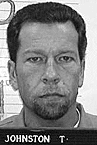
Timothy Johnston
Murderer Brian Kevin Rosenfeld
Murderer · USA · 1985
Brian Kevin Rosenfeld Brian Kevin Rosenfeld was sentenced to three concurrent l…
23 victims
Brian Kevin Rosenfeld
Murderer · USA · 1985
Brian Kevin Rosenfeld Brian Kevin Rosenfeld was sentenced to three concurrent l…
23 victims
 Yahweh ben Yahweh
Murderer · USA · 1980
Yahweh ben Yahweh was born and legally named Hulon Mitchell Jr. (October 27, 19…
23 victims
Yahweh ben Yahweh
Murderer · USA · 1980
Yahweh ben Yahweh was born and legally named Hulon Mitchell Jr. (October 27, 19…
23 victims
 Russell Ellwood
Murderer · USA · 1991
Russell Ellwood was a former taxi driver. Authorities suspected him of killing…
20 victims
Russell Ellwood
Murderer · USA · 1991
Russell Ellwood was a former taxi driver. Authorities suspected him of killing…
20 victims
 Robert Martines Perez
Murderer · USA · 1994
Name: Robert Martines Perez · Other name used in proceedings: Robert Martinez P…
15 victims
Robert Martines Perez
Murderer · USA · 1994
Name: Robert Martines Perez · Other name used in proceedings: Robert Martinez P…
15 victims
 Elfriede Blauensteiner
Serial killer · Austria · 1981
Elfriede Blauensteiner (born 22 January 1931 in Vienna; died 18 November 2003)…
5 victims
Elfriede Blauensteiner
Serial killer · Austria · 1981
Elfriede Blauensteiner (born 22 January 1931 in Vienna; died 18 November 2003)…
5 victims
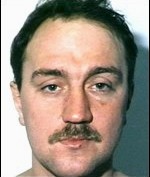 Ian Simms
Murderer · United Kingdom · 1988
Ian Simms — pub landlord and convicted of Helen McCourt’s murder. · Helen McCou…
1 victim
Ian Simms
Murderer · United Kingdom · 1988
Ian Simms — pub landlord and convicted of Helen McCourt’s murder. · Helen McCou…
1 victim
 Venecia DePaula
Murderer · USA · 2009
Venecia DePaula was 32 during the trial and was pregnant with Felipe Perez’s ba…
1 victim
Venecia DePaula
Murderer · USA · 2009
Venecia DePaula was 32 during the trial and was pregnant with Felipe Perez’s ba…
1 victim
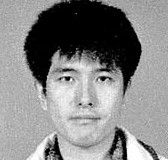 Yuji Nishizawa
Murderer · In the air. Japan · 1999
Yuji Nishizawa (西沢裕司 Nishizawa Yūji) hijacked All Nippon Airways Flight 61 on J…
1 victim
Yuji Nishizawa
Murderer · In the air. Japan · 1999
Yuji Nishizawa (西沢裕司 Nishizawa Yūji) hijacked All Nippon Airways Flight 61 on J…
1 victim
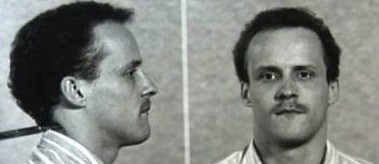 Michel Peiry
Serial killer · USA / France / Switzerland · 1981
Michel Peiry (born 28 février 1959), nicknamed “Le sadique de Romont (FR)”, was…
5 victims
Michel Peiry
Serial killer · USA / France / Switzerland · 1981
Michel Peiry (born 28 février 1959), nicknamed “Le sadique de Romont (FR)”, was…
5 victims
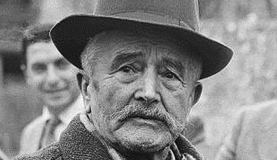 Gaston Dominici
Homicide · France · 1952
Gaston Dominici was convicted of the triple murder of three Britons in France i…
3 victims
Gaston Dominici
Homicide · France · 1952
Gaston Dominici was convicted of the triple murder of three Britons in France i…
3 victims
- Gender
- male
- Country
- USA
- Location
- St. Louis, Missouri, USA
- Date of birth
- January 17, 1961
- Age at first offence
- 28
- Characteristics
- parricide
- Victim profile
- Nancy Johnston, 27 (his wife)
- Method of murder
- Beating and kicking
- Date(s) of murder
- June 30, 1989
- Years active
- 1989
- Date of arrest
- Same day
- Status
-
Executed
Executed by lethal injection in Missouri on August 31, 2005
Case record
Background
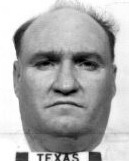
Timothy Johnston was convicted of first degree murder and sentenced to death for killing his wife, Nancy Johnston, in St. Louis, Missouri, on June 30, 1989. The murder involved Nancy Johnston’s torture and depravity of mind and was found to be outrageously and wantonly vile, horrible and inhuman.
The offence
At 2:28 a.m. on June 30, 1989, paramedics arrived at the home of Timothy and Nancy Johnston in response to a 911 call seeking assistance for a “severe sick case.” The 911 operator also dispatched Officer Matthew Rodden of the St. Louis Police Department to the residence.
Timothy Johnston directed the emergency personnel by saying: “hurry up, inside. She is in here. She needs help.”
Nancy Johnston was lying on the floor with her otherwise nude upper body draped with a shirt. Her face and torso were swollen and bloody, and someone had yanked large patches of hair from her head. She did not breathe, and paramedics declared her dead at the scene.
An autopsy performed later that morning revealed extensive, blunt-trauma injuries over much of Nancy Johnston’s upper body. The injuries included a broken nose, bruised and torn lips, scrapes to the back of her head and on her face, separation of a portion of the scalp from the skull, a broken right collarbone, a four-inch tear in her liver, bruising and tearing in the heart and spleen, breaks in nearly all of her front ribs and in four of the back ribs, and a variety of relatively “minor” scrapes and bruises over much of her body.
The medical examiner determined the cause of death as the collapse of the support structure around the heart and lungs, rendering those organs unable to function because they could not bear the weight of the muscle, tissue and bone pressing on them. Bleeding under the skin confirmed that Nancy Johnston remained alive through most of the beating.
When he learned his wife was dead, Timothy Johnston flew into a rage. He ordered the officer and the paramedics to leave, throwing himself against the walls of the living room, knocking lamps and small items from their places, and overturning furniture. He screamed that he knew that a motorcycle gang that wanted “to get back at him” had killed his wife and said that he would take care of everything that needed to be done.
Before or while the police and paramedics arrived, witnesses described the beating continuing in the street. Marty Bounds saw a man “beating on someone” and could not determine the gender of the person being beaten until the attacker ripped her shirt from her. Bounds said the attacker kicked the victim “like if you would kick a football, stomping like ... a tin can, if I was trying to flatten it.” Bounds tried to interrupt the attack verbally, but the attacker responded only with profanity.
Naomi Runtz awoke to the sound of a fracas outside her window and said she saw a man kicking and stomping someone and called 911.
Streetlights illuminated the scene sufficiently well so that Bounds, Runtz and Officer Ruzicka later identified the attacker/driver as Timothy Johnston.
Johnston’s assault began in Nancy Johnston’s car and continued at their home. The incident escalated after an argument erupted earlier that evening at a bar. Johnston took Nancy Johnston home and beat her severely in front of her 11-year-old son. Johnston then called paramedics after she was no longer breathing.
A jury convicted Johnston of first degree murder and recommended the death sentence because the murder of Nancy Johnston involved torture and depravity of mind and was, as a result, outrageously and wantonly vile, horrible and inhuman.
Aggravating circumstance
The sole statutory aggravating circumstance submitted by the trial court and found by the jury was that the murder of Nancy Johnston involved torture and depravity of mind and thus was outrageously and wantonly vile, horrible and inhuman.
To find this aggravator, the jury had to find:
- That the defendant inflicted physical pain or emotional suffering on Nancy Johnston and the defendant did so for the purpose of making her suffer before dying.
- That the defendant committed repeated and excessive acts of physical abuse upon Nancy Johnston and the killing was therefore unreasonably brutal.
- That the defendant killed Nancy Johnston after she was bound or otherwise rendered helpless by defendant and that defendant thereby exhibited a callous disregard for the sanctity of all human life.
- That the defendant, while killing Nancy Johnston or immediately thereafter purposely mutilated or grossly disfigured the body of Nancy Johnston by acts beyond that necessary to cause her death.
The jury found that the state proved each of these elements of the aggravator.
Investigation
Officer Matthew Rodden arrived at the Johnston residence at the same time as the paramedics. A male voice from inside the house directed these emergency personnel to “hurry up, inside. She is in here. She needs help.”
Officer John Ruzicka saw Johnston earlier in the evening when he responded to a call reporting an assault in progress at the intersection of South Broadway and Eichelberger at approximately 1:30 a.m.
Officer Ruzicka found a dark-colored, two-door car stopped in the middle of the southbound lanes of Broadway with a broken windshield on the driver’s side. Ruzicka told the driver to “hold on a minute.” The driver ignored him and sped off.
Ruzicka gave chase briefly but returned to the place of the assault to interview witnesses.
After the police decided to protect the crime scene and Johnston himself, officers decided to handcuff Johnston and take him to a police car. Detective James Maier ordered Johnston removed from the car when he began kicking the inside of the car in an apparent attempt to resist.
Maier noticed blood and hair on Johnston’s steel-toed motorcycle boots.
Officers discovered evidence during the process of checking the house because Nancy Johnston’s eleven-year-old stepson, Michael Federhofer, also lived in the house. Officers checked to determine whether Federhofer was also a victim and to determine whether any members of the motorcycle gang that Johnston referred to remained in the house.
Arrest and interrogation
Detective James Maier informed Johnston of his rights pursuant to Miranda v. Arizona. Maier told Johnston that he, Maier, believed Johnston was involved in the murder.
Johnston denied involvement but became severely agitated. Maier left Johnston alone for nearly an hour.
After a short delay while technicians took fingernail scrapings from Johnston, Johnston called his wife a “whore” and indicated he had grown tired of her infidelities. Johnston also said that he was “dead meat” and told Maier he would confess.
Johnston recounted that he and Nancy Johnston had gone to a local bar on his motorcycle before midnight, that they argued at a bar, that he left her there and returned to their residence. He claimed that he called several friends by telephone in an attempt to calm down.
Johnston said he grabbed a revolver and shot up the house and a television. According to Johnston, Nancy came home during this tirade and attempted to drive away in her mother’s car, parked in the driveway. He ran out, jumped on the hood of her car as she tried to drive away, kicked in the windshield, and chased her when she tried to run away. Johnston claimed he knocked her to the ground and punched her a few times. Johnston said he and Nancy decided to return home, then the argument resumed once they arrived there, and he resumed hitting and kicking her. He said he pulled her inside and called 911.
After learning that eyewitness accounts differed substantially from the story Johnston told, Johnston began to cry.
Witness accounts
Michael Federhofer, Nancy Johnston’s eleven-year-old stepson, was found at his grandmother’s and confirmed parts of Johnston’s story. Federhofer added that he saw Johnston hitting his stepmother while she was still in the car when the two returned home.
Federhofer told police that Johnston ordered the boy to help him get Nancy into the house. Federhofer told Johnston to “leave her alone.” Johnston told Federhofer to “shut up or I’ll kill you” and moved toward the boy; Federhofer ran away and spent the night with his grandmother.
Robyn Romanchuk told police she saw a man standing over a woman, kicking her repeatedly and calling her a “slut,” “bitch” and “whore.” Romanchuk heard young Federhofer scream and saw him run away. She recognized the voice as that of the man who lived with Nancy Johnston. Romanchuk watched as the man dragged the woman behind some bushes, beat her with a lawn chair, went into the house leaving the woman lying outside, and returned carrying a new, unidentified weapon with which he hit the still body repeatedly. Romanchuk saw the man drag the body over the porch and into the house.
Trial
A jury convicted Timothy Johnston of first degree murder. Upon the jury’s recommendation, the trial court sentenced Johnston to death.
In death penalty appeals, the Missouri Supreme Court did not address neither claims of motion-court error founded on alleged trial court errors that Johnston should have preserved for direct appeal, and it did not review motion court error or trial court error for plain error under Rule 30.20 unless a claim of plain error facially established substantial grounds for believing that “manifest injustice or miscarriage of justice” had resulted. The court considered related claims of ineffective assistance of counsel for failure to preserve alleged trial error using the test in Strickland v. Washington.
Johnston assigned error to the motion court’s decision to deny relief based on defense counsel’s alleged ineffectiveness for failing to investigate and present mental health evidence of a psychiatrist’s apparent finding that Tim could not deliberate because of head injuries, alcohol dependence and either organic or personality disorder. The motion hearing record indicated that defense counsel carefully considered whether to put on psychiatric evidence and determined that the court-appointed psychiatrist, Dr. Parwatikar, could have been particularly damaging. In his depositions, Dr. Parwatikar initially testified that Johnston suffered from emotional and mental duress and that he suffered an impaired ability to conform his behavior to the law’s requirements. On cross-examination, Dr. Parwatikar agreed that Johnston did not suffer from a mental disease or defect at the time he beat Nancy Johnston to death. The trial court held there were well-considered strategic reasons for defense counsel’s decisions, and denied relief.
Johnston also claimed his trial counsel was ineffective in failing to obtain and present to certain experts’ “objective evidence” of his alleged brain damage. Johnston asserted the motion court erred in not ordering Johnston transferred to a hospital for a magnetic resonance imaging (MRI) test during the Rule 29.15 proceeding. The court found that before trial standard neuropsychological and EEG testing was performed and neither showed brain damage, and denied the point.
The Supreme Court affirmed the judgments. It held that death sentence was not excessive or disproportionate to the penalty imposed in similar cases.
Sentencing
A Missouri trial court sentenced Timothy Johnston to death for first degree murder.
Appeals and post-conviction proceedings
Direct appeal (Missouri Supreme Court)
In State v. Johnston, 957 S.W.2d 734 (Mo. 1997), the Missouri Supreme Court affirmed Johnston’s conviction and sentence, and affirmed the denial of post-conviction relief.
The court held that:
- Items found during a protective sweep of defendant’s house were properly seized under the plain view doctrine.
- Admission of broken rifle and bloody jeans improperly seized during protective sweep was not prejudicial error.
- Prosecutor’s peremptory challenges to five female African-American venirepersons did not constitute Batson violations.
- Evidence of deliberation was sufficient to support defendant’s conviction.
- Defense counsel’s failure to object to prosecutor’s comments during the penalty phase, including description of defendant as an animal, did not amount to ineffective assistance of counsel.
- Death sentence was not excessive or disproportionate to penalty imposed in similar cases.
The Supreme Court affirmed.
Post-conviction relief (Rule 29.15) and habeas corpus (federal)
Johnston filed a petition for writ of habeas corpus in the United States District Court for the Eastern District of Missouri, challenging his conviction and resulting death sentence. The district court denied the petition.
Johnston sought federal appellate review in Johnston v. Luebbers, 288 F.3d 1048 (8th Cir. 2002). The United States Court of Appeals for the Eighth Circuit affirmed denial of habeas relief, with Judge Heaney dissenting.
The appellate court held that:
- Habeas relief was not warranted on the ground that the trial court failed to clearly instruct the jury.
- The state court’s conclusion that Johnston was not denied effective assistance of counsel was not an unreasonable application of clearly established federal law.
- The state court’s conclusion that Johnston’s confession was not illegally obtained was not an unreasonable application of clearly established federal law.
- The District Court did not abuse its discretion in denying Johnston’s request for an evidentiary hearing.
Execution-related federal stay and clemency
On August 31, 2005, Johnston argued that Missouri’s method of lethal injection violated the U.S. Constitution’s bar to cruel and unusual punishment and sought relief, leading to a stay of execution that was later vacated.
Missouri Attorney General Jay Nixon appealed to the full bench after a three-judge panel stayed the execution. The full bench overruled the stay.
Johnston’s lawyers appealed to the U.S. Supreme Court, and their plea was rejected.
Gov. Matt Blunt declined to reduce Johnston’s sentence to life imprisonment. Blunt also refused to intervene further on the clemency request.
Outcome
Timothy Johnston was executed by lethal injection in Missouri on August 31, 2005.
The execution occurred at the Missouri state prison in Bonne Terre, with Johnston pronounced dead at 12:07 a.m. Moments before the first drug was administered, Johnston rolled his head back and forth and appeared to grimace, and then stopped moving once the drug took effect.
Johnston’s last words were: “I hope Nancy's mom forgives me. I hope everyone I've ever hurt forgives me. I'm ready to go to heaven. I hope you can forgive yourselves.”
Johnston’s final meal included fried chicken, catfish, fries, cole slaw, apple pie and Dr. Pepper.
Other details
Legal citations and procedural references
- State v. Johnston, 957 S.W.2d 734 (Mo. 1997) (Direct Appeal).
- Johnston v. Luebbers, 288 F.3d 1048 (8th Cir. 2002) (Habeas).
- Johnston’s petition for writ of habeas corpus was filed in the United States District Court for the Eastern District of Missouri and denied.
- Johnston’s appeal included assignments of error regarding search and seizure and deliberation.
- The execution-related proceedings involved a claim that the three-drug method of lethal injection presented a threat of “painful and protracted death,” including arguments about administration of the sedative and subsequent drugs.
Names, relationships, and identifying details in the case
- Nancy Johnston was the victim and Timothy Johnston’s wife.
- Michael Federhofer was Nancy Johnston’s eleven-year-old stepson.
- Timothy Johnston was a 44-year-old man executed by lethal injection on August 31, 2005.
Timeline
- June 30, 1989 — Timothy Johnston killed Nancy Johnston at the Johnston home in St. Louis, Missouri.
- July 24, 1989 — Johnston was charged by indictment with First Degree Murder and Armed Criminal Action.
- May 16, 1991 — The jury returned a verdict of guilty of Murder 1st Degree and Armed Criminal Action.
- May 18, 1991 — The jury returned a death sentence as punishment for First Degree Murder and life imprisonment for Armed Criminal Action.
- July 26, 1991 — The St. Louis City Circuit Court sentenced Johnston to death for the First Degree Murder conviction and to Life for Armed Criminal Action.
- January 2, 1992 — Johnston filed a motion for post-conviction relief in the Circuit Court of St. Louis City.
- September 30, 1996 — The Circuit Court denied post-conviction relief.
- November 25, 1997 — The Missouri Supreme Court affirmed Johnston’s conviction and sentence and the denial of post-conviction relief.
- March 2, 1998 — The United States Supreme Court denied certiorari review.
- August 14, 1998 — Johnston filed a petition for writ of habeas corpus in the United States District Court for the Eastern District of Missouri.
- November 2, 2000 — The District Court denied the petition for writ of habeas corpus.
- May 1, 2002 — The Court of Appeals affirmed the denial of habeas relief.
- January 21, 2003 — The Supreme Court declined certiorari review.
- August 31, 2005 — Johnston was executed by lethal injection in Missouri; he was pronounced dead at 12:07 a.m.

Spotted an error, or have more information about this case?