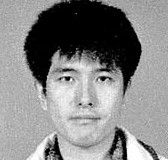
Yuji Nishizawa
Murderer Dr. Wouter Basson
Murderer · 1992
Wouter Basson (born July 6, 1950) was a South African cardiologist and the form…
230 victims
Dr. Wouter Basson
Murderer · 1992
Wouter Basson (born July 6, 1950) was a South African cardiologist and the form…
230 victims
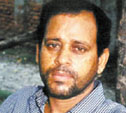 Ershad Sikder
Murderer · Bangladesh · 1990
Ershad Sikder was an influential political figure in the south-western city of…
30 victims
Ershad Sikder
Murderer · Bangladesh · 1990
Ershad Sikder was an influential political figure in the south-western city of…
30 victims
 Russell Ellwood
Murderer · USA · 1991
Russell Ellwood was a former taxi driver. Authorities suspected him of killing…
20 victims
Russell Ellwood
Murderer · USA · 1991
Russell Ellwood was a former taxi driver. Authorities suspected him of killing…
20 victims
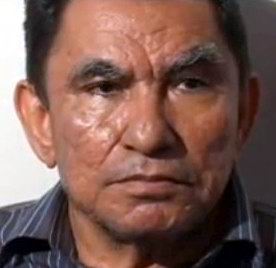 Anisio Ferreira de Sousa
Murderer · Brazil · 1989
September 4, 2003 — Anísio Ferreira de Sousa was sentenced to 77 years in priso…
19 victims
Anisio Ferreira de Sousa
Murderer · Brazil · 1989
September 4, 2003 — Anísio Ferreira de Sousa was sentenced to 77 years in priso…
19 victims
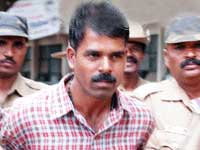 Umesh Reddy
Murderer · India · 1998
Umesh Reddy was sentenced to death on October 27, 2006. The Karnataka High Cour…
18 victims
Umesh Reddy
Murderer · India · 1998
Umesh Reddy was sentenced to death on October 27, 2006. The Karnataka High Cour…
18 victims
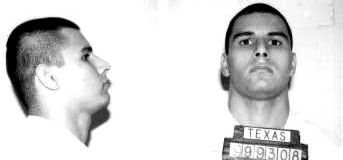 Ruben Gutierrez
Murderer · USA · 1998
Ruben Gutierrez (TDCJ Number 999308) was born on 06/10/1977. He was Hispanic, m…
1 victim
Ruben Gutierrez
Murderer · USA · 1998
Ruben Gutierrez (TDCJ Number 999308) was born on 06/10/1977. He was Hispanic, m…
1 victim
 Cody Posey
Homicide · USA · 2004
Cody Posey was a New Mexico teenager who was born October 9, 1989. In 1992, whe…
3 victims
Cody Posey
Homicide · USA · 2004
Cody Posey was a New Mexico teenager who was born October 9, 1989. In 1992, whe…
3 victims
 Kermit Smith
Murderer · USA · 1980
Kermit Smith, Jr. was executed by the state of North Carolina for the kidnap, r…
1 victim
Kermit Smith
Murderer · USA · 1980
Kermit Smith, Jr. was executed by the state of North Carolina for the kidnap, r…
1 victim
 Bobbie Sue Terrell
Murderer · USA · 1984
Bobbie Sue Dudley Terrell was a Pinellas County nurse and worked as the night s…
12 victims
Bobbie Sue Terrell
Murderer · USA · 1984
Bobbie Sue Dudley Terrell was a Pinellas County nurse and worked as the night s…
12 victims
 Pernell Ford
Murderer · USA · 1983
Defendant: Pernell Ford, also described as 18 during the 1983 murders and as 35…
2 victims
Pernell Ford
Murderer · USA · 1983
Defendant: Pernell Ford, also described as 18 during the 1983 murders and as 35…
2 victims
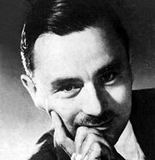 John George Haigh
Serial killer · United Kingdom · 1944
John George Haigh was an English serial killer during the 1940s. He was commonl…
6 victims
John George Haigh
Serial killer · United Kingdom · 1944
John George Haigh was an English serial killer during the 1940s. He was commonl…
6 victims
- Gender
- male
- Country
- In the air. Japan
- Location
- In the air. Japan
- Date of birth
- September 8, 1970
- Age at first offence
- 29
- Characteristics
- —
- Victim profile
- Naoyuki Nagashima, 51 ( the plane's captain )
- Method of murder
- St abbing with knife
- Date(s) of murder
- July 23, 1999
- Years active
- 1999
- Date of arrest
- Same day
- Status
-
Life imprisonment
Sentenced to life in prison on March 23, 2005
Case record: Yuji Nishizawa
Overview
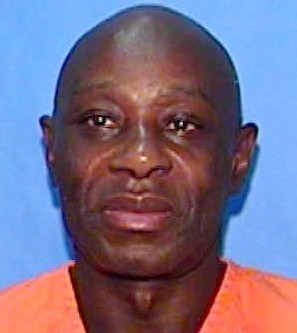
Yuji Nishizawa (西沢裕司 Nishizawa Yūji) hijacked All Nippon Airways Flight 61 on July 23, 1999, forcing access into the cockpit and killing the captain, Naoyuki Nagashima.
Timeline
- July 23, 1999 — A Boeing 747-481D with 503 passengers (including 14 children) and 14 crew members took off from Tokyo International Airport (Haneda Airport) in Ota, Tokyo, Japan, en route to New Chitose Airport in Chitose, Japan near Sapporo. The aircraft was hijacked by Yuji Nishizawa about 25 minutes after takeoff.
- 12:09 P.M. — Crew members managed to subdue Nishizawa, and co-pilot Koga got back into the cockpit and told the air traffic controllers: “It’s an emergency. The captain was stabbed. Prepare an ambulance.”
- 12:14 P.M. — The plane made an emergency landing at Haneda Airport and Nishizawa was immediately arrested.
- March 23, 2005 — Nishizawa was sentenced to life in prison after being found guilty but of unsound mind.
Background
All Nippon Airways Flight 61 used a Boeing 747-481D carrying 503 passengers, including 14 children, and 14 crew members. The flight departed from Tokyo International Airport (Haneda Airport) in Ota, Tokyo, Japan, and was en route to New Chitose Airport in Chitose, Japan near Sapporo.
Yuji Nishizawa was born September 8, 1970 in Tokyo. At the time of the hijacking he was a 28-year-old unemployed man from the ward of Edogawa in Tokyo.
During investigation, it was revealed that Nishizawa took a large dose of SSRIs (antidepressants used in the treatment of depression) before the episode. He said that he hijacked the plane because he wanted to fly it under the Rainbow Bridge in Tokyo.
The offence
About 25 minutes after takeoff, Nishizawa used a 20 centimeter kitchen knife to force a flight attendant to allow him access into the cockpit. He then forced 34-year-old co-pilot Kazuyuki Koga (古賀 和幸, Koga Kazuyuki) out of the cockpit.
Nishizawa remained in the cockpit with captain Naoyuki Nagashima (長島 直之, Nagashima Naoyuki). Nishizawa stabbed Nagashima in the chest and took control of the plane. At one point, the plane descended to an altitude of 300 meters.
Investigation
After the plane landed, a doctor confirmed the death of Nagashima shortly after the plane landed.
Nishizawa was charged with murder.
The trial and evaluations addressed whether Nishizawa was psychologically fit and whether his capability was diminished at the time of the crime. One psychiatric evaluation diagnosed Nishizawa as having Asperger's syndrome. A second evaluation concluded that Nishizawa was “under significant influence of antidepressant drugs and was in a state of diminished capability at the time of the crime.” The prosecution said Nishizawa’s behavior was “rational” at that time and that the killing was “part of his enormous objectives” in what they called a “well-premeditated” crime. Defense attorneys argued that Nishizawa acted out of a “desire for suicide.”
During investigation, Nishizawa said his motive was to fly under the Rainbow Bridge in Tokyo.
Arrest
At 12:09 P.M., crew members managed to subdue Nishizawa and co-pilot Koga got back into the cockpit. Koga told air traffic controllers: “It’s an emergency. The captain was stabbed. Prepare an ambulance.”
The plane made an emergency landing at Haneda Airport at 12:14 P.M., and Nishizawa was immediately arrested.
Trial
Nishizawa was found guilty but of unsound mind, thus only partly responsible for his actions.
During the hearings, his defense team admitted to the allegations but pleaded not guilty and asked for clemency by reason of insanity. Nishizawa apologized for the pilot’s death before prosecutors made their demands.
The court addressed the question of diminished responsibility. Presiding judge Hisaharu Yasui decided that Nishizawa could only be held partly responsible, citing that Nishizawa was taking antidepressant drugs at the time of the crime.
At sentencing, presiding judge Hisaharu Yasui said:
“The hijacking incident was a dangerous and vicious crime unprecedented in Japanese crime history and tremendously damaged public trust in the safe operation of aircraft.”
Yasui also said:
“The defendant bears grave responsibility for the crime and it would be inevitable to give him capital punishment. However, the court has decided to commute the sentence as he had diminished responsibility. “The defendant impulsively came up with murderous intent and killed the pilot after suffering intense anxiety and frustration that he would not be able to carry out his plan to maneuver the plane as the pilot did not leave the cockpit.”
Prosecutors demanded a life sentence. Prosecutors argued that Nishizawa was “completely capable of taking responsibility and it would be appropriate to demand capital punishment,” but asked for life imprisonment instead because Nishizawa was under the influence of antidepressant drugs at the time.
During the trial, Nishizawa confessed to having “considered flying the plane under the Rainbow Bridge,” which crosses Tokyo Bay to link Tokyo’s Shibaura district with the Odaiba district.
Nishizawa also stated during the hearing: “there is nothing wrong.” Nishizawa shouted during the hearing that he did not care if he were sentenced to death for the crime.
Defense attorneys had asked for clemency by reason of insanity.
Sentencing
On March 23, 2005, Nishizawa was handed a life sentence in 2005.
Outcome
Nishizawa received a life sentence. The captain, Naoyuki Nagashima, died as a result of stab wounds.
Aftermath
The hijacking incident led the government to tighten security at airports nationwide. The changes included setting up a gate outside baggage claim in Haneda airport to prevent people who are not passengers from entering the area.
Following the incident, Japanese Prime Minister Keizo Obuchi said at the parliament building in Tokyo:
“It is extemely unfortunate that such an incident occured,”
“I can only express my deep regret,” he added.
“We have to examine how the hijacker could enter the cockpit and what measures were then taken.”
The family of Nagashima sued ANA, the Japanese state, and Nishizawa’s family over Nagashima’s death, alleging that poor security at the airport and aboard the plane led to the incident. A settlement with undisclosed terms was reached on December 21, 2007.
All other 503 passengers and 14 crew on board Flight ANA61 were safe.
Other details
BBC News reported that:
- “The pilot of an All Nippon Airways plane has died from stab wounds after overcoming a hijacker.”
- “The plane returned to Tokyo, where the hijacker was arrested.”
- “All the other 503 passengers and 14 crew on board flight ANA61 were safe.”
- The Boeing 747 was flying from Tokyo’s Haneda airport to the northern city of Sapporo on the island of Hokkaido.
- About 25 minutes after take-off, a 28-year-old Japanese man, identified by police as unemployed Yuji Nishizawa, started screaming at other passengers and cabin crew.
- He was armed with a long knife and barged into the cockpit and demanded to be taken to Yokota, a US military airbase in western Tokyo.
- One report said at one stage took the controls himself, but this was not confirmed by the authorities.
- The military airbase gave clearance for landing, but after about 20 minutes, the pilot and three other crew members overpowered Nishizawa and he was restrained.
- During the struggle, the pilot was repeatedly stabbed in the neck and shoulder by the hijacker.
- The pilot was pronounced dead by a doctor on board shortly after the plane landed in Tokyo one hour and 20 minutes after taking off.
- Under Japanese law, a hijacking resulting in a fatality carried a maximum sentence of the death penalty.
- It was the first time in Japan that someone has been killed in connection with a plane hijack.
In court hearings, Nisizawa’s defence team admitted to the allegations and pleaded not guilty, while asking for clemency by reason of insanity.
A doctor confirmed Nagashima’s death shortly after the plane landed at Haneda Airport.
Co-pilot Koga was 34 years old.
A flight attendant was forced to allow Nishizawa access to the cockpit.
The plane made an emergency landing at Haneda Airport and Nishizawa was arrested immediately after.
A passenger, Yoshiko Kawase, 60, said she noticed the man while he was still in his seat because he appeared nervous and was wearing gloves.
Yuji Nishizawa was reportedly quoted as saying: “I wanted to soar through the air,” following his arrest.
A Japan Times report dated Thursday, March 24, 2005 described the sentence and included the details that prosecutors had demanded a life sentence and that the trial’s central argument was whether Nishizawa was psychologically fit at the time to have been responsible for his actions.
Spotted an error, or have more information about this case?