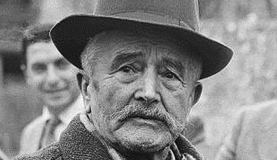
Gaston Dominici
Homicide Alain Lamare
Homicide · France · 1978
Alain Lamare (born 1956) was a French gendarme known to the public under the ni…
1 victim
Alain Lamare
Homicide · France · 1978
Alain Lamare (born 1956) was a French gendarme known to the public under the ni…
1 victim
 Henri-Antoine Charrière
Homicide · France · 1930
Henri-Antoine Charrière was born in Ardèche, France. He had two older sisters.…
1 victim
Henri-Antoine Charrière
Homicide · France · 1930
Henri-Antoine Charrière was born in Ardèche, France. He had two older sisters.…
1 victim
 Yvonne Chevallier
Homicide · France · 1951
Yvonne Chevallier Yvonne Chevallier went on trial on November 5, 1952, and a ju…
1 victim
Yvonne Chevallier
Homicide · France · 1951
Yvonne Chevallier Yvonne Chevallier went on trial on November 5, 1952, and a ju…
1 victim
 David Michael Krueger
Homicide · Canada · 1956
David Michael Krueger was best known by his birth name, Peter Woodcock. In 1982…
4 victims
David Michael Krueger
Homicide · Canada · 1956
David Michael Krueger was best known by his birth name, Peter Woodcock. In 1982…
4 victims
 David Michael Krueger
Homicide · Canada · 1956
Peter Woodcock (birth name) was a Canadian serial killer and child rapist. · Da…
4 victims
David Michael Krueger
Homicide · Canada · 1956
Peter Woodcock (birth name) was a Canadian serial killer and child rapist. · Da…
4 victims
 Katherine Bunnell
Murderer · USA · 2004
Defendant: Katherine Bunnell (alias Jane Doe) Victim: Thomas “T.J.” Wright (3-y…
1 victim
Katherine Bunnell
Murderer · USA · 2004
Defendant: Katherine Bunnell (alias Jane Doe) Victim: Thomas “T.J.” Wright (3-y…
1 victim
 Michael Apelt
Murderer · USA · 1988
Michael Apelt and his brother, Rudi, came to Arizona from West Germany and bega…
1 victim
Michael Apelt
Murderer · USA · 1988
Michael Apelt and his brother, Rudi, came to Arizona from West Germany and bega…
1 victim
 Cristopher Anthony Davis
Murderer · USA · 1995
Defendant: Christopher Anthony Davis (also referred to as Christopher A. Davis)…
3 victims
Cristopher Anthony Davis
Murderer · USA · 1995
Defendant: Christopher Anthony Davis (also referred to as Christopher A. Davis)…
3 victims
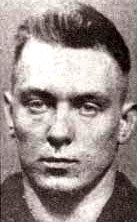 Anthony Chebatoris
Murderer · USA · 1937
Anthony Chebatoris Anthony Chebatoris (1898–1938) was executed by hanging at Mi…
1 victim
Anthony Chebatoris
Murderer · USA · 1937
Anthony Chebatoris Anthony Chebatoris (1898–1938) was executed by hanging at Mi…
1 victim
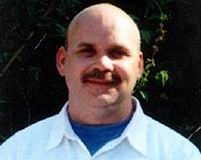 Douglas Donald Moore
Murderer · Canada · 2003
Douglas Donald Moore died of an apparent suicide in a cell at the Maplehurst De…
3 victims
Douglas Donald Moore
Murderer · Canada · 2003
Douglas Donald Moore died of an apparent suicide in a cell at the Maplehurst De…
3 victims
- Gender
- male
- Country
- France
- Location
- Lurs, Alpes-de-Haute-Provence, France
- Date of birth
- 1876
- Age at first offence
- 76
- Characteristics
- murder for hire
- Victim profile
- Sir Jack Drummond, a 61-year-old scientist; his 44-year-old wife Anne Wilbraham; and their 10-year-old daughter Elizabeth
- Method of murder
- Shooting - Beating ( blows from the stock of a carbine )
- Date(s) of murder
- August 4, 1952
- Years active
- 1952
- Date of arrest
- November 13, 1953
- Status
-
Died in custody
Sentenced to death on November 28, 1954; commuted to life imprisonment in 1957; released on humanitarian grounds due to poor health on July 14, 1960; died on April 4, 1965
Case overview
Gaston Dominici was convicted of the triple murder of three Britons in France in what became known as the Dominici affair.
During the night of 4/5 August 1952, Sir Jack Drummond (a 61-year-old scientist), his wife Anne Wilbraham (44), and their 10-year-old daughter Elizabeth were murdered next to their car, parked in a lay-by near La Grand'Terre, the farm belonging to the Dominici family near the village of Lurs in the département of Basses-Alpes (now Alpes-de-Haute-Provence).
Gaston Dominici, the family patriarch, was convicted of the three murders in 1957 and sentenced to death, though it was widely believed that his guilt had not been clearly established. In 1957, President René Coty commuted the sentence to life imprisonment. On 14 July 1960, President Charles de Gaulle ordered Gaston Dominici’s release on humanitarian grounds due to his poor health, but he was never pardoned or given a re-trial. Gaston Dominici died on 4 April 1965. The affair made international headlines at the time.
Timeline
- 4/5 August 1952 — Sir Jack Drummond, Anne Wilbraham, and Elizabeth Drummond were murdered next to their car in the lay-by near La Grand'Terre near Lurs.
- 5 August 1952 — Gustave Dominici claimed to have discovered Elizabeth Drummond’s body at around 5.45 am and flagged down Jean-Marie Olivier to inform police.
- 1 September 1952 — Radiesthetist Jean-Claude Coudouing visited the crime scene.
- 6 August 1952 — The Dominicis were formally interviewed for the first time.
- 6 and 13 August 1952 — Superintendent Edmond Sébeille took witness statements from Henri Conil and Jean Brault.
- 7 August 1952 — A search warrant was executed at the Dominici farm.
- 8 August 1952 — Gustave Dominici was questioned for four hours by Superintendent Sébeille in Peyruis.
- 9 August 1952 — France-Soir published a picture and details of Elizabeth Drummond’s travel diary (a mock-up made by journalist Jacques Chapus).
- 12 October 1952 — Gustave Dominici was taken into custody at Saint-Charles Prison in Digne-les-Bains.
- 15 December 1952 — Gustave Dominici was released after being sentenced to two months’ imprisonment.
- 17 November 1952 — Paul Maillet narrowly escaped an attempt on his life.
- 12 November 1953 — Nelly Leroy was questioned by Superintendent Constant.
- 13 November 1953 — Guston Dominici arrived in Digne-les-Bains, escorted by Gendarmerie Commander Bernier; Guston Dominici’s sons accused their father; Guston Dominici confessed during custody.
- 14 November 1953 — Gaston Dominici was questioned until 6 pm.
- 15 November 1953 — Judge Périès discussed trousers belonging to Gaston Dominici seen drying on the trellis in late afternoon of 5 August 1952.
- November 28, 1954 — Gaston Dominici was sentenced to death.
- 1957 — The death sentence was commuted to life imprisonment.
- 14 July 1960 — Gaston Dominici was released on humanitarian grounds due to his poor health.
- 4 April 1965 — Gaston Dominici died.
People
Accused
- Gaston Dominici — patriarch of the Dominici family; convicted of the murders; sentenced to death; later had his sentence commuted; released on humanitarian grounds due to poor health; died on 4 April 1965.
Victims
- Sir Jack Drummond — 61-year-old scientist; murdered on 4/5 August 1952.
- Anne Wilbraham — 44-year-old; murdered on 4/5 August 1952.
- Elizabeth Drummond — 10-year-old; murdered on 4/5 August 1952.
Other named individuals (investigation and related)
- Gustave Dominici — Gaston Dominici’s son; claimed to have found Elizabeth’s body and flagged down Jean-Marie Olivier; later accused and detained in connection with the case.
- Marie Dominici — Gaston’s wife; 73 (nicknamed “The Sardine”); involved in the farm household.
- Yvette Dominici — Gustave’s wife; 20; pregnant with her second child; had interactions with Aimé Perrin and others during discovery and investigation.
- Alain (Dominici) — baby son of the Dominicis at the time of the murders (10 months old in the family account).
- Clovis Dominici — Gaston’s and/or Gustave’s family member identified as involved on the day of the murders.
- Marcel Boyer — involved in events around discovery; later gave conflicting statements.
- Faustin Roure — saw gunshots conversation and later gave information about a landslide visit and sightings.
- Marceau Blanc — a lorry driver who passed the scene early.
- Joseph Moynier — passed the scene at 4.50 am.
- Jean Hébrard — noticed a camp bed at 5.20 am.
- Jean Ricard — tourist camping on the nearby plateau; passed on foot; observed positions of bodies around 6.50 to 7 am.
- Aimé Perrin — met Yvette and assisted officers to the scene.
- Henri Estoublon — mayor of Lurs.
- Dr Dragon — local doctor who began examining bodies.
- Prosecutor Louis Sabatier — arrived during the early investigation period.
- Judge Roger Périès — judge involved early in the case; questioned people during an inquiry period.
- Clerk Emile Barras — judge’s clerk.
- Superintendent Edmond Sébeille — led the investigation officially.
- Captain Albert — arrived with officers early at the scene.
- Officers Romanet and Bouchier — officers involved in early actions and questioning.
- Inspectors Ranchin and Culioli — recovered a Rock-Ola M1 carbine from the river Durance.
- Lorry drivers and other witnesses — including Ode Arnaud, Lucien Duc, Germain Garcin, Jean Garcin, Raymond Franco, and others named in witness accounts.
- Journalists and newspapers referenced — including André Sevry from Le Monde, and France-Soir, L’Humanité.
- Lawyers and named officials in later custody/confession — including Mr Pollak (lawyer), Mr Charrier, Custody Officer Guérino, Superintendent Prudhomme, and Custody Officer Guérino’s colleague Bocca.
The offence
Crime scene and victims
In the early hours, six or seven shots were heard at approximately 1.10 am.
Investigators found the bodies near the Drummonds’ car:
- Lady Anne Drummond — lying on her back, covered by a sheet, parallel to the left side of the car (position details varied in subsequent testimony).
- Sir Jack Drummond — lying on his back, underneath a camp bed on the other side of the road.
- Elizabeth Drummond — 77 metres away on a slope leading down to the river; her skull had been smashed in by several blows from the stock of a carbine described as a long firearm similar to a rifle.
The car was described as a Hillman with registration number NNK686.
Weapons and ammunition
A Rock-Ola M1 carbine was recovered from the river Durance; it was broken in two and in very poor condition even before being thrown into the river. Several parts were missing or replaced with improvised substitutions.
Investigators also found:
- two cartridge cases and two full cartridges, lying in pairs (one pair found 3 metres behind the car, the other 5 metres perpendicular to the front-left of the car and 1.5 metres away from Lady Anne’s body),
- cartridge cases marked “LC4” and full cartridges bearing “WCC 43” and “WCC 44”.
A chip of wood from a rifle stock was found near Elizabeth’s head during body removal and was circulated by hand among people before location details were understood.
Investigation
Assignment and early actions
The investigation was officially assigned to Superintendent Edmond Sébeille of Marseille’s 9th Mobile Brigade.
There were multiple disruptions to the scene:
- investigators’ actions included removing bodies at 3 pm on 5 August,
- there were altercations involving crowd control, including criticism of Captain Albert for not containing the crowd of onlookers and journalists,
- investigators later noted that the crime scene had been contaminated multiple times,
- the blood pool found behind the sump was never tested and it was never established whose blood it was.
Evidence and witness accounts (selected)
- A 4 cm² shred of skin from a human hand was found hooked on the car’s rear bumper and was passed to Superintendent Sébeille.
- The car’s front doors had been closed; the double boot door had been pushed in with the key left in the lock on the outside, which dismissed the theory that Elizabeth locked herself in from inside.
- Shoe prints from crepe shoes were found; they were protected by twigs and photographed.
- A police dog picked up Elizabeth’s scent and followed a route including the railway track, the RN 96 road, and the irrigation canal, stopping at a point before returning.
Multiple competing witness accounts described people near the car at different times, including sightings of an “unknown man” with a thick head of hair and witnesses describing a man looking under the bonnet.
France-Soir published a picture and details of Elizabeth’s travel diary, later described as a mock-up made by journalist Jacques Chapus.
There were also reports of political press activity and theories advanced by the French Communist Party.
Searches, rifles, and other items
Investigators executed a search warrant at the Dominici farm and found:
- a 12 mm calibre hunting rifle,
- an old Fusil Gras service rifle rechambered for hunting large game,
- a 9 mm carbine.
A search warrant at the farm of François Barth (Yvette’s father) produced nothing of evidential value.
On 29 August 1952, a search warrant was executed at Paul Maillet’s home and two Sten guns with ammunition were found hidden in a kitchen stove. Paul Maillet was not prosecuted for unlawfully possessing weapons of war in exchange for providing assistance.
Disputed and evolving testimony
Witness and participant statements included contradictions about:
- whether Gustave waved down Jean-Marie Olivier from behind the Drummonds’ car and what he said,
- whether Gustave’s earlier claims about timing and positions were consistent,
- how many bodies and which bodies Gustave referred to,
- whether a “woman dressed in black” was seen,
- the accounts surrounding the discovery and movement of bodies, including Lady Anne’s position and when the sheet coverage changed.
Arrest and custody
Gustave Dominici was taken into custody at Saint-Charles Prison in Digne-les-Bains in the late afternoon of 12 October 1952. He was formally charged by Judge Périès with failing to assist a person in danger of death after he admitted Elizabeth Drummond was still alive when he found her around 5.45 am on 5 August 1952.
Gustave later retracted previous statements on 20 October; his request for bail was refused.
On 7 November (year within the case narrative of the second inquiry period), Gustave was questioned in prison. He was evasive about “Jo.”
Trial and sentencing
Charge connected to Gaston Dominici’s conviction
Gaston Dominici was convicted of the triple murder of Sir Jack Drummond, Anne Wilbraham, and Elizabeth Drummond.
He was sentenced to death on November 28, 1954.
Confession and questioning narrative
Gaston Dominici was questioned after being brought into custody in Digne-les-Bains, with the custody period described as involving officers and a confession that evolved over time.
During custody, Gaston asked Superintendent Prudhomme to draw up “the document that says I’m guilty”, while stating he was innocent. Superintendent Prudhomme responded that the situation could not be treated as a negotiation and that either he was guilty or he wasn’t.
Gaston’s account later stated the murders were triggered by his sexual attraction to Lady Anne Drummond. The confession described:
- Lady Anne’s acceptance of sexual relations,
- noise waking Sir Jack Drummond,
- a fight leading Gaston to shoot Sir Jack three times (twice to his front) and Lady Anne one or twice,
- Elizabeth’s flight toward the bridge,
- Gaston catching Elizabeth at the riverbank, knocking her unconscious with a pistol-whip,
- later statements about finding Elizabeth still alive and the involvement of the carbine.
These claims were described as contradicting autopsy results in the narrative, including that Lady Anne was entirely clothed and had dress pierced by bullets, and that autopsy showed she had not been involved in sexual intercourse immediately before death.
Appeals
No re-trial was granted after release on humanitarian grounds.
Outcome
- Sentenced to death on November 28, 1954
- Commuted to life imprisonment in 1957
- Release on humanitarian grounds due to poor health on July 14, 1960
- Never pardoned or given a re-trial
- Died on April 4, 1965
Aftermath
The Dominici affair made international headlines at the time and remained subject of dispute.
Gaston Dominici was released due to poor health and later died on 4 April 1965.
Multiple initiatives and campaigns discussed defending the Dominicis, as well as an anti-police protest that had been prohibited by prefectural order.
The affair also involved discussion of later theories and publications, including the claim that a miscarriage of justice had occurred.

Spotted an error, or have more information about this case?