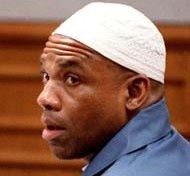
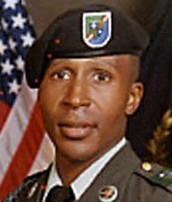
Leo Alexander Jones
Murderer Ervil LeBaron
Murderer · USA · 1972
Ervil Morrell LeBaron (1925 to August 16, 1981) was the leader of a polygamous…
35 victims
Ervil LeBaron
Murderer · USA · 1972
Ervil Morrell LeBaron (1925 to August 16, 1981) was the leader of a polygamous…
35 victims
 Brian Kevin Rosenfeld
Murderer · USA · 1985
Brian Kevin Rosenfeld Brian Kevin Rosenfeld was sentenced to three concurrent l…
23 victims
Brian Kevin Rosenfeld
Murderer · USA · 1985
Brian Kevin Rosenfeld Brian Kevin Rosenfeld was sentenced to three concurrent l…
23 victims
 Marvin Gray
Murderer · USA · 1975
Marvin Gray was convicted killer who claimed responsibility for 23 slayings and…
23 victims
Marvin Gray
Murderer · USA · 1975
Marvin Gray was convicted killer who claimed responsibility for 23 slayings and…
23 victims
 Yahweh ben Yahweh
Murderer · USA · 1980
Yahweh ben Yahweh was born and legally named Hulon Mitchell Jr. (October 27, 19…
23 victims
Yahweh ben Yahweh
Murderer · USA · 1980
Yahweh ben Yahweh was born and legally named Hulon Mitchell Jr. (October 27, 19…
23 victims
 Russell Ellwood
Murderer · USA · 1991
Russell Ellwood was a former taxi driver. Authorities suspected him of killing…
20 victims
Russell Ellwood
Murderer · USA · 1991
Russell Ellwood was a former taxi driver. Authorities suspected him of killing…
20 victims
 Nicola Sacco
Murderer? · USA · 1920
Nicola Sacco Nicola Sacco and Bartolomeo Vanzetti were convicted of murdering t…
2 victims
Nicola Sacco
Murderer? · USA · 1920
Nicola Sacco Nicola Sacco and Bartolomeo Vanzetti were convicted of murdering t…
2 victims
 Leonard Edward Smith
Murderer · USA · 1984
Leonard Edward Smith was sentenced to life in prison and was also sentenced to…
2 victims
Leonard Edward Smith
Murderer · USA · 1984
Leonard Edward Smith was sentenced to life in prison and was also sentenced to…
2 victims
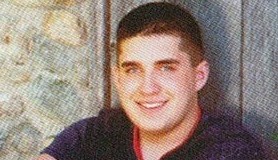 Tyler Peterson
Mass murderer · USA · 2007
Tyler Peterson committed suicide by shooting himself the same day victims. Tyle…
6 victims
Tyler Peterson
Mass murderer · USA · 2007
Tyler Peterson committed suicide by shooting himself the same day victims. Tyle…
6 victims
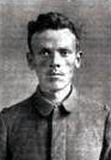 Friedrich Schumann
Serial killer · Germany · 1911
Friedrich Schumann (1 February 1893 – 27 August 1921) was a German serial kille…
6 victims
Friedrich Schumann
Serial killer · Germany · 1911
Friedrich Schumann (1 February 1893 – 27 August 1921) was a German serial kille…
6 victims
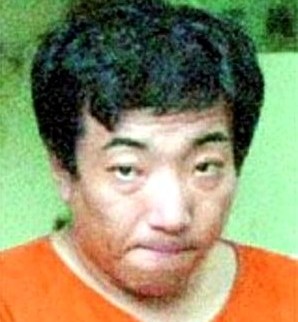 Hiroshi Maue
Serial killer · Japan · 2005
Hiroshi Maeue ( 前上 博 , Maeue Hiroshi ) was born August 8, 1968. He was a Japane…
3 victims
Hiroshi Maue
Serial killer · Japan · 2005
Hiroshi Maeue ( 前上 博 , Maeue Hiroshi ) was born August 8, 1968. He was a Japane…
3 victims
- Gender
- male
- Country
- USA
- Location
- Duval County, Florida, USA
- Date of birth
- April 13, 1950
- Age at first offence
- 31
- Characteristics
- revenge
- Victim profile
- Thomas Szafranski, 28 (Jacksonville police officer )
- Method of murder
- Shooting (Winchester rifle)
- Date(s) of murder
- May 23, 1981
- Years active
- 1981
- Date of arrest
- Same day
- Status
-
Executed
Executed by electrocution in Florida on March 24, 1998
Case record: Leo Alexander Jones
Personal details
Leo Alexander Jones (April 13, 1950 – March 24, 1998) was sentenced to death and was executed by electrocution in Florida on March 24, 1998 at the age of 47.
The offence
On May 23, 1981, shortly after 1:00 A.M., Officer Thomas J. Szafranski was shot in his squad car at the intersection of 6th Street and Davis Street, Jacksonville, Florida. A bullet struck the wire cage separating the front and back seats and a bullet fragment ricocheted into the head of patrolman Thomas Szafranski, 28, killing him.
Leo Jones and his cousin Bobby Hammonds were confronted in a two-story apartment building after Officer Wilmouth and Officer Lynwood Mundy responded to the incident. The officers searched the building’s lower level and found several high-powered rifles resting in plain view, but did not disturb them at that time.
Jones was condemned for the 1981 slaying of Thomas Szafranski, who was struck in the head by a sniper’s bullet while sitting in his patrol car in downtown Jacksonville.
Investigation
Officer Wilmouth was first on the scene. A group of people came out of a nearby bar and approached him. One unidentified member of the group indicated that the shots had come from the two-story apartment building fronting the 6th and Davis Street intersection. Wilmouth proceeded to investigate this building, and Mundy quickly joined the investigation.
Officer Mundy entered the building fully aware that the vacant lower left apartment was a known “stash house” harboring drug users, vagabonds and other street criminals. Wilmouth informed Mundy that he had heard “shuffling” in the upper left apartment. Mundy knocked on the door and proceeded to identify himself as a police officer, but repeated knocking went unanswered. When Mundy continued to hear voices coming from within, he entered the apartment and confronted appellant and appellant’s cousin, Bobby Hammond, charging them both with attempted first-degree murder.
Both appellant and Hammond were transported to the Police Memorial Building. There, after being given repeated Miranda warnings by Officer Eason, appellant signed a statement incriminating himself and exonerating his cousin, Hammond. Jones (as written in the case report) was referenced as “Jones, 440 So. 2d at 572” in the court’s discussion.
Arrest and custody-related allegations
Jones and Hammond testified that police beat them both at the scene and at the police station. The police acknowledged striking them at the scene, testifying it was necessary because they were resisting arrest, and denied hitting them at any other time. Prior to obtaining Jones’ short two-sentence confession, Jones was taken to the hospital. The attending doctor testified that Jones had only superficial injuries. A doctor or lawyer with the public defender’s office who saw Jones at a bond hearing shortly after his arrest said Jones had cuts and bruises on his face and neck.
A lawyer with the public defender’s office saw Jones at a bond hearing after his arrest and said Jones had cuts and bruises on his face and neck.
Confession and related trial evidence
At a pretrial hearing on the validity of the confession, Hammonds disavowed the statement he had given police. He said officers had beaten and threatened him, telling him to implicate Jones. Police testified that Jones and Hammonds were hurt during a scuffle as the two resisted arrest. Officers denied any physical abuse or coercion.
Detective Hugh Eason told the Tribune he simply talked to Jones until he persuaded him to confess.
Jones’ lawyers charged that the confession, written by Eason and signed by Jones, was suspect because of the vague description of the weapon as a “gun or rifle.” Eason testified that Jones told him what to write and that Jones then voluntarily signed it. Judge A.C. Soud denied the motion to throw out the confession, and the ruling was ultimately approved on appeal.
At trial, Hammond changed his story again and testified against Jones. Jones maintained his innocence, saying he was in bed when the shooting occurred.
The State relied heavily upon the confession. The case also included testimony that about a week prior to the murder Jones told a police officer he was tired of being hassled by the police and that he intended to kill a pig. Hammond testified that on the night of the murder, he saw Jones leave the apartment with a rifle in his hand, heard gunshots, and shortly thereafter saw Jones return to the apartment still carrying the rifle. This testimony was consistent with the State’s theory that Jones fired shots from a downstairs apartment, and Hammond had previously been impeached by an earlier sworn statement that he did not see Jones with a gun that night.
Police found two .30-30 rifles in Jones’ apartment. The condition of the bullets in the officer’s body prevented a ballistics comparison. A hand-swab test was taken to determine whether Jones had recently fired a gun; the crime laboratory analyst testified there was an insufficient amount of antimony present to reach any conclusion, explaining that it would have been expected due to the four-hour delay in taking the test and because a rifle rather than a pistol was involved.
The motive was described by prosecutor Greene as revenge. Jones had been stopped a week before the shooting and, according to the police officer who stopped him, threatened to kill an officer. The officer’s report made no mention of any threat, and Jones denied it.
Jones claimed the guns belonged to Glenn Schofield, an acquaintance he had sold cocaine to that night.
Jones was tried and convicted by an all-white jury, and Szafranski also was white. Jurors recommended that Jones be sentenced to death by a vote of 9-3. The judge accepted the recommendation, which did not have to be unanimous.
The main witness against Jones later recanted.
Trial
Jones was convicted of the sniper killing of white police officer Thomas Szafranski, 28, and was sentenced to death.
Post-conviction proceedings and evidence development
In Jones’ first round of appeals, his lawyers challenged the judge’s decision to let jurors hear the confession, focusing on what happened at trial and whether the judge’s rulings were proper. Those appeals failed.
Jones’ first motion for postconviction relief focused on allegations of ineffectiveness of trial counsel, including a contention that counsel was ineffective for failing to locate Marion Manning. Jones argued that Manning would have testified that Schofield was at the scene and that shortly after the shots were fired he jumped into her nearby car and told her to drive away.
Trial counsel H. Randolph Fallin testified he recognized that Schofield might be a suspect but said Schofield refused to talk to him when Fallin tried to interview him at the jail where Schofield was held following an arrest for an unrelated crime. Fallin also stated neither Schofield nor anyone else had given him the name of the woman supposed to have been with Schofield following the shooting. In rejecting Jones’ ineffective assistance argument as a basis for postconviction relief, the court stated that accepting the judge’s finding that Fallin was never told her last name, Fallin could not be faulted for not locating Marion Manning, and it was questionable whether Manning would have been helpful because she testified at the postconviction hearing that Schofield told her that as he got into the car, Schofield told her that appellant had shot the policeman (referencing “Jones, 528 So.2d at 1174”).
Jones’ current motion for postconviction relief alleged (1) that counsel was ineffective for failing to locate and present witnesses other than those referred to in the first motion, and (2) that Jones was entitled to a new trial because of newly discovered evidence.
The court held that Jones was not entitled to relief on the first ground. It found he had already had a full and fair hearing on his claim of ineffectiveness of trial counsel and that he could not raise ineffective assistance claims on a piecemeal basis by filing successive motions (citing Francis v. Barton, 581 So. 2d 583 (Fla.), cert. denied, 111 S.Ct. 2879 (1991); and Squires v. State, 565 So.2d 318 (Fla. 1990)). It also found the motion was filed beyond the two-year time limit of Florida Rule of Criminal Procedure 3.850, except that newly discovered evidence claims fall within the exception to the two-year requirement.
Newly discovered evidence affidavits considered
The newly discovered evidence alleged by Jones was reflected by affidavits attached to his motion, including the following statements:
Patricia Owens (then Ferrell) stated she lived with Glen Schofield at the time of the murder and that Schofield had complained to her about being harassed by the police. Owens said that after the murder Schofield told her to tell the police that he was home with her when the murder occurred and that he made an equivocal statement implying he was the killer. She further stated that a week after the killing Schofield went to jail for robbing a bank, and that when he got out of prison eight years later he bragged to her about killing Officer Szafranski.
Linda Atwell, who was Jones’ girlfriend, stated that as she left Jones’ apartment on the night of the murder, Schofield passed her running upstairs holding a rifle or a shotgun. Atwell stated she asked why he was running and Schofield replied, “Them crackers are after me.”
Katherine Dixon stated she and her boyfriend Tony Brown were waiting at their apartment to meet Schofield on the night of the murder, but he never showed up. The following morning she saw a gun in the closet. Dixon stated Brown told her it was a 30-30 rifle but refused to tell her who owned the gun. She said Brown took the gun and she never saw it again. Dixon stated that soon after, Brown and Schofield were arrested for robbing a bank.
Daniel Cole stated he walked with his girlfriend Denise Reed near the murder scene on the night the officer was killed. Cole stated he heard a shot and within a few minutes saw Schofield running from the area behind Jones’ apartment house holding a rifle in his hand.
Denise Reed gave a statement essentially corroborating Daniel Cole.
Frank Pittro, who was presently in jail at Marion Correctional Institution, stated he met Schofield in 1985 at Union Correctional Institution. Pittro stated Schofield bragged on more than one occasion about how he killed a Jacksonville police officer and got away with it, described taking a high caliber rifle and shooting him, and described running through an apartment building and out the back to get away from police. Pittro stated Schofield told him Leo Jones had been arrested for the killing but that Jones had nothing to do with the crime.
Franklin Delano Prince, an inmate at Union Correctional Institution, stated that in 1985 or 1986 Schofield told him he killed a Jacksonville police officer and that Leo Jones was in prison for the murder. Prince stated Schofield confessed the killing to many others, including another inmate named John Davis.
An investigator of the Capital Collateral Representative (CCR) reported an interview with Paul Marr. The report stated Marr told the investigator that Marr and Schofield were both incarcerated at Union Correctional Institution in 1985. The investigator reported that Schofield described to Marr how he killed a Jacksonville police officer in 1981, explained that he obtained a rifle from an apartment building, shot the officer, returned the rifle to the apartment, and exited through the back door of the apartment building where he was later picked up by a woman friend. The investigator reported Marr said Schofield told him Leo Jones was on death row for the crime.
In preparing to defend against Jones’ current motion, Duval County assistant state attorney John Jolly discovered certain documents in his file and immediately disclosed them to CCR. The documents reflected that in 1990 Michael Richardson was in the Clay County Jail awaiting trial for robbery. In trying to negotiate a plea bargain, Richardson told an assistant state attorney that Schofield was responsible for the 1981 murder of a Jacksonville police officer. This information was passed on to the Duval County Sheriff’s Department. A representative of that department interviewed Richardson, and Richardson confirmed that Richardson had overheard Schofield telling how he committed the crime. The trial judge held an emergency Sunday afternoon hearing on the legal sufficiency of the motion, and denied it, reasoning that the ineffective assistance claim was procedurally barred and that newly discovered evidence would not have compelled a verdict for Jones if introduced at trial.
The case discussed the standard for measuring newly discovered evidence claims and described prior Florida authority, including Hallman v. State, 371 So. 2d 482, 485 (Fla. 1979), and other cases and rules, before adopting a modified probability standard.
Standard applied and disposition in the Florida Supreme Court
The court concluded that Hallman’s “conclusiveness test” was too strict and held that newly discovered evidence must be of such a nature that it would probably produce an acquittal on retrial. The same standard would apply if the issue were whether a life or a death sentence should have been imposed. The court described federal court authority using a similar standard.
The court explained that under the Hallman definition of newly discovered evidence, asserted facts must have been unknown by the trial court, party, or counsel at the time of trial, and defendant or counsel could not have known them by the use of diligence.
The court found it appeared that much of the evidence referring to events near the time of the murder might not qualify as newly discovered because if not already known it could have been obtained with reasonable diligence. The court discussed examples including Linda Atwell and the name and telephone number of Patricia Owens being set forth in the police report.
However, the court stated that Schofield’s confessions to various inmates other than Marr and to Patricia Owens after he got out of jail qualified as newly discovered evidence that should be considered.
The court held that under the older Hallman standard, the trial judge’s rejection based on newly discovered evidence was correct and that in light of Jones’ confession and other evidence at trial, it could not be said newly discovered evidence would have conclusively prevented the conviction. Under the newly adopted probability standard, the court could not be sure whether Jones’ motion should be denied. The court determined it was necessary to have an evidentiary hearing on newly discovered evidence claims.
The court also addressed a Brady v. Maryland issue. It concluded it did not view the circumstances surrounding the taking of Richardson’s statement as a violation of Brady v. Maryland, 373 U.S. 83 (1963), and it rejected the Brady claim.
The court reasoned that because CCR learned of Richardson’s existence only recently, it could be excused for not yet procuring his statement. It treated Richardson’s testimony concerning Schofield’s statements as newly discovered evidence.
Because the trial judge denied Jones’ motion without the evidentiary hearing contemplated by the court’s revised approach, the court reversed the order denying Jones’ motion for postconviction relief and remanded the case for an evidentiary hearing. As a consequence, the Florida Supreme Court stayed Jones’ pending execution.
The court’s disposition was dated by the series of opinions referenced in the case summary: opinion 70,836 (June 23, 1988; 528 So. 2d 1171), opinion 73,281 (November 10, 1988; 533 So. 2d 290), opinion 78,907 (November 14, 1991; 591 So. 2d 911), opinion 81,346 (April 11, 1996; 678 So. 2d 309), opinion 90,231 (May 22, 1997; 695 So. 2d 679), opinion 90,231 (October 20, 1997; 701 So. 2d 76), opinion 92,234 (March 17, 1998; 709 So. 2d 512).
Hearing and subsequent legal outcome leading to execution
After the Florida Supreme Court issued its final ruling on Jones’ innocence claims on March 17, 1998, the majority found the evidence did not warrant relief under its newly articulated standard. Two judges dissented: Leander Shaw and Harry Anstead. Leander Shaw argued that appeals courts should act as a “constitutional safety net” to prevent execution of innocent people, and he wrote that “This evidence vastly implicates Schofield and casts serious doubt on Jones’ guilt.” Harry Anstead listed witnesses—20 in all—who implicated Schofield or testified to other problems with the case, and he argued the court was overly restrictive, threatening “to defeat the ends of justice” by its nearsightedness. Anstead wrote: “…we cannot ignore the fact that the State routinely relies on 'jailhouse confessions' to secure convictions in criminal cases, including many murder cases,” and added: “Obviously the State would have a powerful case against Schofield....”
Jones’ lawyers objected after the March 25, 1997, fiery death of Pedro Medina during an execution in the wired, wooden chair known as “Old Sparky.” Jones’ appeal for a stay to the Florida Supreme Court and separate appeal to a federal judge were rejected Monday, after which Jones was executed one week later.
Jones was pronounced dead at 7:11 a.m. on March 24, 1998.
Last statement during execution
During preparations while staring at his religious adviser, El Hajj Rabbani Muhammad, Jones said repeatedly: “I bear witness that there is no God but Allah and Muhammad is his messenger,” and when the jolt hit he flinched and tightened his fingers.
Other procedural and contextual events included in the case record
- The case record described a nearly yearlong halt in executions in Florida that ended when Gerald Stano, 46, died in the state’s electric chair for the 1973 murder of a 17-year-old girl; Stano had confessed to 41 killings.
- Jones’ execution was described as the 41st since Florida’s death penalty was upheld in 1976, and the last time the state had back-to-back executions was in December 1995.
- Florida State Prison spokesman Gene Morris stated: “We've been assured that the chair and all the components are in very good working order,” in relation to concerns about the execution equipment.
- The case record discussed a 1990 incident involving a sponge in the headpiece catching fire during the execution of Jesse Tafero.
- It also included discussion of the Florida Supreme Court in October 1997 clearing the way for resumed use of the electric chair and the fact that if lethal injection were ever ruled unconstitutional, Florida lawmakers had approved execution by lethal injection.
- The case record also referenced earlier procedural activity including Florida Supreme Court opinions and the reversal and remand for an evidentiary hearing, which resulted in a stay of pending execution before the later execution occurred.
Notable people mentioned
- Thomas J. Szafranski, 28, was the victim and a Jacksonville police officer.
- Leo Jones was the appellant and defendant convicted and sentenced to death.
- Bobby Hammond was Jones’ cousin and a witness whose story changed across proceedings.
- Officer Lynwood Mundy was involved in entering the apartment and described as an “enforcer” in testimony by Cleveland Smith.
- Detective Hugh Eason was referenced as discussing Jones’ confession and as the author of the confession as described.
- Judge A.C. Soud refused to suppress the confession.
- Prosecutor Greene was referenced as describing motive and as handling appeals.
- Trial counsel H. Randolph Fallin testified regarding efforts to locate Marion Manning and Schofield.
- Florida Supreme Court Justice Leander Shaw and Harry Anstead dissented in March 17, 1998 ruling; Shaw wrote that his case had become “a horse of a different color” and also wrote that “casts serious doubt on Jones' guilt” (as quoted in the case summary narrative).
- El Hajj Rabbani Muhammad was Jones’ religious adviser during execution preparations.
- Cleveland Smith was a retired police officer who came forward and testified about Officer Lynwood Mundy’s alleged bragging about beating Jones.
- Pedro Medina and Gerald Stano were mentioned in connection with execution-related events.
Quotations included verbatim
- “Them crackers are after me.”
- “I bear witness that there is no God but Allah and Muhammad is his messenger,”
- “In the hearts of all us, it's long overdue,” said Thomas Pialorsi.
- “We've been assured that the chair and all the components are in very good working order,” said Florida State Prison spokesman Gene Morris.
- “The present case is a classic example of that safety net working properly—up to the present point,” wrote Florida Supreme Court Justice Leander Shaw.
- “Although Jones was tried and convicted in 1981, much of the present evidence did not—could not—come to light until now, more than a decade later—after Officer Smith and Schofield's accusers came forward.”
- “This evidence vastly implicates Schofield and casts serious doubt on Jones' guilt,” wrote Shaw.
- “…we cannot ignore the fact that the State routinely relies on 'jailhouse confessions' to secure convictions in criminal cases, including many murder cases,” wrote Harry Anstead.
- “Obviously the State would have a powerful case against Schofield....” wrote Harry Anstead.
Spotted an error, or have more information about this case?