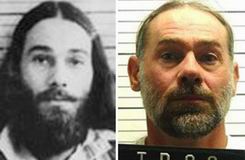
Leonard Edward Smith
Murderer Brian Kevin Rosenfeld
Murderer · USA · 1985
Brian Kevin Rosenfeld Brian Kevin Rosenfeld was sentenced to three concurrent l…
23 victims
Brian Kevin Rosenfeld
Murderer · USA · 1985
Brian Kevin Rosenfeld Brian Kevin Rosenfeld was sentenced to three concurrent l…
23 victims
 Marvin Gray
Murderer · USA · 1975
Marvin Gray was convicted killer who claimed responsibility for 23 slayings and…
23 victims
Marvin Gray
Murderer · USA · 1975
Marvin Gray was convicted killer who claimed responsibility for 23 slayings and…
23 victims
 Yahweh ben Yahweh
Murderer · USA · 1980
Yahweh ben Yahweh was born and legally named Hulon Mitchell Jr. (October 27, 19…
23 victims
Yahweh ben Yahweh
Murderer · USA · 1980
Yahweh ben Yahweh was born and legally named Hulon Mitchell Jr. (October 27, 19…
23 victims
 Russell Ellwood
Murderer · USA · 1991
Russell Ellwood was a former taxi driver. Authorities suspected him of killing…
20 victims
Russell Ellwood
Murderer · USA · 1991
Russell Ellwood was a former taxi driver. Authorities suspected him of killing…
20 victims
 Corey James Jennings
Murderer · USA · 2000
Name: Corey James Jennings · TDCJ Number: 999382 · Date of Birth: 03/31/1975 ·…
1 victim
Corey James Jennings
Murderer · USA · 2000
Name: Corey James Jennings · TDCJ Number: 999382 · Date of Birth: 03/31/1975 ·…
1 victim
 Randy Schoenwetter
Murderer · USA · 2000
Name: Randy Schoenwetter Date of birth: 10/27/81 Eighteenth Judicial Circuit: B…
2 victims
Randy Schoenwetter
Murderer · USA · 2000
Name: Randy Schoenwetter Date of birth: 10/27/81 Eighteenth Judicial Circuit: B…
2 victims
 Lonnie Franklin
Serial killer · USA · 1985
Lonnie Franklin was convicted as the “Grim Sleeper” serial killer, a nickname u…
25 victims
Lonnie Franklin
Serial killer · USA · 1985
Lonnie Franklin was convicted as the “Grim Sleeper” serial killer, a nickname u…
25 victims
 Russell Williams
Murderer · Canada · 2009
Russell Williams (born March 7, 1963) was convicted murderer and rapist and a f…
2 victims
Russell Williams
Murderer · Canada · 2009
Russell Williams (born March 7, 1963) was convicted murderer and rapist and a f…
2 victims
 Dennis Rader
Serial killer · USA · 1974
Dennis Lynn Rader (born March 9, 1945) was an American serial killer who murder…
10 victims
Dennis Rader
Serial killer · USA · 1974
Dennis Lynn Rader (born March 9, 1945) was an American serial killer who murder…
10 victims
- Gender
- male
- Country
- USA
- Location
- Hamblen County, Tennessee, USA
- Date of birth
- December 30, 1960
- Age at first offence
- 24
- Characteristics
- robbery, armed robbery, rape
- Victim profile
- John “Shorty” Pierce / Novella Webb
- Method of murder
- Shooting ( .32 caliber pistol)
- Date(s) of murder
- May 21, 1984
- Years active
- 1984
- Date of arrest
- 2 days after
- Status
-
Sentenced to death
Sentenced to life in prison; sentenced to death on August 25, 1989
Case record: Leonard Edward Smith
Status
Leonard Edward Smith was sentenced to life in prison and was also sentenced to death on August 25, 1989.
Timeline
- May 21, 1984 — Leonard Edward Smith described going with his girlfriend Angie O'Quinn and his friend David Hartsock to a road near the Sullivan-Carter County line, getting liquor, drinking and talking, smoking marijuana, then joining a robbery attempt at a store near the county line and later entering Webb’s Store and shooting Novella Webb.
- May 23, 1984 — Leonard Edward Smith and David Hartsock were arrested while hiding in a home in an isolated area of Dennis Cove.
- 1984 — Leonard Edward Smith, his friend David Hartsock, and his girlfriend Angie O'Quinn robbed two small grocery stores in rural Sullivan County; John “Shorty” Pierce was shot and killed at Malone’s Grocery, and Novella Webb was shot and killed at Webb’s Grocery.
- October 3, 1997 — The Court of Criminal Appeals of Tennessee at Knoxville entered an opinion dated October 3, 1997, affirming the judgment; the opinion cited “(Death Penalty)” and stated “AFFIRMED.”
- May 17, 1999 — The Supreme Court of Tennessee at Knoxville issued an opinion in an automatic appeal affirming the death sentence.
- 11th day of October, 1999 — The sentence of death by electrocution was to be carried out as provided by law unless otherwise ordered by the Court or other proper authorities.
Background
In 1984, Leonard Edward Smith, his friend David Hartsock, and his girlfriend Angie O'Quinn robbed two small grocery stores in rural Sullivan County.
Armed with a .32 caliber pistol, Hartsock entered Malone’s Grocery alone, while Smith and O'Quinn waited for him outside the store in Smith’s car. During the course of the robbery, Hartsock shot and killed John Pierce.
The trio left Malone’s Grocery and proceeded to Webb’s store near the Carter-Sullivan County line. Both Smith and Hartsock entered Webb’s store. Smith was carrying the gun, and during the robbery, he shot and killed Novella Webb. The opinion stated that the victim and her husband owned and operated the store.
Leonard Edward Smith was charged with two counts of first degree murder for the killings of Pierce and Webb. The offenses were joined for trial, and, at Smith’s request, venue for the trial was changed from Sullivan to Hamblen County.
Smith was convicted on both counts of first degree felony murder. At the conclusion of the proof, the State withdrew its notice of intent to seek the death penalty with respect to the Pierce murder, and the trial court imposed a life sentence. However, the jury imposed a sentence of death for the Webb murder.
On Smith’s first direct appeal, the Supreme Court of Tennessee affirmed Smith’s conviction and life sentence for the killing of Pierce, but reversed Smith’s conviction of first degree murder and sentence of death for the Webb murder. The Supreme Court reversed and remanded for a new trial, concluding that the offenses should not have been joined for trial and finding prosecutorial misconduct during final argument (cited as State v. Smith, 755 S.W.2d 757 (Tenn.1988) (“Smith I”)).
Smith was re-tried and again convicted of first degree felony murder and sentenced to death for the Webb killing.
On the second direct appeal, the Supreme Court affirmed the conviction but vacated the death sentence. It found that the jury had been improperly allowed to consider the life sentence imposed for the Pierce murder in considering whether Smith should be sentenced to death for the Webb murder, and it also found that the felony supporting the conviction of first degree murder had been improperly used to establish the felony murder aggravating circumstance in violation of State v. Middlebrooks, 840 S.W.2d 317 (Tenn.1992) (cited as State v. Smith, 857 S.W.2d 1 (Tenn.1993) (“Smith II”)). The case was remanded to the trial court for a third sentencing hearing.
This case was Smith’s appeal from the third sentencing hearing, held in Hamblen County. The Supreme Court noted that prior to the third resentencing hearing, the trial judge denied a motion for recusal and sua sponte changed the venue from Hamblen to Johnson County. The Court of Criminal Appeals granted an extraordinary appeal, found that the trial court had erred by changing venue without the defendant’s consent, but concluded that the refusal of the trial judge to recuse himself was not error (cited as State v. Smith, 906 S.W.2d 6 (Tenn.Crim.App.1995)).
At the third sentencing hearing, the State again sought and obtained the death penalty for the murder of Novella Webb. The Supreme Court stated that the State introduced very little proof regarding the circumstances of the offense at this third sentencing hearing.
The offence
Malone’s Store (John “Shorty” Pierce)
The opinion described a robbery at Malone’s Grocery in rural Sullivan County, where John Pierce was shot and killed.
The Supreme Court described that, during the robbery, Hartsock shot and killed John Pierce.
Webb’s Grocery (Novella Webb)
The opinion described that Smith and Hartsock entered Webb’s store during a robbery, and Smith shot and killed Novella Webb.
The Supreme Court also stated that Mahoney testified her mother had been fifty-nine years old when she was murdered, and her father had been seventy-eight years old at the time of the robbery and murder.
Investigation and evidence
At the third sentencing hearing, the State introduced proof to establish the single aggravating circumstance upon which it relied to support imposition of the death penalty: the defendant had been previously convicted of one or more felonies, other than the present charge, which involve the use or threat of violence to the person.
The State’s proof consisted of copies of indictments and judgments reflecting that Smith had been convicted of robbery in Carter County on October 13, 1980, and on February 21, 1985, and that Smith had been convicted of first degree murder for the killing of John Pierce on March 20, 1985. The reference to the life sentence imposed for the Pierce murder conviction had been redacted from the copy of the judgment passed to the jury.
The State also introduced the judgment establishing that Smith had been convicted of the first degree murder of the victim in this case on August 23, 1989.
With respect to each of these convictions, the State offered identification testimony to establish that Leonard Edward Smith was the same person who was previously convicted of the robbery and murder offenses.
As its final witness, the State called Katy Mahoney, the daughter of the victim in this case. The Supreme Court summarized her testimony: that her father and mother had operated the country store Smith robbed for many years; her mother had been fifty-nine years old when she was murdered; her father had been seventy-eight years old at the time of the robbery and murder; her father’s ribs had been broken during the episode when he was pushed into a trash can; and that her father’s health had declined “drastically” after the robbery and murder. The opinion stated that he was never able to work again and eventually sold the store, and he died the next year from a brain tumor.
Mahoney testified that the murder “won't go away,” that “we live with it all the time,” and that it “it's caused problems now for eleven years.”
Smith’s statement read to the resentencing jury
In mitigation, the defense called Sullivan County Sheriff Keith Carr, who in 1984 had been the detective in charge of investigating the Webb murder. Shortly after Smith’s arrest, Smith had given Sheriff Carr a statement recounting his involvement in the murders of both John Pierce and Novella Webb.
The Supreme Court stated that the entire statement, which the detective read to the resentencing jury at the request of defense counsel, was set forth as follows:
I, Leonard Edward Smith, am giving this statement of my own free will and without any threats or promises being made to me.
On Monday, May 21, 1984, I was with my girlfriend Angie O'Quinn and David Hartsock, and, we went and got some liquor and went to a road near the Sullivan-Carter County line. We parked and were just drinking and talking and smoked some joints. While we were on that road in my black Ford Pinto which I had painted black because it used to be orange, David said “Get out, I want to talk to you.” He and I got out and walked a ways from the car where Angie couldn't hear us talking and David said, “I can get us a little bit of money here at this store.” He said, “It's the store down at the county line.” I asked him if it was Shorty Malone's and he said, “Yes.” Angie and I drove David down there, and let him off a little ways from the store. I parked on a little paved road beside the store. David had a .32 caliber chrome-plated pistol with him. The pistol was his pistol. I heard several shots fired and just a few seconds later David came running around the store. David jumped into the car and said, “Get the hell out of here, I had to shoot him.” I figured it was Shorty because he ran the store. We drove out the road that goes beside of Malone's Grocery and it dead ends and you can turn left to the Wautauga area, or right back to Sullivan County. We turned onto the Wautauga Highway and drove to what is known as Mountain Road. I asked David if he shot the man, and he said, he shot him one time and the man pulled a gun and started shooting at him. I don't remember if he said what money he got. I drunk some more liquor, and made Angie get out of the car. I started drinking and was just going to drive us out of the mountain. We came out at some store, and I turned left and, drove until I realized I was going to [sic] wrong way, and I pulled it in at Webb's Store to turn. I stopped the car at Webb's and David jumped out, and I ran in the store behind him. David ran and jumped on the counter, and knocked the old man over and yelled to me to, “get that bitch” referring to an old woman at the end of the counter. I started towards her, and she started throwing things at me and started spraying paint on me. I fired one shot just to scare people, but, the old woman just kept spraying orange paint and came towards me. I couldn't see because of the paint and I held the gun up and apparently the old lady was trying to get the gun away from me and it went off. We ran from the store when I fired the second shot. I didn't really know that I had shot her until we heard it later on the news. When we were in Webb's Store the old man was hollering, “help me, help me,” and hollering for his wife. The old woman never did say anything that I remember. I know that before we left the store, some man came up to the door, and I told him to get out of there. I didn't get any money from either store, and David didn't say if he did or not. David and I left Webb's and went back up towards Mountain Road, and picked Angie up. I told her we had to get out of there, and we drove down towards Underwood Park, and set the car on fire. David cut a hose next to the carburetor and set the car on fire. David, Angie and me took off on the trails, and really didn't know which way to go. We came out at a house on Indian Creek. It was the Johnson residence because my dad had sold them the house. We didn't go to the house until late last night, and Angie got Gladys Sheets to take us to the home where we were arrested this morning. I had never been to the house before but had been in the area. When Gladys drove us to Dennis Cove, she said she thought we did it. I had taken my shirt and wrapped my feet so I could walk and I think I left it in Gladys' car or at the house. Gladys had told us that Mrs. Webb, and the man at Malone's were both dead. We told Gladys that we didn't do it and she said, “If you didn't, you better keep the gun because the news said it was a .38,” and she knew we had a .32 caliber. I told David to throw the gun out anyway because I knew we had done it. He threw it out as we went over a bridge, and we drove on up to the house. We stopped at a grocery store, and Angie and Gladys went in and got some food for us to take to the house. We fixed something to eat, and went to sleep, but, I felt like they knew where we were at. I had cut mine and David's hair with a pair of scissors Angie had in her pocketbook because I knew they would be looking for somebody with longer hair. This morning I heard a loud noise, and I knew we were caught then. I told Angie, “I'm going out, and you come out too, so we won't get hurt.” Somebody had yelled for us to come out, and David went out first. All I know is that everything didn't turn out the way it was supposed to, and it shouldn't have happened. I am sorry for what happened, because I know I am a thief, but, I don't think of myself as a murderer. This is all I know to tell you about what happened.
On cross-examination, Sheriff Carr said that Webb had been killed approximately forty-five minutes after John Pierce, and he estimated that the driving time from Malone's Store to Webb's Store was about thirty minutes.
Sheriff Carr testified he had examined the murder scene at Webb's store and had searched for a bullet in a pool of blood about an inch deep by using a vegetable strainer. In his search, he discovered a mark on the wall behind the counter at Webb's store which had been caused by a bullet striking the wall. He also observed the victim’s body and said that the bullet which caused death entered at the victim’s right nasal passage.
The Supreme Court stated that the .32 caliber gun used in the Webb murder was found underneath a railroad bridge. Orange paint spots were visible on the gun when it was recovered, and it had six live rounds in the chamber.
Sheriff Carr testified that the route Smith claimed to have driven after leaving Webb’s store was along a curvy, mountainous, dirt road which was very treacherous.
A day or so after the murder, Sheriff Carr found the defendant’s badly burned car near an area where Smith had been camping with Hartsock and O'Quinn prior to the murder. Also found at that site were partially burned articles of Smith's clothing and strands of Smith's and Hartsock's hair which had been cut to disguise their appearance.
Sheriff Carr testified that Smith, Hartsock, and O'Quinn were arrested on May 23, 1984, while hiding in a home in an isolated area of Dennis Cove. The Supreme Court stated that Gladys Sheets, one of Hartsock’s relatives, had driven the trio to this location and had stopped along the way to allow O'Quinn to purchase food and camping supplies. A live .32 caliber round was found in Smith's pocket when he was arrested. Smith’s and Hartsock's hair had been cut very short.
The Supreme Court stated that at the time of the Webb murder, Smith was twenty-three-years-old; Hartsock and O'Quinn were eighteen or nineteen years of age.
The Supreme Court also stated that although Smith expressed remorse in his statement, Sheriff Carr testified there was nothing indicative of remorse in Smith's demeanor when he gave the statement.
During cross-examination, a jury-out hearing was held to determine the permissibility of certain questions. The Supreme Court stated that during this hearing Smith ordered his attorneys to present no further proof in mitigation and to waive final argument. The trial court determined Smith was competent to decide. Defense counsel presented no further mitigating evidence. In rebuttal, the State recalled Mahoney, who testified that during the eleven years since the murder, she had never seen evidence to indicate the defendant felt remorse.
Following this testimony, the State made a closing argument, but in accordance with the defendant’s instructions defense counsel waived closing argument.
Arrest and participants
The Supreme Court stated that Smith, David Hartsock, and Angela O'Quinn were arrested on May 23, 1984, while hiding in a home in an isolated area of Dennis Cove. It also stated that Gladys Sheets drove the trio to this location.
The Supreme Court described that Smith’s live .32 caliber round was found in Smith’s pocket when he was arrested and that Smith’s and Hartsock’s hair had been cut very short.
Trial
Sentencing hearing (third sentencing hearing)
At the third sentencing hearing, the Supreme Court described that the State introduced proof of the single aggravating circumstance and that it introduced very little proof about the circumstances of the offense.
After waiving opening statement, the State introduced proof to establish the aggravating circumstance described in Tenn.Code Ann. § 39-2-203(i)(2) (1982 Repl.) (as referenced in the opinion) and related to the statutory elements involving the use or threat of violence.
The Supreme Court stated that Mahoney testified about her family and the impact of the murder on her family.
The defense called Sullivan County Sheriff Keith Carr, read Smith’s statement, and after his cross-examination included details about the murder scene and evidence.
Competence and waiver of mitigating evidence and argument
The Supreme Court addressed Smith’s challenge that the trial court allowed Smith to control the presentation of mitigating evidence and to waive closing argument against counsel’s advice.
The Supreme Court described that during a jury-out hearing, Smith ordered his attorneys to present no further proof in mitigation and to waive final argument. The trial court found Smith competent to make the decision.
The Supreme Court recounted the process: Smith’s attorney advised the trial court that Smith had instructed him earlier that morning to waive mitigation; counsel advised against waiving mitigation; the trial court attempted to question Smith to ensure understanding of rights and consequences; Smith refused to be sworn and would not respond except through attorneys; the trial court warned that the jury would almost certainly return with a verdict of death by electrocution if mitigation and argument were waived; and Smith, through his attorney, answered “Yes” to the trial court’s question about understanding.
The Supreme Court also stated the trial court questioned defense counsel about competence. Defense counsel responded that Smith was competent, with counsel stating: “Of course, I've known Leonard now for ten or eleven years. He's always been competent, at least, in my opinion.” The Supreme Court stated that the trial court asked: “And, you have no personal doubts as to his competency and legal ability to make such a decision I take it?” and neither attorney expressed doubt.
The Supreme Court stated that when the jury was recalled, the defense rested, and the trial court concluded the record reflected Smith was competent and fully informed when he waived mitigation and argument.
Verdict and sentence imposed
Based on the proof submitted at the sentencing hearing, the Supreme Court stated the jury found that the State had proven the aggravating circumstance beyond a reasonable doubt and also found that the aggravating circumstance outweighed any mitigating circumstances beyond a reasonable doubt.
The Supreme Court stated that as a result, the jury imposed a sentence of death by electrocution. The trial court entered judgment in accordance with the jury’s verdict, and the Court of Criminal Appeals affirmed.
Sentencing
Aggravating circumstance relied upon
At the third sentencing hearing, the Supreme Court described that the State sought and obtained the death penalty for the murder of Novella Webb and relied on one aggravating circumstance: that the defendant was previously convicted of one or more felonies, other than the present charge, which involve the use or threat of violence to the person.
Sentence of death
The Supreme Court stated that the jury imposed a sentence of death by electrocution and that the Supreme Court affirmed the judgment of the Court of Criminal Appeals upholding the death sentence.
The Supreme Court also stated the sentence was to be carried out on the 11th day of October, 1999, unless otherwise ordered.
Appeals
Supreme Court of Tennessee at Knoxville (automatic appeal)
The Supreme Court of Tennessee at Knoxville reviewed the automatic appeal and considered three issues limited at oral argument:
- Whether the trial court was correct in allowing the defendant to control the presentation of mitigating evidence and to waive closing argument against counsel's advice.
- Whether the admittance of victim impact testimony and argument at the sentencing hearing constituted reversible error.
- Whether the sentence of death was arbitrary or disproportionate in violation of Tenn.Code Ann. § 39-13-206(c)(1)(A)-(D) (1997 Repl.).
The Supreme Court concluded that none of the alleged errors had merit and affirmed the judgment of the Court of Criminal Appeals upholding the death sentence.
Court of Criminal Appeals appendix (April 1997 session)
In the Court of Criminal Appeals of Tennessee at Knoxville, the case was listed with:
- C.C.A. No. 03C01-9512-CC-00383
- Hamblen County
- Hon. Lynn W. Brown, Judge
- “(Death Penalty)” It stated “FOR THE APPELLANT: J. Robert Boatright” and “FOR THE APPELLEE: John Knox Walkup Attorney General and Reporter” and other listed attorneys.
The opinion in the appendix stated:
- “OPINION FILED: October 3,1997”
- “AFFIRMED”
- “JOE G. RILEY, Judge”
Selective prosecution
The Court of Criminal Appeals described that the defendant filed a pre-trial motion requesting that the district attorney general disclose standards used to determine whether to seek the death penalty in murder cases. The assistant district attorney general explained that aggravating and mitigating circumstances were examined and weighed. Defense counsel’s request to put the assistant district attorney general under oath was denied. The Court of Criminal Appeals stated that prosecutorial discretion used in selecting candidates for the death penalty did not result in any constitutional deprivation and held the issue was without merit.
Recusal of trial judge
The Court of Criminal Appeals described that defendant contended the trial judge should have granted a motion for recusal because the trial judge was the prosecuting attorney in an earlier robbery case relied on as an aggravating circumstance. The Court of Criminal Appeals discussed standards for recusal and stated that the issue of recusal had been addressed in the extraordinary appeal in Smith III (906 S.W.2d 6). It stated the record indicated no further evidence of the nature of the trial judge’s participation in the underlying charge. It held the issue without merit.
Jury selection expert
The Court of Criminal Appeals described that defendant requested expert services of a licensed private investigator, two psychologists, a medical doctor, and a jury selection expert. The Court of Criminal Appeals stated that services were authorized except the jury selection expert. It stated that denial of funds for a jury selection expert did not violate constitutional requirements absent a showing of special need and that there was no showing of particularized need in that case.
Jury selection—questionnaire on life imprisonment
The Court of Criminal Appeals described that defense counsel was allowed to submit an extensive questionnaire to potential jurors but the trial judge disallowed two questions asking whether a juror believed a person sentenced to life would spend the rest of his life in prison and, if not, how many years the juror thought that person would serve. It also stated that one of those questions asked whether this would make the juror less likely to vote for a life sentence. The Court of Criminal Appeals held there was no abuse of discretion and the issue was without merit.
Jury selection—group voir dire
The Court of Criminal Appeals described denial of defendant’s request for individual voir dire on all issues except pre-trial publicity and views on the death penalty. It referenced three instances during group voir dire when jurors stated they would be unable to follow the law, and stated those jurors were ultimately excused for cause. It held no prejudice resulted from group voir dire and held the issue without merit.
Jury selection—alternating voir dire
The Court of Criminal Appeals addressed defendant’s complaint that the trial judge erred by not alternating the order of voir dire between the state and defense. It stated this was rejected in Smith II and held no abuse of discretion in allowing the state to proceed first.
Jury selection—dismissals for cause
The Court of Criminal Appeals described defendant’s contention that the trial court erred in excusing several prospective jurors for cause sua sponte. It stated that each juror had indicated that he or she could not follow the law and quoted that it was clear the juror views would prevent or substantially impair the performance of duties in accordance with instructions and oath. It discussed presumption of correctness and the burden on defendant. It held the jurors met the standard for dismissal and held the related argument without merit.
Failure to excuse for cause
The Court of Criminal Appeals addressed defendant’s claim that the trial judge erred by not excusing two potential jurors who stated they could not consider mitigating evidence. It stated that although each initially indicated trouble considering certain kinds of mitigating evidence, the totality of questions and answers showed they could follow the law. It held no abuse of discretion and noted one juror was excused by defendant’s peremptory challenge and neither sat on the panel. It held no relief was available.
Admission of Webb judgment of conviction
The Court of Criminal Appeals stated that the state introduced the judgment showing that the defendant had been found guilty of first degree murder of Webb. It stated that no contemporaneous objection was made and the issue was waived. It nonetheless addressed the issue, stating that the state was entitled to show the defendant had in fact been convicted of the first degree murder for which the jury determined the sentence. It held the issue without merit and stated that the prosecution relied on one aggravating circumstance, the defendant’s prior violent felony convictions excluding the present conviction.
Prior violent felonies—Pierce judgment and redactions
The Court of Criminal Appeals discussed that Smith argued the introduction of his conviction and redacted Order of Judgment for the first degree murder of Pierce was erroneously allowed as evidence. It cited Smith I and Smith II regarding use of Pierce life sentence evidence and described that on resentencing the Pierce judgment had been redacted omitting any reference to the sentence. It stated that defense counsel made no objection to redactions and that jury instructions directed them not to speculate as to significance of redactions. It held the admission of the redacted judgment compliant and the issue without merit.
Direct participation in violence
The Court of Criminal Appeals described Smith’s argument that he did not directly participate in violence in the Pierce murder and that direct participation was necessary to trigger the prior violent felony. It stated this issue was decided contrary to defendant’s argument in Smith II and held it without merit.
Introduction of indictment
The Court of Criminal Appeals described Smith’s contention that the trial court erred by allowing introduction of an armed robbery indictment where the conviction was only for simple robbery. It stated this issue had been determined contrary to defendant’s argument in Smith I and Smith II and held it without merit.
Prosecutorial misconduct
The Court of Criminal Appeals stated defendant alleged prosecutorial misconduct undermined his rights to a fair trial and a reliable sentencing determination. It stated no contemporaneous objection was made, so the issue was waived, and nonetheless addressed it. It discussed:
- Intentional murder argument and stated it was not improper
- Deterrence argument and stated it did not view it as deterrence
- Webb conviction argument and stated the prosecutor did not argue the present conviction could be considered as an aggravating circumstance
It held the issues without merit.
Jury instructions
The Court of Criminal Appeals addressed defendant’s contention that the trial court erred in failing to instruct the jury on specific non-statutory mitigating circumstances and in refusing to instruct the jury on presumed parole or electrocution effects. It held:
- Non-statutory mitigating circumstance instructions were not required under the statute in effect at the time the offense was committed
- Refusal to instruct on parole availability or presumption about actual carry out of sentence was without error
It held these issues without merit.
Taking exhibits to the jury room
The Court of Criminal Appeals addressed defendant’s contention that the trial court erred in allowing the jury to take exhibits to the jury room for use in deliberations and that redactions caused prejudice. It stated that the rules allowed taking exhibits unless otherwise determined and that allowing exhibits was not abuse of discretion. It held this issue without merit.
Constitutionality of death penalty statutes
The Court of Criminal Appeals addressed constitutional contentions including failure to meaningfully narrow eligible defendants, allowing death to be imposed capriciously and arbitrarily, electrocution as cruel and unusual punishment, and appellate review inadequacy. It stated these contentions had been rejected by its Supreme Court and held the issue without merit.
Dissent in Supreme Court (victim impact evidence)
The Supreme Court portion included a dissenting opinion that argued for different limitations on victim impact evidence. It stated that the dissenting justice respectfully dissented from the majority’s approval of admission of victim impact evidence during sentencing.
The dissent included multiple verbatim statements and cited:
- Payne v. Tennessee
- State v. Nesbit
- Tenn. Code Ann. § 39-13-204(c)(Supp.1998)
- Tenn. Code Ann. § 40-35-102(3)(1997) It stated that the adoption of procedures like those used by New Jersey in State v. Muhammad should be used and argued the evidence should be unconstitutional unless carefully controlled and restricted.
The dissent included the following verbatim quotations from Mahoney and also quoted among other legal citations and language from prior cases. One example included the Supreme Court dissent’s quoted passage:
- “Generally, victim impact evidence is unsettling because its use encourages the jury to quantify the value of the victim's life and urges the finding that murder is more reprehensible if the victim is survived by a bereaved family than if the victim had no family at all. State v. Nesbit, 978 S.W.2d at 903.”
The dissent also included verbatim quotations from Professor Lynne N. Henderson about “Victim” and “Victims.”
It concluded:
- “Accordingly, I would remand this case for a new sentencing hearing conducted in a manner consistent with the discussion herein contained.”
Other details
Identity, actors, and relationships
The Supreme Court described that Smith’s friend David Hartsock and girlfriend Angie O'Quinn were involved in the robberies and that Gladys Sheets drove Smith, Hartsock, and O'Quinn to the Dennis Cove location.
The Supreme Court described that Smith had left O'Quinn alongside the road a short distance from Webb’s store. The Supreme Court also stated that after waiving opening statement, the State called Mahoney and then the defense called Sheriff Carr.
Victim and family ages and injuries
The Supreme Court stated:
- Mahoney testified her mother was fifty-nine-years-old when she was murdered.
- Mahoney testified her father was seventy-eight-years-old at the time of the robbery and murder.
- Mahoney testified her father’s ribs had been broken when he was pushed into a trash can.
- Mahoney testified her son was eleven years old at the time of the murder.
- The Supreme Court stated her father became unable to work and sold the store after the murder.
- Mahoney testified her father died the next year from a brain tumor.
- Mahoney testified about the effect of the murder: “it's caused problems now for eleven years.”
Jury findings and standards referenced
The Supreme Court described the jury’s findings:
- the State proved the aggravating circumstance beyond a reasonable doubt
- the jury found the aggravating circumstance outweighed any mitigating circumstances beyond a reasonable doubt It stated the jury imposed death by electrocution.
Concluding holdings
The Supreme Court held:
- The trial court correctly allowed Smith to waive mitigation and closing argument after determining Smith was competent and fully informed.
- The admission of victim impact evidence and argument did not constitute reversible error.
- The death sentence was not arbitrary or disproportionate to similar cases under the principles of proportionality review.
The Supreme Court affirmed the Court of Criminal Appeals decision and affirmed the death sentence.
Spotted an error, or have more information about this case?