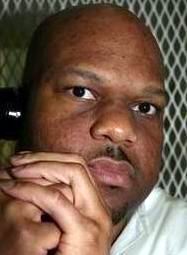
George Alarick Jones
Murderer Brian Kevin Rosenfeld
Murderer · USA · 1985
Brian Kevin Rosenfeld Brian Kevin Rosenfeld was sentenced to three concurrent l…
23 victims
Brian Kevin Rosenfeld
Murderer · USA · 1985
Brian Kevin Rosenfeld Brian Kevin Rosenfeld was sentenced to three concurrent l…
23 victims
 Russell Ellwood
Murderer · USA · 1991
Russell Ellwood was a former taxi driver. Authorities suspected him of killing…
20 victims
Russell Ellwood
Murderer · USA · 1991
Russell Ellwood was a former taxi driver. Authorities suspected him of killing…
20 victims
 Robert Martines Perez
Murderer · USA · 1994
Name: Robert Martines Perez · Other name used in proceedings: Robert Martinez P…
15 victims
Robert Martines Perez
Murderer · USA · 1994
Name: Robert Martines Perez · Other name used in proceedings: Robert Martinez P…
15 victims
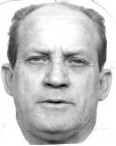 Billy Frank Vickers
Murderer · USA · 1993
Billy Frank Vickers Vickers was executed by lethal injection in Texas on Januar…
14 victims
Billy Frank Vickers
Murderer · USA · 1993
Billy Frank Vickers Vickers was executed by lethal injection in Texas on Januar…
14 victims
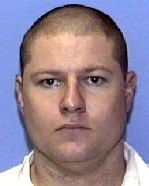 Christopher Britton
Murderer · 2001
Name: Christopher Britton · TDCJ Number: 999426 · Full name: Christopher Wade B…
1 victim
Christopher Britton
Murderer · 2001
Name: Christopher Britton · TDCJ Number: 999426 · Full name: Christopher Wade B…
1 victim
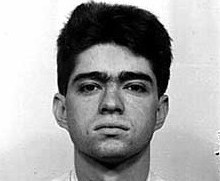 Harold Glenn Smith
Murderer · USA · 1985
August 13, 1986 — A jury convicted Harold Glenn Smith of first-degree murder an…
4 victims
Harold Glenn Smith
Murderer · USA · 1985
August 13, 1986 — A jury convicted Harold Glenn Smith of first-degree murder an…
4 victims
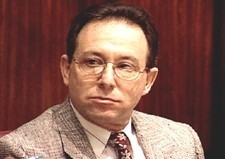 Bruce Rich
Murderer · USA · 1995
Name: Bruce Rich Bruce Rich was accused of killing his parents so that he could…
2 victims
Bruce Rich
Murderer · USA · 1995
Name: Bruce Rich Bruce Rich was accused of killing his parents so that he could…
2 victims
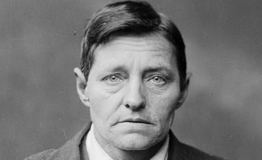 Eugenia Falleni
Murderer · Australia · 1917
Eugenia Falleni Eugenia Falleni was convicted of murder and sentenced to death.…
1 victim
Eugenia Falleni
Murderer · Australia · 1917
Eugenia Falleni Eugenia Falleni was convicted of murder and sentenced to death.…
1 victim
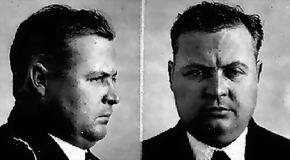 David Curtiss Stephenson
Murderer · USA · 1925
David Curtiss “Steve” Stephenson (21 August 1891 – 28 June 1966) was an America…
1 victim
David Curtiss Stephenson
Murderer · USA · 1925
David Curtiss “Steve” Stephenson (21 August 1891 – 28 June 1966) was an America…
1 victim
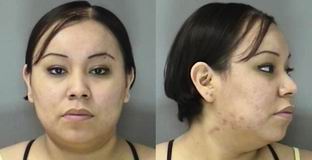 Mary Agnes Leider
Murderer · USA · 2012
Mary Agnes Leider was 25 years old, from Saint Xavier, on the Crow Indian Reser…
1 victim
Mary Agnes Leider
Murderer · USA · 2012
Mary Agnes Leider was 25 years old, from Saint Xavier, on the Crow Indian Reser…
1 victim
- Gender
- male
- Country
- USA
- Location
- Dallas County, Texas, USA
- Date of birth
- April 10, 1974
- Age at first offence
- 18
- Characteristics
- kidnapping, robbery, drug dealer
- Victim profile
- Kindra Buckner (female, 20) / Forrest Hall (male, 22)
- Method of murder
- Shooting
- Date(s) of murder
- December 1992 / April 13, 1993
- Years active
- 1992–1993
- Date of arrest
- —
- Status
-
Executed
Executed by lethal injection in Texas on June 2, 2010
Case record: George Alarick Jones
Timeline
- April 13, 1993 — George Alarick Jones and three accomplices went to the Red Bird Shopping Mall in Dallas to rob someone, forced their way into Forrest Hall’s car as he was leaving the mall, drove to a secluded road in South Dallas, ordered Hall out of the car, forced him to lie face-down in a grassy ditch, and shot him twice in the back of the head.
- September 23, 1993 — Derrick Rogers gave a voluntary written statement to detectives.
- September 21, 1993 — Kindra Buckner’s face photograph was taken after her body was found.
- September 1993 — Kindra Buckner was abducted and taken to a remote area as she walked home, was forced to strip naked, her purse contents were searched, and she was shot twice in the head; Jones and his accomplice later returned and shot her in the face with a shotgun, and then burned the car to cover their tracks.
- April 1993 (following the shooting) — The body of Forrest Hall, 22, was found in a ditch alongside a road in Lancaster, Texas, and police recovered two spent .380 automatic shell casings near Hall’s body.
- April 1993 (the following day) — Dallas police officers recovered Hall’s vehicle abandoned on a street near Fair Park in Dallas, and Hall’s car had been stripped so the tires and rims were missing, as were the car’s stereo and speakers.
- Within a week of the killing — A Lancaster patrolman involved in a pursuit of a suspected stolen vehicle recovered a .380 automatic pistol that was later found to be the weapon used to kill Hall.
- Five months after the murder — Derrick Rogers confessed his and Jones’s participation in Hall’s murder to detectives with the Dallas Police Department and a special agent with the Federal Bureau of Investigation.
- Five months after Hall’s body was found (at his parents’ home) — Jones was arrested at his parents’ home in South Dallas.
- Within hours of the arrest — Jones gave a three-page voluntary written statement admitting his involvement in the murder.
- Sept. 29, 1993 — Jones was re-indicted after his first case was dismissed during jury selection due to an error in correcting the original indictment.
- March 22, 1995 — Jones was found guilty of capital murder at trial.
- March 29, 1995 — The trial punishment phase concluded with a death sentence.
- Sept. 16, 1998 — The Texas Court of Criminal Appeals affirmed Jones’s conviction and sentence on direct appeal.
- Nov. 8, 1999 — The U.S. Supreme Court denied petition for writ of certiorari.
- Sept. 13, 2000 — The Texas Court of Criminal Appeals denied Jones’s state application for writ of habeas corpus.
- Sept. 6, 2001 — Jones initiated federal habeas corpus proceedings.
- July 23, 2003 — A U.S. district court denied federal habeas petition.
- Jun. 24, 2004 — The 5th U.S. Circuit Court of Appeals affirmed the district court rejection of Jones’s petition.
- Jan. 27, 2005 — The Texas Court of Criminal Appeals set the execution date.
- Oct. 15, 2004 — Jones filed a petition for writ of certiorari with the U.S. Supreme Court.
- Jan. 10, 2005 — The U.S. Supreme Court denied the petition for writ of certiorari.
- Jan. 10, 2005 — Jones filed a successive state court petition based on mental retardation.
- June 2, 2010 — Jones was executed by lethal injection in Texas.
Background
George Alarick Jones was 30 years old when Texas Attorney General Greg Abbott provided information about his scheduled execution. Jones was described as 25 years of age in a letter and stated he was born the son of Annie and George J Jones of Dallas, Tx, on April 10, 1974. Jones was described as 5 feet 10 inches tall and weighing about 195 pounds, with brown eyes and a lighter shade of brown skin tone. Jones described enjoying playing basketball, working out, and listening to music, including Jazz and R&B. He also described reading a good book and being fascinated with the "mafia" or "Mafioso" secret society.
Jones was also described as having been convicted and sentenced to death for the April 13, 1993, Dallas robbery-murder of 22-year-old Forrest Hall, and as having been housed on Texas Death Row.
The offence
Forrest Hall murder and carjacking-related robbery
On April 13, 1993, George Jones and three accomplices went to the Red Bird Shopping Mall in Dallas to rob someone. They forced their way into Forrest Hall’s car as Hall was leaving the mall. They drove to a secluded road in South Dallas, parked on the side of the road, and Jones ordered Hall out of the car. Jones forced Hall to lie face-down in a grassy ditch and shot Hall twice in the back of the head. Jones left Hall in the ditch and rejoined the others at a nearby restaurant.
Hall’s lifeless body was found in a ditch alongside a road in Lancaster, Texas. Hall had been shot twice in the back of the head at very close range. Police recovered two spent .380 automatic shell casings near Hall’s body. The following day, Hall’s vehicle was recovered abandoned on a street near Fair Park in Dallas. Hall’s car had been stripped; the tires and rims were missing, as were the car’s stereo and speakers. Within a week, a Lancaster patrolman involved in a pursuit of a suspected stolen vehicle recovered a .380 automatic pistol that was later found to be the weapon used to kill Hall. The pistol was left behind in the stolen car after the car’s lone occupant fled on foot.
Jones admitted that a car stereo and speakers found in his house belonged to Hall, and he admitted that the tires and rims from Hall’s car were pawned at a nearby pawn shop. A forensic document examiner testified that Jones had signed a pawn slip for the tires and rims from Hall’s car at a Dallas pawn shop.
Other aggravated robberies and related carjackings
In addition to the capital murder, Jones actively participated in at least five other similar aggravated robberies. In each, armed with either a handgun, rifle, shotgun or some other weapon, Jones and one or more other individuals confronted a victim in a public place and forcibly took the victim’s car. A surviving victim of at least one of these robberies was shot at several times, and another was sprayed with mace as he used a public pay phone. The cars that were eventually recovered had been destroyed or stripped of all their specialty equipment including the tires, rims, and stereos.
A report described that Jones acknowledged being a drug dealer and that prosecutors tied Jones to 21 crimes, including other armed car jackings and the fatal shooting of Kendra Buckner.
Kindra Buckner kidnapping and murder
During one of Jones’s car jacking sprees, Jones and an accomplice kidnapped and killed 20-year-old Kindra Buckner. Jones and his accomplice drove Buckner to a secluded spot, forced her to strip naked, searched the contents of her purse, and then shot her twice in the head. Fearing that Buckner might have survived, Jones and his accomplice later returned to the scene and shot her in the face with a shotgun. They then burned the car to cover their tracks. Jones was never tried in her death.
Investigation and evidence
Derrick Rogers confession and involvement
Five months after Hall’s murder, Derrick Rogers confessed his and Jones’s participation in Hall’s murder to detectives with the Dallas Police Department and a special agent with the Federal Bureau of Investigation. At trial, Rogers testified that he had known Jones for over two years and that on the afternoon of April 13, 1993, Rogers and Jones, along with two others, went to a shopping mall in Dallas to look for someone to rob. They saw Hall get out of his white car and enter the shopping mall, waited, and then when Hall left the mall Rogers and Jones, armed with a .380 automatic pistol, forced Hall into his car and drove to a secluded road in South Dallas. The others followed them in a separate car. Once parked, Jones ordered Hall out of the car and shot him twice in the head as Hall lay down in the grass. Afterwards, Rogers and Jones took Hall’s car and rejoined the others at a nearby McDonald’s restaurant.
Rogers detailed his and Jones’s participation in a voluntary written statement given to the detectives on September 23, 1993.
Jones’s arrest and voluntary statements
After Jones had been implicated by Rogers, detectives obtained a warrant and arrested Jones at his home in South Dallas. Within hours, Jones also gave a three-page voluntary written statement admitting his involvement in the murder.
Jones blamed his accomplice Derrick Rogers for Hall’s slaying but stated he “accidentally” shot Hall once with the gun in self-defense. Jones also admitted that a car stereo and speakers found in his house belonged to the victim and that the tires and rims were pawned at a nearby pawn shop. A forensic document examiner determined that it was Jones who signed the pawn slip for the tires and rims.
Jones’s lawyers later challenged the confession, which Jones said was written by police, and the confession was allowed into evidence at his capital murder trial in 1995.
Testimony of Derrick Rogers’s girlfriend
Jones’s jury heard from Derrick Rogers’s girlfriend, who confirmed much of Rogers’s testimony. She testified that she saw Jones, armed with a pistol, force Hall into his car and drive away from the shopping mall. She then followed Jones, Hall, and Rogers to a secluded street south of Dallas. She saw Hall step out of the car with his hands raised as Jones held a gun on him. As she drove away, she heard two gunshots. Later, she asked Jones why he killed Hall, and Jones replied so he wouldn’t get to see his son.
Arrest
Jones was arrested at his home in South Dallas.
Jones was also described as being arrested at his parents’ home about five months after Hall’s body was found along a rural road near Lancaster in April 1993.
Trial
Guilt-innocence and verdict
On March 22, 1995, a Dallas County jury found George Alarick Jones guilty of the April 13, 1993, capital murder of Forest J. Hall.
The evidence at the guilt/innocence stage established that Jones, then 19 years old, kidnapped Hall from a shopping center parking lot in Dallas County, transported Hall in Hall’s own car to a rural part of Dallas County, and then shot Hall twice in the back of the head with a .380 caliber automatic handgun. Jones did not contest the sufficiency of the evidence to support the verdict at either the guilt/innocence or punishment stages.
Punishment and death sentence
At the punishment stage, the jury answered special issues in a manner that required the trial court to sentence Jones to death. On March 29, 1995, the trial punishment phase concluded with a death sentence.
Doug Parks, Jones’s lead defense lawyer at his trial, said Jones had come from a good family and “never wanted for anything.” Parks said Jones was acting out to fit in with the wrong crowd.
Jury selection issue (venire member Snyder)
In Jones’s appeal, the Texas Court of Criminal Appeals addressed errors in the trial court’s grant of the State’s challenge of veniremember Snyder for cause.
The State challenged Snyder under four different theories; the trial court granted the challenge under one theory: that Snyder would “start an accomplice witness behind other witnesses” with respect to credibility. The record reflected that during voir dire the State informed Snyder that an “accomplice” was someone “who may have participated in the crime themselves or ... were there during the commission of the crime.” Snyder stated repeatedly, without equivocation or vacillation, that she would be more skeptical of an accomplice witness than of witnesses generally because she would always wonder about the accomplice's motivation for testifying, while also stating she could accept an accomplice’s testimony, explaining that “it would just come down to whether or not I believed the individual.”
The Court of Criminal Appeals concluded the trial court applied the wrong legal standard in granting the State’s challenge for cause and that the trial court erred. The Court of Criminal Appeals held the error was not of constitutional dimension and overruled points of error one and two because it determined that Jones was not entitled to reversal.
Parole eligibility and instructions/voir dire request
Jones argued that the trial court erred in denying requests to voir dire the jury and present evidence regarding parole law and in refusing to instruct the jury on parole law. The Texas Court of Criminal Appeals overruled points of error three, four, and five.
The federal habeas proceedings also addressed refusal to voir dire or instruct the jury about parole eligibility. The Fifth Circuit held that the trial court’s refusal to voir dire about Texas parole law did not violate Jones’s rights under the Eighth or Fourteenth Amendments, and that Jones also did not have a constitutional right to an instruction about parole law because Jones would have been parole-eligible under Texas law governing capital offenses committed between September 1, 1989, and August 31, 1993. The Fifth Circuit stated that under TEX.CODE CRIM. PROC. ANN. art. 42.18, § 8(b)(2) (Vernon 1993), a defendant who receives a life sentence becomes eligible for parole when actual time served equals thirty-five years of confinement.
Photograph of Kindra Buckner
At the punishment stage, Jones complained about the admission in evidence of State’s exhibit 37, a photograph of Kindra Buckner’s face taken after her body was found on September 21, 1993. Jones conceded the photograph was relevant “because ... it depicts the damage to the victim's head,” but he contended that its prejudicial effect substantially outweighed its relevance. Jones argued it was too gruesome to be admissible.
The Texas Court of Criminal Appeals overruled the related points of error and found no abuse of discretion in admitting State’s exhibit 37. The Court noted that once a defendant objects to photographic evidence on the basis of Rule 403, the trial court must weigh its probative value against its potential for unfair prejudice, and on the record it discerned no abuse of discretion.
Jones also argued that the trial court erred in denying a request for a Rule 403 balancing test with respect to State’s exhibit 37. The Court of Criminal Appeals held that any error had not been preserved for appellate review because Jones did not ask the trial court to state its mental process and did not object when it failed to do so.
Accomplice witness rule at punishment stage
Jones objected that the charge at punishment failed to give an instruction to the jury on accomplice witness testimony such as the one given on guilt or innocence. The Texas Court of Criminal Appeals overruled the related point of error. The Court held that the accomplice witness rule embodied in Article 38.14 did not apply to testimony offered to prove extraneous offenses at the punishment stage of a capital murder trial.
Sentencing
A Dallas County jury sentenced Jones to death after the punishment phase concluded on March 29, 1995.
The Texas Court of Criminal Appeals affirmed the death sentence on direct appeal.
Appeals
Direct appeal (Texas Court of Criminal Appeals)
On Sept. 16, 1998, the Texas Court of Criminal Appeals affirmed Jones’s conviction and sentence on direct appeal.
The opinion noted the State’s arguments and the Court’s analysis regarding points of error, including:
- Error in granting the State’s challenge for cause of veniremember Snyder under points of error one and two.
- Denial of requests to voir dire or present evidence about parole law under points of error three, four, and five.
- Admission of the photograph of Kindra Buckner under points including error six and seven.
- Jury charge on accomplice witness testimony at the punishment stage under point of error eight.
The Court affirmed the judgment. Meyer, J., and Baird, J., dissented in separate opinions. Overstreet, J., dissented without a written opinion.
U.S. Supreme Court
The U.S. Supreme Court denied certiorari. The U.S. Supreme Court denied the petition for writ of certiorari on Nov. 8, 1999. The U.S. Supreme Court also denied a subsequent petition for writ of certiorari on Jan. 10, 2005.
State habeas
On Sept. 13, 2000, the Texas Court of Criminal Appeals denied Jones’s state application for writ of habeas corpus.
Federal habeas
Jones initiated federal habeas corpus proceedings on Sept. 6, 2001. A U.S. district court denied federal habeas petition on July 23, 2003. On Jun. 24, 2004, the 5th U.S.
The Fifth Circuit considered two issues for which a Certificate of Appealability was granted:
- whether the trial court’s removal of a venire member for cause violated Jones’s rights under the Sixth or Fourteenth Amendments; and
- whether the trial court’s refusal to instruct or voir dire the jury about parole eligibility impinged upon Jones’s Eighth or Fourteenth Amendment rights.
The Fifth Circuit denied the petition.
The Fifth Circuit stated that the removal of venire member for cause did not warrant reversal under its Sixth Amendment analysis because the actual jury that sat was impartial. The Fifth Circuit also rejected Jones’s parole-related claims.
Outcome
Jones’s execution occurred after the exhaustion of his court appeals.
A report described that Jones was executed for the fatal shooting of Forrest Hall during a carjacking 17 years earlier. Another account described that he was executed on June 2 for the fatal shooting of a Dallas man during a carjacking at a mall in 1993, and that relatives of the slain man, Forrest Hall, watched through a window.
Aftermath
Execution details and final statement
Jones was executed by lethal injection in Texas on June 2, 2010. He was pronounced dead at 6:18 p.m. CDT, eight minutes after the lethal drugs began flowing. Hall’s relatives watched through a window and Jones’s relatives did not witness the execution, except for a requested spiritual advisor.
When asked by the prison warden if he had a final statement, Jones thanked his parents “who have been my pillar of strength in this situation” and his brothers and sisters “who have loved me despite my faults and imperfections.” Jones told the victim’s family “I hope this brings you closure or some type of peace.” Jones also told them “I hope it helps his family, son and loved ones.” Jones added: “This has been a long journey, one of enlightenment,” and “It’s not the end, it’s only the beginning.”
Hall’s uncle Theron Nash said after watching the execution: “It was a bitter, bitter situation.” Nash also said: “We thank God for this day and we ask God’s mercy upon George Jones' mother.” Another uncle, Kelvin Hall, said: “It was like laying down and going to sleep.” Kelvin Hall also said: “My nephew suffered.” Nash said even after 17 years, the slaying “is as fresh as the day it happened.”
A report described that Jones’s arms were partially covered by his white shirt and the tape around the intravenous tubes carrying the drugs, and that a needle was opposite a tattoo of the word “killer” on his right arm.
Mentions of innocence claim and prosecution response
Jones told The Associated Press recently from a visiting cage outside death row: “They were putting cases on me in places I never was.” He also said: “If I do something, I own up to it. How can I feel sorry for nothing I had to do with?” Greg Davis, one of the prosecutors at Jones’s capital murder trial, said: there was “absolutely no doubt” authorities had the right man. Davis also said: “That's just a lie,” in response to Jones’s claim of innocence.
Jones blamed his accomplice Derrick Rodgers in his written confession but stated he “accidentally” shot Hall once with the gun in self-defense. Jones also admitted that a car stereo and speakers found in his house belonged to Hall.
Additional case details on implicated crimes and attempted execution history
A report stated that Jones acknowledged being a drug dealer and said prosecutors were wrong when they tied him to 21 crimes, including other armed car jackings and the fatal shooting of Kendra Buckner. Another report stated Jones was never tried in her death.
A report described that Jones got within two days of execution before the Texas Court of Criminal Appeals agreed to review claims that he was mentally impaired and ineligible for execution, and that the appeal was later rejected.
Other details
- George Alarick Jones was described as “Petitioner-Appellant” in the Fifth Circuit habeas case against “Doug Dretke, Director, Texas Department of Criminal Justice, Correctional Institutions Division, Respondent-Appellee.”
- The Fifth Circuit case was No. 03-11186 and was decided on June 24, 2004.
- The Texas Court of Criminal Appeals decision included the citation Jones v. State, 982 S.W.2d 386 (Tex. Crim. App. 1998) (Direct Appeal).
- Jones was described as having a tattoo with the word “killer” on his right arm.
Spotted an error, or have more information about this case?