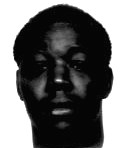
Ernest James Kemp
Murderer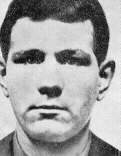 Alfred Charles Whiteway
Murderer · United Kingdom · 1953
Alfred Charles Whiteway was a serial rapist. Both girls had very deep stab woun…
2 victims
Alfred Charles Whiteway
Murderer · United Kingdom · 1953
Alfred Charles Whiteway was a serial rapist. Both girls had very deep stab woun…
2 victims
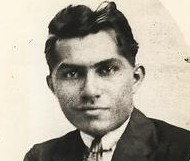 Buck Ruxton
Murderer · United Kingdom · 1935
Buck Ruxton (21 March 1899, Bombay – 12 May 1936, Manchester) was also known as…
2 victims
Buck Ruxton
Murderer · United Kingdom · 1935
Buck Ruxton (21 March 1899, Bombay – 12 May 1936, Manchester) was also known as…
2 victims
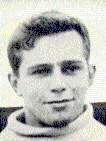 Miles Giffard
Murderer · United Kingdom · 1952
Miles William Giffard (1927 - 24 February 1953) twice played cricket for the Co…
2 victims
Miles Giffard
Murderer · United Kingdom · 1952
Miles William Giffard (1927 - 24 February 1953) twice played cricket for the Co…
2 victims
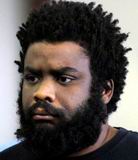 Tyree Smith
Homicide · USA · 2011
Tyree Lincoln Smith, born January 11, 1977, was found not guilty by reason of i…
1 victim
Tyree Smith
Homicide · USA · 2011
Tyree Lincoln Smith, born January 11, 1977, was found not guilty by reason of i…
1 victim
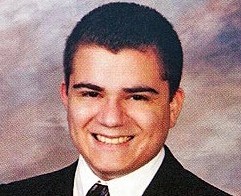 William Freund
Homicide · USA · 2005
October 15, 2005 — Freund wrote that he had tried suicide before. · October 29,…
2 victims
William Freund
Homicide · USA · 2005
October 15, 2005 — Freund wrote that he had tried suicide before. · October 29,…
2 victims
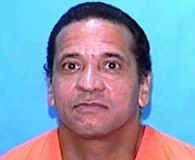 Juan Roberto Melendez-Colon
Murderer? · USA · 1983
Juan Roberto Melendez-Colon was born May 24, 1951. He lived in Brooklyn, New Yo…
1 victim
Juan Roberto Melendez-Colon
Murderer? · USA · 1983
Juan Roberto Melendez-Colon was born May 24, 1951. He lived in Brooklyn, New Yo…
1 victim
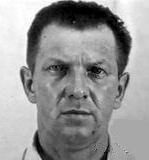 Stanislaw Modzelewski
Serial killer · Pol and · 1952
Stanislaw Modzelewski (born 15 March 1929 in Szczepankowo near Łomża, died on 1…
7 victims
Stanislaw Modzelewski
Serial killer · Pol and · 1952
Stanislaw Modzelewski (born 15 March 1929 in Szczepankowo near Łomża, died on 1…
7 victims
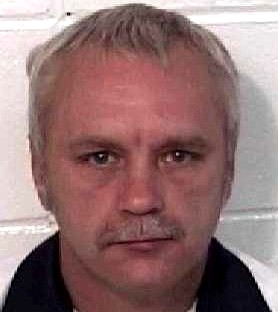 Jonathen Jarrells
Murderer · USA · 1987
Jonathen Jarrells was convicted by a Walker County jury of murder, armed robber…
1 victim
Jonathen Jarrells
Murderer · USA · 1987
Jonathen Jarrells was convicted by a Walker County jury of murder, armed robber…
1 victim
- Gender
- male
- Country
- United Kingdom
- Location
- Eltham, London, England, United Kingdom
- Date of birth
- October 4, 1923
- Age at first offence
- 21
- Characteristics
- rape, rape?, convicted rapist
- Victim profile
- Miriam Deeley (female, 21)
- Method of murder
- Strangulation with scarf
- Date(s) of murder
- February 13, 1944
- Years active
- 1944
- Date of arrest
- February 24, 1944
- Status
-
Executed
Executed by hanging at Wandsworth Prison on June 6, 1944
Overview
Ernest James Harman Kemp was born illegitimately on 4 October 1923 at Gillingham (Kent). He adopted his mother's name and later claimed that his father had died when he was aged 4. Kemp lived in New Cross (South London) and worked as a Porter at the local rail station.
The offence
Miriam Deeley's body was discovered in an allotment alongside the railway at Well Hall Station on 14 February 1944. She had been raped and strangled with her scarf. After being killed, her body had been dragged some distance to its present location. Some items were also found nearby, together with some large footprints.
Investigation
From numerous appeals, witnesses came forward who had seen Miriam with a what appeared to be a soldier. A description was circulated describing the wanted person as "a talkative soldier with what might appear to be an impressive collection of medal ribbons."
Early in the morning of 22 February 1944, an ex-WWI soldier and now a Police Constable called Charles Memory spotted a soldier with a WAAF. The soldier was wearing an "unifrom" with an impressive collection of medal ribbons, including medals that were issued before the soldier was born.
Once the WAAF had departed, Charles Memory arrested the soldier and took him to Albany Road Police Station. Chief Inspector Edward Greeno, who was heading the enquiry into Miriam's murder, was notified of the arrested suspect's description. The suspect stated that he was Gunner Ernest Kemp.
After finding out that Kemp was a deserter, Greeno asked Kemp to account for his actions over the period of 12-14 February 1944. Kemp provided some evasive answers and also failed to account for some of Miriam's possessions he had in his rucksack. Greeno asked Kemp to remove his boots, which were the same size as those found near Miriam's body. Kemp was then informed that he was being detained as a suspect in the murder of Miriam Deeley.
Arrest
On 22 February 1944, Police Constable Charles Memory arrested the soldier after spotting him with a WAAF and took him to Albany Road Police Station.
Trial
On 18 April 1944, Kemp's trial for the murder of Miriam Deeley began at the Old Bailey before Mr Justice Cassels.
The Prosecution case was presented by Mr L.A. Byrne and Mr Gerald Howard. Kemp was represented by Mr F.H. Lawson.
Kemp pleaded not guilty and no evidence was presented by the defence.
The jury found Kemp guilty of Miriam's murder and added a recommendation to mercy.
Sentencing
Kemp was sentenced to death by hanging.
Outcome
Ernest Kemp was executed by hanging at Wandsworth Prison on 6 June 1944. As with all executed prisoners, he was buried within the prison grounds. Miriam Deeley was buried in Brookwood Cemetery.
Other details
- Ernest Kemp enlisted in the Queen's Royal Regiment (West Surreys) on 29 December 1942, serving at Maidstone, Exeter, Illfracombe and Taunton.
- During 1943, Kemp transferred to the Royal Artillery and served at Aberdeen, Cromer, Watford and Woolwich.
- On 8 February 1944, whilst under military police escort at the dentist, Kemp escaped by climbing through a toilet window.
- Miriam Deeley had joined the Women's Auxiliary Air Force (WAAF) on 7 August 1942.
- Miriam Deeley was from a family of four and lived in Wanstead, London.
- Miriam Deeley became engaged to Aircraftsman William Quill after a posting in Cornwell.
- After William Quill's commission had been announced, Miriam was posted to No. 1 Balloon Centre at RAF Kidbrooke (south-east London).
- Quill was posted for a course at No. 7 Radio School, which was located at the Science Museum.
- On the weekend of 12-13 February 1944, Miriam obtained a weekend pass which she spent with her fiancé at her family home at Wanstead.
- Her fiancé escorted Miriam back to Charing Cross Rail Station so she could catch a train to Kidbrooke and rejoin her unit.
- When Miriam arrived at Charing Cross, she had missed the last direct train to Kidbrooke; she phoned her unit to notify them that she would be late, and boarded a train for Lewisham.

Spotted an error, or have more information about this case?