Ali Reza Kordiyeh
Serial killer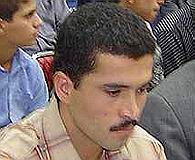 Mohammed Bijeh
Serial killer · Iran · 2004
Mohammed Bijeh (Persian: محمد بيجه ) was an Iranian serial killer. He confessed…
20 victims
Mohammed Bijeh
Serial killer · Iran · 2004
Mohammed Bijeh (Persian: محمد بيجه ) was an Iranian serial killer. He confessed…
20 victims
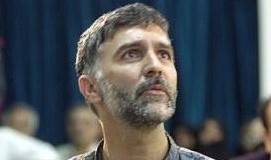 Saeed Hanaei
Serial killer · Iran · 2000
Saeed Hanaei Saeed Hanaei was found guilty and was hanged at dawn in Mashhad Pr…
19 victims
Saeed Hanaei
Serial killer · Iran · 2000
Saeed Hanaei Saeed Hanaei was found guilty and was hanged at dawn in Mashhad Pr…
19 victims
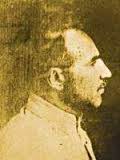 Ali Asghar Borujerdi
Serial killer · Iran · 1908
Ali Asghar Borujerdi (Persian: عَلی اَصغَر بروجردی) was known in Iran as اصغر ق…
33 victims
Ali Asghar Borujerdi
Serial killer · Iran · 1908
Ali Asghar Borujerdi (Persian: عَلی اَصغَر بروجردی) was known in Iran as اصغر ق…
33 victims
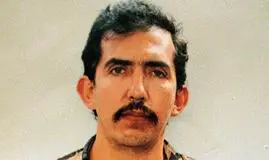 Luis Alfredo Garavito
Serial killer · Colombia/Ecuador · 1992
Luis Alfredo Garavito Cubillos, also known as "La Bestia" ("The Beast") or "Tri…
192 victims
Luis Alfredo Garavito
Serial killer · Colombia/Ecuador · 1992
Luis Alfredo Garavito Cubillos, also known as "La Bestia" ("The Beast") or "Tri…
192 victims
 Edson Isidoro Guimaraes
Serial killer · Brazil · 1999
Edson Isidoro Guimarães was a Brazilian nursing assistant and nurse’s aide at S…
131 victims
Edson Isidoro Guimaraes
Serial killer · Brazil · 1999
Edson Isidoro Guimarães was a Brazilian nursing assistant and nurse’s aide at S…
131 victims
 Larry Allen Stout
Murderer · USA · 1987
Larry Allen Stout, aged 33, pleaded guilty in a Virginia court to the robbery a…
1 victim
Larry Allen Stout
Murderer · USA · 1987
Larry Allen Stout, aged 33, pleaded guilty in a Virginia court to the robbery a…
1 victim
 Derlyn Ray Threats
Murderer · USA · 2005
Derlyn Ray Threats was a former Camp Pendleton Marine sergeant. He was convicte…
1 victim
Derlyn Ray Threats
Murderer · USA · 2005
Derlyn Ray Threats was a former Camp Pendleton Marine sergeant. He was convicte…
1 victim
 Jessy San Miguel
Mass murderer · USA · 1991
Name: Jessy San Miguel (also referred to as Jessy Carlos San Miguel) Status: Ex…
4 victims
Jessy San Miguel
Mass murderer · USA · 1991
Name: Jessy San Miguel (also referred to as Jessy Carlos San Miguel) Status: Ex…
4 victims
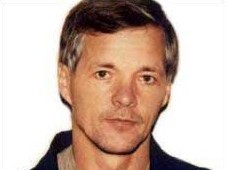 Jack Unterweger
Serial killer · USA / Czechoslovakia · 1976
Johann “Jack” Unterweger was an Austrian serial killer. He was born in 1950 in…
12 victims
Jack Unterweger
Serial killer · USA / Czechoslovakia · 1976
Johann “Jack” Unterweger was an Austrian serial killer. He was born in 1950 in…
12 victims
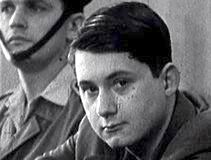 Karol Kot
Murderer · Poland · 1964
Karol Kot (December 18, 1946 - May 16, 1968) was a Polish serial killer. Kot wa…
2 victims
Karol Kot
Murderer · Poland · 1964
Karol Kot (December 18, 1946 - May 16, 1968) was a Polish serial killer. Kot wa…
2 victims
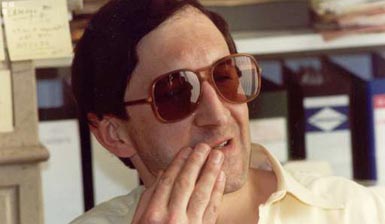 Madani Bouhouche
Murderer · Belgium · 1982
Madani “Dany” Bouhouche (June 14, 1952 - November 22, 2005) was a former Belgia…
2 victims
Madani Bouhouche
Murderer · Belgium · 1982
Madani “Dany” Bouhouche (June 14, 1952 - November 22, 2005) was a former Belgia…
2 victims
- Gender
- male
- Country
- Iran
- Location
- Tehran, Iran
- Date of birth
- 1969
- Age at first offence
- 28
- Characteristics
- rape, taxi driver
- Victim profile
- Girls and women aged 10 to 47
- Method of murder
- Stabbing with knife , then doused with gasoline and set on fire
- Date(s) of murder
- February-June 1997
- Years active
- 1997
- Date of arrest
- —
- Status
-
Executed
Executed by hanging on August 12, 1997
Case record: Ali Reza Kordiyeh
Identification
Ali Reza Khoshruy Kuran Kordiyeh was known as the “Tehran Vampire” and the “The Vampire”.
Background
Ali Reza Khoshruy Kuran Kordiyeh was a serial killer who stalked the streets of Tehran, Iran, for his victims. He was born in 1969. He was 28 at the time of his execution and trial coverage.
He pretended to be a cab driver to lure victims. He carried out his crimes by posing as a freelance taxi driver in the streets close to the site of his hanging. Police dubbed their quarry the “Teheran Vampire” after his night-prowling habits.
The offence
Kordiyeh claimed the lives of nine girls and women, including a ten-year-old girl. He kidnapped, raped, stabbed, and burned victims.
Relatives of the victims described him as being accused of theft in addition to the attacks. Newspapers said he burned his victims after killing them so they would not be recognized. Newspapers reported that some bodies were imperfectly consumed by flame, allowing investigators to count up to 30 stab wounds on a single corpse.
The killings occurred over a four-month period. The spree began in March. Kordiyeh confessed to the kidnap, rape and murder of nine girls and women aged 10 to 47, including a mother and her daughter.
A tenth death sentence was for rape in 1993. Kordiyeh was linked to a rape in 1993 and to charges of kidnapping and theft in 1994, and he escaped before going on trial.
Investigation
Kordiyeh was picked up for acting suspiciously at a mall. Two victims escaped him, and they helped authorities prepare a suspect sketch. Kordiyeh was swiftly identified following his June arrest for acting suspicious at a Teheran shopping mall.
Investigators linked him through physical evidence, including human bloodstains in his car.
Kordiyeh confessed to the murders when confronted with evidence and was identified by a surviving victim.
Arrest and prior events
Kordiyeh had been arrested in 1993 on charges of kidnapping and rape, and he escaped while being transported to court. He remained at large for another four years. He logged his first arrest at age 24 on charges of kidnapping and rape.
In 1994, he had been arrested on charges including kidnap and theft but escaped before going on trial.
In February 1997, he graduated to murder. Over the next five months, he killed at least nine women.
Kordiyeh was arrested for acting suspiciously at a Teheran shopping mall, and he was confronted with evidence including bloodstains in his car.
Trial
Kordiyeh was condemned to death in multiple sentences after confessing on television. In one account, he was condemned to 10 death sentences on Monday after confessing on television to the kidnap, rape and murder of nine girls and women aged 10 to 47 over a four-month period. In another account, his trial was broadcast live on state-run television.
The tenth death sentence was for rape in 1993. He received 10 death sentences and 214 lashes.
Relatives of the victims had demanded punishment including stoning. Government-owned newspaper Iran Daily said a number of the victims’ relatives had said public hanging was too mild a punishment and called for another method of execution, and demanded his hands be cut off before execution because he had also been accused of theft. Relatives of the victims also called for Kordiyeh to be stoned to death and for his hands to be cut off.
A cleric spoke to the crowd before the sentence was carried out.
“Innocent blood will always be avenged... This is punishment for the criminal but for us witnesses it is a lesson to be learned... We are responsible for our actions,” a robed cleric told the crowd before the sentence was carried out.
Kordiyeh’s last words before the crane hoisted him aloft were:
“I borrowed money from no one, and I owe none to anyone. I ask God for forgiveness for what I did.”
A judicial official stated those last words were his last words before he was hanged.
Sentencing
Kordiyeh was sentenced to death and received 214 lashes. He received nine times over a death sentence earlier in the month after he was convicted of killing nine women, including a mother and his 10-year-old daughter.
He was condemned to 214 lashes and 10 death sentences.
Appeals
Newspapers said the Supreme Court was expected to confirm the sentence within 48 hours.
Outcome
Kordiyeh was executed by being publicly whipped and then hanged from a crane.
His execution took place in front of victims’ families and a crowd of 10,000 to 20,000 spectators. His whipping began on Monday and the lashes were completed before he was hanged. The whipping involved more than 200 times with a thick leather belt, including whipping by relatives of victims and by prison officials as part of his 214-lash sentence.
The execution was carried out by tying him to a yellow crane and lifting him with a rope around his neck. He was led underneath the crane as a noose was tightened around his neck, and as the crane lifted him his legs kicked and he became still.
Verses from the Koran were relayed through loudspeakers to onlookers.
Photos were not allowed.
The location of the hanging was a construction site. The location of the hanging had not been announced beforehand, but word had spread since the crimes and the sentence were the talk of Tehran. One reported location was near Shahrak Rah-Ahan in the western suburbs of Tehran; another account described the hanging at a construction storage site in the western Tehran neighborhood where he had cruised for fares.
Kordiyeh was hung from a crane on August 12, 1997.
“I borrowed money from no one, and I owe none to anyone. I ask God for forgiveness for what I did,” were Kordiyeh’s last words before he was hanged.
A reporter described crowds cheering and wailing, and authorities leaked the time and venue of the execution to the press in an unusual breach of policy.
Aftermath and related incidents
Iranian authorities were less than satisfied with the result of the public display, fearing that Kordiyeh’s example might inspire lethal copycats. Before year’s end, another Teheran cabbie was arrested for attempting to molest a female passenger. The would-be rapist told police, “I’m going to be the next Teheran Vampire.”
One account quoted reactions and statements from attendees. Nasser Parchami, father of 25-year-old Parvand who was among the victims, sobbed:
“I have no life or future left ahead of me, but I'm still not satisfied with the punishment this killer is getting for killing my daughter,” sobbed Nasser Parchami, father of 25-year-old Parvand who was among the victims.
In one account, Maryam Bakhti said she believed she was very nearly one of Kordiyeh’s victims and stated:
“It's a sweet death for him. He deserves worse,” said Maryam Bakhti who believes she was very nearly one of Kordiyeh's victims.
Maryam Bakhti also stated:
“When I saw him on the television I just shivered... The police were very slow in telling us there was a murderer among us,” she said.
In another account, a man shouted:
“Do you see finally that God is greater, you son of a dog?”
In the same account, Marzieh Davani said:
“He is not a human,” said Marzieh Davani, a 38-year-old woman.
Amir Ezati said:
“I really cannot understand a human can do what he did. He deserves to die surrounded by the hatred of people,” said Amir Ezati.
“Damn you, you killer,” somebody shouted.
The chant was taken up by others as Kordiyeh was led underneath the crane.
Other details
Kordiyeh was also described as being dubbed “The Vampire” and the “Teheran Vampire.” He was executed in public after being flogged by relatives of victims.
Relatives of the victims had demanded public stoning or other methods, and there were demands for his hands to be cut off before execution because he had also been accused of theft.
Public hangings and floggings were described as rare in Tehran, but Kordiyeh’s execution occurred as a public spectacle.
A judicial official was quoted regarding his last words.
Spotted an error, or have more information about this case?